St. Lawrence Church: A Neo-Gothic Parish Church in Lübeck
Site at a Glance
- Popularity
- Medium
- Country
- Germany
- Primary era
- Modern
- Eras represented
- Early Modern, Modern
- Civilizations
- German, Holy Roman Empire
- Site type
- Religious
- Remains
- Church
On this page15 sections
History
Cemetery and parish origins
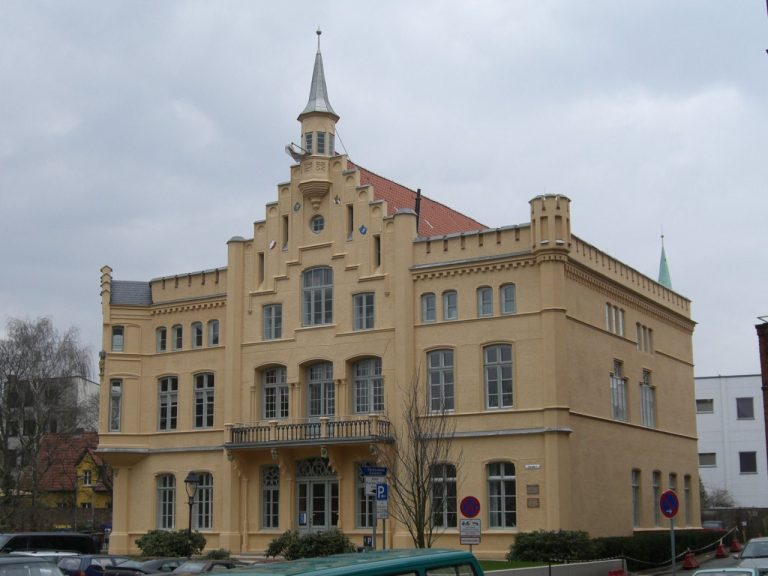
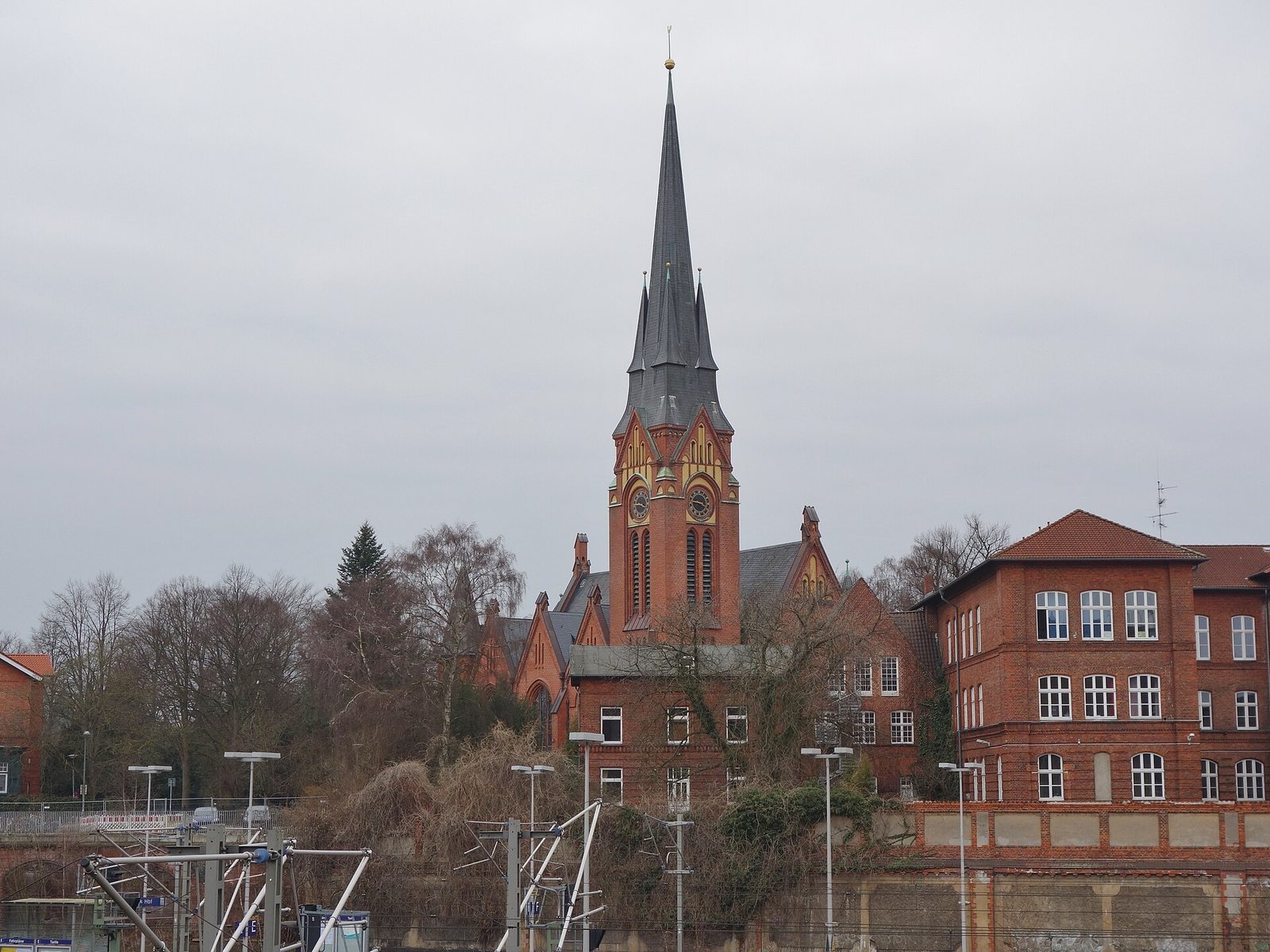
St. Lawrence Church is a brick Neo-Gothic parish church, a revival of Gothic architectural forms, on Steinrader Weg in Lübeck, Germany, immediately north of the city’s main railway station. Dedicated in 1900, it replaced an earlier church that had served a parish established outside the city walls.
The cemetery beside the church began in 1597 during a plague epidemic that killed an estimated 7,000 to 8,000 people, about a third of Lübeck’s population. It was first used for plague victims and poor people. An inscription marks its founding on the feast day of Saint Lawrence, an early Christian martyr whose feast falls on 10 August, and dedicates the cemetery to God and the poor.
The parish was established in 1669, and its church became the first parish church outside Lübeck’s walls. The cemetery came first; its dedication to Saint Lawrence later gave the church its name as well.
Rebuilding and changes to the church
By the late nineteenth century, population growth in the surrounding area created demand for a larger church. Chief Pastor Johannes Bernhard supported the project, while Senator Friedrich Heinrich Bertling helped secure the new building through his time, money, and influence. The original church was demolished, and the replacement was built on its site under municipal building director Gustav Schaumann, with Ernst Carl Conrad Heidenreich as architect and master builder. It was dedicated on 6 May 1900. St. Matthäi Church was built at about the same time, a few streets to the north.
As the old church was being replaced, its pulpit went to St. Catherine’s Church in 1899, and its 1674 altar was transferred to St. George’s Chapel in Schwartau. The baptismal angel remained with the congregation. In 1901, after his election to Lübeck’s Senate, Emil Possehl donated a new organ to the church.
In 1908, Herrmann Paulig financed an addition to the façade. The proposal for a statue of Saint Lawrence gave way to a figure of Christ. In 1914, Alfred Stülcken baptized Herbert Frahm at the church; Frahm later became known as Willy Brandt and served as German chancellor.
The first organ, built by Sauer, was destroyed by a short-circuit fire on 28 December 1921. An instrument by P. Furtwängler & Hammer replaced it. In 1939, during the ministry of German-Christian pastor Gerhard K. Schmidt, the church was remodeled. The German Christians were a Protestant movement that sought to align church life with Nazi ideology. The neo-Gothic pulpit was removed, and the altar was taken to the attic and replaced with a sculpture by Otto Flath. In 1999, the altar returned to its former position and Flath’s sculpture was moved to the side. The replacement organ was restored in 1993–1994 by the Lobback organ-building firm.
A Baroque painting of the Binding of Isaac, the biblical episode in which Abraham is stopped from sacrificing his son, was identified in 2001 as a work from the workshop of Jakob Jordaens. In 2025, the congregation decided to place the painting on permanent loan to Lübeck’s St. Annen Museum.
Cemetery use and stewardship
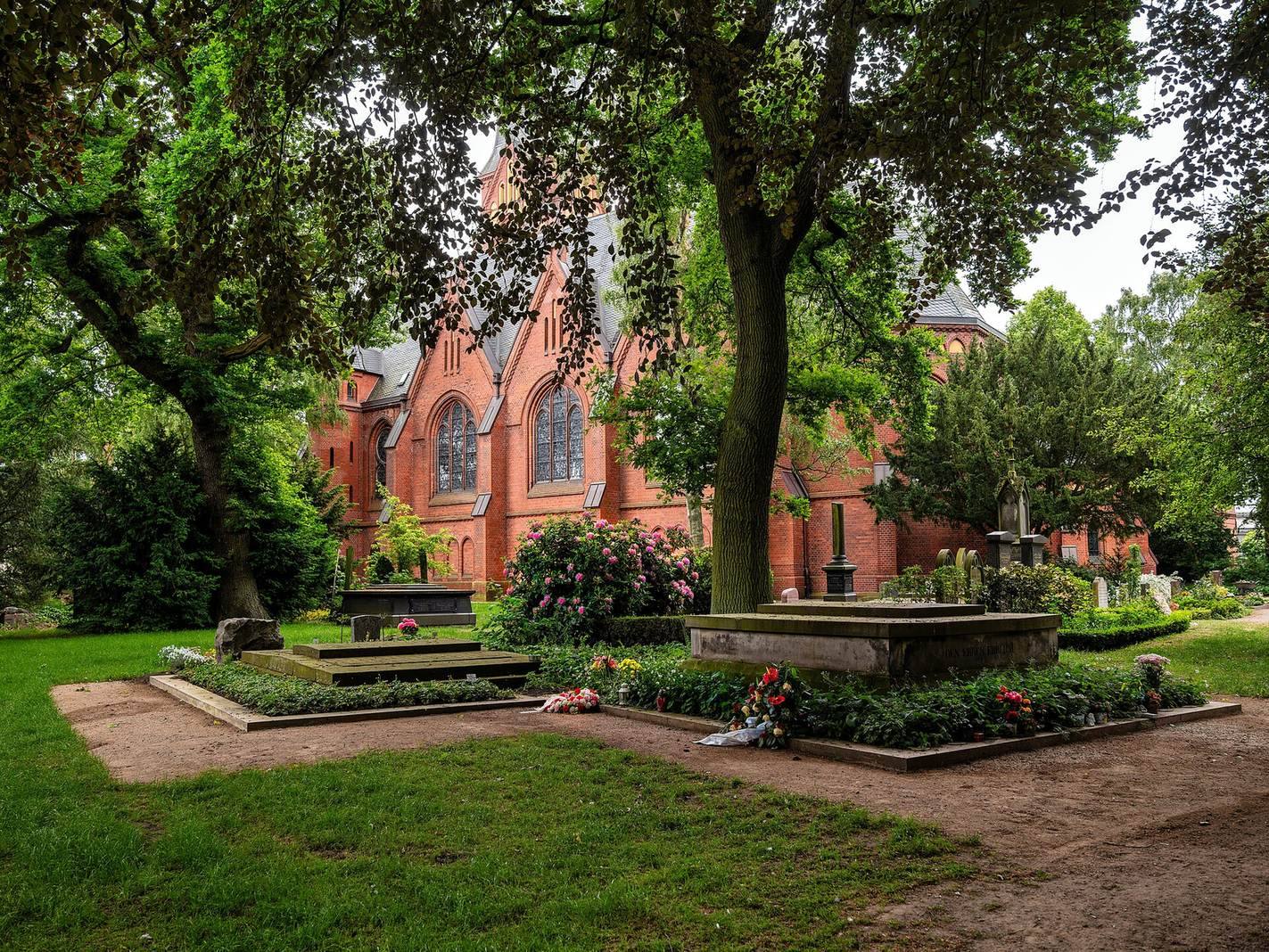
In the late eighteenth century, the cemetery became a center of cemetery reform, and wealthy Lübeck residents began choosing plots there. In the nineteenth century, burials included members of prominent local families, preachers, people connected with the Niederegger marzipan business, and industrialists.
The cemetery was full when it passed into municipal administration in 1906. The church and cemetery have been protected together as historic monuments since 1977. The congregation resumed cemetery management on 1 January 2008. The church belonged to the Evangelical-Lutheran St. Lorenz congregation until 2021. From 1 January 2022, after five Lübeck congregations merged, it became part of the Evangelical-Lutheran Laurentius congregation, a Protestant tradition rooted in the Reformation.
Remains
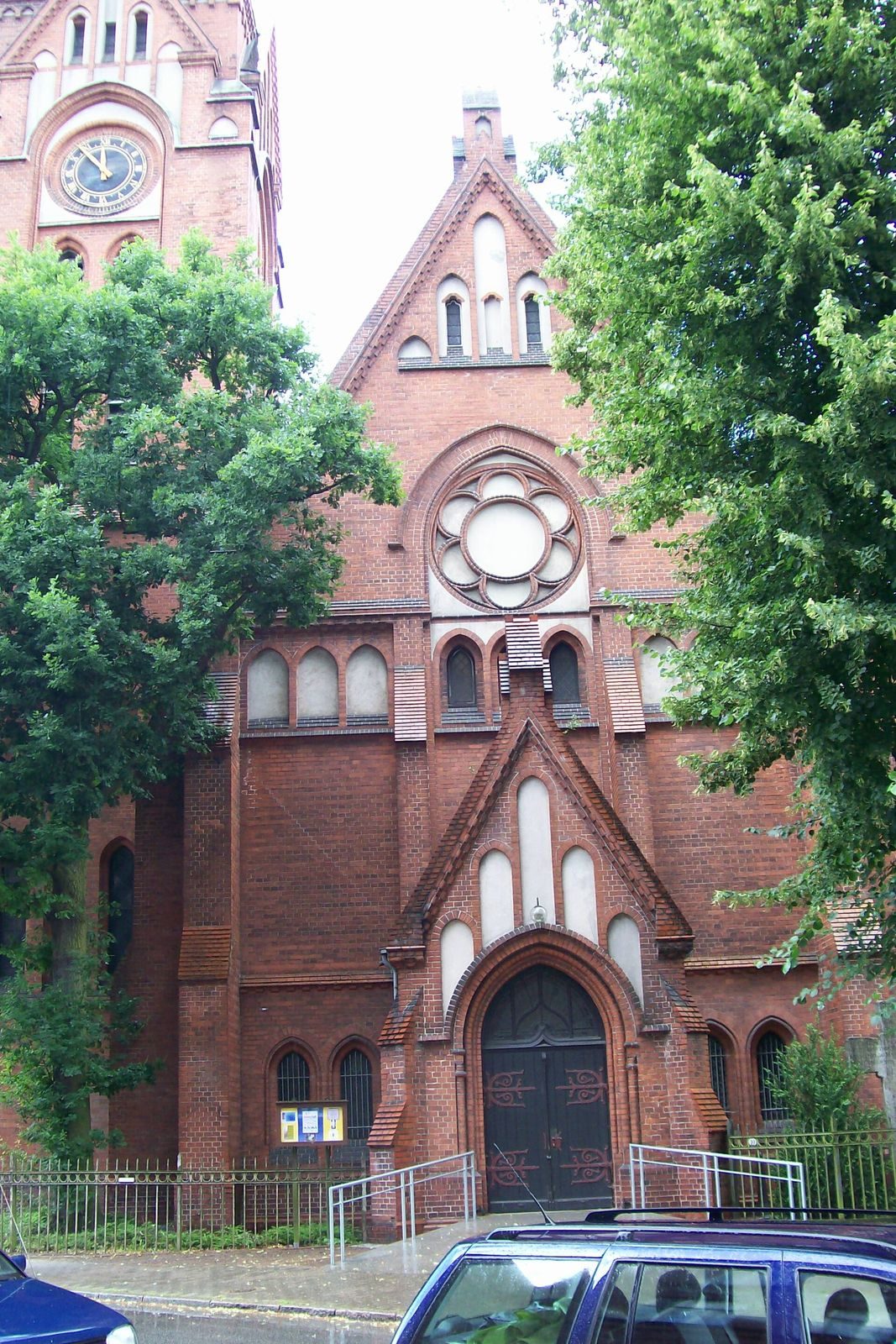
The site includes the brick church and a cemetery with memorials and tombs from several periods. The church has a main entrance, windows along the nave, and a tower that houses its bells. Its neo-Gothic construction is complemented by the cemetery’s older stone monuments and later tombs.
Church and interior
Main building
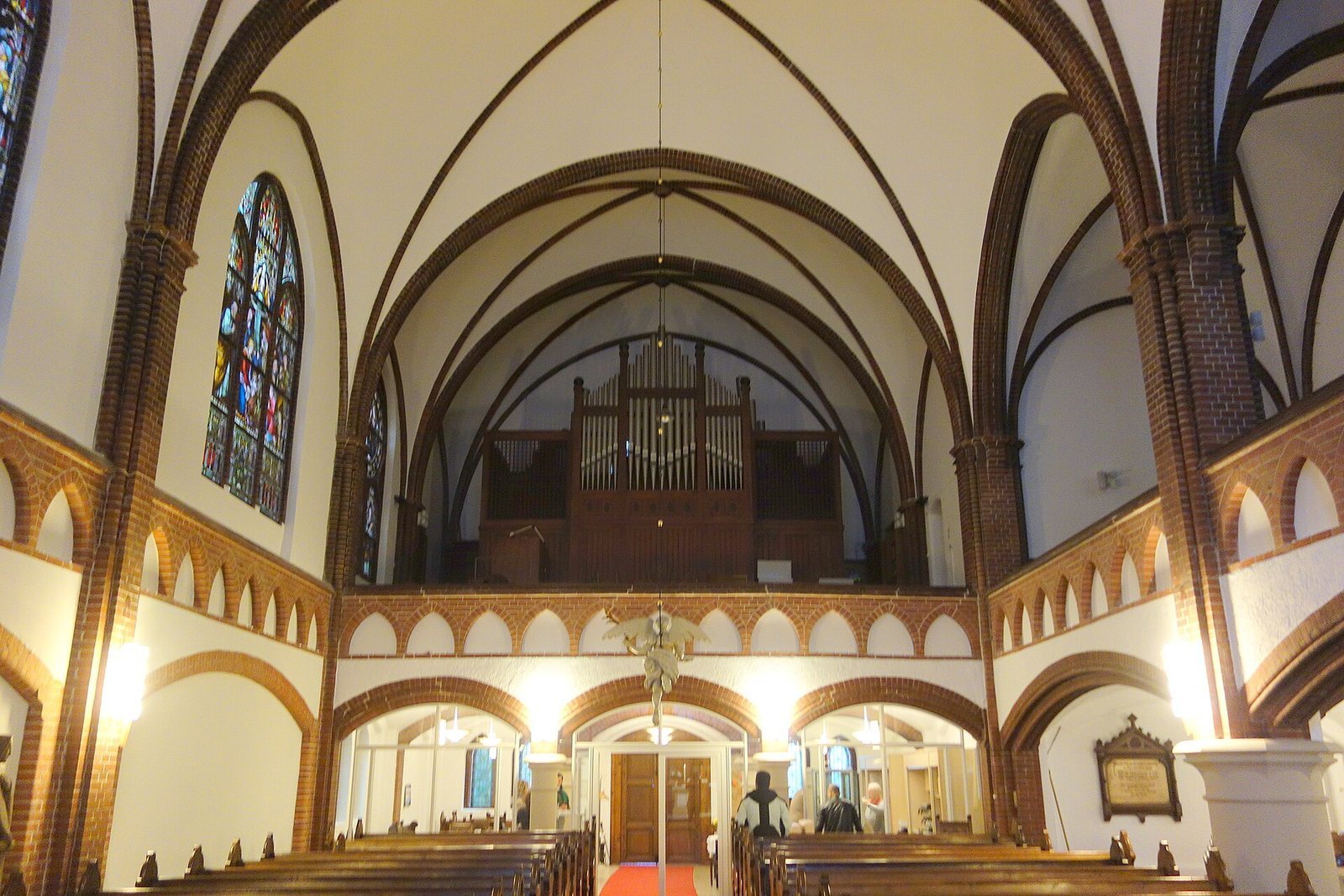
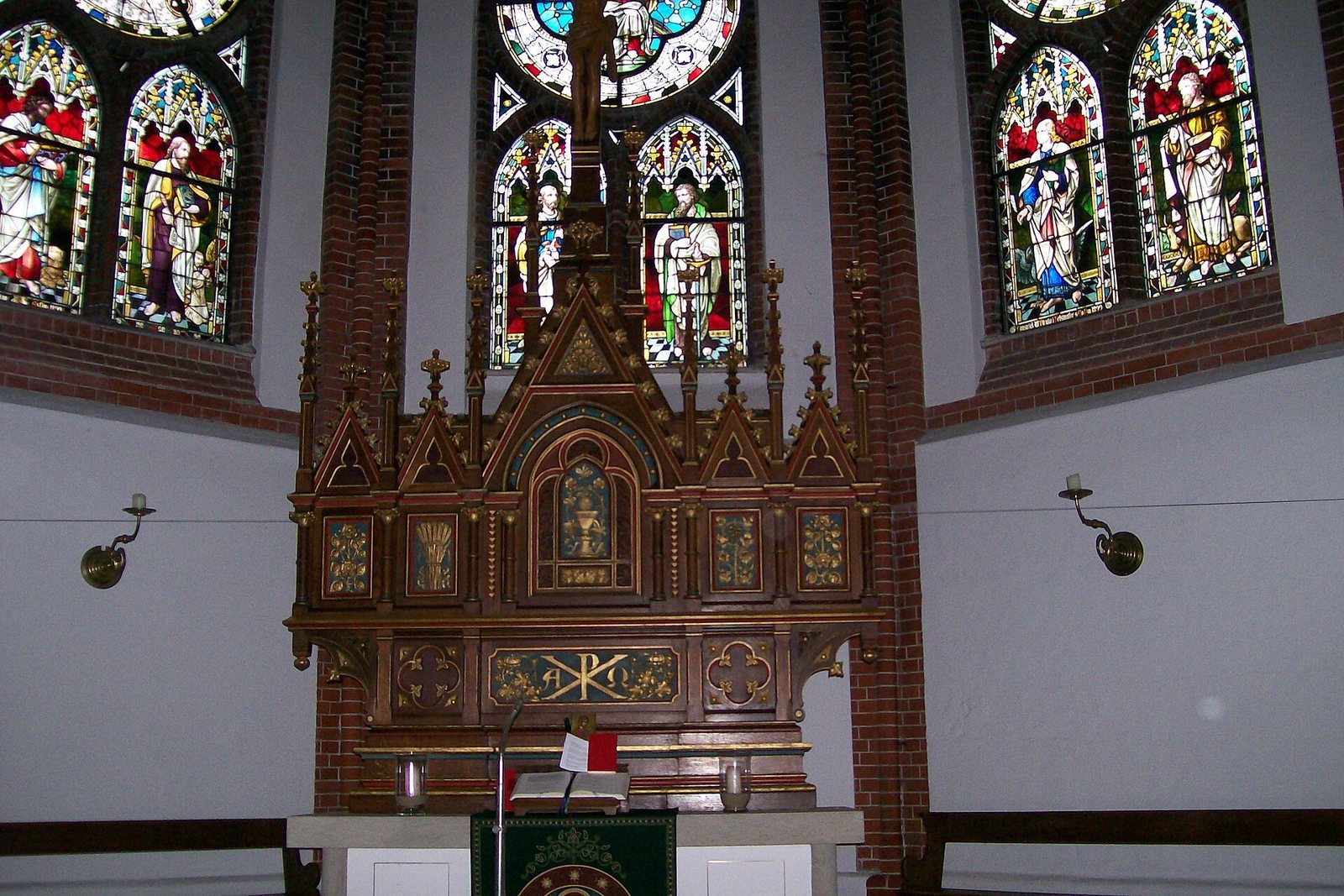
The present church is built of brick in the Neo-Gothic style. Its tower contains the bells, while the nave has windows along its length. The neo-Gothic altar and pulpit were made by Gustav Kuntzsch’s firm in Wernigerode. The altar, taken to the attic during the 1939 remodeling, was returned to its former position in 1999.
Christ statue
A 2.20-metre-high statue of Christ stands on the façade. Lübeck-born sculptor Hans Schwegerle carved it from shell limestone. The figure’s pose refers to the promise in John 14:13 that prayers made in Christ’s name will be answered. Schwegerle also gave Lübeck’s city museum a smaller version.
Baptismal angel
The church retains a baptismal angel by Dietrich Jürgen Boy, the surviving furnishing from the earlier church’s interior. The angel is lowered while holding the baptismal bowl.
Gallery painting
The Baroque gallery painting depicts the Binding of Isaac. Its attribution to the workshop of Jakob Jordaens, a Flemish Baroque painter and pupil of Peter Paul Rubens, was established in 2001. The congregation decided in 2025 to place it on permanent loan to the St. Annen Museum.
Organ
The organ has three manuals, or keyboard manuals, and a pedal played with the feet. It has 30 stops, which select sets of pipes, and two transmissions that allow stops to operate from more than one manual or pedal. The instrument replaced the Sauer organ destroyed by fire in 1921 and was restored in 1993–1994.
Bell peal
The present three-bell peal combines two loan bells from Danzig with the smallest bell from the 1925 Ohlsson peal. The two loan bells were brought from Hamburg’s bell cemetery in 1950. The church’s first peal included two bells cast in 1660 by Cordtmann and Arend Kleymann; its small bell was recast in 1849 by Lübeck’s last council bell-founder, F. W. Hirt, and an unknown founder made a third, smaller bell. The first peal was melted down during the First World War. Lübeck’s M & O Ohlsson foundry cast its replacement in 1925, but the two larger bells were melted down during the Second World War. The smallest survived and remains in the present peal.
Cemetery monuments
Plague cross
The cemetery’s oldest memorial is a free-standing plague cross dating to 1598. It is made of Gotland limestone.
Tombs and gravestones
The tomb of Meder, who died in 1798, features a mourning genius, an allegorical spirit in funerary art, by Ludwig Daniel Heyd. Karl Rechlin’s tomb, also dated 1798, has a prominent broken column stump. Other named memorials include tombs for Margaretha Elisabeth Jenisch and the Bertling family. The Niederegger family gravestones use the firm’s lettering from the third stone onward. Cemetery monuments in the Neoclassical style, a European style that predates the Neo-Gothic revival, were the subject of a design competition; the Heyd brothers brought some tombs from Kassel. Other tombs are associated with Behn in 1804, Plessing in 1810, and Jenisch in 1832. A gravestone was later moved to Vorwerker Cemetery.