Val-Dieu Abbey: A Cistercian Monastery in Belgium
Site at a Glance
- Popularity
- Medium
- Country
- Belgium
- Primary era
- Early Modern
- Eras represented
- Medieval, Early Modern, Modern
- Civilizations
- Belgian, Habsburg, Habsburg Austria, Habsburg Spain, Holy Roman Empire, Spanish
- Site type
- Religious
- Remains
- Monastery
On this page10 sections
History
Foundation and medieval growth
Val-Dieu Abbey is a Cistercian monastery in the Berwinne valley near Aubel, Belgium, founded there in 1216 by monks from Hocht. The Cistercians are a Catholic monastic order whose communal life follows the Rule of St Benedict. Several surviving buildings follow the Mosan tradition, an architectural culture associated with the Meuse region. Although its community remained relatively small, the abbey became an important regional landholder and economic center.
The community grew out of Hocht Abbey, founded near Maastricht in 1180 by monks sent from Eberbach, a Cistercian abbey in Germany. As Hocht increasingly became a women’s religious house in the early 13th century, the monks sought a new home. They had bought land at Weerst in 1203, but instead moved in 1216 to the Berwinne valley, where Lotharius of Are-Hochstaden, count of Dalhem, and Henry III, duke of Limburg, had donated more fertile land. Papal bulls confirmed the foundation in 1217 and 1218.
At its largest, the 13th-century community numbered about 30 monks. The abbey held roughly 1,000 hectares, six mills, three farms, eight barns, and vineyards. Its abbot sat in the Estates of Dalhem, territorial political assemblies, and from 1598 represented the abbey in the Estates of Limburg and the Lands of Overmaas.
War, fire, and rebuilding
The Limburg War of Succession, fought from 1283 to 1288, left the abbey impoverished. A fire destroyed its church in 1287. Following intervention by the Cistercian General Chapter over declining discipline, donations from John II, duke of Brabant, and his successors supported rebuilding. The restored church was completed in 1331.
Heavy war taxes imposed by Charles the Bold, duke of Burgundy, burdened the abbey in the 15th century. Religious discipline weakened again in the 16th century, and Protestant rebels burned the church and monastery in 1574. Reconstruction was completed in 1625. Dutch troops abducted Abbot Michiel van Verviers in 1636, and French troops plundered the abbey in 1683.
Recovery, suppression, and return
The 18th century brought greater stability and renewed prosperity. Under Abbot Jean Dubois, who led the abbey from 1711 to 1749, building work flourished. Brewing at Val-Dieu, which dated back to the Middle Ages, ended during this century.
French authorities suppressed religious orders and confiscated the abbey in 1796. Two years later, Abbot Jacques Uls and two monks bought it back. Eight monks remained in 1811, but after Uls died the following year, ownership passed to his family. They expelled the monks and put the property to commercial use. A cloth factory soon failed, and a boarding school operated from 1825 to 1828. The church was stripped, and the botched removal of its spire brought down the tower and roof.
In 1840, Bernard Klinkenberg, a former companion of Uls, bought back part of the abbey. Monks from Bornem Abbey in Belgium restored monastic life in 1844, with four novices joining the next year. The community became a priory, a monastic house governed by a prior rather than an abbot. The abbatial palace remained in lay ownership until 1975.
Henry Pétry acquired the guesthouse, farm, smithy, grain mill, and about 120 hectares of surrounding land in 1852. After his wife Eugénie died, their daughters inherited the estate. Louise’s husband, Gustave Regout, bought out her sister’s share, and their son Adolphe received Val-Dieu as a wedding gift in 1902. The family used the property as a summer residence and hunting ground, while efforts to establish sheep farming and fruit growing failed. After Jeanne Regout’s death in 1971, the estate was sold in stages; Roger Regout was the last family member to live there as a tenant farmer.
Wartime resistance and the modern community
During the Second World War, Abbot Albéric Steiger helped turn the abbey into a center of resistance to the German occupation and a refuge for persecuted people. Two monks, Father Hugo (Karel Jacobs) and Father Stephanus (Piet Mühren), worked with the Clarence resistance network. German collaborators infiltrated the network, and the two monks were arrested. They were executed with other resistance members at Fort Rijnauwen near Utrecht on 9 October 1943.
In 1946, the pope granted the abbey church basilica status, an ecclesiastical honor rather than a particular architectural plan. The abbey received protected-heritage listings in 1942 and 1975. The last three Cistercian monks left in 2001. From 2002, a lay Christian community continued monastic life at Val-Dieu according to the Rule of Benedict and Cistercian tradition, in association with Lérins, a historic monastery in France, and under regional ecclesiastical oversight. The site now serves as a retreat. Brewing resumed at the abbey farm in 1997.
Remains
Courtyard and monastic buildings
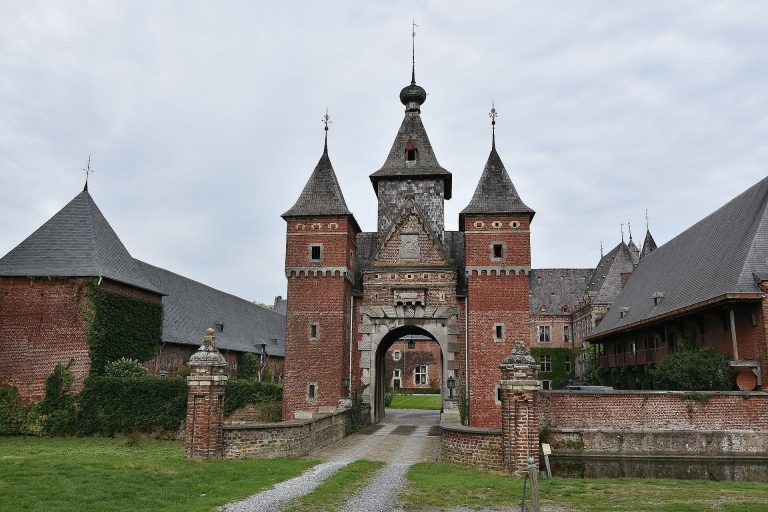
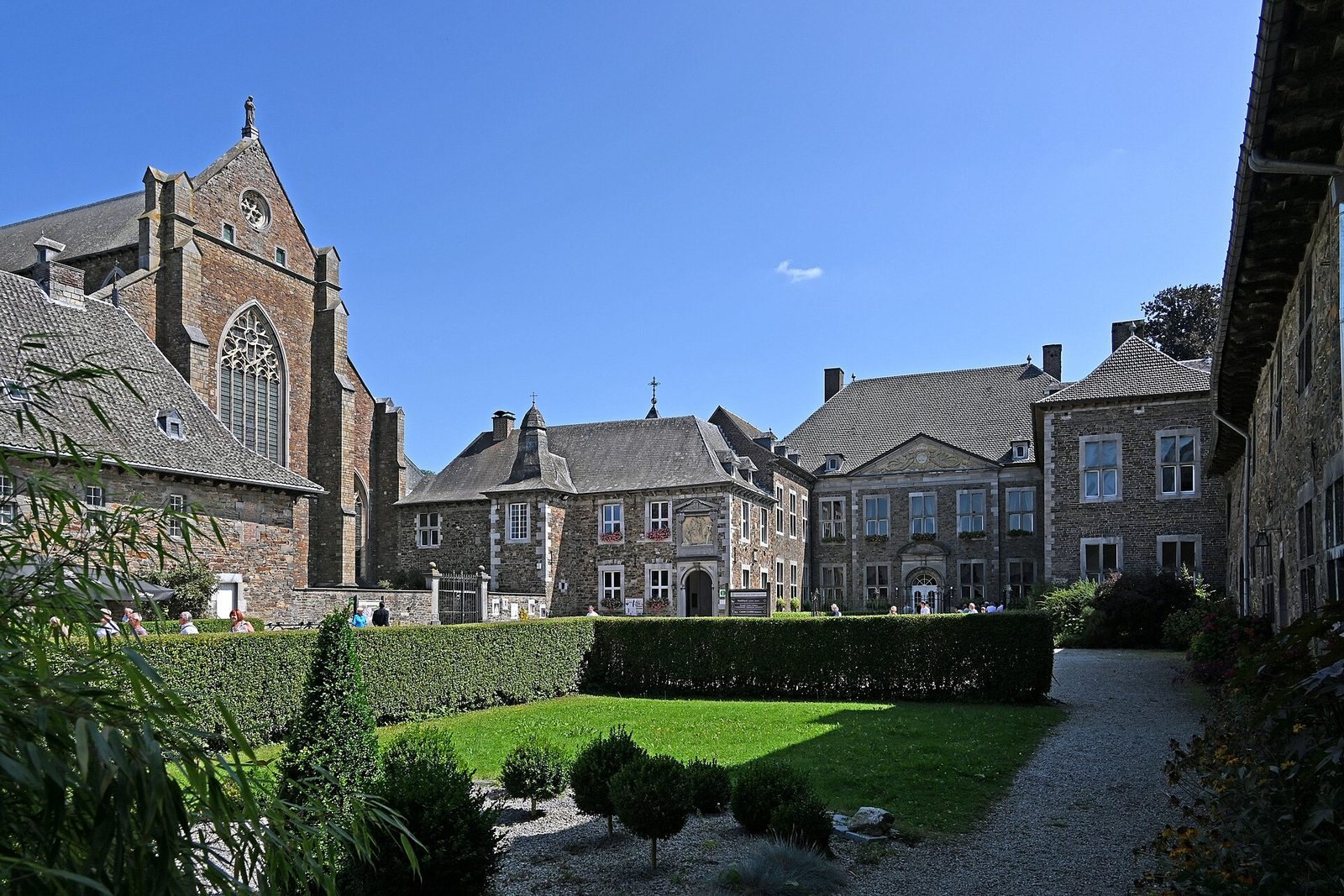
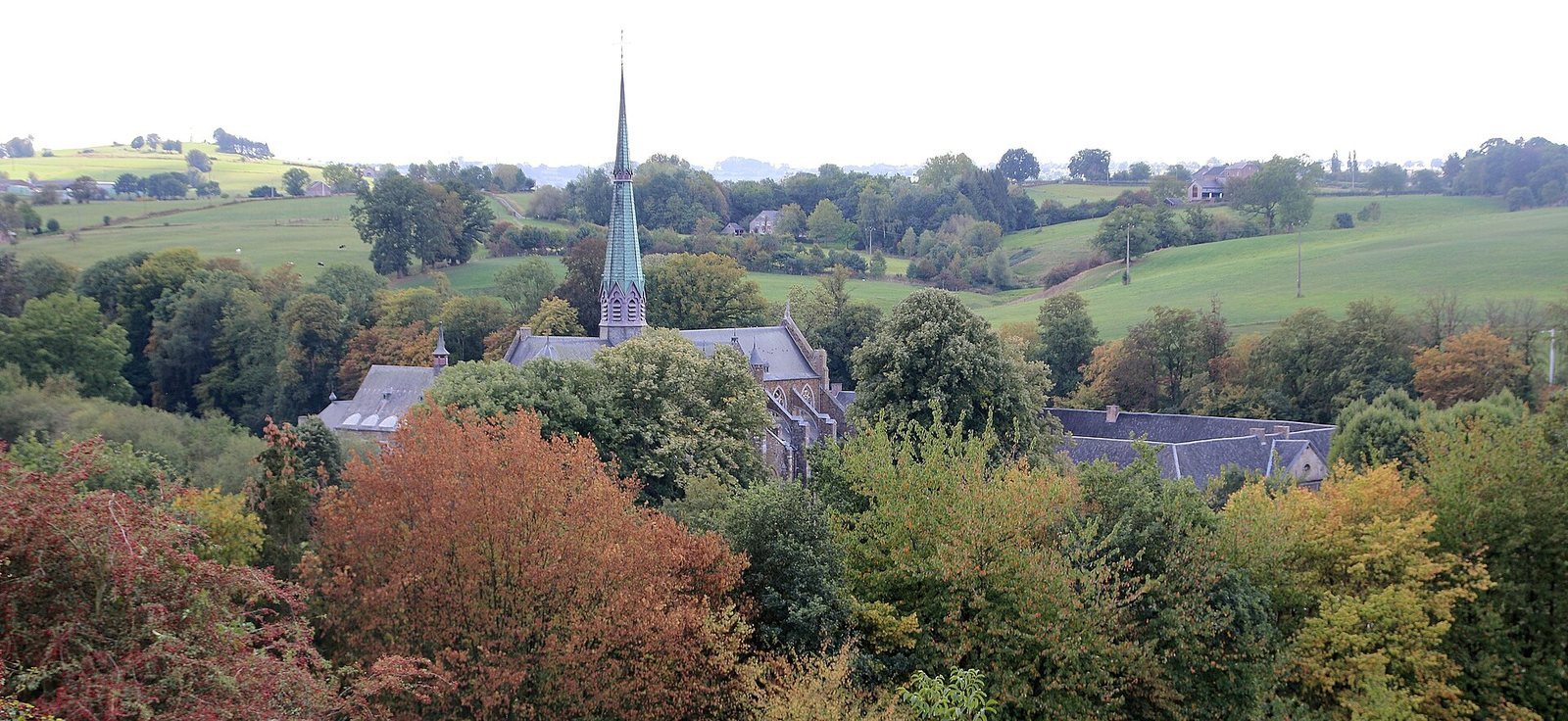
The surviving complex is arranged around a courtyard reached through a U-shaped gatehouse. The abbot’s palace and guest quarters open onto the court, while monastery wings and service buildings, including a watermill, form other parts of the complex. Much of the 17th- and 18th-century fabric remains. Several buildings use sandstone rubble masonry in the Mosan style. The abbey stands in the Berwinne valley in the Pays de Herve, near the former boundary between the county of Dalhem and the duchy of Limburg.
Church
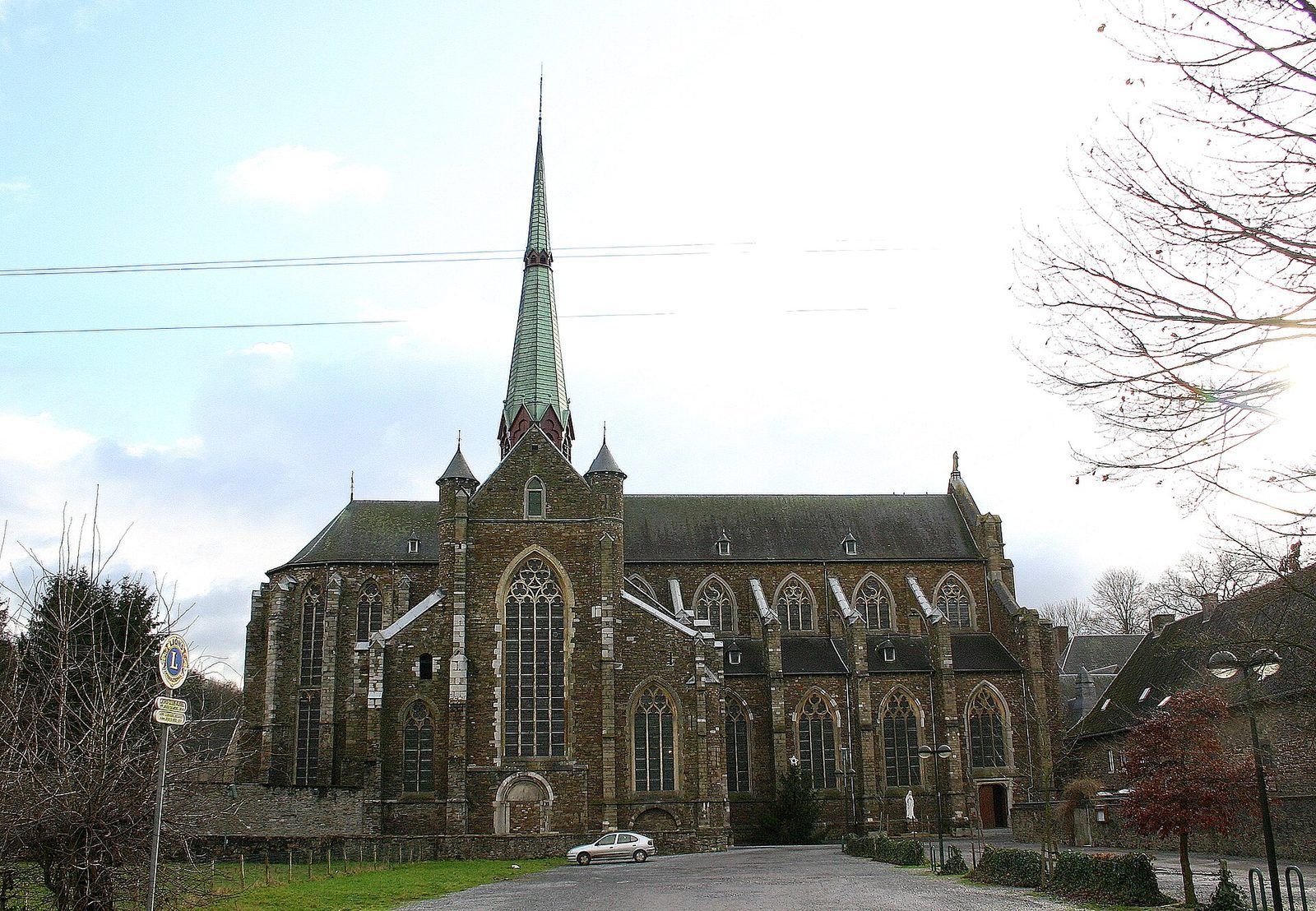
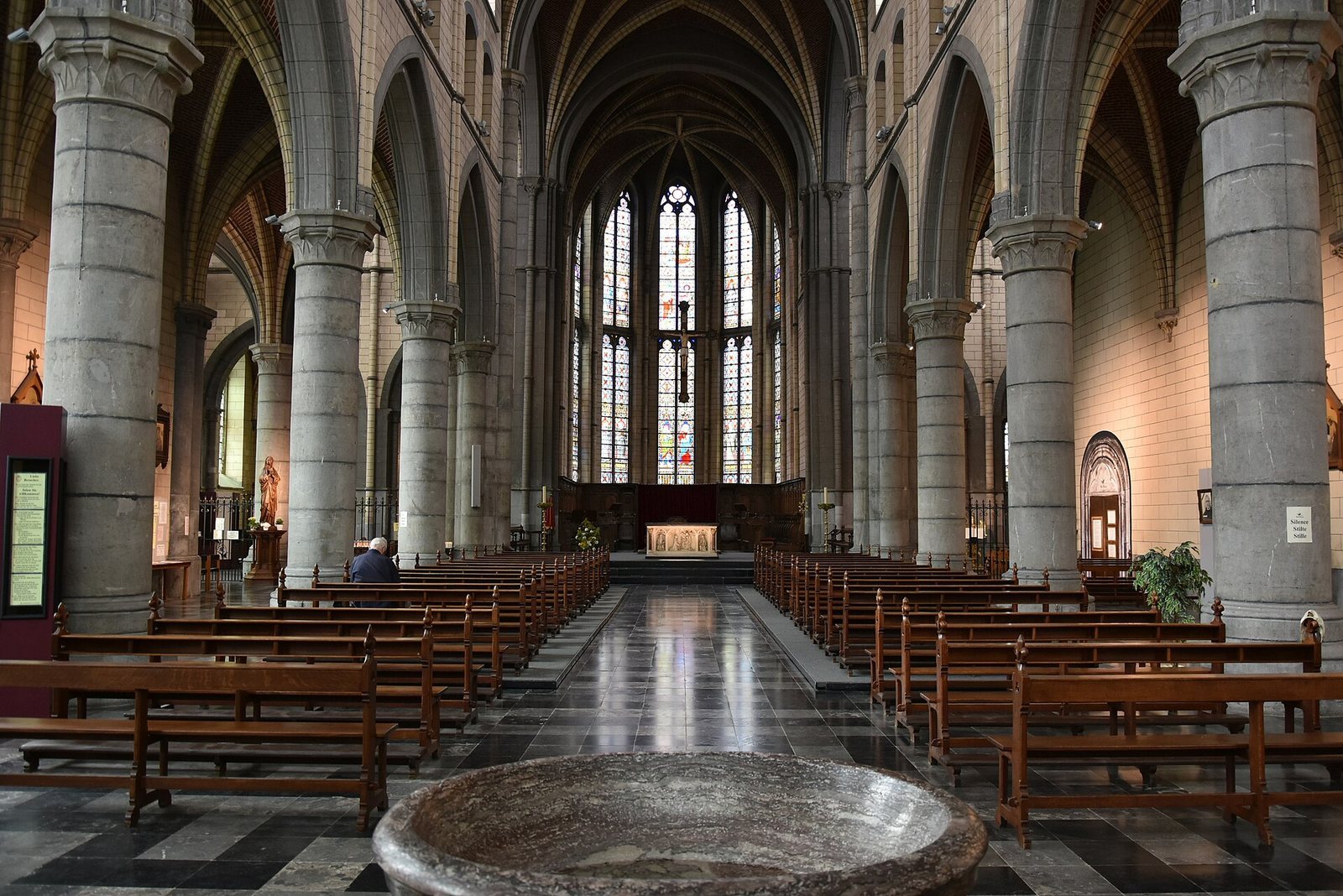
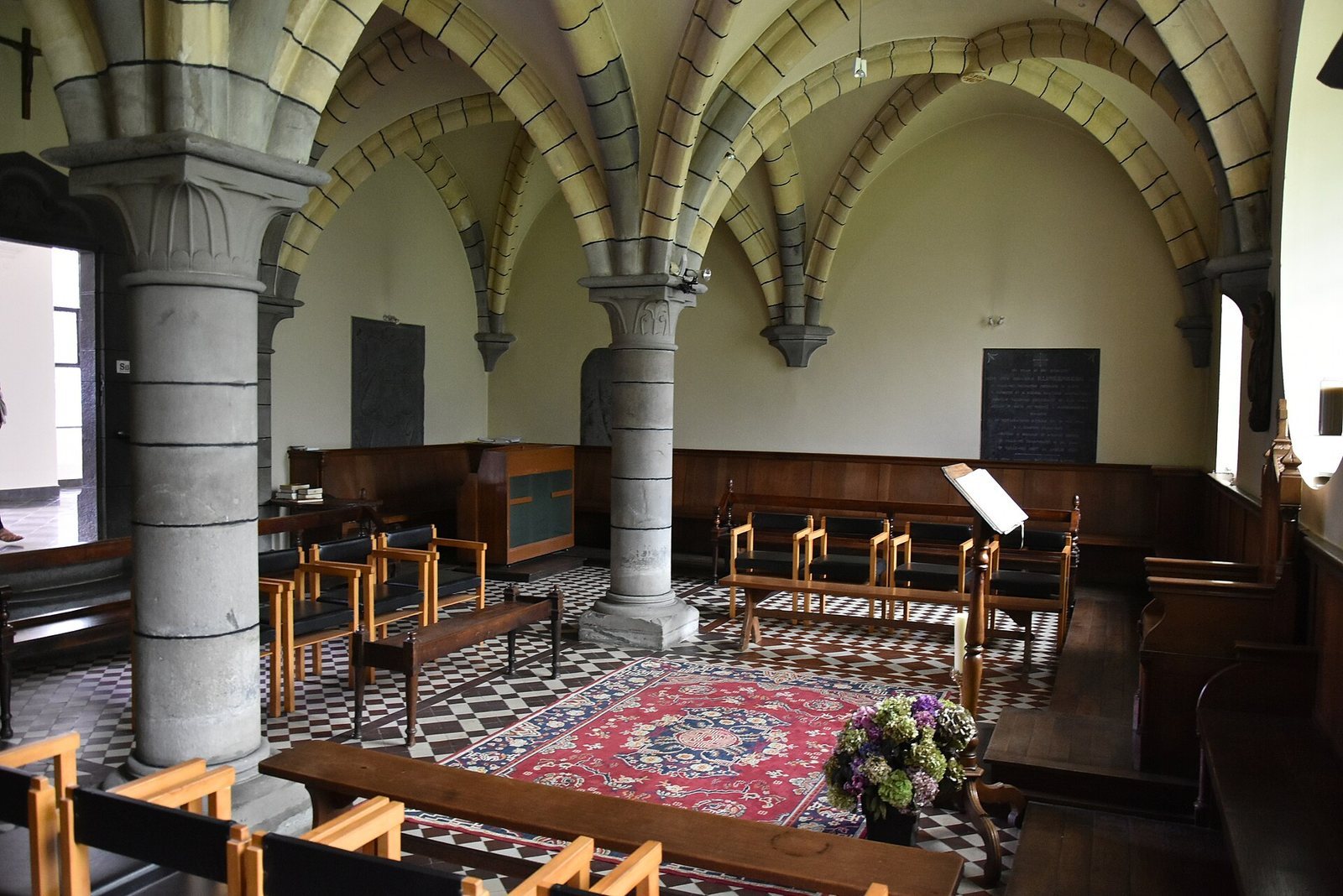
The church was partly demolished in 1839 and rebuilt in 1870, so most of its present fabric dates from the late 19th century. Architect Émile Deshayes designed the crossing tower, added in 1934, and the monastery is attached to a side aisle. Elements from the 13th-century church survive, including the sacristy, two chapels, a doorway in the transept, and a hard-stone portal surround on the north side of the choir. Inside is a red-marble holy-water font from the original church.
Park
An approximately seven-hectare landscape park lies behind the abbey and contains several distinct habitats. Part of the park dates to the 18th century.
Heritage collection
The abbey’s heritage collection was transferred in 2001 to the treasury of Liège Cathedral and is being restored by the David-Constant Fund of the King Baudouin Foundation. It includes illuminated medieval manuscripts and about 80,000 engravings, roughly 12,000 of them made before 1800. Much of the print collection was assembled by the monk Servais Duriau (1701–1775), who gathered works from the Low Countries, Germany, France, and Italy. He arranged prints in 32 albums and added commentary; 19 albums survive, forming an illustrated compendium of religion, history, geography, and the arts. Abbot Nicolas Henrotte (1811–1897) continued the work in the 19th century. The collection also includes a 17th-century painting of the abbey’s foundation by Henry III.