Lousonna: A Roman Settlement on Lake Geneva
Site at a Glance
- Popularity
- Medium
- Country
- Switzerland
- Primary era
- Classical
- Eras represented
- Classical
- Civilizations
- Roman
- Site type
- Settlement
- Remains
- Town
On this page15 sections
History
Roman foundation and growth
Lousonna was a Roman settlement beside Lake Geneva in what is now Lausanne, Switzerland. Established around 15 BC on an existing Celtic settlement, it represents an early stage in the history and name of Lausanne. The Romans also built a military camp there.
Lousonna stood at the meeting point of important routes, including the road across the Great St Bernard Pass between Italy and Gaul. It lay within the territory of Aventicum, a Roman colony at present-day Avenches. At its greatest extent, the settlement covered about 20 hectares and had an estimated population of 1,500 to 2,000.
The lakeside location supported trade by water and land. The boatmen’s association transported Mediterranean amphorae, or large storage jars, between Genava, the Roman name for Geneva, and Lousonna. Goods unloaded at Lousonna continued by road towards Yverdon-les-Bains and the Rhine basin, while lake traffic connected the settlement with other communities around the shore.
Decline and relocation
From the late third century, insecurity following Germanic raids into Gaul contributed to Lousonna’s decline. A settlement developed on a more defensible hill farther up the Flon valley. By the mid-fourth century, Lousonna had been abandoned in favour of this hill, later associated with medieval Lausanne.
Rediscovery and archaeological work
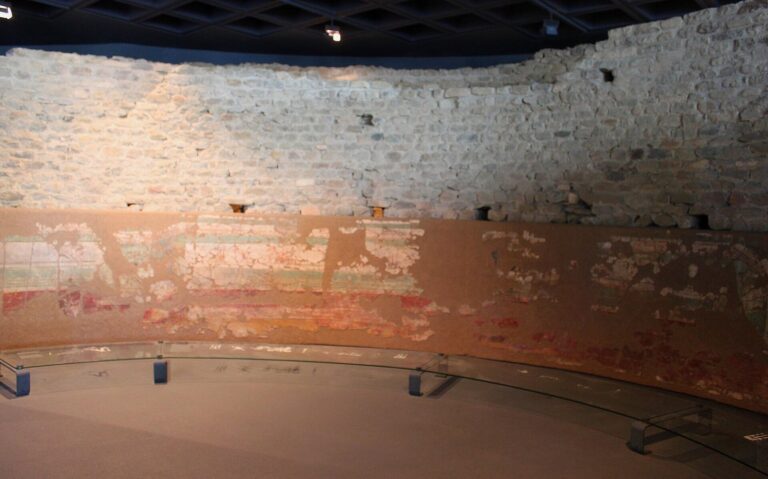
Finds from Lousonna had been known since the early fifteenth century, but written references to its name date from the eighteenth century. Urban growth in the early nineteenth century prompted the first scientific surveys, and systematic excavation began in the 1930s. Architect and archaeologist Frédéric Gilliard led work that uncovered particularly well-preserved house foundations. A museum built above a fresco-decorated house in 1936 was replaced by the present museum building in 1993.
Investigations accompanied construction of the A1 motorway in the 1960s and the 1964 Swiss National Exhibition. Excavations between 1972 and 1976 uncovered the forum, a civic and commercial public centre. Work on the east bank of the Flon in 1998–2001 revealed a theatre and residential area. Preventive investigations in 2012 found graves probably belonging to a burial ground, and a University of Lausanne teaching excavation uncovered a house at the western end of the site in 2013–14. It may have served as an inn and stood at the settlement’s entrance for people arriving from Nyon. Excavation of a major burial ground west of the forum began in June 2024, with several thousand graves anticipated.
Lousonna is protected as a Swiss cultural property of national importance.
Remains
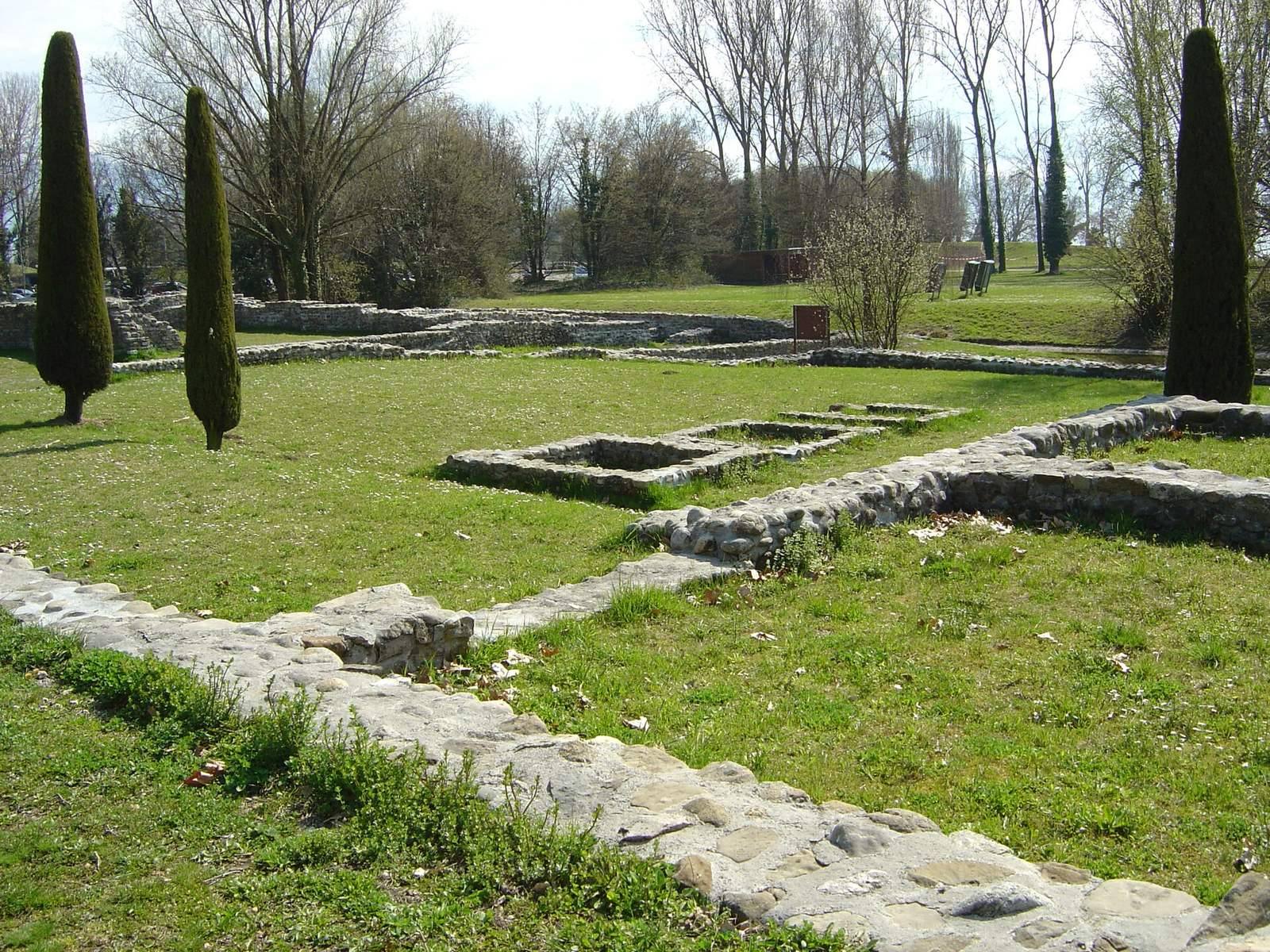
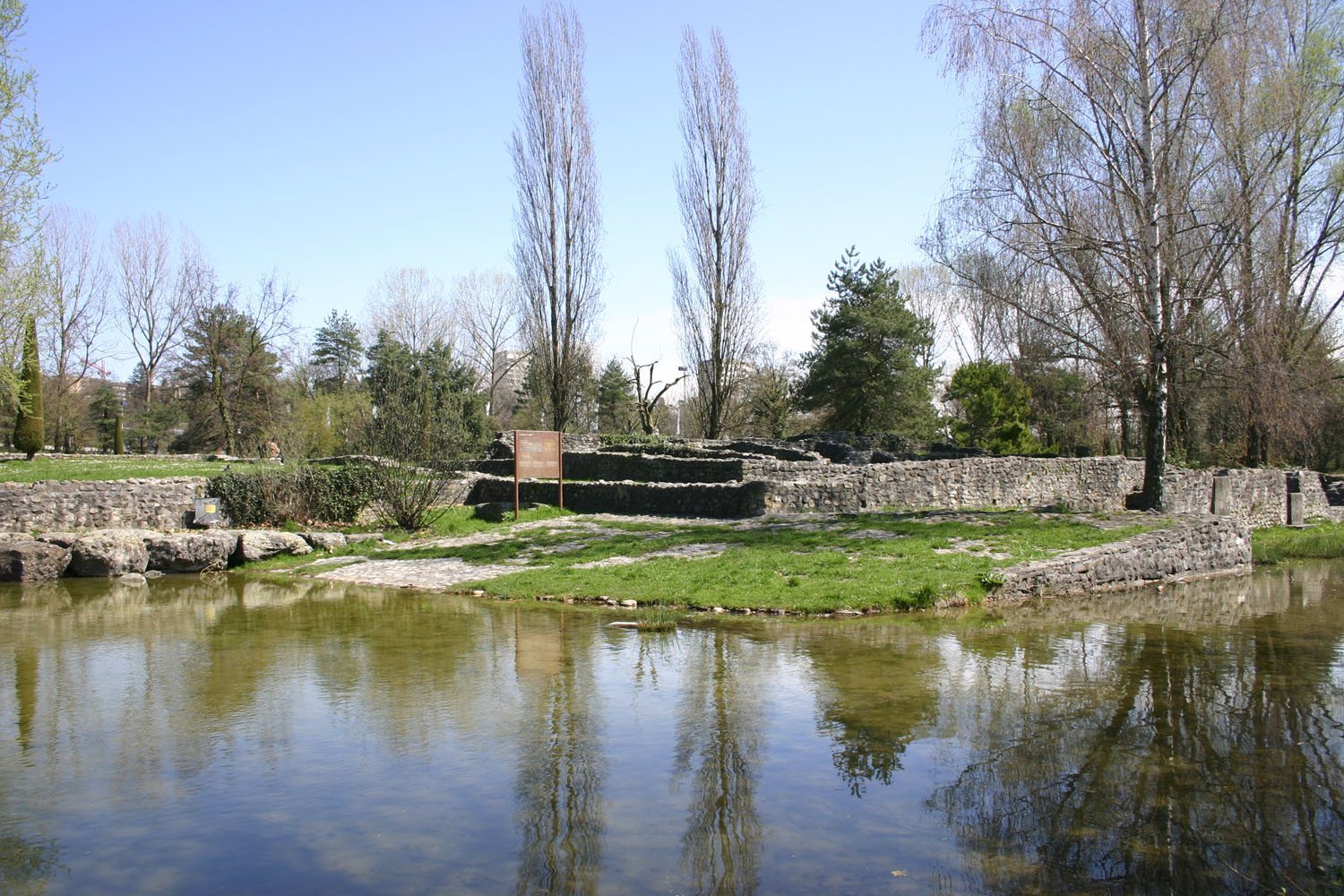
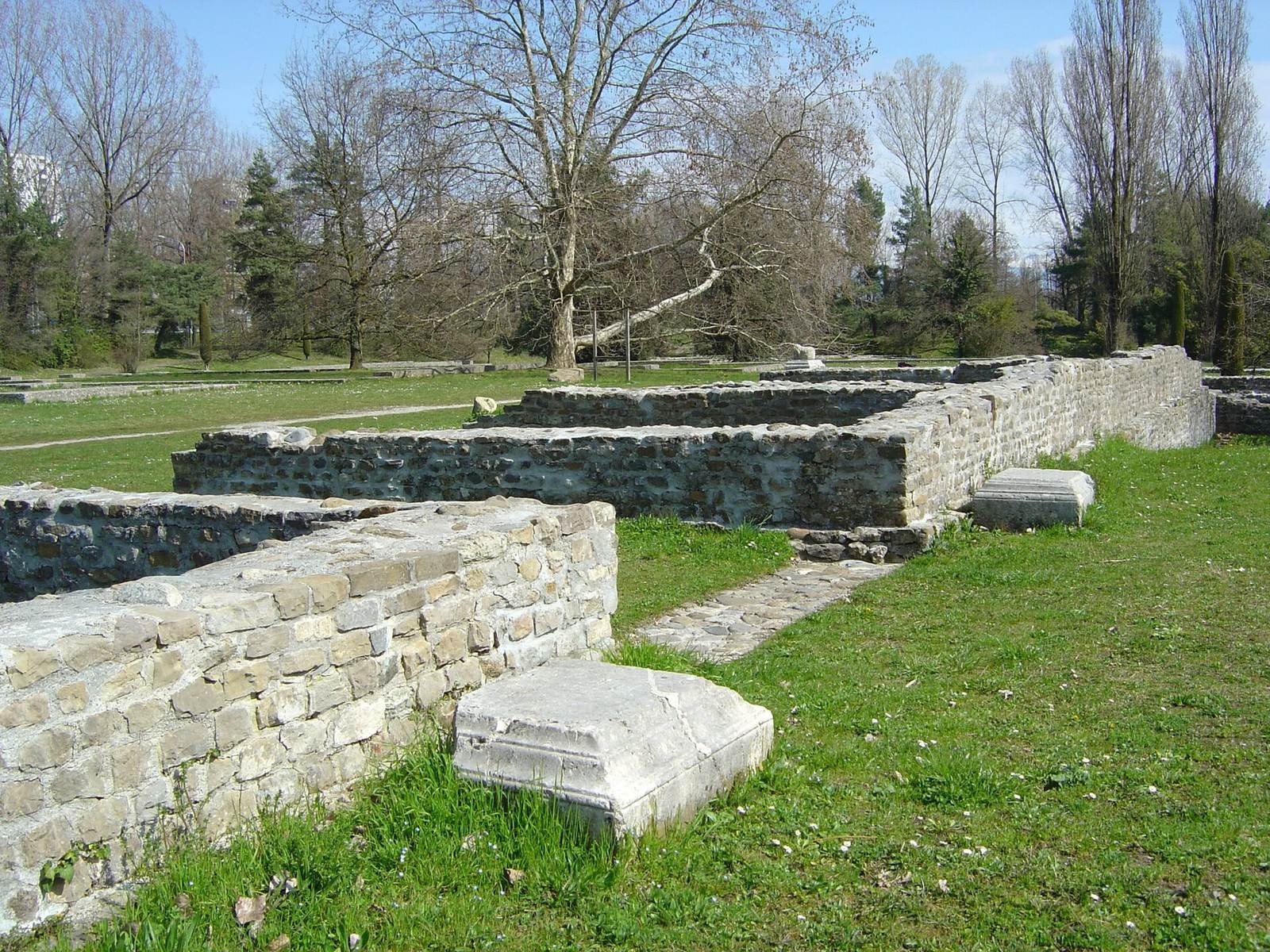
The settlement occupied a flat strip between the Flon and Chamberonne deltas, extending about 1.2 km along the ancient shore and reaching roughly 250 m in width. It now lies in Lausanne’s Vidy district, about 200 m north of the present lake shore; the ancient shoreline was farther inland. Remains extend into a public lakeside park, while much of the settlement lies beneath the A1 motorway. A pond beside the cleared area evokes the former shore. A channel carried water from the Flon to houses.
Forum and civic buildings
Forum and basilica
The forum occupied somewhat higher ground east of the settlement, at a stated elevation of 100 to 150 m. Its basilica, a large civic hall rather than a Christian church, bordered the southern side beside the lake. It was Lousonna’s most important building and probably served mainly as a council meeting hall, as well as a tribunal and place of exchange.
Shops and boatmen’s meeting hall
Shops stood beside the basilica. One was converted into a schola, a meeting place for a professional association, in this case the boatmen’s corporation. Its ruins and a stone dedication measuring 185 by 55 cm were uncovered. The inscription, numinibus Aug(ustorum) nautae
, connects the meeting place with Lousonna’s boatmen.
Temple
A square temple was built in the middle of the forum in the mid-third century. Fragments of a nearby frieze suggest that the temple was dedicated to the worship of Rome and the emperor, part of the Roman imperial cult, which involved religious veneration of the emperor and imperial household.
Other excavated buildings
Buildings excavated in the 1930s have uncertain dates and purposes. Some may have served administrative functions, while the block north of the forum may instead have contained houses.
Harbour and transport features
The harbour stood beside the basilica and served as the main transfer point for goods moving through Lousonna. Boatmen’s warehouses and commercial premises occupied the nearby area. Vessels could land at a shore reinforced with rock or be hauled up a sloping, paved ramp that remains visible. Cargoes included olives, Rhône valley wine and preserved fish.
Theatre and housing
Theatre
The theatre was uncovered on the east bank of the Flon. It formed part of the settlement’s built area, which extended across both sides of the watercourse.
Residential buildings
Domestic buildings extended between the Flon and Chamberonne deltas, and several large country houses stood around the settlement. One excavated house had fresco decoration. The house at the western end, uncovered in 2013–14, may have been an inn.
The West House yielded a Roman votive hatchet in 1984. It belongs to the Allmendingen type, an archaeological classification for a form of Roman ritual hatchet. Its partly erased Latin inscription was punched into the object and later re-examined by the University of Lausanne’s School of Criminal Sciences. The reading probably refers to an indigenous deity influenced by Egyptian religion, identified as Isis Leusonna. Isis was an Egyptian goddess whose worship spread beyond Egypt.
Inscriptions and religious evidence
More than a dozen inscriptions from Lousonna provide evidence about its people and institutions. Dedications name the Roman deities Ceres, Neptune, Apollo, Mercury, Hercules and Luna, as well as the Suleviae, goddesses worshipped in both Roman and Gallic religious traditions. The lake itself was also known as Lacus Lemannus and Lacus Losonne. A medieval copy of a Roman road map, the Peutinger map, labels it Lacum Losonne.