Château de Vennes: A Baroque Residence in Lausanne
Site at a Glance
- Rating
- 5
- Popularity
- Very Low
- Country
- Switzerland
- Primary era
- Early Modern
- External website
- Open
- Eras represented
- Early Modern
- Civilizations
- Swiss
- Site type
- Domestic
- Remains
- Castle
On this page7 sections
History
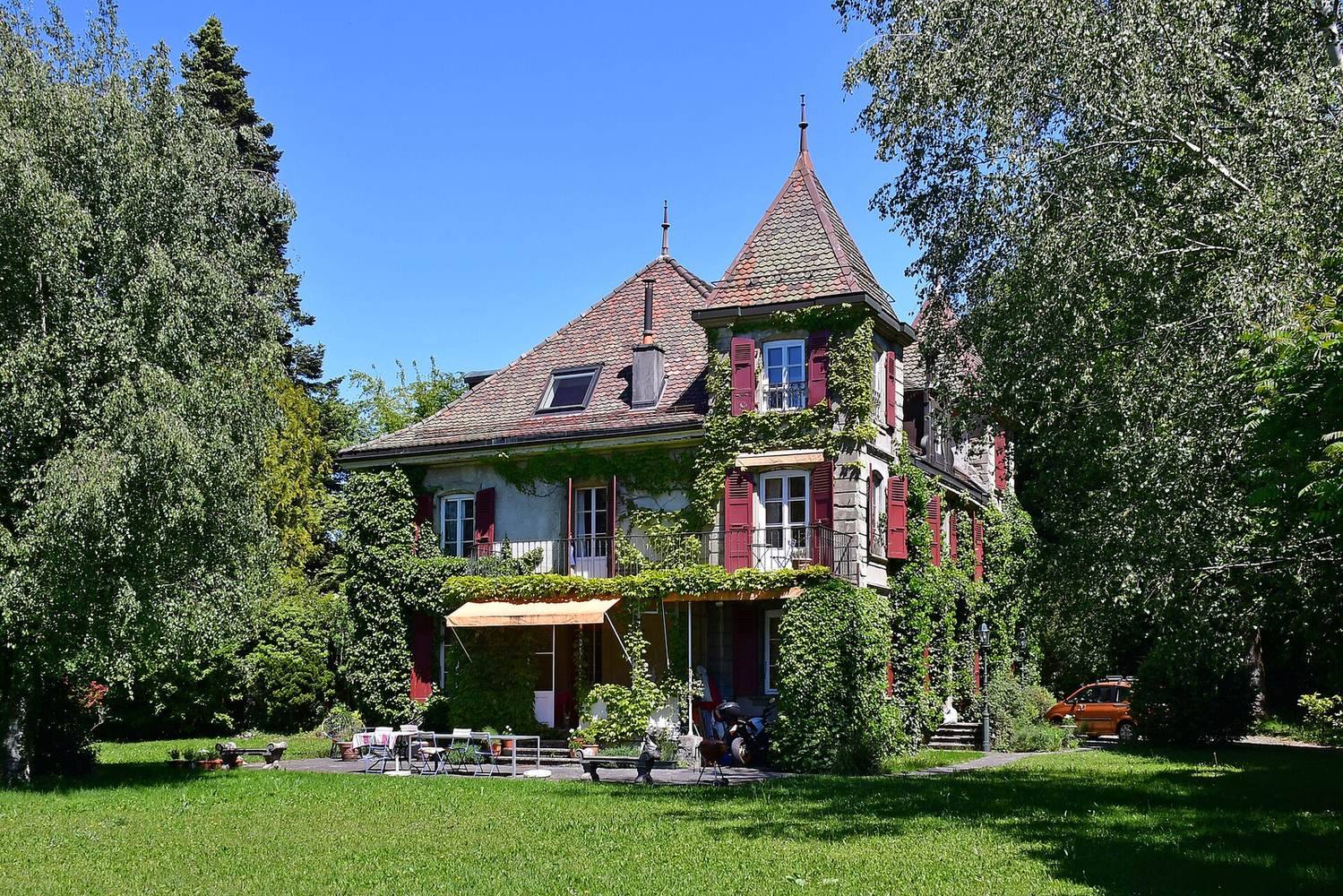
The Château de Vennes is an eighteenth-century Baroque residence on the northern outskirts of Lausanne, Switzerland. Baroque is an early modern European style known for richly composed, often monumental forms. The estate stood near the Moudon road, also called the Bern road, in an area once dotted with country houses.
The estate and its construction
In 1674, Sébastien de Loys obtained seigneurial rights over land acquired by his predecessors. These were jurisdictional privileges attached to a lordship, distinct from ownership of the estate. In 1775, the Albert family, heirs of the de Loys, sold the modest lordship to Jean-Abraham Meyn. A Dutch-born diplomat and military officer, Meyn had settled in Lausanne and became a formal citizen of the city in 1774.
Meyn built the château in two campaigns, in 1779–1780 and 1784–1787, on the site of an older seigneurial house. A document from 1782 described that earlier dwelling as little more than a poor hut. The building phases probably produced both the main residence, already called the château in 1780, and the farmer’s house now known as La Grange.
Successive owners and changing uses, 1791–1903
In 1791, Meyn sold the château and its dependencies to Gédéon Bauty but temporarily kept the seigneurial rights. He moved to the more modest house at Dessous-les-Roches and transferred those rights to the City of Lausanne in 1795. Bauty sold the estate in 1811 to the bankers Févot and Bugnion, who passed it on in 1816 to Henri Jacques Lavers, an Englishman of independent means. After Lavers died on 14 March 1819, his widow, Eliza, sold the property in February 1820 to Henry de Ruvynes, a Lausanne citizen and infantry captain serving the king of England.
The Irish nobleman known as the Marquess of Headfort bought the château in 1828. He had settled in Lausanne in 1824 and apparently rented the house before purchasing it. After his death in December 1829, his heir, Marianne Massy, née Rosslevine, sold the estate in November 1831 to Auguste Dardel. Dardel did not live there permanently. The relatively low sale price may have reflected a view that the property was inconveniently far from Lausanne; in 1838, local property assessors also judged buildings of this kind to have little value in the area.
In 1838, Dardel sold the property to Captain Benjamin Turtaz, who lived there until 1845, when he returned to Lausanne. Turtaz died in 1850, and his heirs sold the estate the following year to farmer Jean-Abraham Henny, previously a tenant at Valency. Henny farmed the land and rented out the château. Professor Antoine Cherbulliez lived there until 1853. He had left his Geneva chair in public law and political economy following the 1846 revolution, and later taught political economy at the Zurich Polytechnic.
In 1856, Jacob Blumer opened an institute for young people with intellectual disabilities in the château and ran it until 1869. The building was then let for shorter stays. Henny had died in 1858; his son David Henny-Duport continued farming the estate before selling it in 1885. The new owner, industrialist Charles Ortlieb, moved to Rue de Bourg in Lausanne in 1888. From 1890 the château was rented as a girls’ boarding house, first run by Alice Châtelain and later by Juliette and Aloïse Vuillémoz. Banker Alfred Galland-Renevier, who served as British consul in Lausanne, lived there from 1900.
Institutions and preservation, 1903 onward
In October 1903, Austrian hotel director Jean Schmidt-Mayor bought the property as a secondary residence. He built a large rental apartment building on part of the parcel and later sold it. From 1906 until the First World War, a girls’ boarding school occupied the château. It then served briefly as a psychiatric clinic before becoming the Valcreuse Institute. The war left the Lausanne-Palace, which Schmidt-Mayor had built on the site of the Beau-Site, without most of its foreign clientele. Financially ruined, he returned to Austria in 1917.
The Vaud Cantonal Bank subsequently owned the château and rented it to Harold Trowbridge-Burrows. Geza de Petenyi bought it in 1920 and lived there for three years. From 1923, Professor René Chesaux, director of a boarding school for children from wealthy families, mostly of Anglo-Saxon origin, rented the building. Its sale in 1930 to Gallati of Glarus did not immediately alter that use. In 1934, Karl Schmidt-Rossi established a boys’ institute there; it moved to Lutry in 1947.
The Société coopérative du château de Vennes acquired the property in 1947. The château was then badly dilapidated, and demolition was considered. Ernest Roetlisberger bought it intending to establish a tannery, but sold it to Jeanne Michoud in 1949 after the authorities opposed the project. Michoud carried out urgent repairs and lived there for twelve years. Marcelle Junod acquired the château in 1960 and opened a boarding house for young men and women. Owners living there since 2000 have gradually restored it according to professional conservation standards. The buildings are rated 2 in the architectural survey and listed as cultural property of regional importance.
Remains
The estate’s buildings include a large Baroque residence and a separate farmer’s house. The grounds extend down an eastern slope, from which an avenue once approached the château.
Main residence and farm building
The main façade has two projecting bays that evoke side towers. Its archaizing composition belongs to a form then widespread in Lausanne. Related local examples include the Château de Vidy, dating to around 1774, and the Château de Béthusy, built in 1774–1775. The separate farmer’s house is now known as La Grange.
Eastern approach and slope
A tree-lined avenue formerly led to the château from the east. The estate’s lower eastern slope was later used for widening the cantonal road and, especially, for building private villas.