Tombos: An Egyptian-Nubian Center of Colonial Rule in Sudan
Site at a Glance
- Popularity
- Medium
- Country
- Sudan
- Primary era
- Bronze Age
- Eras represented
- Bronze Age, Iron Age
- Civilizations
- Egyptian, Kushite
- Site type
- Burial
- Remains
- Necropolis
On this page18 sections
History
Tombos is an archaeological site on the Nile near the Third Cataract in Sudan, occupied from the middle of Egypt’s 18th Dynasty through the Kushite 25th Dynasty. In the New Kingdom, the period of Egyptian history that includes the 18th Dynasty, it became an important center of Egyptian colonial control. Royal inscriptions, elite tombs, and other burials show that Egyptian and Nubian traditions were closely interwoven there.
Egyptian rule in the New Kingdom
A rock inscription at Tombos refers to the second year of Thutmose I’s reign. It presents his victory over Kush in the form of a poetic royal hymn, rather than a straightforward account of events, and also emphasizes his coronation as ruler of Upper and Lower Egypt. The hymn describes conquered peoples and claims the southern frontier at Kush and the northern limit near the Euphrates. Thutmose I’s military expeditions reached as far south as the Fourth Cataract.
Thutmose I is credited with establishing a fortress at Tombos and keeping a permanent garrison there. The fortification excavated at the site has not been securely identified as that fortress. Other inscriptions date to the reigns of Thutmose III, Amenhotep I, and Amenhotep III. One records that, in the twentieth year of Thutmose III, a viceroy brought goods and tribute from the south to the pharaoh and received a favorable response. The damaged name is read either as Inebny or Amenemnekhu; these may be alternative names for one official, but that identification is uncertain.
Merymose served as viceroy under Amenhotep III for most of the pharaoh’s 38-year reign. A viceroy was a senior official who governed territory on behalf of a ruler. Merymose’s titles included king’s son of Kush, overseer of the southern foreign lands, and fan-bearer on the right of the king.
Cemetery and community
The cemetery held both elite burials and graves for people of more modest means. Its two principal Egyptian tomb types began to be built and used around the reign of Thutmose III. Their initial use probably ended in the late Ramesside period, although later burials and reuse continued. The cemetery’s long sequence reflects the changing Egyptian and Nubian communities at Tombos.
Burials associated with Siamun, Tiy, and Horemhet reflect Egyptian funerary customs, including the use of stamped clay funerary cones, a practice associated especially with Thebes. Siamun’s title, Scribe and Reckoner of the Gold of Kush, identifies him as a senior official, described as subordinate only to the viceroy and the military commander of the Nubian colony. A woman named Weren is associated with his tomb.
Evidence from human remains suggests that Egyptian colonial policy shifted from military dominance toward cooperation with Nubian elites. Tombos burials show fewer cranial injuries and defensive fractures than earlier periods and than Kerma, consistent with comparatively lower interpersonal violence during the New Kingdom. Cranial classifications divided the sample roughly evenly between Egyptian and Nubian categories, while analysis of people buried in mud-brick pyramids found many low-level workers. These findings challenge the assumption that monumental tombs were used only by elites or the very wealthy.
Skeletal evidence also indicates nutritional and disease stress, more pronounced among children. Eye-socket lesions associated with anemia were more common in children, and all affected children had active lesions. Adults had lower rates, and most of their lesions had healed or remodeled. Access to Egyptian resources and trade may have improved nutrition, including access to cattle and other livestock, while increased contact with outsiders may have brought greater exposure to infectious diseases such as treponematosis, a bacterial disease, and tuberculosis. Shorter femurs among Tombos males than among males from Kerma also point to stress during childhood.
Later burials and Napatan use
Nubian mound burials began at Tombos in the late New Kingdom and continued into the Napatan period, the Kushite era associated with Napata. The cemetery therefore remained in use into the time of the 25th Dynasty, a Kushite dynasty that ruled Egypt.
A horse was buried in a shaft originally made for a New Kingdom pyramid tomb. Radiocarbon analysis places the burial in the early Third Intermediate Period, the politically divided era after the New Kingdom and before reunification under the 25th Dynasty. Horse burials were rare in the New Kingdom, while respect for horses and other equids was characteristic of the Napatan period. The burial has therefore been interpreted as evidence of the emergence of Napatan ideology.
Archaeological investigation
A. J. Arkell made a brief visit in 1946, noting a New Kingdom cemetery and two sherds of Mycenaean pottery, from the Bronze Age civilization centered in mainland Greece. A University of Khartoum test excavation in 1991 also identified a New Kingdom cemetery. University of California, Santa Barbara excavations from 2000 to 2005 revealed its complexity and its continued use into the Napatan period. A joint expedition by that university and Purdue University worked from 2010 to 2020, finding further graves from the New Kingdom, Third Intermediate, and Napatan periods. The British Museum also surveyed Egyptian inscriptions as part of a wider investigation in northern Sudan. Investigations in 2013 revealed ancient settlement remains beneath the modern village, and work from 2015 to 2020 defined a large fortification at its southern edge.
Remains
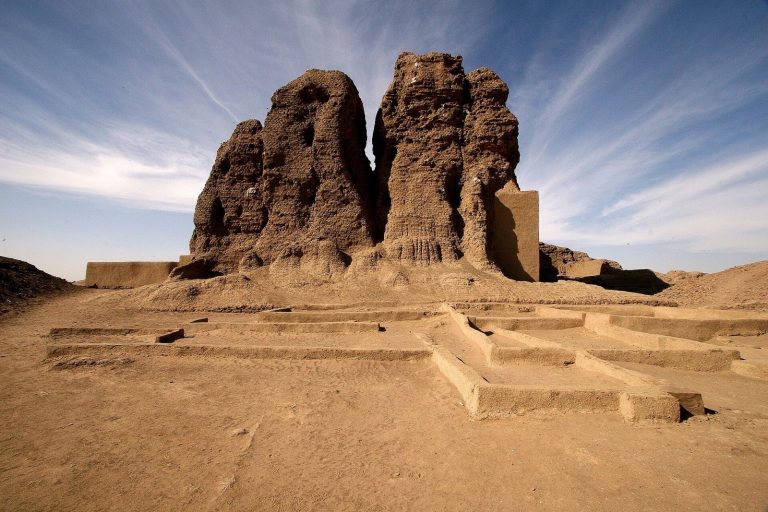
The remains extend across Tombos Island and nearby stretches of riverbank. They include a granite quarry, inscribed boulders, a cemetery with pyramid monuments and underground graves, and settlement structures built in masonry and mud brick. Much of the site is now in ruins.
Island and riverbank
Granite quarry
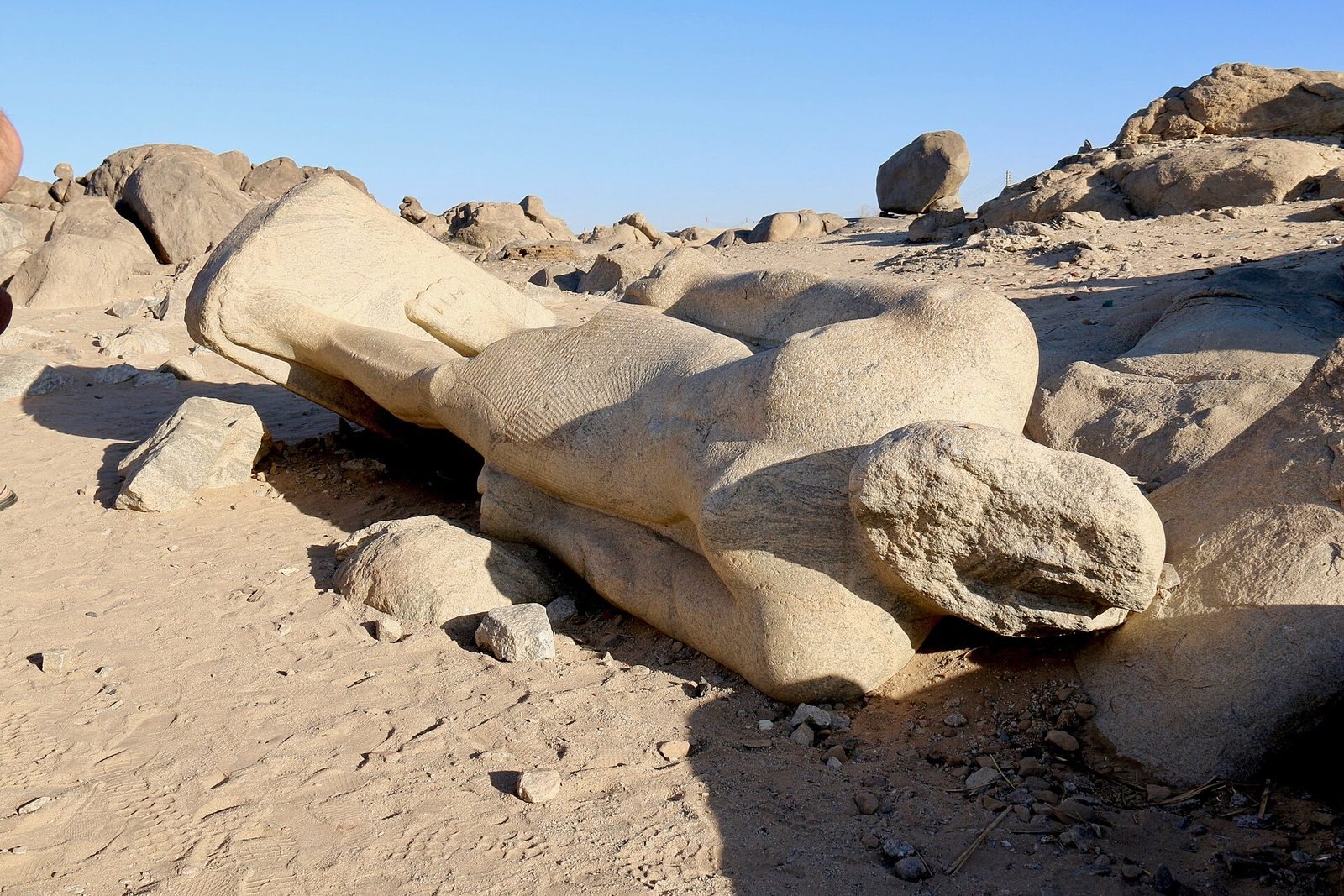
Tombos was an important source of Nubian granite, including black granite used for statues and buildings from the Nile Delta to the kingdom’s southern regions. An unfinished statue of Taharqa, a Kushite king of the 25th Dynasty, lies on its side in the quarry. It has remained there since it was made more than 2,700 years ago. The statue was damaged and unusable, possibly because of a production mistake or a flaw in the stone.
Rock inscriptions and stelae
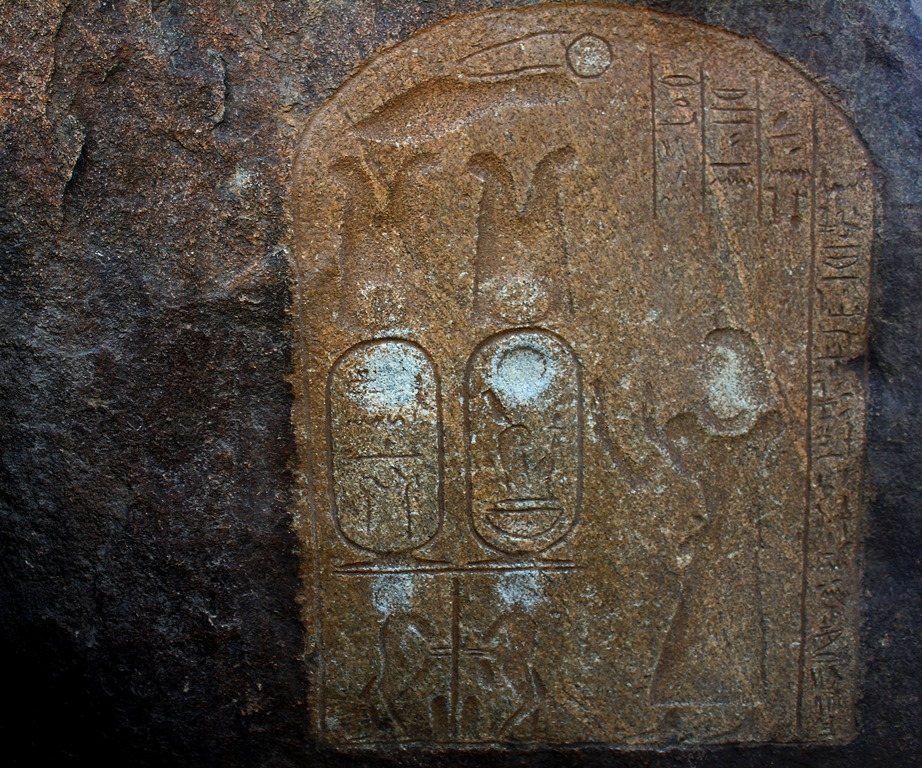
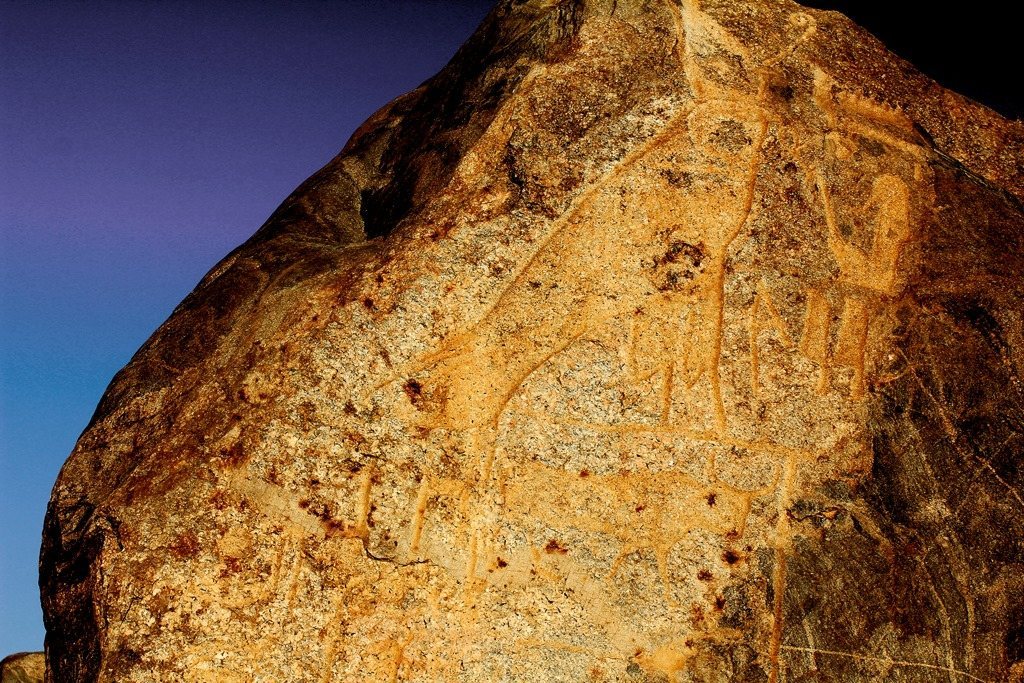
Egyptian inscriptions are carved on the island and along the riverbank. Thutmose I’s victory inscription stands on the east bank, opposite the island. A nearby low granite-gneiss boulder bears an inscription on its north side for the viceroy whose damaged name is read as Inebny or Amenemnekhu. Merymose’s brief inscription is deeply carved on the north face of a low granite-gneiss boulder several metres from Thutmose I’s large stela. A separate stela of Merymose occupies the north side of a large boulder whose western face bears Thutmose I’s victory inscription. It depicts Merymose worshipping two royal-name cartouches, oval frames around the hieroglyphs, of Amenhotep III. Below them, two prisoners have their arms bound behind their backs. The scene may adapt the motif known as the union of the two lands.
Cemetery
Pyramid monuments
The principal Egyptian pyramid tombs stood in the cemetery’s southwestern area. Around 3,000 years ago, pyramids associated with ten Egyptian nobles occupied this part of the site. Siamun’s tomb includes a large pyramid and a T-shaped chapel built into it, aligned east to west. Radiocarbon dates from bone and pottery found with its enclosure place it between the reigns of Thutmose IV and Amenhotep III. A funerary cone, a clay cone stamped with the deceased’s name and title, bears Siamun’s name and title in a form associated especially with Thebes.
Tiy’s tomb
Tiy’s pyramid tomb had a simple stamped funerary cone bearing his hieroglyphic name, an adaptation of rather than a copy of the conventional Theban form. The grave contained a poorly preserved but finely made coffin inlaid with faience, a glazed, non-clay material. It also held a finely carved funerary figurine bearing Tiy’s name and title.
Horemhet’s tomb
Horemhet’s tomb is a complex arranged around a shaft, with chapels around it. No pyramid survives, but the funerary cones follow Theban practice in a simplified form.
Underground chamber and pit tombs
North of the pyramid monuments, underground chamber and pit tombs served multiple burials. They belonged to middle-class people, probably including lower-ranking officials and skilled workers. Finds include coffins, amulets, and statues connected with Egyptian funerary beliefs, as well as Nubian ivory bracelets and earrings. Most pottery is Egyptian in style, alongside some Nubian ceramics.
Most burials used the Egyptian extended body position. Four women in Egyptian middle-class tombs were instead placed in a Nubian flexed position, with the head facing east and the right side facing north. One wore three amulets of Bes, an Egyptian household deity, around her neck.
Nubian mound burials and the horse grave
Nubian mound graves include rare communal burials. Some people were placed in coffins and mummified, while others were buried in the Egyptian extended position; the burials rested on Nubian-style funerary beds. The horse burial occupied a reused pyramid-tomb shaft and was accompanied by a scarab showing Ptah, an Egyptian god associated with creation and craftsmanship, and an iron cheekpiece. The cheekpiece is among the earliest iron objects found in Nubia. The horse’s bones indicate use with a chariot saddle harness and regular, somewhat strenuous activity.
Settlement and fortification
Masonry building
Excavation at the southern edge of the modern village exposed the foundations of a masonry building. Impressions left by beams and roofing, fragments suggesting a finished floor above the ceiling, and a sandstone column base point to a structure with either high openings in its upper walls or a roofed colonnade. Its purpose remains uncertain; it may have been an elite residence or an administrative or religious building. Most associated pottery dates to the late 18th Dynasty, with use continuing into the Third Intermediate Period and the 25th Dynasty. Mat-impressed cooking pottery reflects Nubian influence.
Mud-brick ditch
A large fortification at the village’s southern end extends into a palm grove. Its ditch was cut into floodplain sediment and lined with mud-brick walls. The cut measured about four metres across, narrowing to roughly three metres between the walls, and its floor and sides were roughly plastered. At its eastern end it turned at a right angle, then ran west for 215 metres from the masonry building’s northeastern corner to the riverbank.