Stari Grad Veliki Kalnik: A Medieval Mountain Fortress in Croatia
Site at a Glance
- Popularity
- Medium
- Country
- Croatia
- Primary era
- Medieval
- Eras represented
- Medieval, Early Modern
- Civilizations
- Habsburg, Habsburg Austria, Hungarian, Kingdom of Croatia
- Site type
- Military
- Remains
- Castle
On this page9 sections
History
Stari Grad Veliki Kalnik is a mountain fortress above the village of Kalnik in Croatia. The complex developed from the 12th century onward, and the castle is dated to the 13th century. Rebuilding over time brought Romanesque, Gothic, Renaissance, and Baroque elements to the stronghold, which became known for resisting a Mongol siege.
Early occupation and the Mongol invasion
The area was inhabited in prehistoric and Roman times. A Roman lookout or small fortification may have stood on Vuklanec, below Vranilovac, to guard a Roman road. Croatian historian Ivan Kukuljević Sakcinski considered it highly likely that Romans built the upper part of the later castle and that it survived into the period of the medieval Croatian kings.
King Béla IV’s charter of 1243 provides the first recorded mention of the castle. It describes defenders, aided by local people, protecting the royal castle of Kemlek from Mongol forces invading the region. The stronghold was besieged but not captured, and Béla may have taken refuge there while fleeing the invasion. A plaque beside the castle commemorates the stand and credits it with stopping the Mongol advance.
Local tradition tells that people from the area fed plums to Béla and his retinue, earning the name “plum-eaters.” In the story, the Mongols withdrew and the king granted the inhabitants noble status. Separately, the castle’s warrior retainers received noble privileges, which later kings and bans, high-ranking regional governors, confirmed.
Medieval records used several forms of the castle’s name, including Kalnik, Kemnuk, Kemnek, and Kemluk; the 1243 charter calls it Kemlek. In 1264 its lord was described as the count of Kemnuk. King Stephen V granted the castle and estate to Roland, ban of Slavonia, in 1270. The Gardun clan later held it, and by 1291 it was a royal castle administered by the ban.
Changing owners in the 14th and 15th centuries
The castle became the property of Augustine, bishop of Zagreb, in the early 14th century, but had returned to royal ownership by the early 15th. Its castle warriors were recorded collectively in 1362. Between 1365 and 1369, King Louis I held Ivan Alexander, tsar of the Bulgarian Empire, captive at the castle.
Around this period, the noble settlement of Brezovica developed into the predecessor of present-day Kalnik. A medieval church dedicated to St. Bereck, also known as Brcko, was built there.
In 1409 Sigismund of Luxembourg gave the castle to his wife, Barbara of Cilli. From 1419 it passed through the hands of the Garai family and Siemowit IV of Masovia. The Zagreb bishopric held it from 1428, followed by Tvrtko II, king of Bosnia, from 1435. In 1438 King Albert II of Habsburg granted the castle and estate to the Serbian ruler Vuk Branković. The property later passed to the Cilli family through his daughter’s marriage.
After Ulrich II of Cilli was murdered and the family died out, Croatian ban John Vitovec became lord of the castle. Matthias Corvinus later granted it to his son, John Corvinus. The Alapi family held it from the late 15th century into the early 17th century. Other families associated with ownership included the Erdődy, Drašković, Keglević, Orehovečki, and Kosače.
Ottoman attacks and abandonment
Ottoman forces attacked the castle repeatedly during the Alapi family’s tenure but never captured it. After Ottoman forces were defeated at Obrež Kalnički in 1565 and withdrew, settlement increasingly moved to the foot of Mount Kalnik.
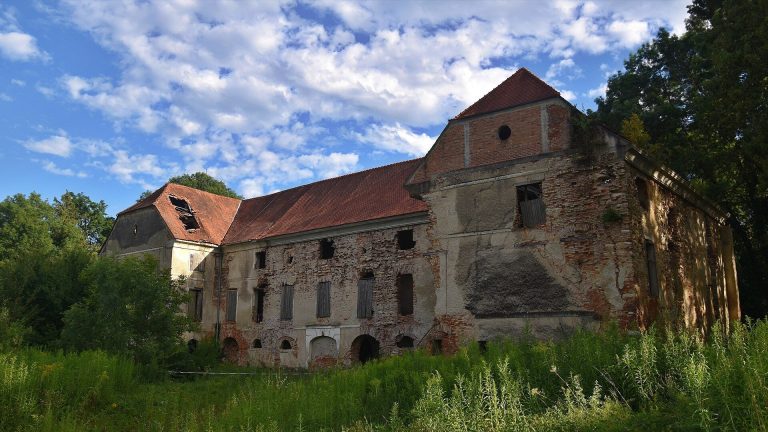
During the 17th century the castle and estate belonged to the Drašković and Orehóczy families, followed by the Keglevich, Patacsich, and Ozsegovich families. As the Ottoman threat receded, the castle lost importance. László Orehóczy built a manor below it during the 17th century. The castle was gradually abandoned and fell into ruin, while the estate was administered elsewhere.
Remains
Fortress complex
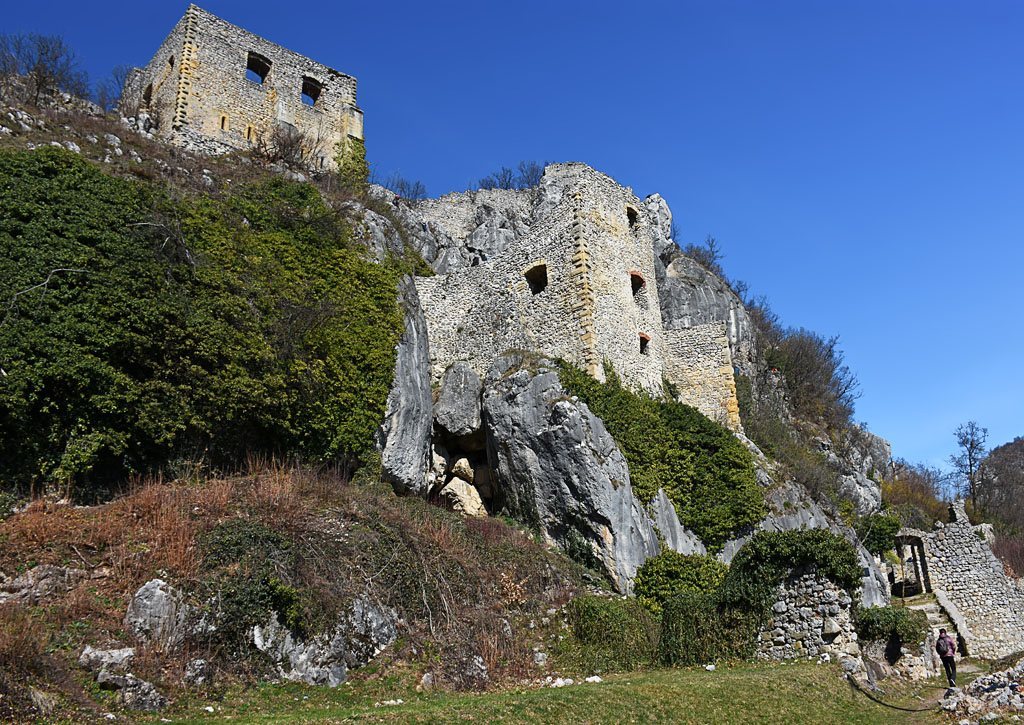
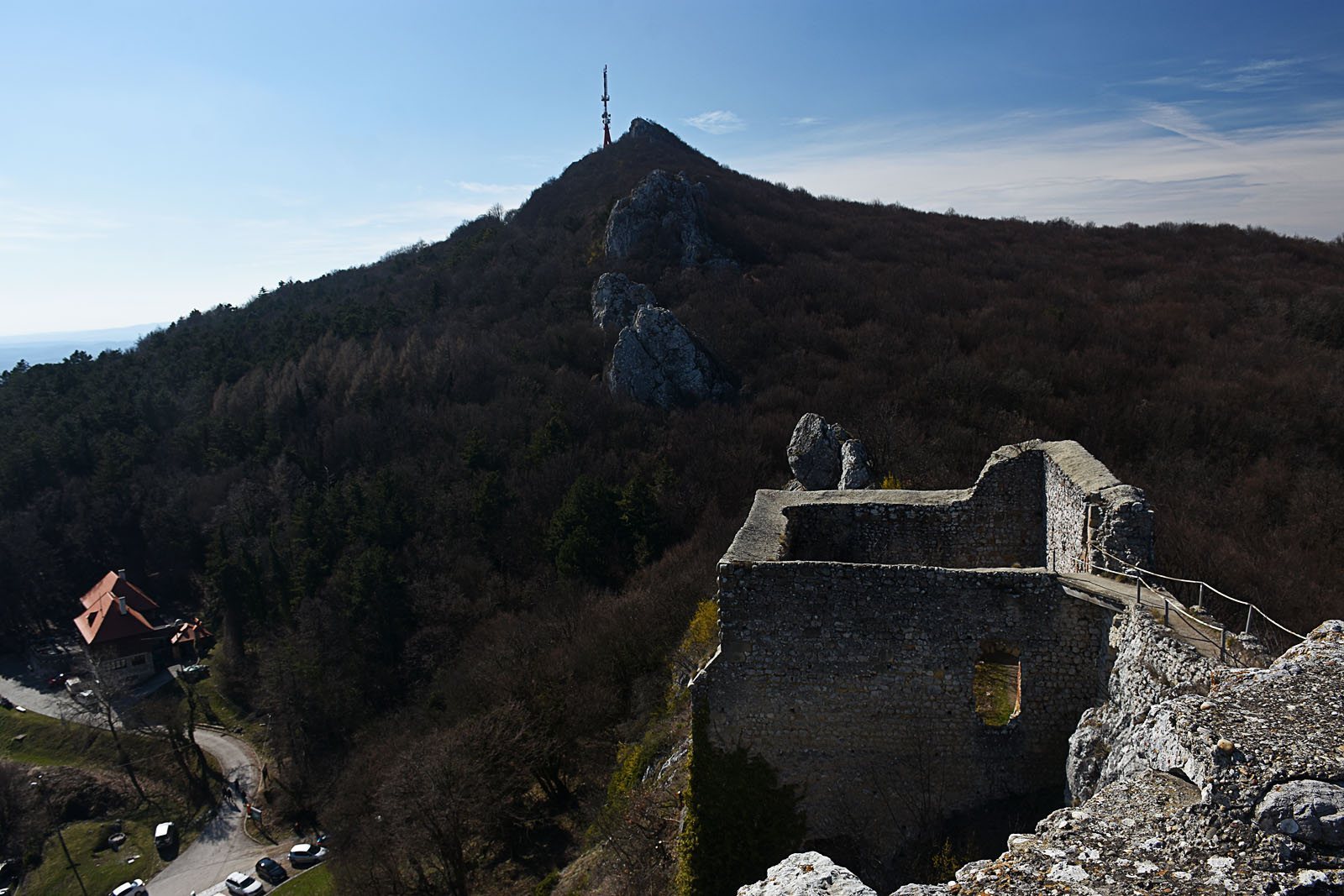
The stone fortress stands on rocky high ground at Sveta Katalina, on Vuklanec below Vranilovac, at an elevation of 475 metres above sea level. Its main buildings and the highest part of the castle were linked by a narrow passage. The remains include an upper enclosure, a former residential tower, and associated walls and supports.
Upper castle and chapel
The highest part of the castle was a many-sided structure that may have contained the chapel of St. Catherine mentioned in medieval records. This upper section is now almost entirely destroyed, while remains of the chapel survive.
Residential tower
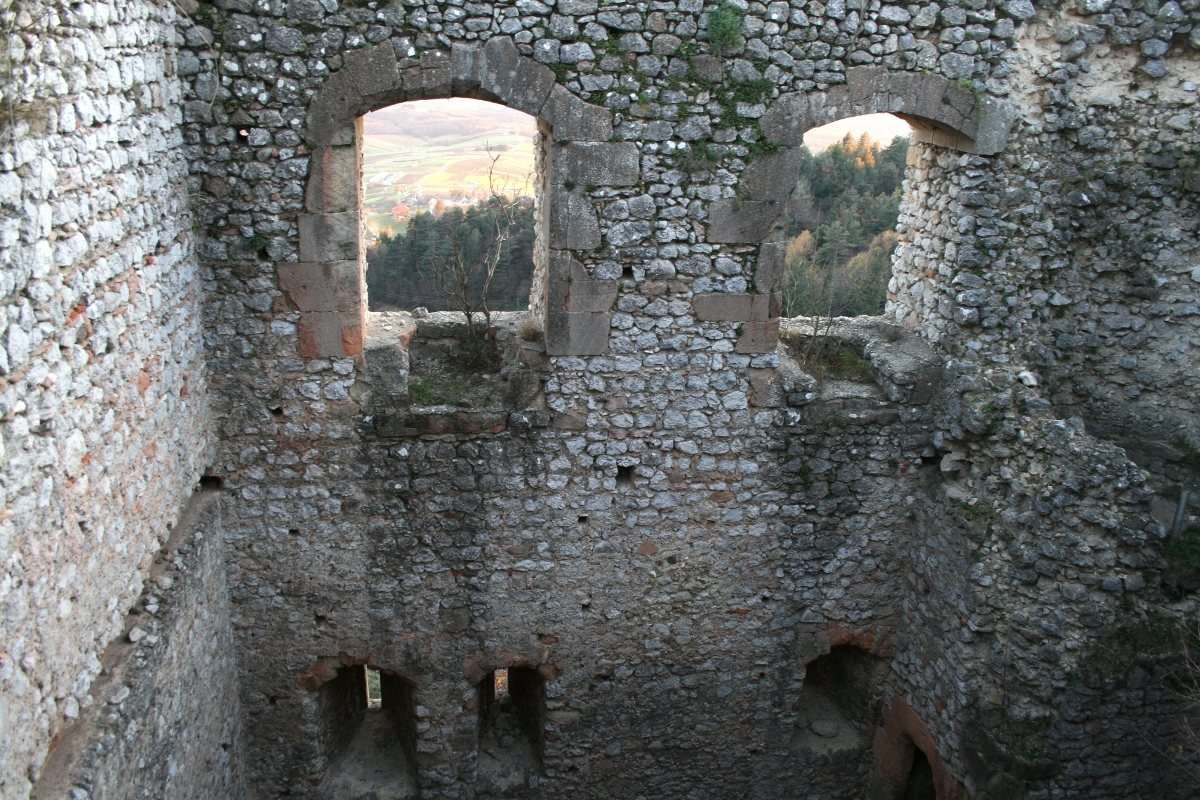
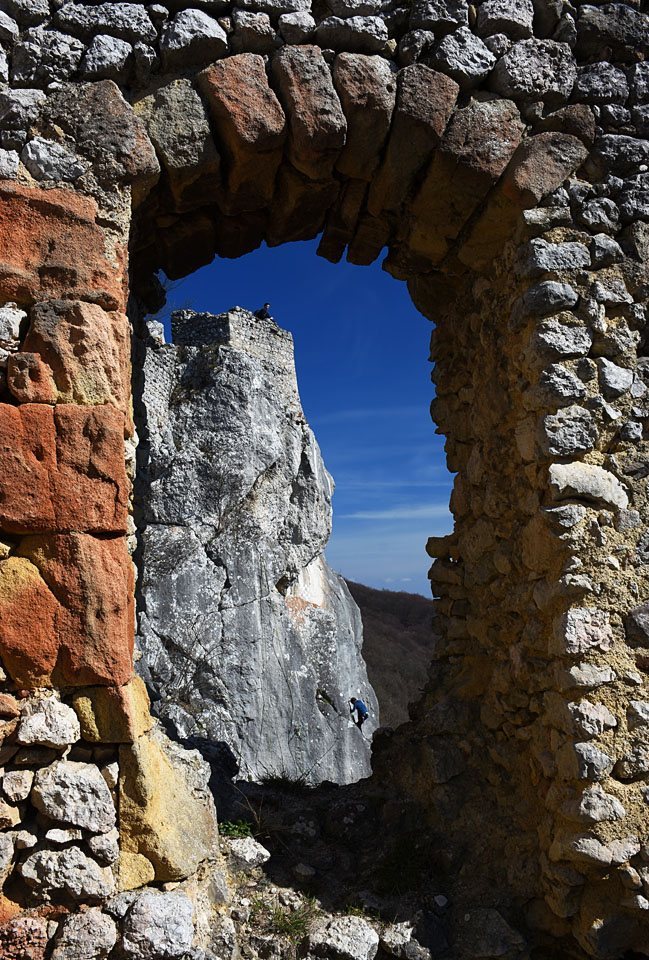
The former square residential tower and nearby remains are still clearly visible. The tower dominated the completed fortress; its thick walls suggest that it may once have risen higher than the surviving portion. Projecting wall supports also remain. At the lower levels, narrow openings for weapons and windows have small semicircular arches. Larger windows appear on the upper floors, which may have been intended for residential use. Square towers with projections are particularly uncommon in Croatia.
Manor below the fortress
Ruins of the manor below the castle also survive, though they are now severely deteriorated.