Szolnok Castle: A Hungarian River Fort on the Tisza–Zagyva Confluence
Site at a Glance
- Popularity
- Medium
- Country
- Hungary
- Primary era
- Early Modern
- Eras represented
- Early Modern
- Civilizations
- Habsburg, Hungarian
- Site type
- Military
- Remains
- Fort
On this page14 sections
History
Szolnok Castle was a fortified stronghold at the confluence of the Tisza and Zagyva rivers in Hungary, strengthened in 1550–52 under Habsburg rule as Ottoman forces advanced. Its position linked important river and land routes, including military traffic between Buda and Transylvania.
Early strategic position
Szolnok developed in the 10th and 11th centuries where river transport and overland routes met. The town’s location supported the salt route, timber commerce on the Tisza, and the movement of military forces. During the Árpád dynasty, Hungary’s first ruling house, an earthwork fort stood at the river confluence.
Ottoman threat and capture
In 1550–51, King Ferdinand I ordered the existing fort strengthened and the town enclosed by a wall. István Dobó contributed to the plans, while General Nicolaus Salm organized the work and Lőrinc Nyáry became commander. Soldiers from the area and elsewhere, together with large numbers of serfs, provided the labor. Work continued quickly in the summer of 1552.
Szolnok and Eger formed the principal fortified barriers between the advancing Ottoman forces and the rest of Hungary, including Upper Hungary, the historical name for the kingdom’s northern region. After the Ottomans took Temesvár and occupied the Danube–Tisza–Mureș area, reports in June 1552 warned that the two strongholds were under threat. Nyáry’s garrison numbered about 1,400, mostly Spanish, German, and Czech soldiers, with a smaller Hungarian contingent. Its supplies included 24 cannons, 3,000 muskets, and extensive stores of gunpowder and food.
Ahmed Ali Pasha besieged the fort on 2 September 1552 with an army of about 40,000. Hungarian boatmen deserted first. During the night of 3 September, Hungarian and Spanish horsemen swam across the Tisza, after which the boatmen returned to carry the foot soldiers over. German mercenaries fled on the night of 4 September, leaving a gate open. Nyáry and 50 Hungarian foot soldiers who remained loyal to him were captured.
Ahmed and Mohamed left a garrison of about 2,000 before advancing on Eger. Szolnok remained under Ottoman control until 1685. In 1553, the Ottomans made it the center of a sanjak, an administrative district of their empire.
Habsburg recovery and decline
In 1685, Habsburg forces led by Sigbert Heister and Claude Florimond de Mercy took Szolnok, damaging both the town and the fort. Antonio Caraffa then ordered repairs because of the site’s strategic value. In 1697, Imre Thököly had the fort burned.
The Rákóczi Uprising, an early 18th-century revolt against Habsburg rule, reached Szolnok in 1703 and 1706, bringing further devastation to the town. In 1706, Ferenc Deák, a commander of Ferenc II Rákóczi, burned the fort to keep imperial forces from using it. General Jean Rabutin then ordered its stones removed. Rákóczi’s troops retook the fort in 1710 but evacuated it on 10 October as cavalry general Jacob Joseph Cusani’s forces advanced.
After the uprising, the fort fell into ruin and its stones were reused in other buildings. By the late 18th century, the fort had been altered and the town’s defenses had deteriorated. Planned dismantling of the fort took place between 1799 and 1811.
Remains
The fort stood at the meeting of the Tisza and Zagyva. Its irregular quadrilateral plan enclosed a spacious courtyard, with rounded cannon towers at the corners and a broad moat around the fort. Timber, earth, and clay formed the principal elements of its early defenses; later work changed the fort’s outline.
Fort construction and plan
The 1550–52 defenses used two timber palisades, made from posts driven about one to two metres into the ground. Carpentry or woven branches joined the posts, while layers of earth and clay were packed and rammed between the walls. Woven material and clay covered the exterior, helping resist fire and offering some protection against early cannon fire. Builders also used some stone. Later bastions, projecting sections with flanks, were added to the fort. By 1778, polygonal bastions had taken the places of the rounded towers. The extent of stonework at that time is uncertain, but substantial stone additions probably belong to later alterations rather than the original works.
River works and crossings
A new branch of the Zagyva was excavated in 1552 to encircle the fort. It forms the channel at the river’s present mouth into the Tisza, while the former course was filled in. A small lake near MÁV Hospital remains from that old course and is identified as a remnant of the moat. The street name Tófenék utca, meaning Lake-Bottom Street, recalls the northwest part of the former town moat. By the later period, that moat had filled and served mainly during high water.
In 1562, the Ottomans built the first permanent bridge across the Tisza. Timber piles from it were exposed during low water in August 2003. After the bridge was destroyed, a replacement crossing ran through the town, shifting its connection from the Zagyva’s right bank to its left.
Ottoman-era structures and evidence
Religious and public buildings
During the Ottoman occupation, the town had a mosque, baths, and a minaret. Later fighting caused extensive deliberate damage to these buildings. The base of the minaret survives, and a decorative fountain marks its former location.
Ceramics and an early depiction
Ottoman-period ceramics associated with the fort are held at the János Damjanich Museum. A copper engraving made in 1617 also depicts Szolnok Castle.
Walls and associated monuments
Town and castle walls
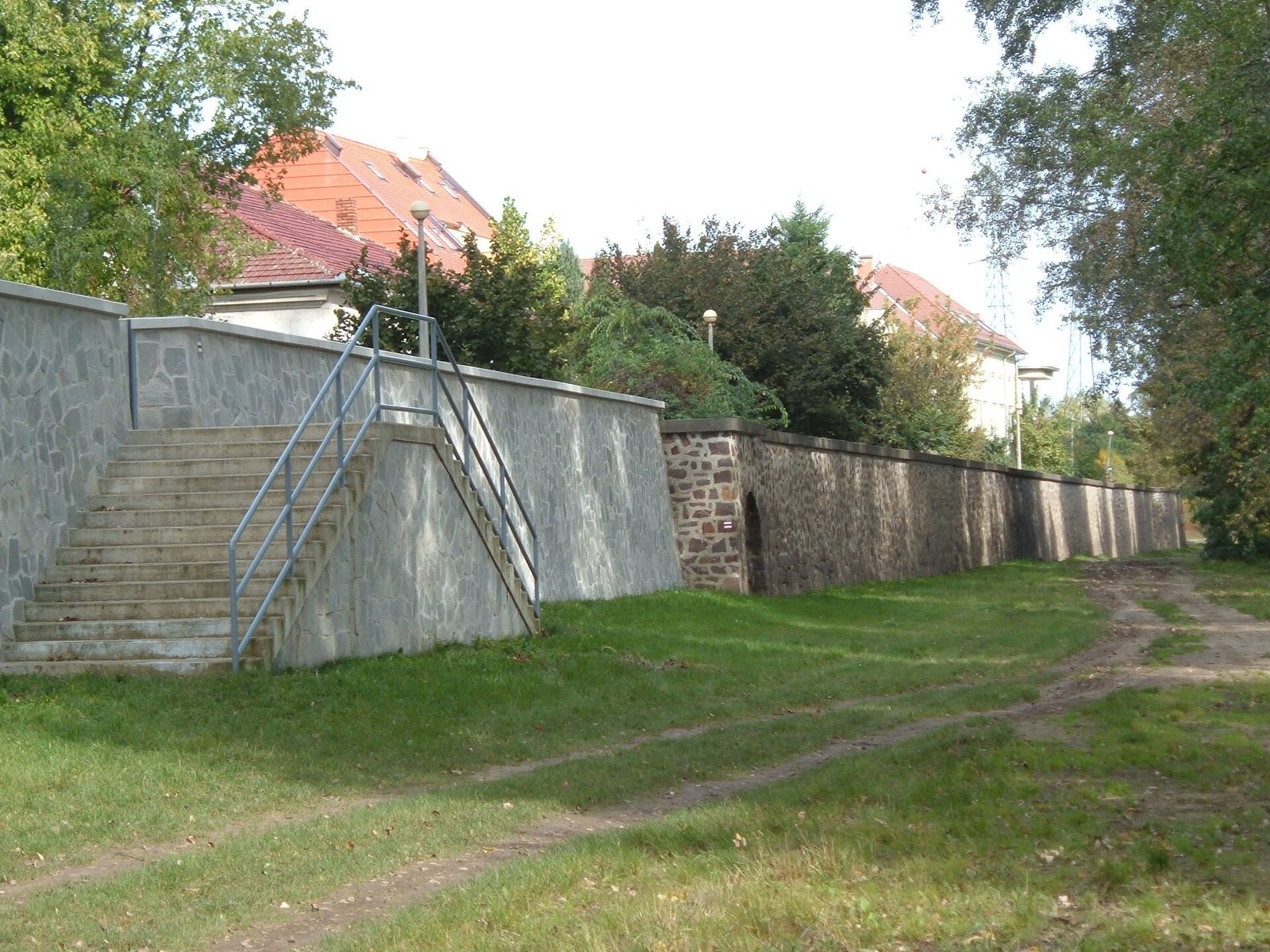
The town’s defenses were separate from the fort and consisted of a surrounding wall and rounded artillery towers reinforced with wooden beams. Much of this system had deteriorated by the later period. A plaque is attached to a rebuilt section of castle wall, and a modern flood-protection wall follows the former castle-wall line.
Church and garden feature
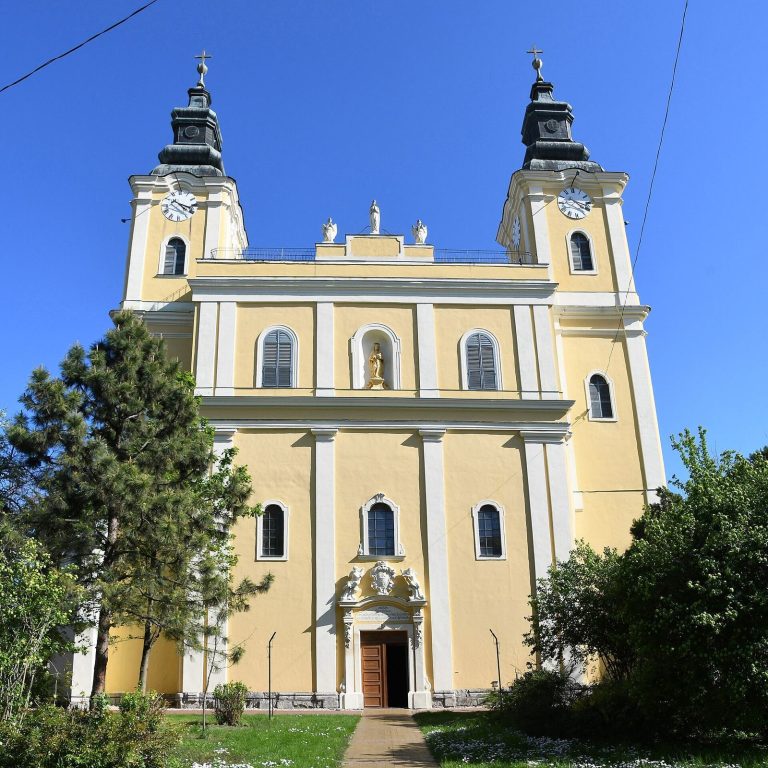
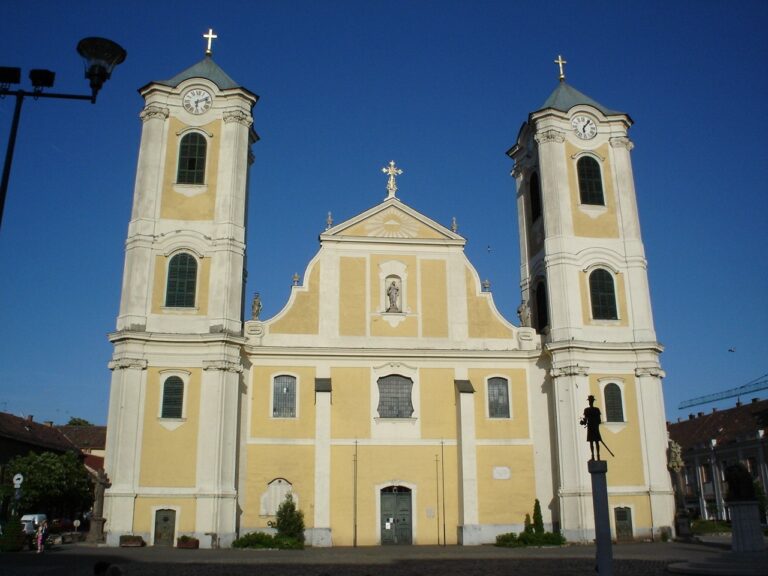
An artificial ruin stands in the garden of the Szolnok Artists’ Colony. The Castle Church is another feature associated with the site; behind it is a statue of St John of Nepomuk dated 1804.
Public memorials
A plaque about the castle is located on Kossuth Square. A millennial memorial there bears a bust of St Stephen, Hungary’s first king and a saint.