Saint Nicholas Church in Słupsk: A Medieval Parish Church Rebuilt as a Library
Site at a Glance
- Popularity
- Medium
- Country
- Poland
- Primary era
- Medieval
- Eras represented
- Medieval
- Civilizations
- Duchy of Pomerania, Holy Roman Empire
- Site type
- Civic
- Remains
- Library
On this page6 sections
History
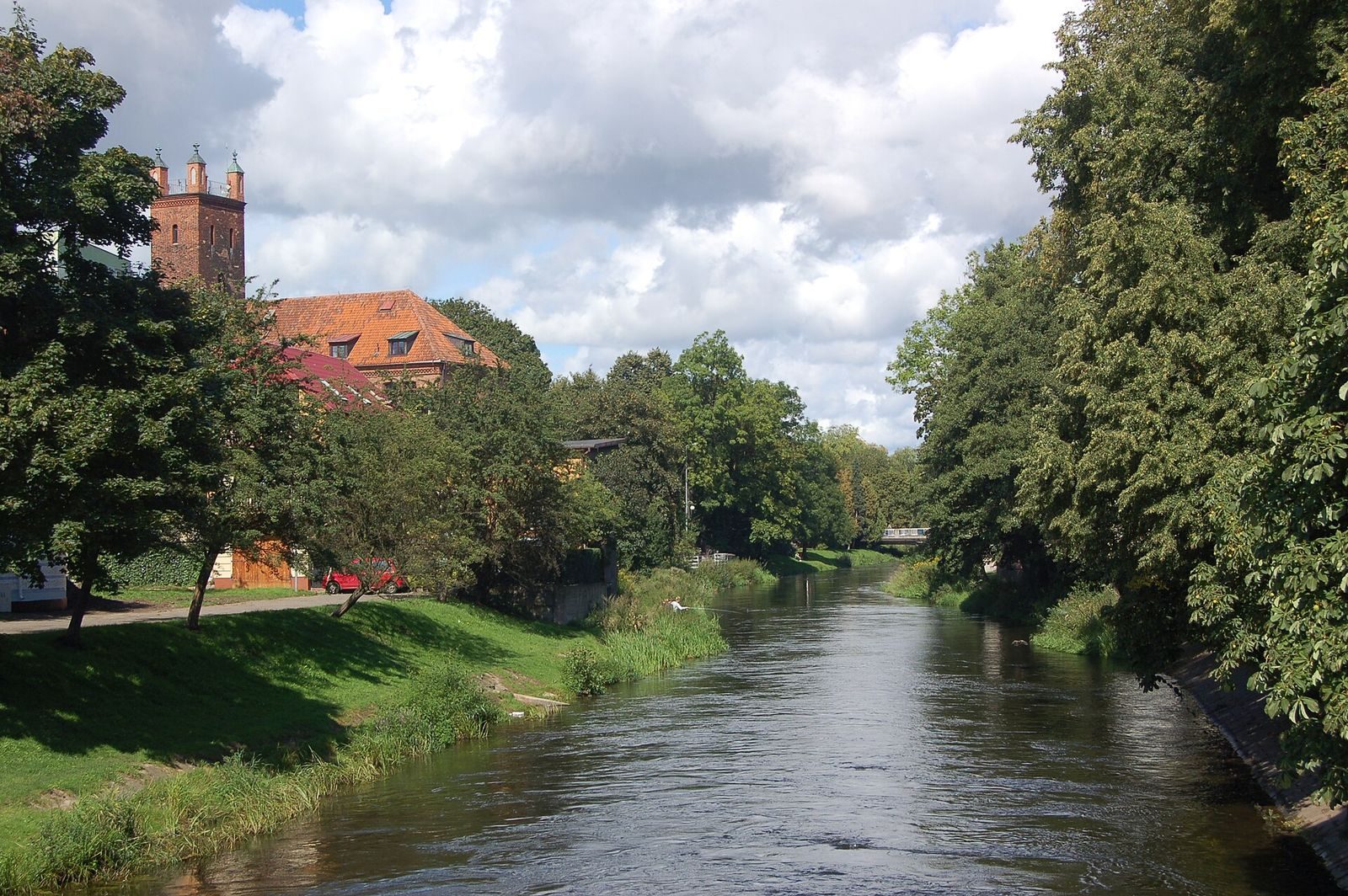
Saint Nicholas Church in Słupsk is a former church on the left bank of the Słupia River in Poland. Its brick Gothic building, constructed in the 14th century or early 15th century, replaced an earlier wooden church and served the left-bank town and a Norbertine convent, part of a Roman Catholic order also known as the Premonstratensians. It was Słupsk’s second church after St Peter’s, which served the Kashubian community on the river’s right bank.
Early church and convent
The original wooden private church was built by Pomeranian Duke Świętopełk II. A chaplain served there by the middle of the 13th century, and the church is named in a record of 1276. In 1224, Trzebiatów became the widow’s dower of Anastasia, wife of Duke Bogusław I, meaning property set aside for her after her husband’s death. Anastasia founded a church and Norbertine convent in Słupsk.
In 1281, Mestwin II, ruler of Pomerelia, established a Premonstratensian religious house in Słupsk for canons from Belbuck. The first nuns arrived in 1284, probably from Marienbusch near Treptow on the Rega. The convent may initially have stood west of the Słupia. From 1311, it was beside the church at the northern edge of the medieval old town. That year, John and Waldemar, margraves of Brandenburg, meaning rulers of a border territory, granted land for a church and new convent.
The parish served residents that included people from around Lübeck, and may also have included people of Slavic origin who spoke another language. Saint Nicholas, a fourth-century bishop traditionally associated with merchants, gave the church a dedication understood to reflect a town center of merchants and craftspeople. The parish initially fell under the authority of the archbishopric of Gniezno, an important Polish church center; surrounding parishes remained under that authority throughout the 13th century.
Reformation and Protestant use
A town fire in 1447 destroyed the church’s organ. In 1522, the Norbertine priest Jan Krystian Ketelhuta arrived from Białoboki and preached Lutheran teachings, a tradition within Protestant Christianity. Duke Bogusław X quietly supported the Reformation. After his death, the movement prevailed under his successor, and Lutheran worship was introduced in Słupsk. Services were restricted to Saint Nicholas and St Mary’s churches.
In 1535, after the Reformation reached Pomerania, the Norbertine convent became a Protestant women’s foundation, an endowed institution with places for women of high social standing. It continued until 1945 and may have had nine places, assigned to selected women by royal Prussian and later ministerial decisions. Some appointees came from Berlin or other distant places.
Fires and changing uses
A fire in 1665 destroyed both church and convent. With rebuilding delayed by a lack of funds, the church deteriorated into a ruin; partial repairs began in 1673. Colonel Steding arranged for its rebuilding, and after repairs it became a garrison church in 1737, serving military personnel and holding Lutheran services. When the regiment left Słupsk in 1740, the building became a storehouse and carriage house.
During the Seven Years’ War, a major conflict fought from 1756 to 1763, Russian troops used the church from autumn 1759 to spring 1760 for Eastern Orthodox worship and as quarters. After their departure, it served as a storehouse and fire station. Neglect left the roof and ceiling beams at risk of collapse, and the building again fell into ruin. From the 1770s until 1945, it housed a municipal school and a boarding school for poor pupils.
Destruction and reconstruction
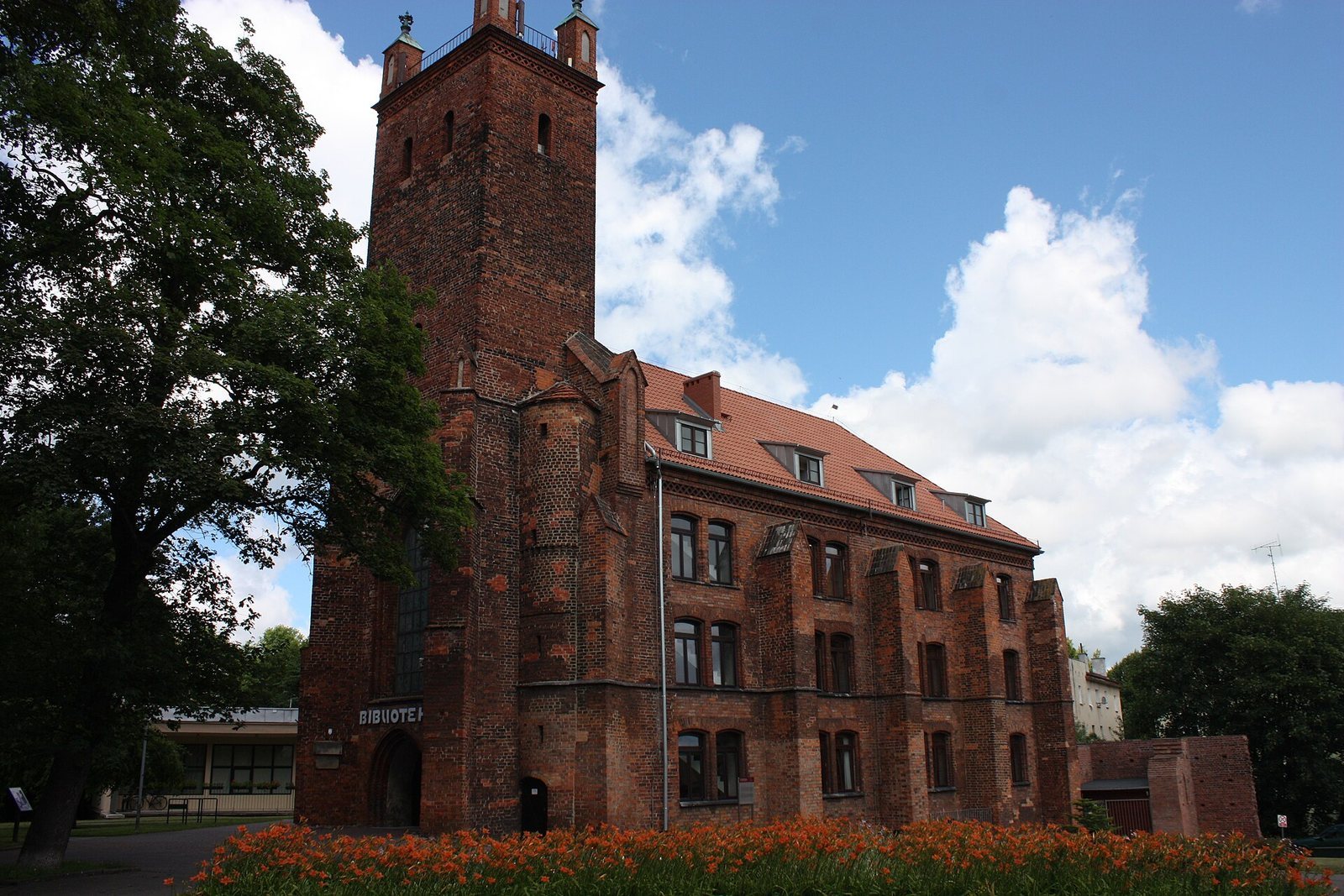
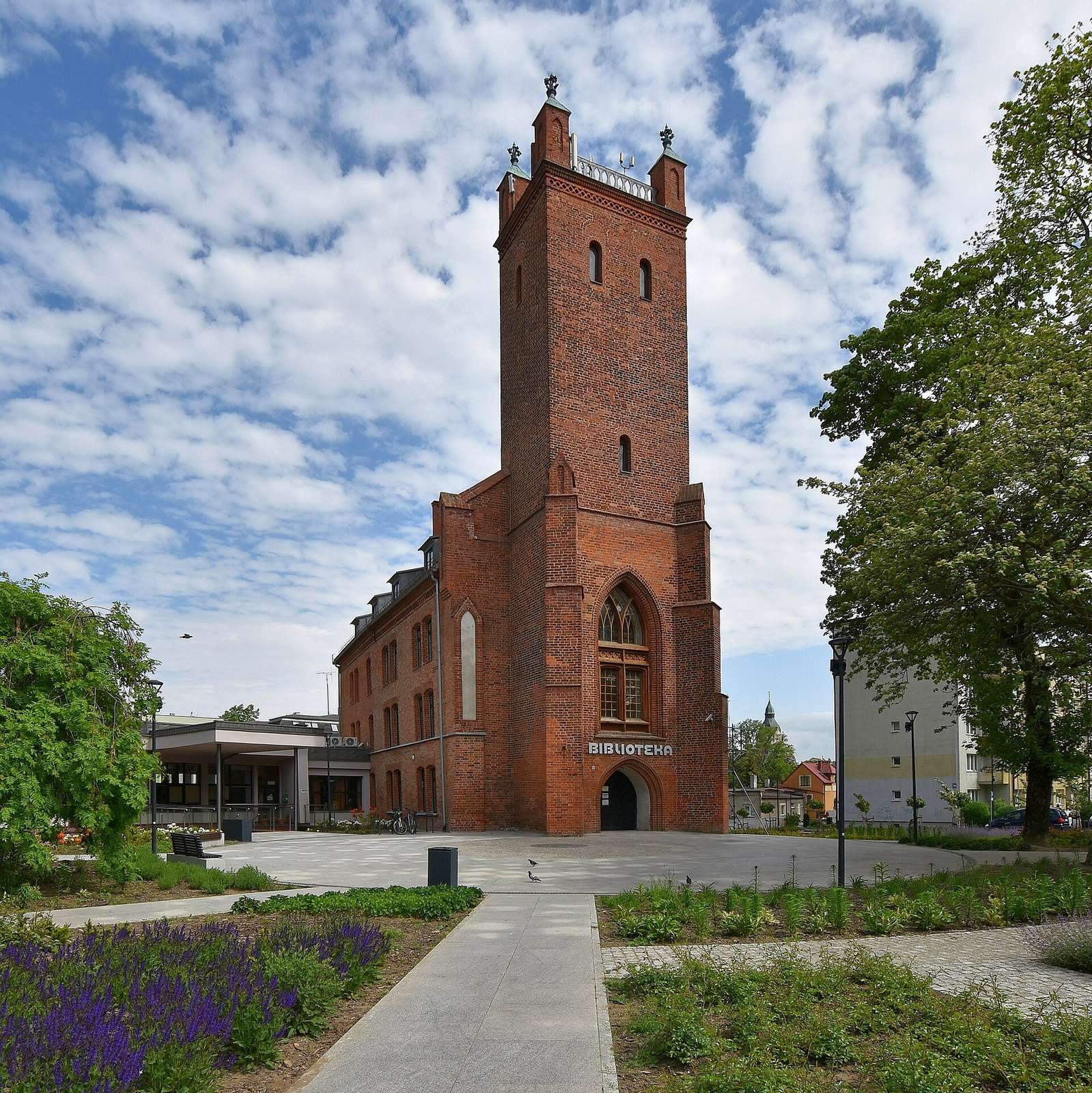
In March 1945, Red Army soldiers set fire to Słupsk’s old town. The former church burned and became a ruin, and the attached convent house was probably destroyed that year. A measured survey of the Gothic ruins followed in 1955. Plans to rebuild the church as a library emerged in the early 1960s, with design work carried out between 1961 and 1965. Reconstruction began in 1965 with rubble removal, followed by building and installation work to a design by architect J. Majdecki. The Municipal Public Library opened in the rebuilt church on 10 September 1971; the following day, Polish writer Maria Dąbrowska became its patron.
Remains
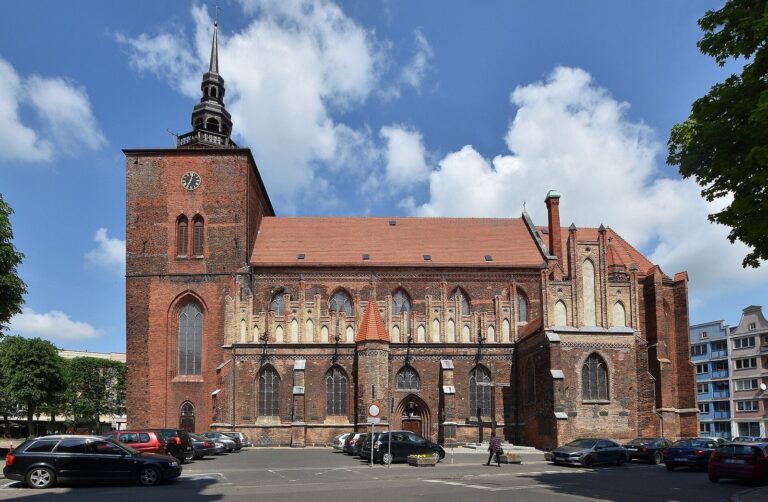
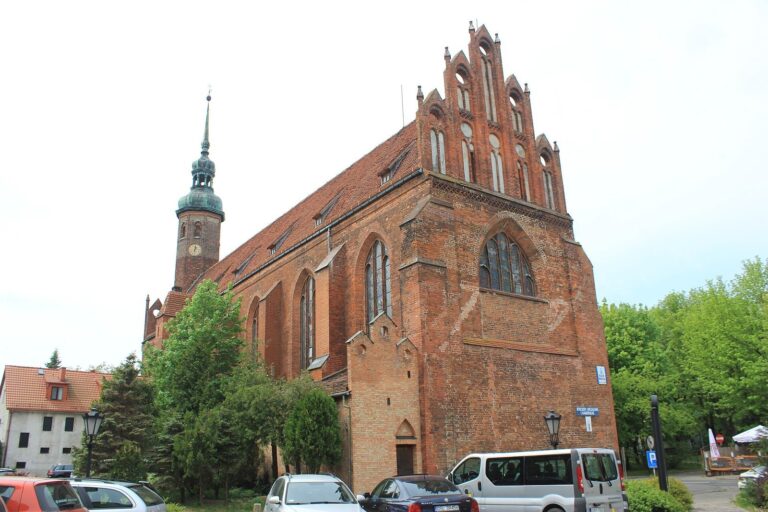
The church stands on two low slopes above the Słupia, with its chancel, the area around the altar, at the eastern end. Its form is that of a brick Gothic building with a single tower. The rebuilt structure incorporates surviving parts of the historic church.
During reconstruction, some surviving masonry, particularly sections adjoining the convent wall, could not be rebuilt. Retained fragments include Wendish and Gothic bonds, patterns formed by the arrangement of bricks, chiefly beside a defensive wall.