Old Royal Naval College: A Naval Training College and Hospital in Greenwich
Site at a Glance
- Popularity
- Very High
- Country
- United Kingdom
- Primary era
- Early Modern
- Eras represented
- Early Modern
- Civilizations
- British, English
- Site type
- Civic
- Remains
- Hospital
On this page8 sections
History
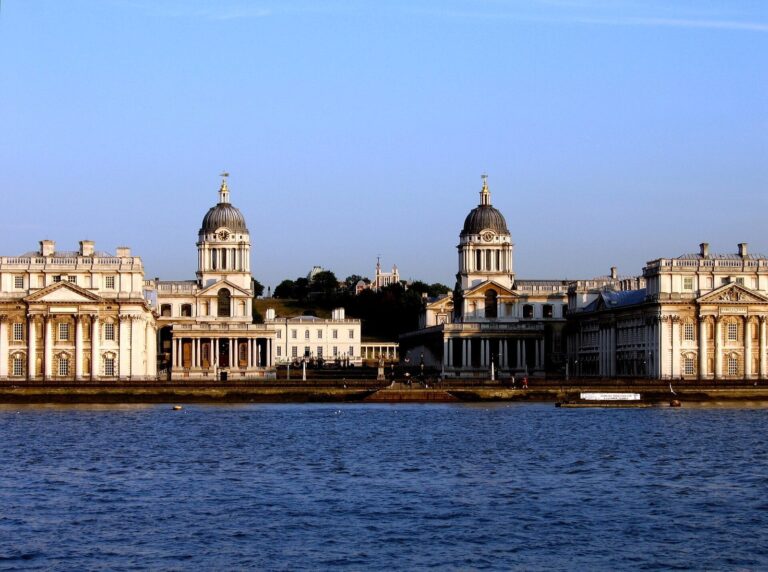
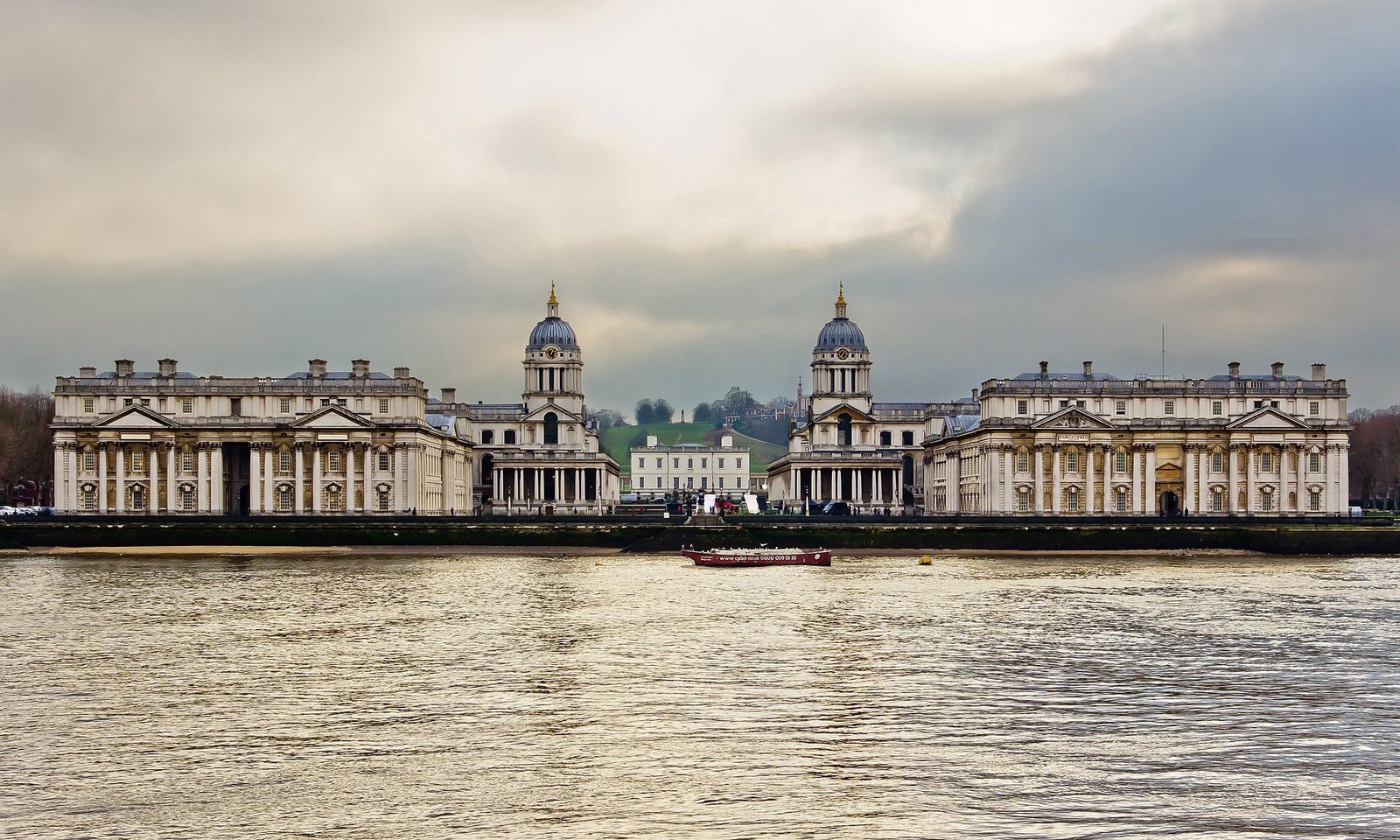
The Old Royal Naval College is a former naval training college and seamen’s hospital complex on the River Thames in Greenwich, London, United Kingdom. Christopher Wren designed its hospital buildings, constructed between 1696 and 1712. Before those institutions, the site was home to a royal palace.
From Bella Court to Greenwich Palace
Humphrey, Duke of Gloucester, built Bella Court. After the Crown took possession of the property, Margaret of Anjou renamed it the Palace of Placentia. Henry VII later rebuilt the palace, which became more commonly known as Greenwich Palace.
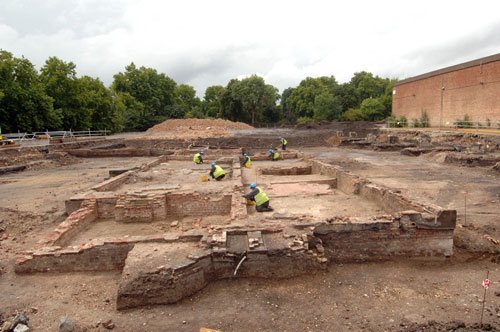
The palace was the birthplace of the Tudor monarchs Henry VIII, Mary I, and Elizabeth I. Henry VIII was reputed to favor it. During the English Civil War, a conflict between Royalist and Parliamentary forces, the palace deteriorated. It was demolished in 1694, apart from an unfinished building associated with architect John Webb, which was later completed for hospital use.
The Royal Hospital for Seamen
Mary II ordered the establishment of the Royal Hospital for Seamen at Greenwich in 1692. The idea followed her seeing wounded sailors return from the Battle of La Hogue, a major naval battle between French and Anglo-Dutch forces that year. William III and Mary II leased the site for the hospital on 25 October 1694.
The hospital first used a wing of the unfinished palace building, then expanded as its plans changed. Wren designed the new buildings, erected between 1696 and 1712. The hospital closed in 1869. In 1875, the remains of thousands of sailors and officers buried in its grounds were transferred to East Greenwich Pleasaunce, also called Pleasaunce Park.
Naval college and later stewardship
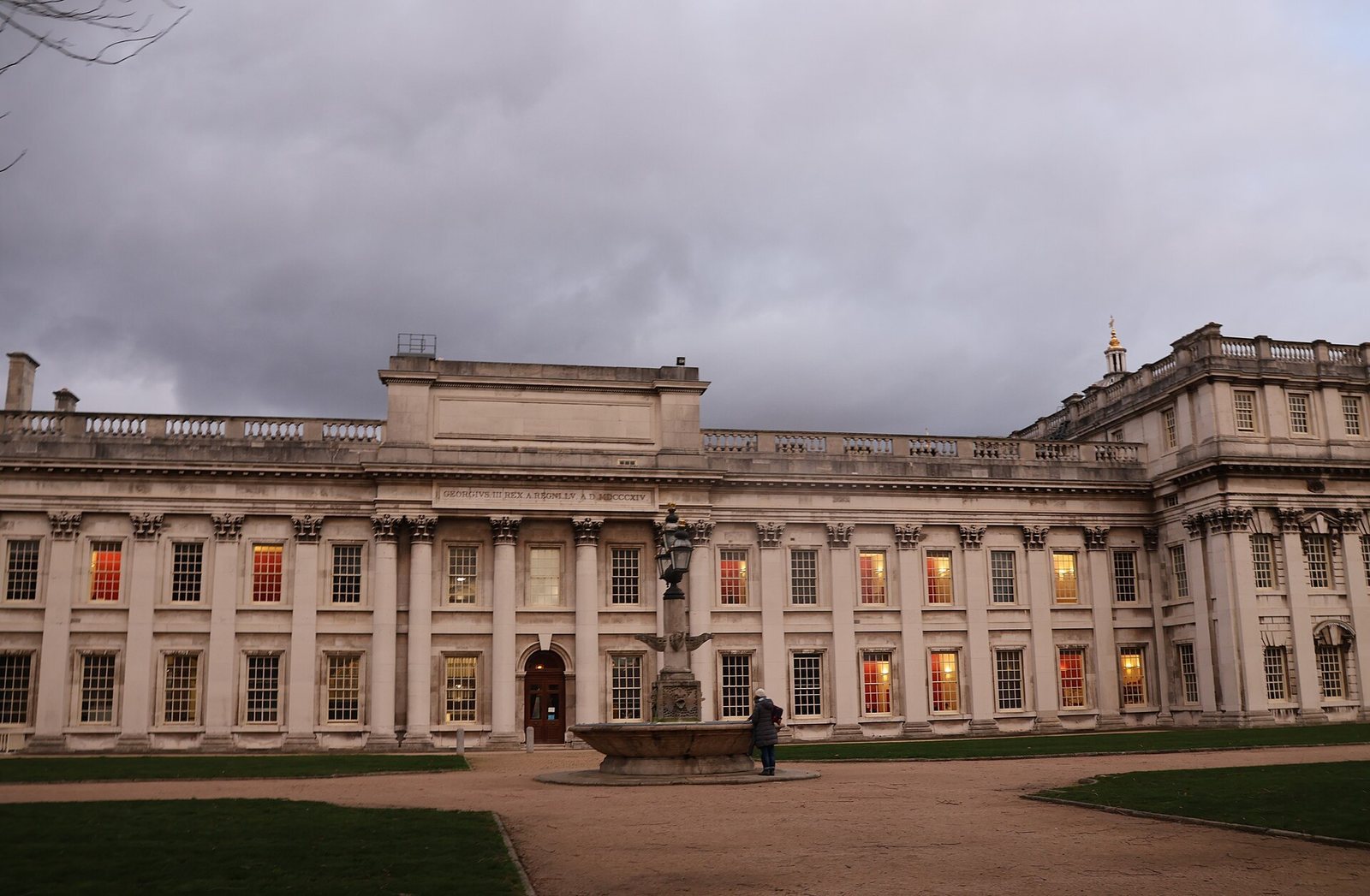
In 1873, the buildings became the Royal Naval College, Greenwich, a Royal Navy training establishment. The Navy left in 1998, and the Greenwich Foundation for the Old Royal Naval College took over management. The University of Greenwich leased parts of Queen Mary and King William Courts, and all of Queen Anne and the Dreadnought Building, in 1999. Around 2000, Trinity College of Music leased most of King Charles.
The college and the site’s earlier identities as Greenwich Palace and Greenwich Hospital form part of Maritime Greenwich, a UNESCO World Heritage Site inscribed in 1995 and extended in 2008. The buildings also hold Grade I listed status, England’s highest category of listed-building protection.
Remains
Courts and layout
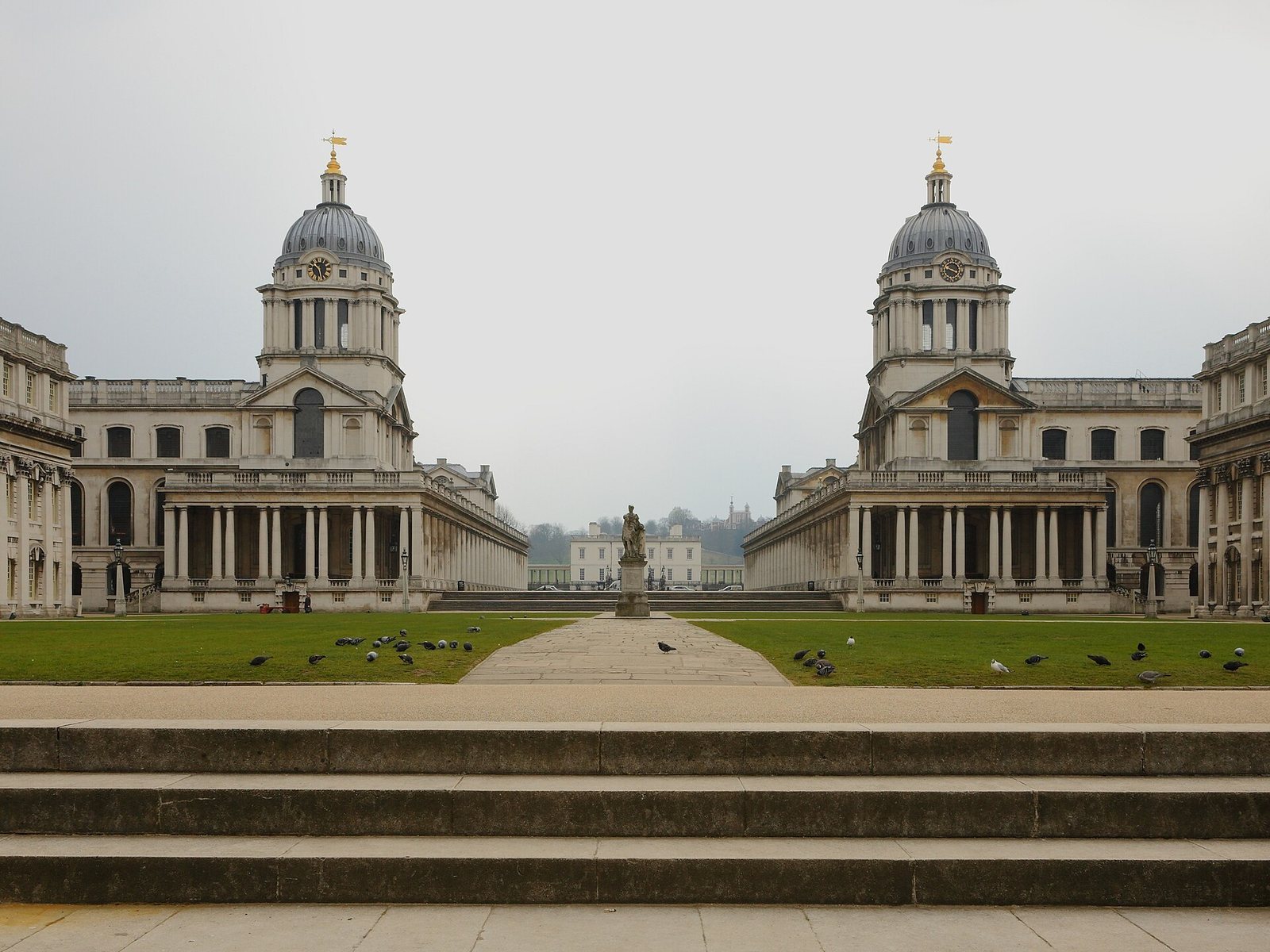
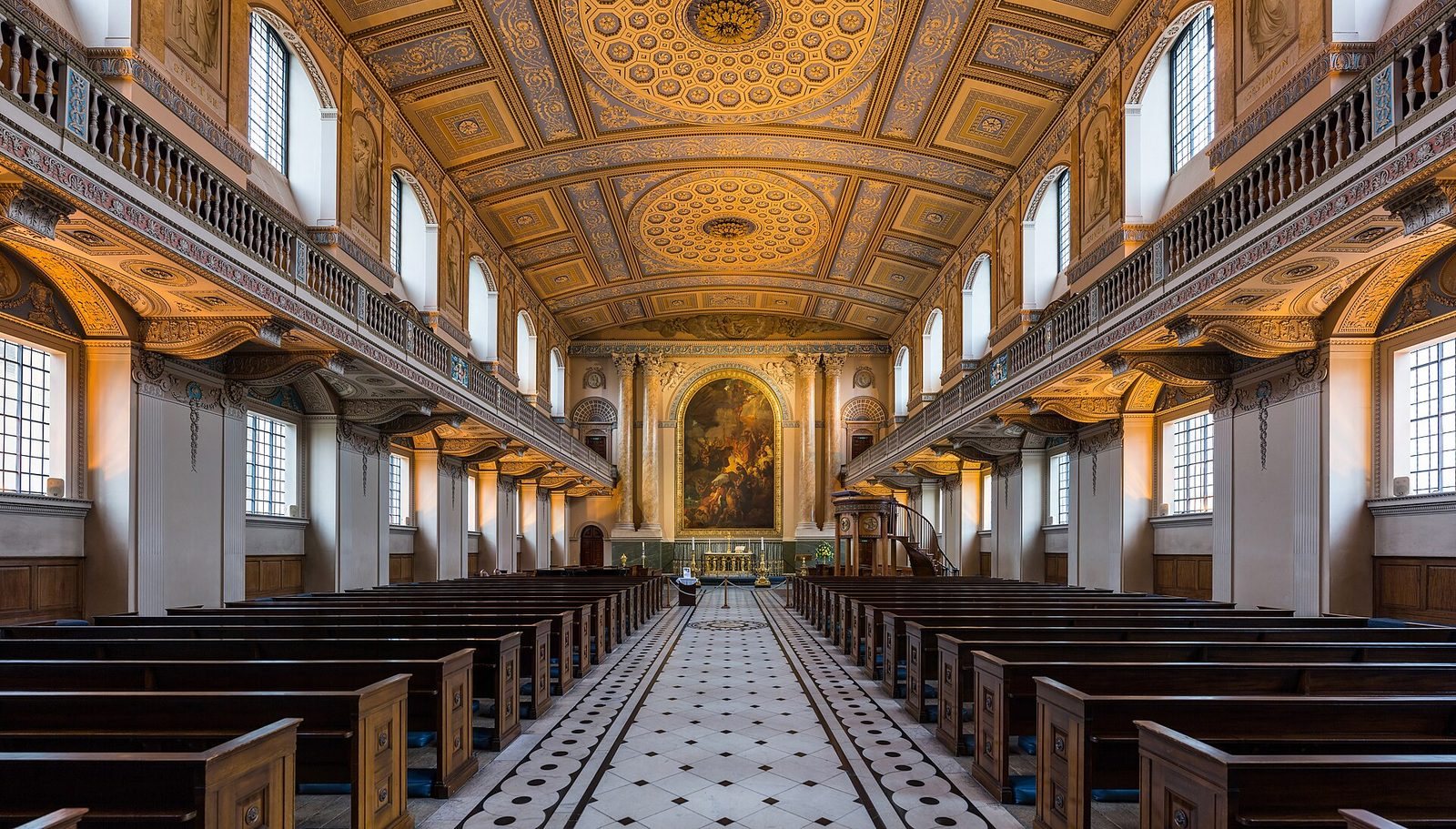
The complex includes Queen Mary Court, King William Court, Queen Anne, King Charles, and the Dreadnought Building, as well as the Chapel and Painted Hall. The Chapel is in Queen Mary Court and the Painted Hall in King William Court. Domes rise above the entrances, with the Queen’s House in the central distance. Wren incorporated the older Queen’s House into the hospital plan, retaining a long sightline from the house toward the river.
Painted Hall
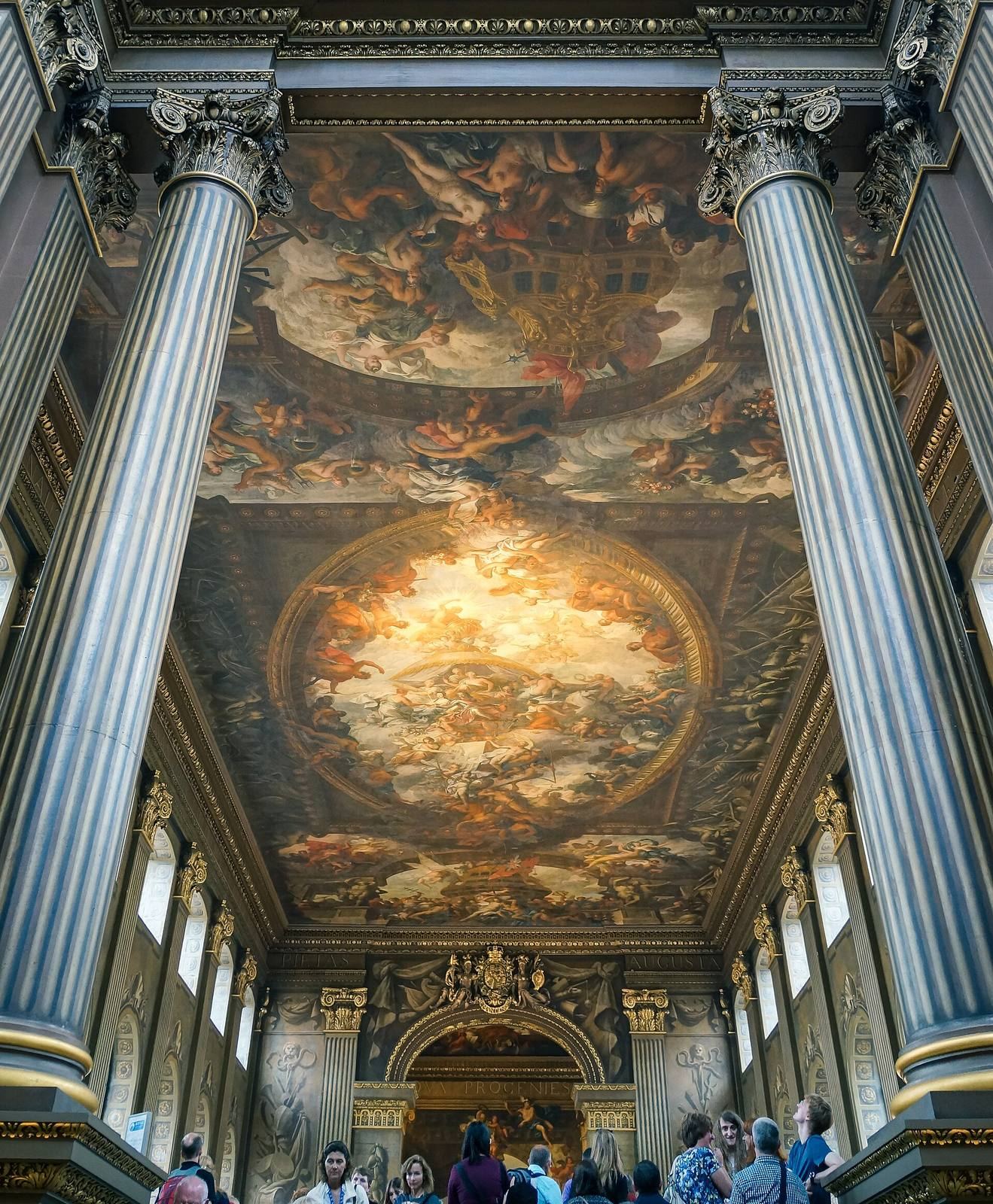
Sir James Thornhill painted the Painted Hall between 1707 and 1726. It consists of Upper and Lower Halls, each with painted ceiling artwork; the vestibule and its ceiling are also features of the complex. Conservation work covered 3,700 square metres of Thornhill’s painted work, with a project announced in 2014 focused on the Lower Hall. The Upper Hall had been conserved in 2013.
Other interior spaces
The named interior spaces include undercrofts, lower-level rooms beneath buildings, a crypt, a chamber below a religious building, and an old skittle alley, a lane for traditional bowling. The Nelson Room, named in 2005, contains a statue modeled on the one in Trafalgar Square, along with memorabilia and paintings. Nelson’s coffin had been kept in the room before he was laid in state.