Hospital of the Holy Spirit in Lübeck: A Medieval Charitable Institution
Site at a Glance
- Popularity
- High
- Country
- Germany
- Primary era
- Medieval
- Eras represented
- Medieval, Modern
- Civilizations
- Holy Roman Empire
- Site type
- Civic
- Remains
- Hospital
On this page13 sections
History
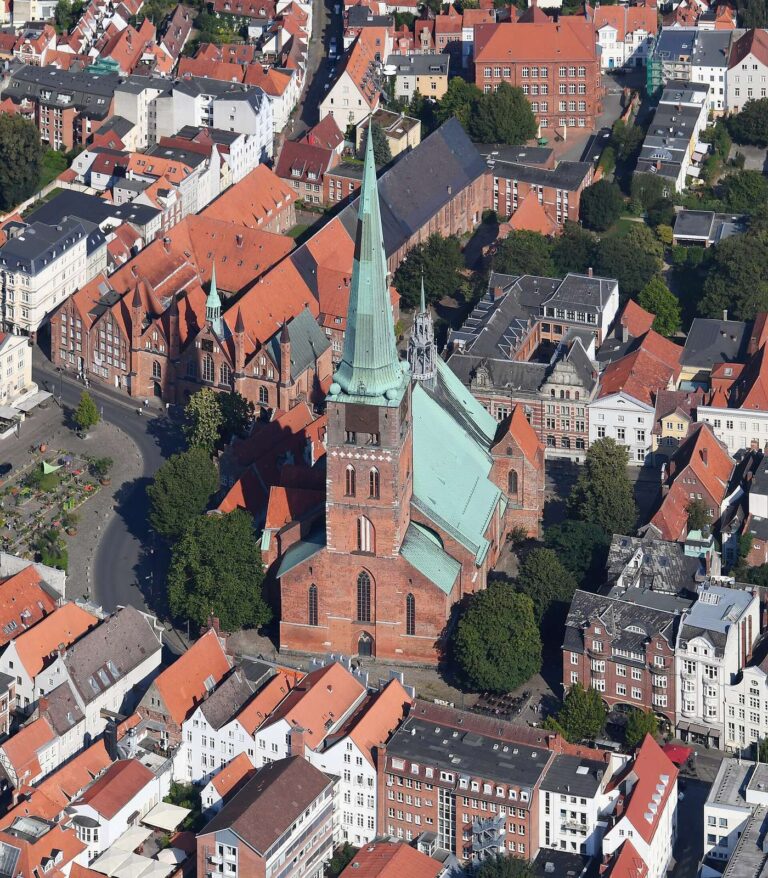
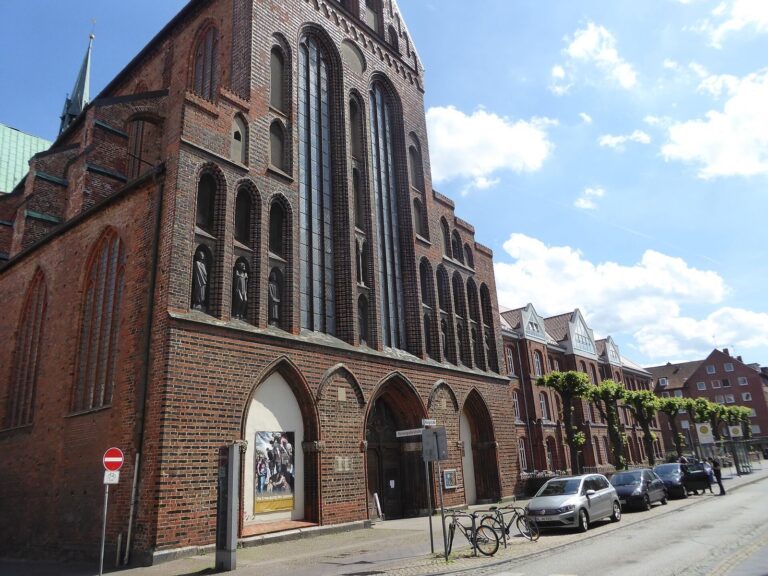
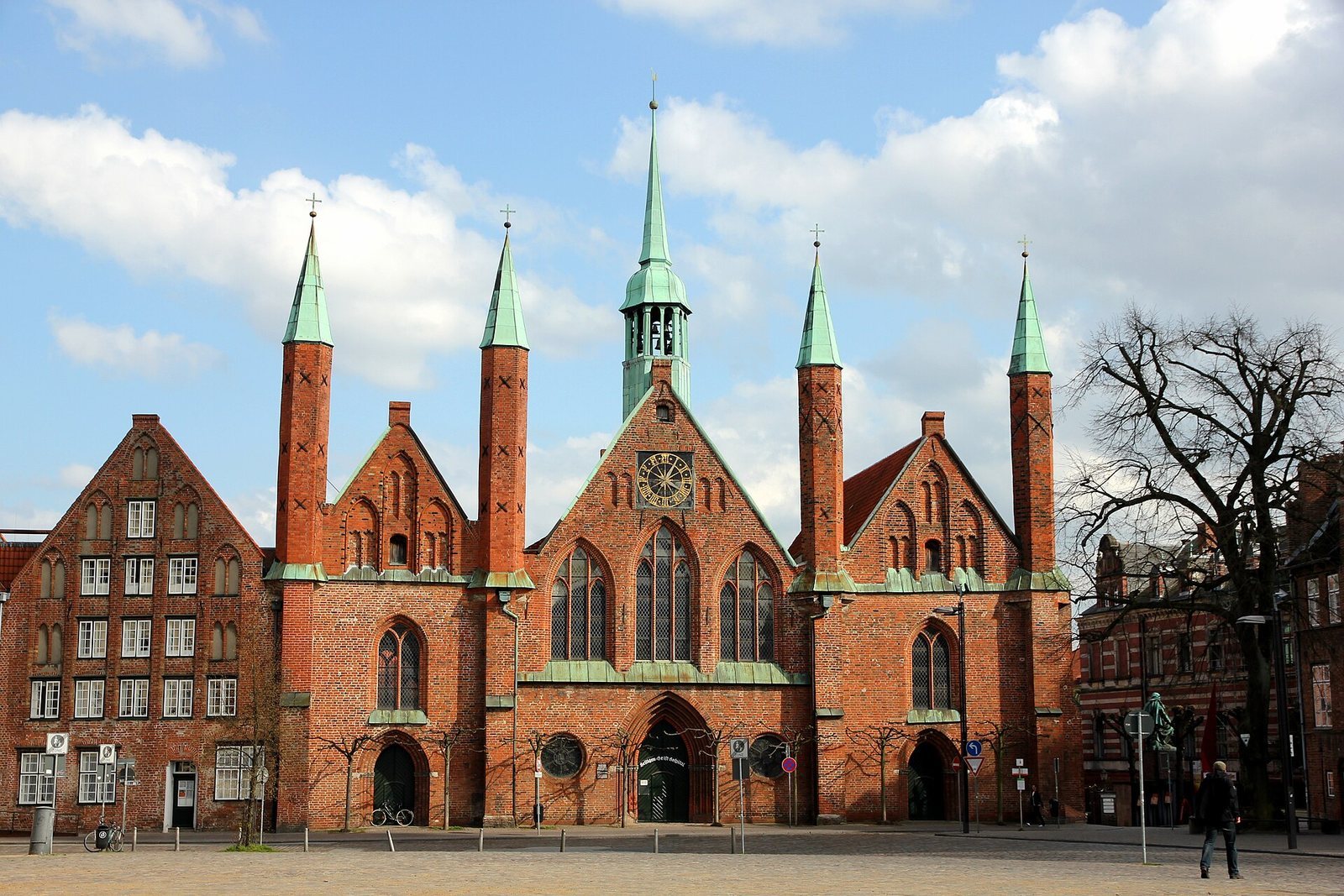
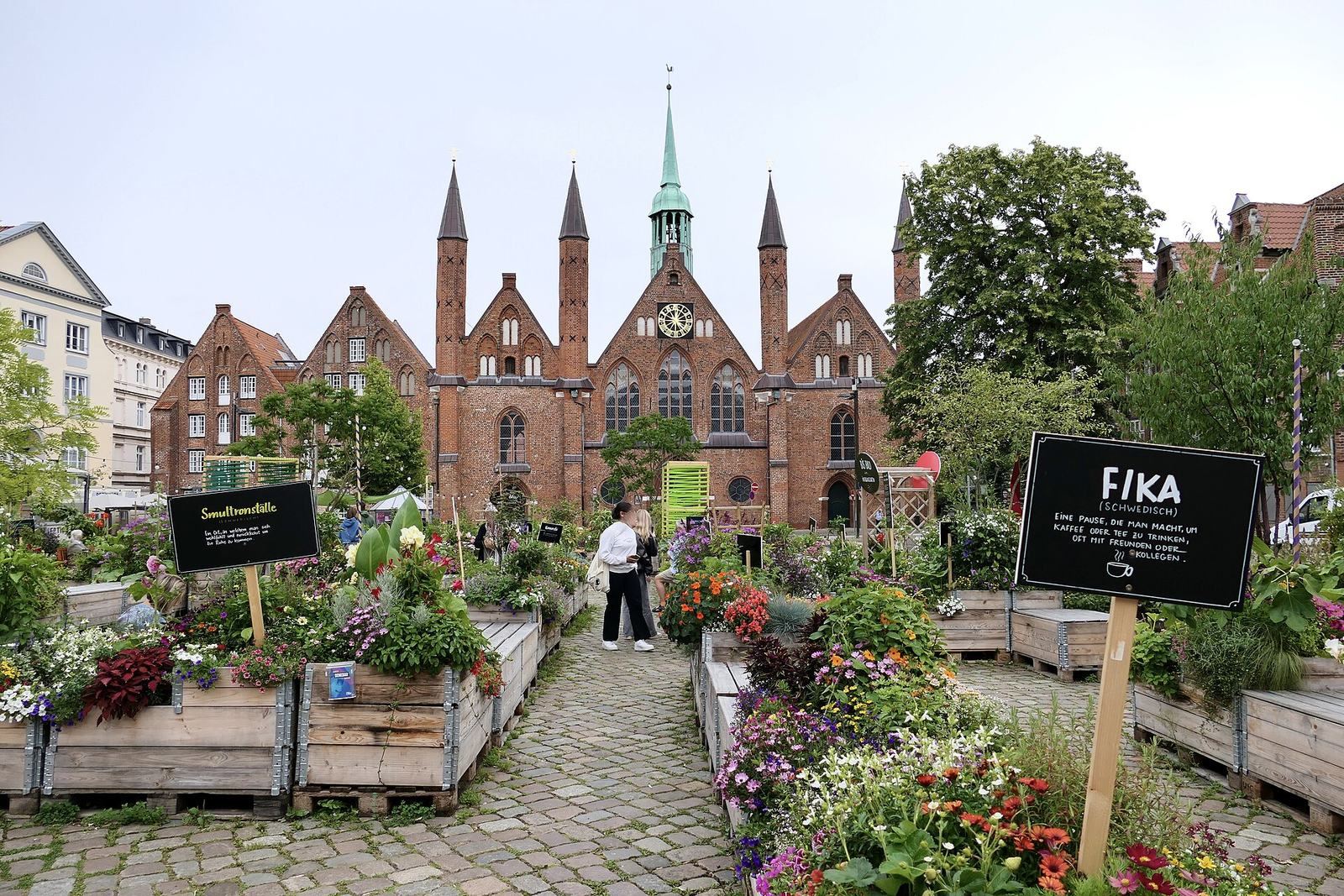
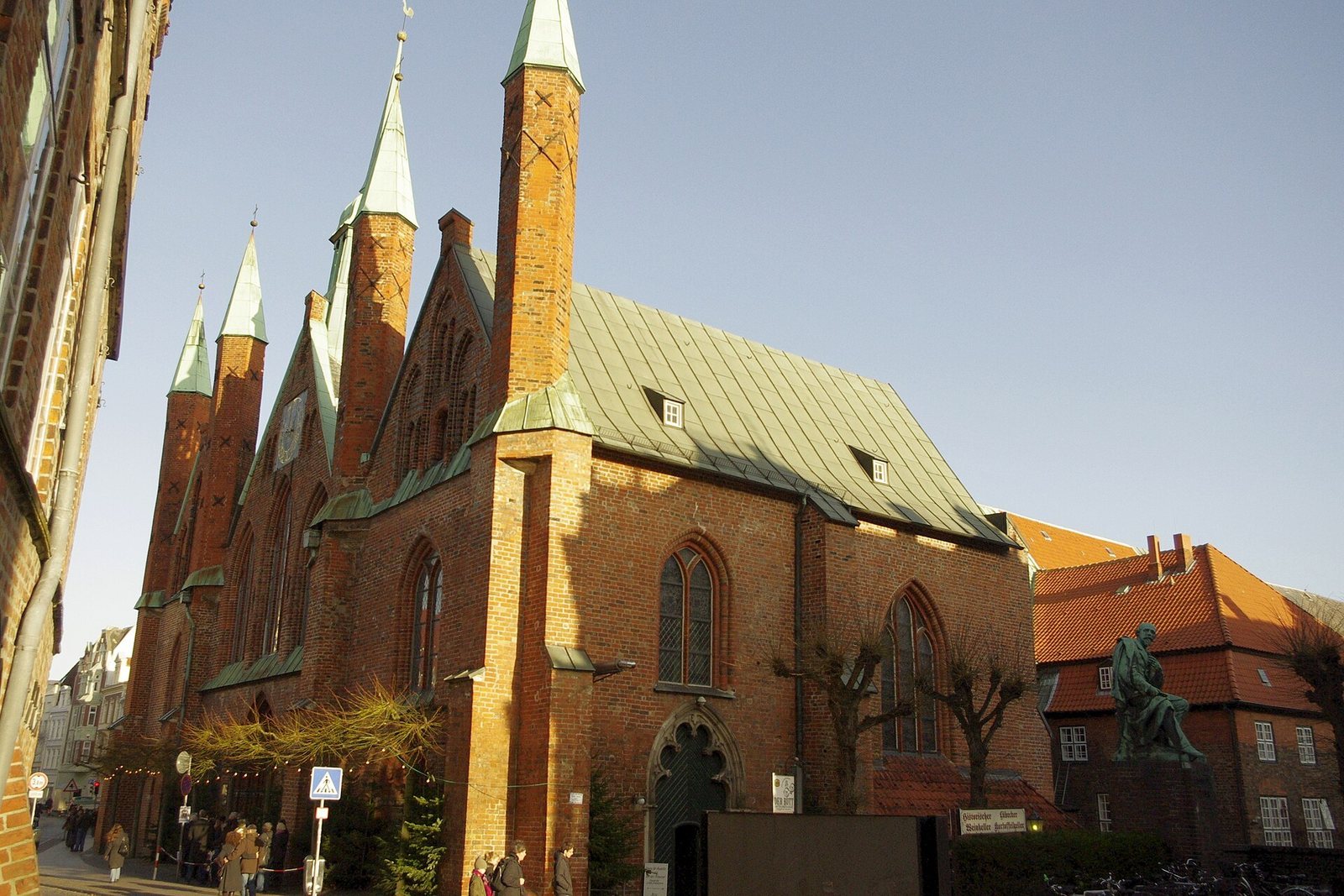
The Hospital of the Holy Spirit in Lübeck is a medieval charitable foundation in Germany, established in 1227. Its building at Koberg was completed in 1286 in Brick Gothic, a northern European form of Gothic architecture built chiefly of brick. The institution became one of northern Europe’s most important medieval charitable foundations and is regarded as a precursor to modern hospitals.
Foundation and medieval mission
The hospital belonged to the Holy Spirit hospital tradition associated with Santo Spirito in Sassia, a historic church in Rome. Hospitals in this tradition were supervised by a brotherhood of the Order of the Holy Spirit, a medieval religious order connected with charitable care. Merchant Bertram Morneweg and other wealthy Lübeck merchants founded the new hospital after Morneweg returned from trading in Riga. He became its first head. Work to transfer the hospital from Klingenberg to Koberg began after 1360.
Residents followed rules similar to those of a monastery and received food. From the seventeenth century, they were also given a warm bath eight times each year. Estates in and around Lübeck provided income for the care of poor and sick people and for assistance to other institutions.
Reformation and changing care
During the Reformation, the hospital became a secular home for older people, a role it has continued to serve. Its residents’ beds were first placed in the hall. In the eighteenth century, hospital wards occupied the building’s first and second floors; purpose-built wooden chambers followed in 1820.
Estates and modern administration
Before the Imperial Deputation Recess of 1803, a settlement that reorganized territorial and church holdings in the German states, the foundation owned villages in Mecklenburg and Holstein. Its Mecklenburg properties included Warnkenhagen, Alt Bukow, Krumbrook near Hohen Schönberg, and Brandenhusen, Neuhof, Seedorf, Wangern, and Weitendorf on Poel. In Holstein, it held Böbs and Schwochel.
In 1935, amid plans for territorial reorganization under the Greater Hamburg Act, legislation reshaping boundaries in northern Germany, and concern for Lübeck’s exclaves, the city and foundation exchanged property. The city received Mönkhof and Falkenhusen, both within its limits. The foundation received Behlendorf, covering 259 hectares, Albsfelde at 123 hectares, and Behlendorfer See at 70 hectares. The 180-hectare Krumbecker Hof, now part of Stockelsdorf, also belongs to the foundation. In 1986, Lübeck’s city parliament directed that the foundation’s estates be managed exclusively according to organic-farming principles.
The hospital is now a foundation under public law, a public legal entity that administers assets for a defined public purpose. The Hanseatic City of Lübeck administers it in trust, and the institution continues in part as a retirement and nursing home. A threat of permanent closure in 2023 was averted. In 2007, the foundation repurchased parts of the former Gertrudenherberge, a pilgrimage lodging associated with the hospital, to preserve them as a monument.
Remains
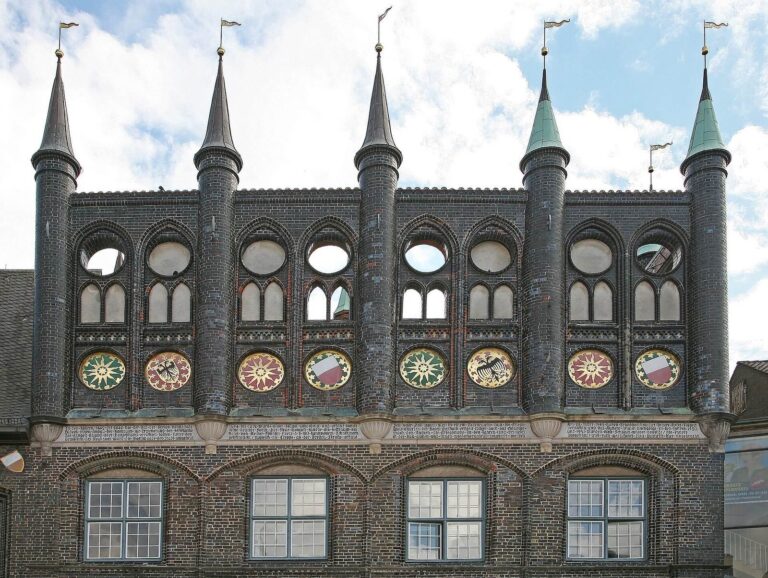
The surviving complex includes a three-aisled hall church, with a central nave and two side aisles of roughly similar height. Its Brick Gothic construction is ornamented by slender turrets and zigzag roof gables. A roof turret on the central gable was added later.
Living quarters
Wooden chambers built in 1820 provided separate quarters for men and women. Each measured about four square metres and was open at the top. The chambers stood in adjoining rows, with two long corridors between them. Names and numbers of former residents remain on the doors. The chambers continued to be occupied until 1970. A small library and a pharmacy also served the residents.
Medieval wall paintings
Throne of Solomon
A large painting in the western arched field on the north side dates to about 1320–25. It depicts Solomon, king of ancient Israel, seated with his wife and mother on a throne surrounded by twelve lions. Above them, Christ and Mary sit on a higher throne among angels. Christ shares his rule with his crowned mother, shown as Queen of Heaven, and gives her a lily sceptre.
Christ in Majesty and founder portraits
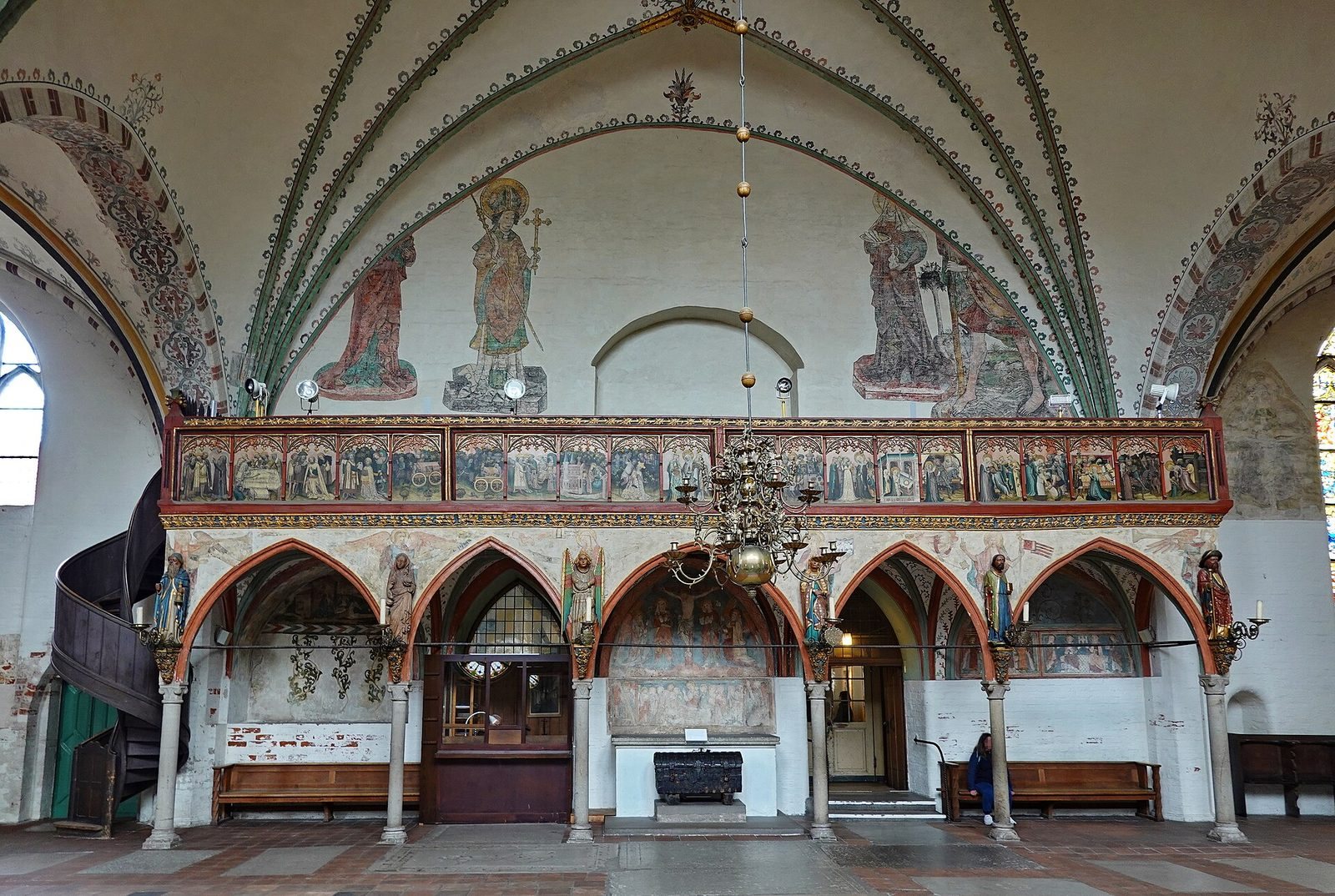
A second large painting on the north wall shows Christ in Majesty, an image of Christ in glory and sovereignty, surrounded by symbols of the four Evangelists. Circular medallions, or roundels, portray the hospital’s founders, including Bertram Morneweg. A separate Crucifixion scene appears beneath the chancel screen. In the 1866 restoration, the original blue background of the Solomon painting was removed and replaced with red after reddish material in the wall was mistakenly taken as evidence of its original colour. Painter Christian Stolle’s oil-paint restoration caused further damage. Later restoration took place in 1939–40 and 1979–84. Detailed study followed from 1990 to 1995, and both paintings had been conserved in light of its findings by 1999.
Furnishings and memorials
Saint Elizabeth panels
The railing of the chancel screen, the barrier between the chancel and the nave, contains 23 panels illustrating the life of Saint Elizabeth of Hungary, a thirteenth-century princess known for charitable work and revered as a Christian saint. An unknown Westphalian artist made the cycle in the first half of the fifteenth century. It follows the tradition of the medieval Dominican friar and religious writer Dietrich von Apolda.
Altar
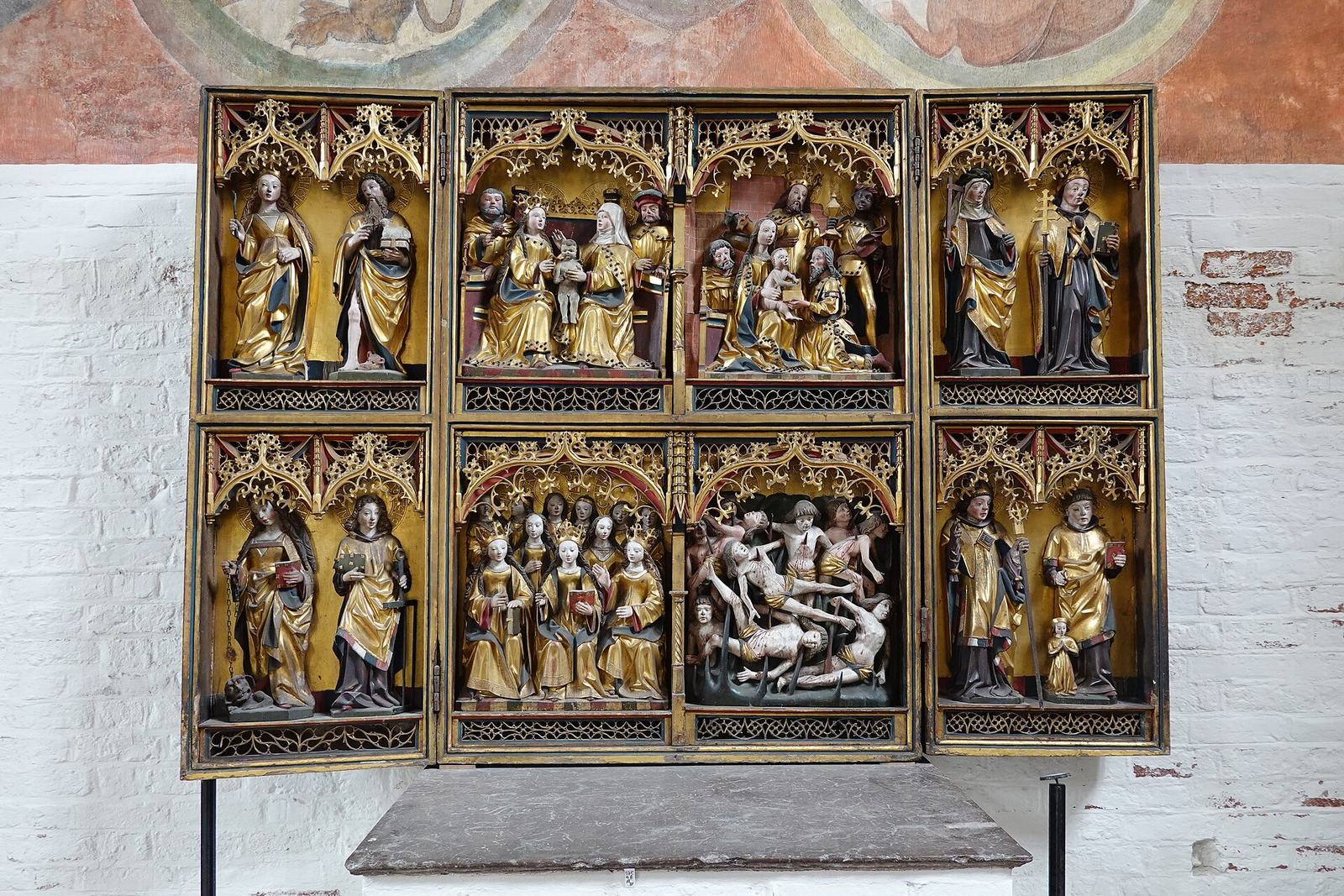
An altar depicting God the Father with the dead Son dates to 1513–20 and is attributed to Benedict Dreyer, a late-medieval artist associated with Lübeck.
Gravestones and bell
Twelve medieval gravestones are associated with the hospital. Eight remain in their original condition, while the others are partly damaged. A bell cast by Lübeck bell founder Lorenz Strahlborn in 1745 is now held in the bell collection at St Catherine’s Church.