Kalundborg Slot: A Medieval Danish Castle
Site at a Glance
- Popularity
- Medium
- Country
- Denmark
- Primary era
- Medieval
- Eras represented
- Medieval
- Civilizations
- Danish
- Site type
- Military
- Remains
- Castle
On this page9 sections
History
Construction and military role
Kalundborg Slot is a castle in Denmark whose construction began in 1340 and was completed in 1375. It was probably built by King Valdemar Atterdag. In the 14th and 15th centuries, it ranked among Denmark’s most important castles and strongest fortresses. Kings and powerful nobles met there to negotiate, and the castle served as a military stronghold during wartime. In unsettled periods, Denmark’s naval levy fleet, a force assembled through required service, gathered in Kalundborg Fjord.
In 1341, during the Kalundborg War, Valdemar besieged the castle because its lord supported Norway. After taking it, the king gained control of the town and strengthened its defenses with a ring wall.
Royal government and custody
On 31 May 1494, an assembly of the estates, representing the kingdom’s social orders, met under King Hans and adopted the Indivisibility Letter. It declared Denmark a free elective kingdom, in which the ruler was chosen, and stipulated that the realm could not be divided into inherited shares. Dorothea of Brandenburg, Hans’s mother, used the castle as her widow’s residence and died there in 1495. Steen Brahe, a Danish nobleman and brother of the astronomer Tycho Brahe, served for more than 40 years as a royal fief administrator, managing territory for the crown.
From about 1400 until 1536, the tower called Folen held Denmark’s state archive and treasury. Its records included title deeds belonging to the crown and realm. Erik of Pomerania removed the treasury and the old Dannebrog, a Danish banner dating to the 13th century, and took them to Gotland.
The castle also held prisoners. Christina Nilsdotter Gyllenstierna, a Swedish noblewoman and widow of the regent Sten Sture the Younger, was detained there with her mother and child. Christian II was brought from Sønderborg Castle in 1549 and died at Kalundborg in 1559. Swedish commander Charles de Mornay was held as a prisoner of war from 1566 to 1571. In 1621, mathematician Christoffer Dybvad was transferred from the Blue Tower at Copenhagen Castle to Folen; he remained there until his death less than two years later.
Destruction and renovation
The castle suffered severe damage during the Swedish wars. In 1659, Swedish besieging troops had the town’s inhabitants demolish it. The ruins were renovated between 2015 and 2019.
Remains
Fortified layout
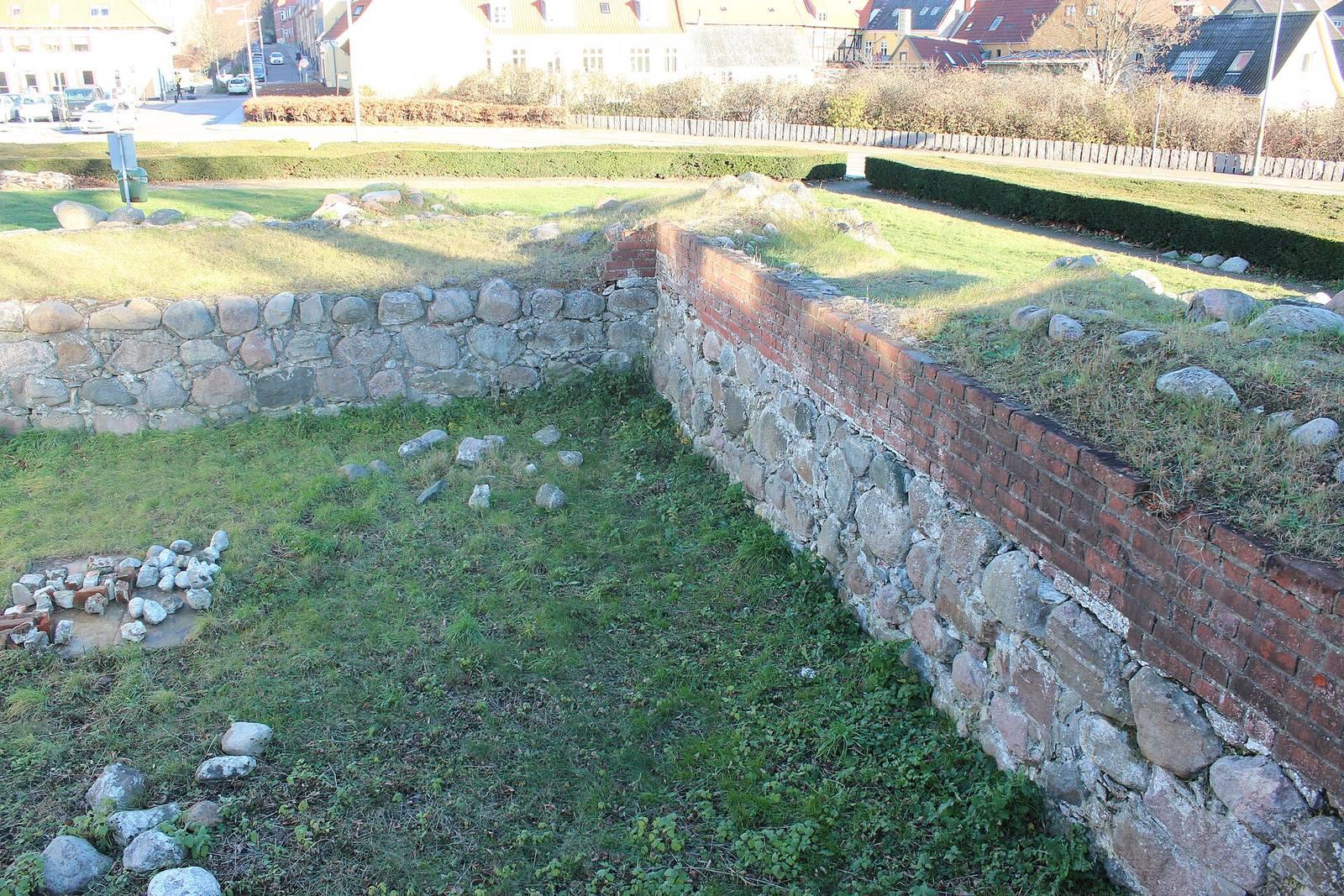
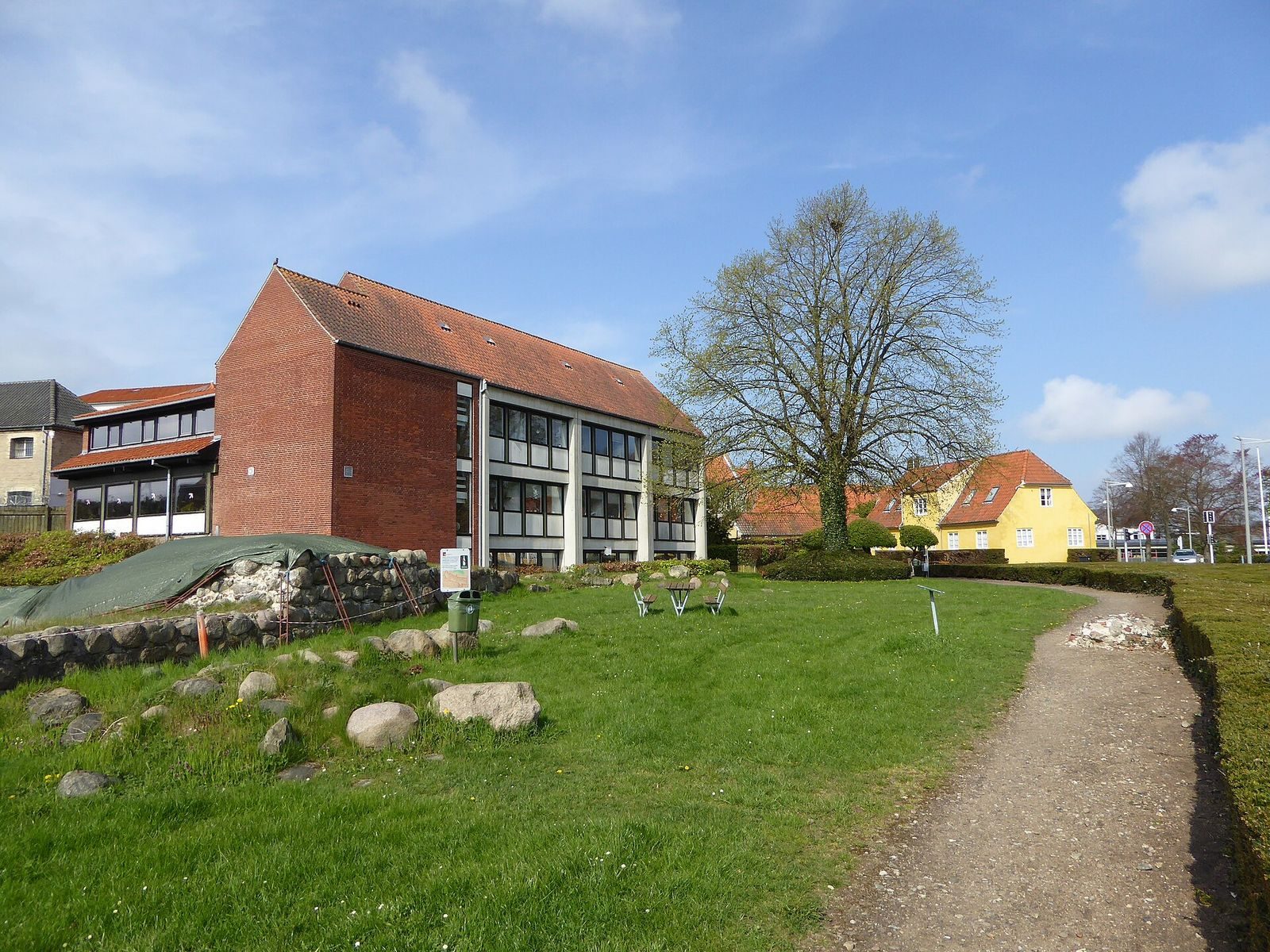
Kalundborg Slot was arranged as a concentric fortress, with successive defensive enclosures around a central group of buildings. The central complex had five wings and was enclosed by two ring walls. Houses stood along the inner side of the outer wall, between large defensive towers. Visible remains include the foundations of Folen and Fars Hat, as well as part of a ring wall.
Tower foundations
Folen
Folen was the castle’s largest tower. Its foundations survive as part of the visible remains.
Fars Hat
Fars Hat was a smaller, round fortified tower. The name was also used for medieval castle towers and may have referred jokingly to the shape of a tower roof. Its foundations survive.