Kloster Rulle: A Cistercian Nunnery in Germany
Site at a Glance
- Rating
- 4.3
- Popularity
- Very Low
- Country
- Germany
- Primary era
- Modern
- Eras represented
- Medieval, Early Modern, Modern
- Civilizations
- German, Holy Roman Empire
- Site type
- Religious
- Remains
- Monastery
On this page9 sections
History
Kloster Rulle is a former Cistercian nunnery, belonging to a Catholic monastic order, in Rulle, Germany. Founded at Haste in 1230, it moved to Rulle in 1246/47 and later became a pilgrimage destination. The monastery was dissolved in 1803.
Foundation and relocation
Giselbert von Haste, a medieval official serving Prince-Bishop Konrad von Velber, established the community with the knight Gerhard Saxo and Osnabrück citizen Heinrich Svethering. A prince-bishop was both a church leader and a secular ruler. The nuns first lived at Giselbert’s farmstead in Haste, then part of Osnabrück.
The community transferred to a former farmstead at Rulle, probably after its building at Haste burned down. Konrad von Lingen, an official serving the Counts of Tecklenburg, had sold the Rulle property to the Cistercians in 1233. The abbots of Hude initially oversaw the nunnery’s religious life; abbots of Loccum and later Marienfeld took on that responsibility.
Community and pilgrimage
The nuns taught girls and young women from noble families in the region. Their instruction included reading, writing, Latin, social conduct and elaborate embroidery. The community continued through the Reformation, though it generally comprised only eight to ten nuns. Around 1300, Gisela von Kerssenbrock completed the richly decorated manuscript known as the Codex Gisle.
On 4 November 1347, someone stole jewellery gathered for a monstrance, a vessel for displaying the consecrated Eucharistic host, and a box containing five hosts from the church altar. The thief discarded the box in a thicket. Churchgoers found it two weeks later, on the Sunday before Martinmas, and returned it to the church. The wafers had turned red, which people interpreted as a divine sign of the Eucharist, in which Catholic belief holds that bread and wine become the body and blood of Christ.
The event drew pilgrims to Rulle, especially during the fifteenth and sixteenth centuries. Pilgrimage declined after the monastery closed, then grew again from 1917, after Osnabrück Bishop Hermann Wilhelm Berning preached about the event. A spring in the monastery grounds also gave rise to the name Kloster Marienbrunn, used from 1661 before it later fell out of use. Local tradition tells of a blind shepherd who found the spring with his staff and regained his sight when water emerged.
Baroque abbey and dissolution
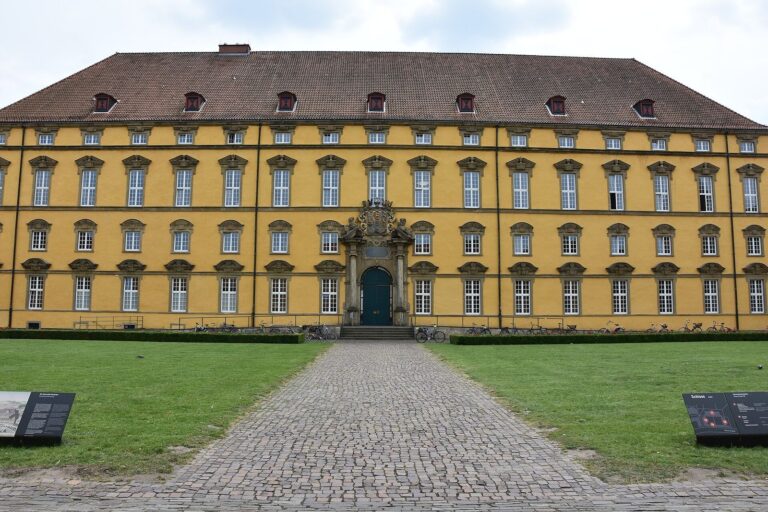
Abbess Anna Barbara von Scharbe commissioned a one-storey Baroque abbey house modeled on the one at Marienfeld. Her predecessor, Anna Magell von Clevorn, directed its construction even after resigning in 1700. Anna Barbara died in 1704, after four years as abbess. Her successor, Hedwig Sydonie von Schwencke, completed the building in 1712 and led the monastery until 1726.
Maria Anna Isabella von Hövell served as abbess from 1726 to 1763, followed by Eleonora von Honstedt from 1763 to 1776 and Anna Lucia von Reusch from 1776 to 1786. Hedwig von Walthausen held the office from 1786 to 1802. Her sister, Sophie Charlotte von Walthausen, became the last abbess; she had come from Bersenbrück, where the former monastery continued as a collegiate foundation after 1787.
The nunnery ended after the 1803 Final Recess of the Imperial Deputation, a decree that reorganized territorial and church holdings in the Holy Roman Empire. Under its terms, monasteries in territories ceded to France passed to secular control. Rulle and its lands became property of the Kingdom of Hanover and were administered by the Hanover Monastery Chamber.
Secularization and later use
After the monastery’s dissolution, the pilgrimage church passed as a gift to the Catholic parish of Rulle. Catholic clergy lived and worked in the west wing of the former abbess’s house from 1803 to 1973, while its other rooms served as a forester’s residence. In the early twentieth century, the municipality bought the house from the Hanover Monastery Chamber and used it as a school. After a new school opened, a diocesan youth house occupied the west wing. Since 1957, the building has housed Haus Maria Frieden, the Diocese of Osnabrück’s youth education centre.
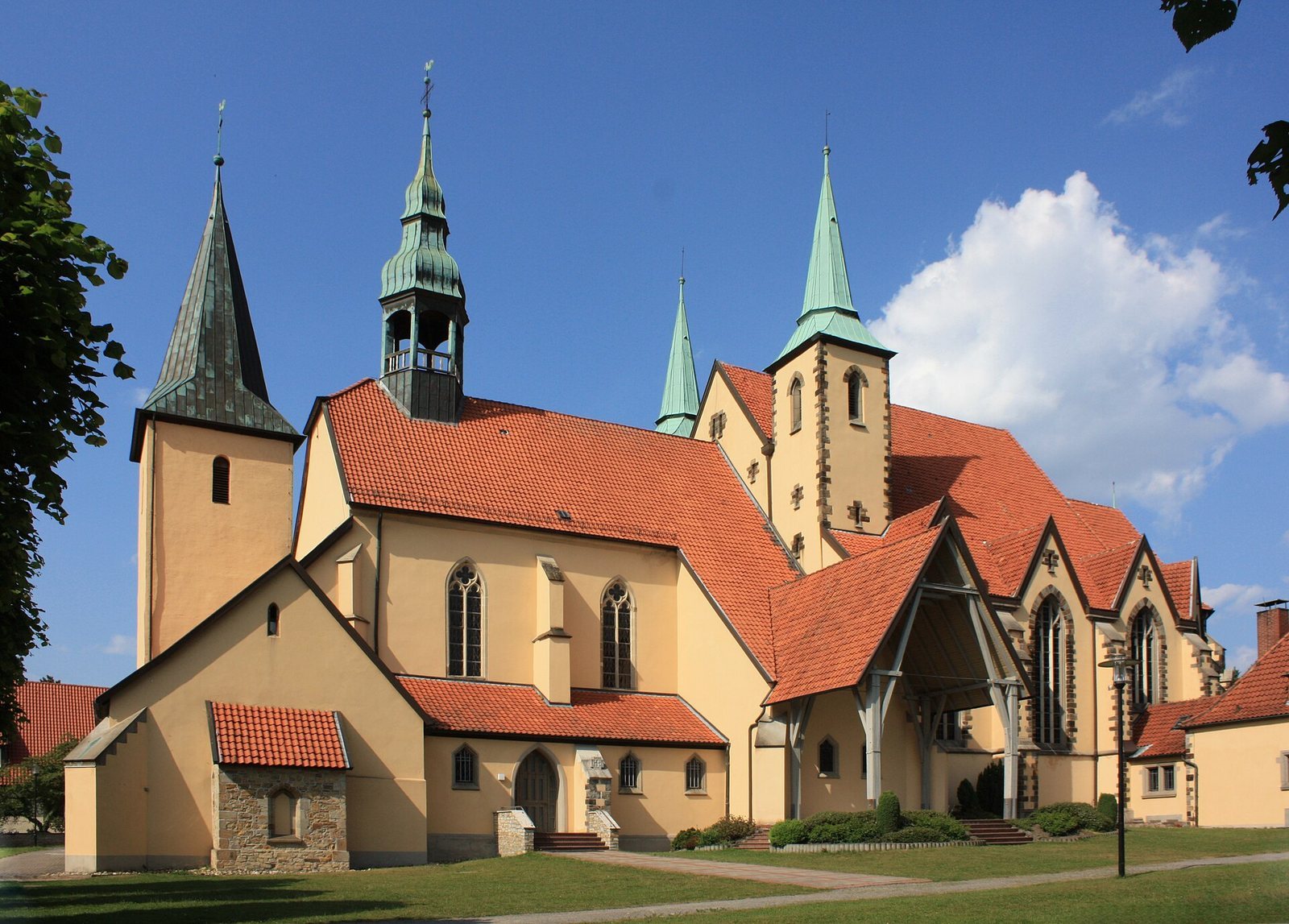
From 1927 to 1930, the church of St John was reshaped by joining the old parish church of St Ulrich and the Chapel of Grace beneath one roof and extending the church to the east.
Remains
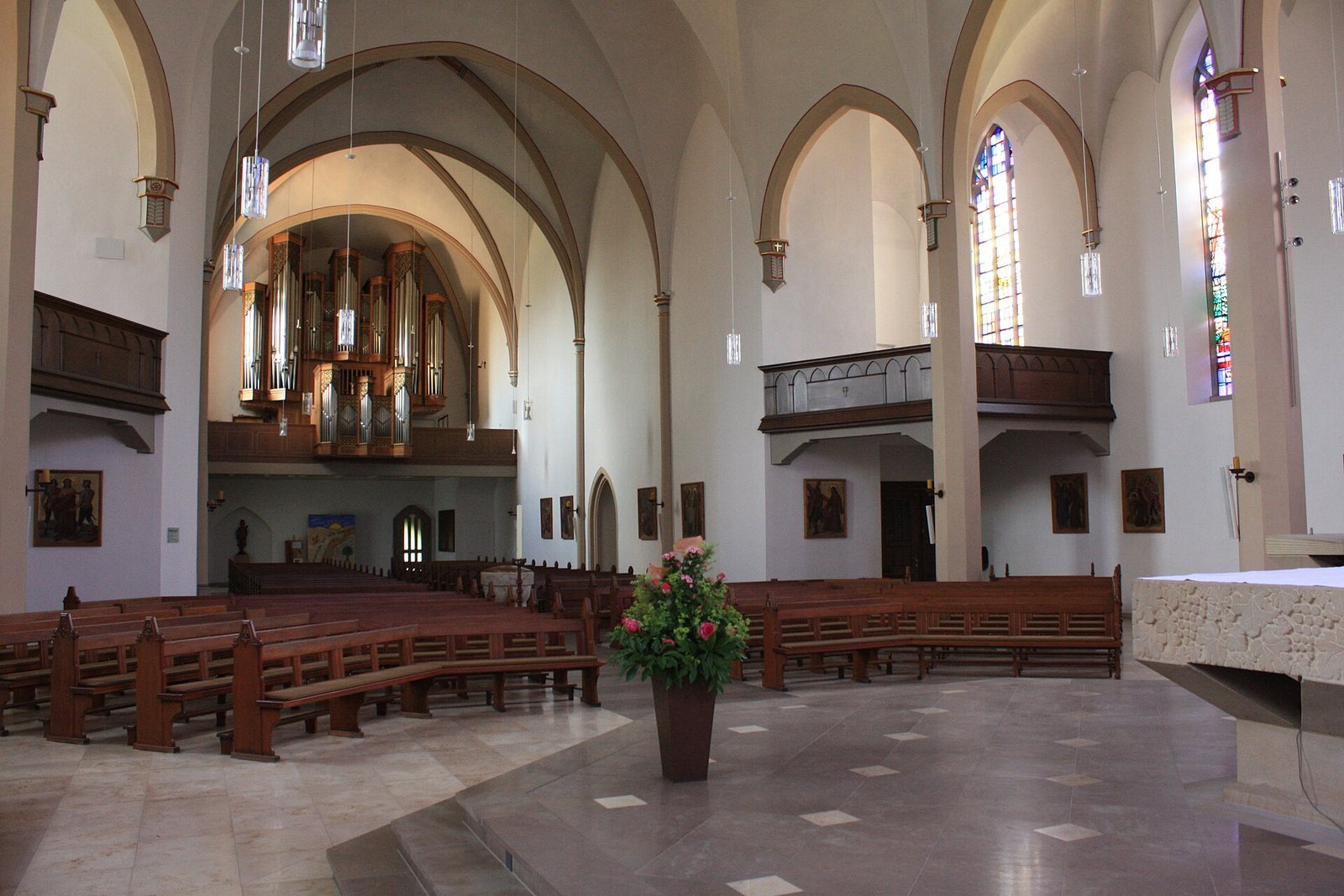
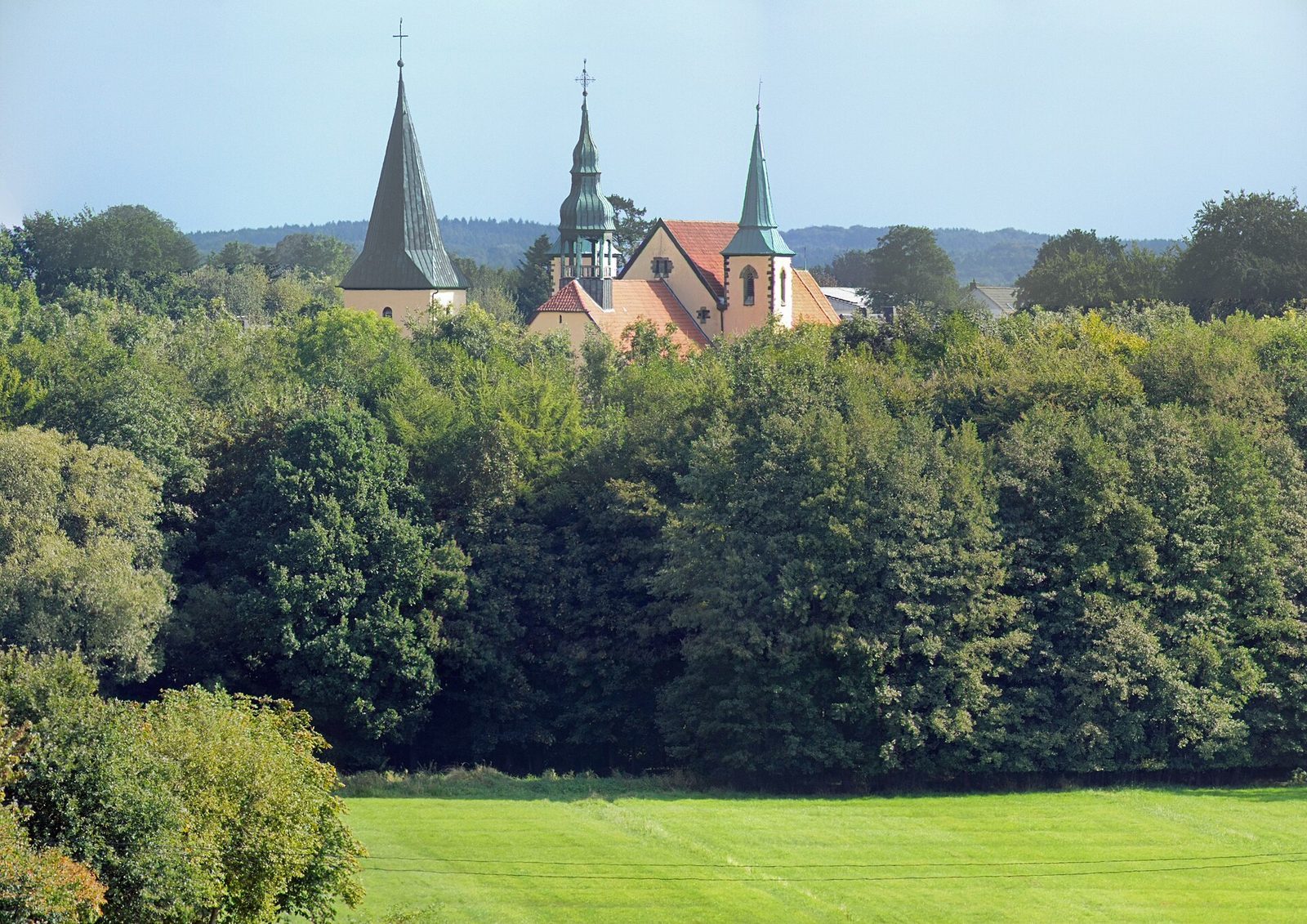
The surviving complex centers on the pilgrimage church, with its older northern church structures joined to a three-aisled hall extending east. A hall church has a central nave and side aisles of roughly equal height. The multi-towered, richly articulated design uses the Heimatschutz style, an early twentieth-century German movement that drew on regional building traditions.
Church complex
The old parish church of St Ulrich stands on the northern side of the complex and occupies the site of two earlier church buildings. It is joined beneath the same roof as the Chapel of Grace, while the larger hall church continues eastward. Together these parts form the pilgrimage church of St John.
Former abbess’s house
The former abbess’s house is a plastered, one-storey Baroque building constructed from Piesberg sandstone. Remodeling in 1973 added a basement, but left the exterior form unchanged. Red-brick facing used in the interior alterations contrasts with the region’s traditional sandstone and half-timber construction.
Spring and former farm buildings
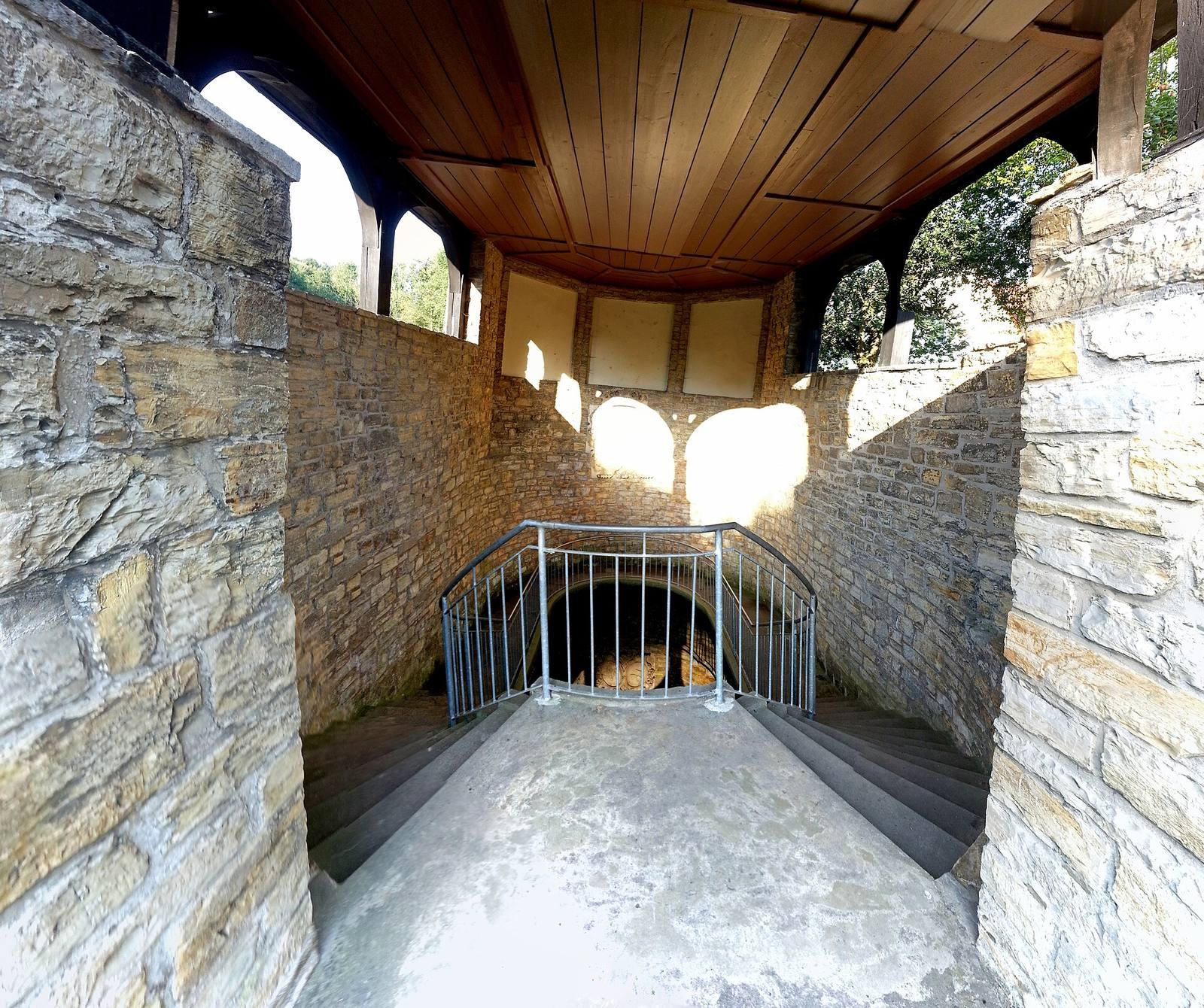
The Marienbrunnen spring has been built over since 1923. The monastery’s coat of arms and the family arms of Abbess von Hövell, dated 1742, were once displayed above the entrance to the sisters’ house; they were later placed on the rear interior side of the well house. Half-timbered buildings that formerly served as monastery farms remain in Rulle and now have other uses.