Altes Schloss Freyenstein: Renaissance Castle Ruin in Brandenburg
Site at a Glance
- Rating
- 4.5
- Popularity
- Medium
- Country
- Germany
- Primary era
- Early Modern
- Eras represented
- Early Modern, Modern
- Civilizations
- Holy Roman Empire, Margraviate of Brandenburg
- Site type
- Domestic
- Remains
- Castle
On this page10 sections
History
Renaissance construction and destruction
Altes Schloss Freyenstein is a Renaissance castle ruin in Freyenstein, a district of Wittstock/Dosse in Brandenburg, Germany. Built between 1551 and 1572 for Curdt von Rohr by the architect Dominicus Parr, it stands on the site of a medieval castle. The Renaissance was a European cultural and artistic period whose architecture often drew on classical design.
The castle was destroyed in 1631 during the Thirty Years’ War, a major European conflict fought from 1618 to 1648. It has remained in ruins since then.
Modern conservation
In 1968, the surrounding area was redesigned to follow existing park structures. Partial restoration and development work took place from 1969 to 1973. HB-Werkstätten für Keramik in Marwitz restored and added to the castle’s terracotta elements.
Remains
Plan and surviving wings
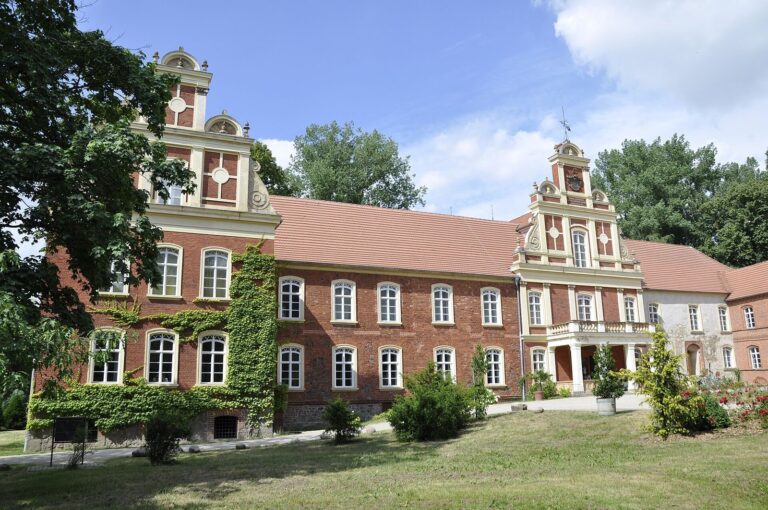
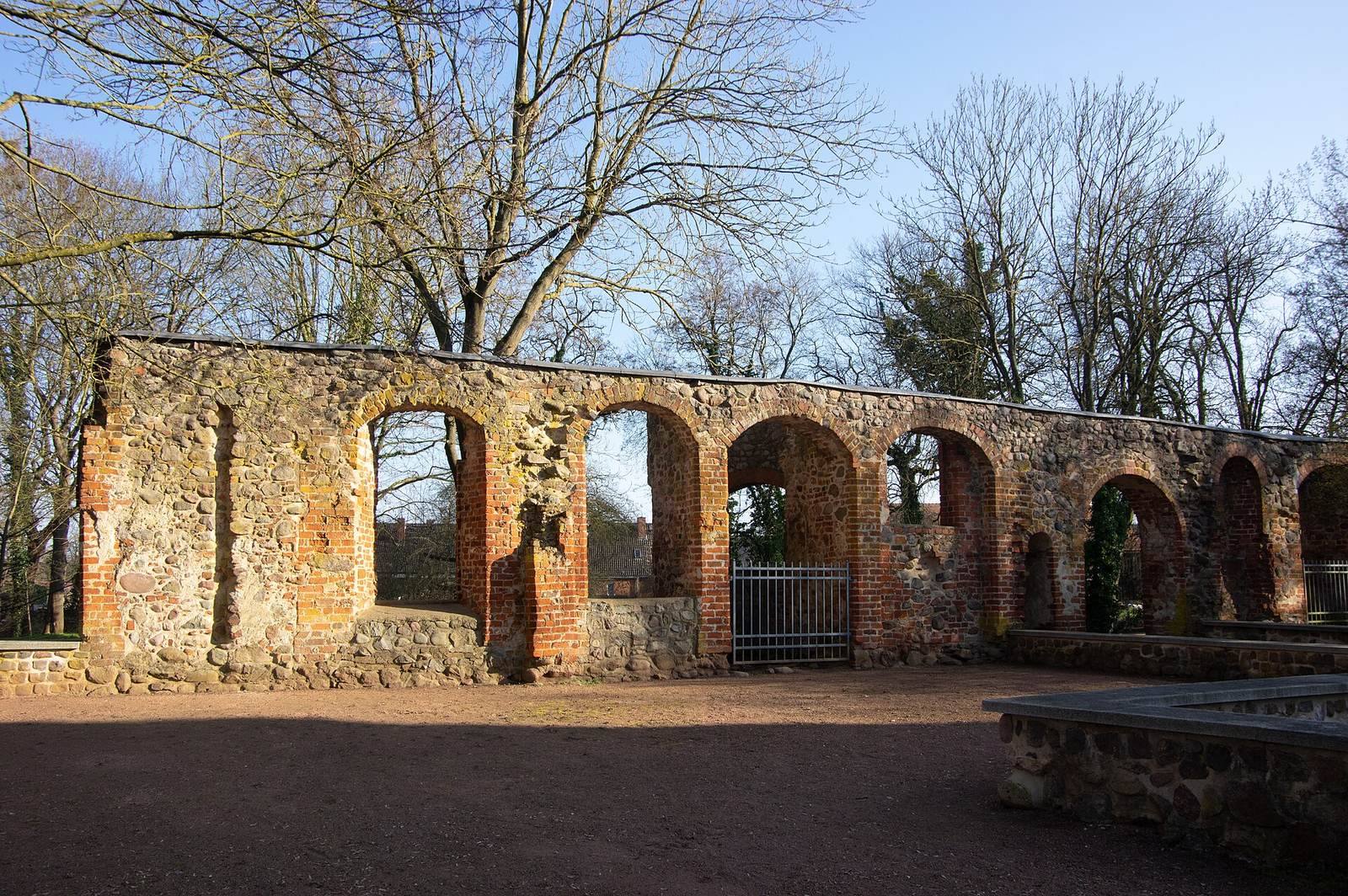
The fragmentary remains occupy a site southeast of the town wall, with moats partly enclosing the castle area. The original plan had three wings arranged irregularly. Surviving sections include parts of the south-facing main front and the decorated north end of the west wing.
South-facing front
Sections of the former main front survive around the entrance. Two semicircular tower stumps stand on either side of the gate.
West wing
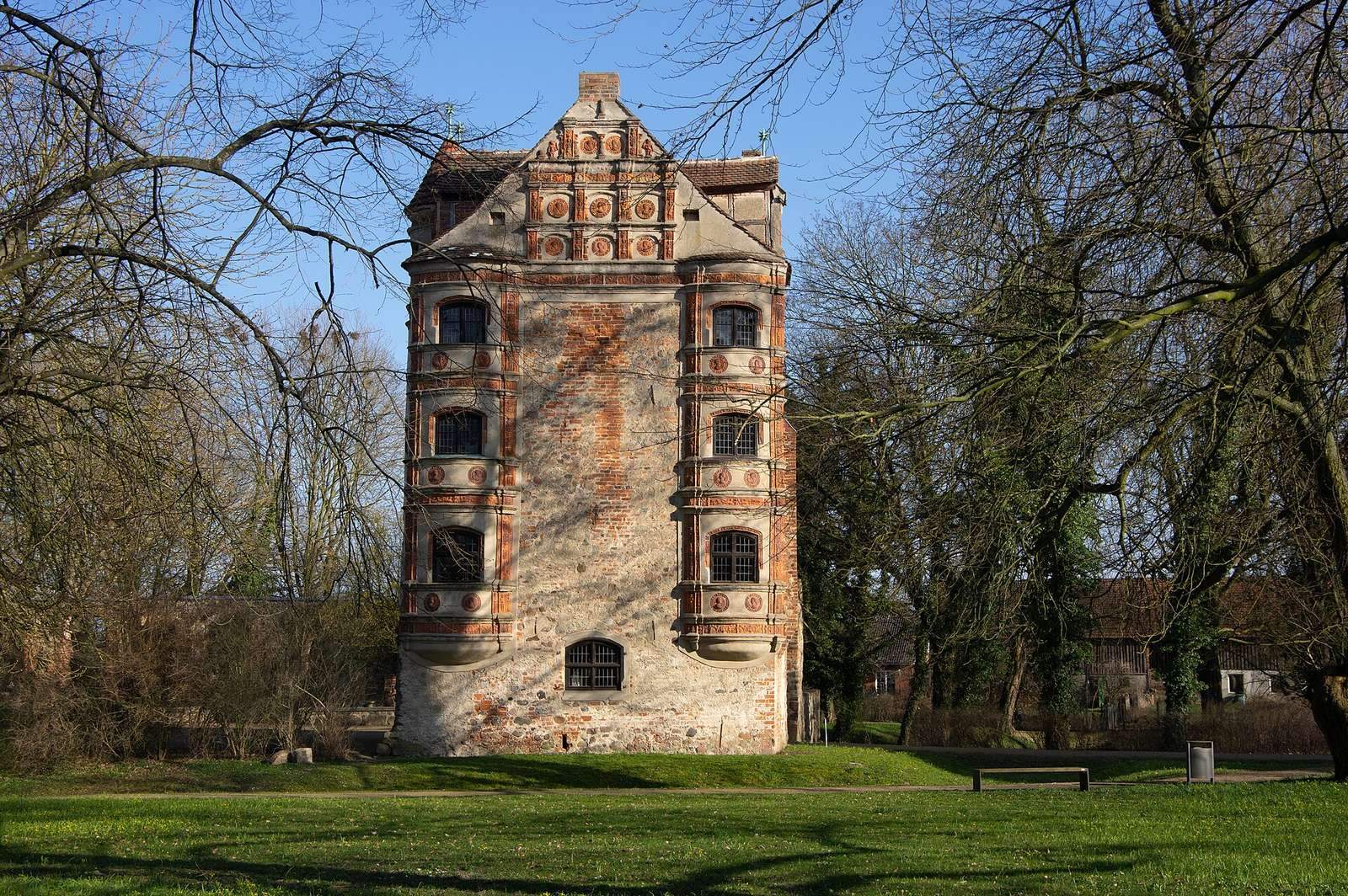
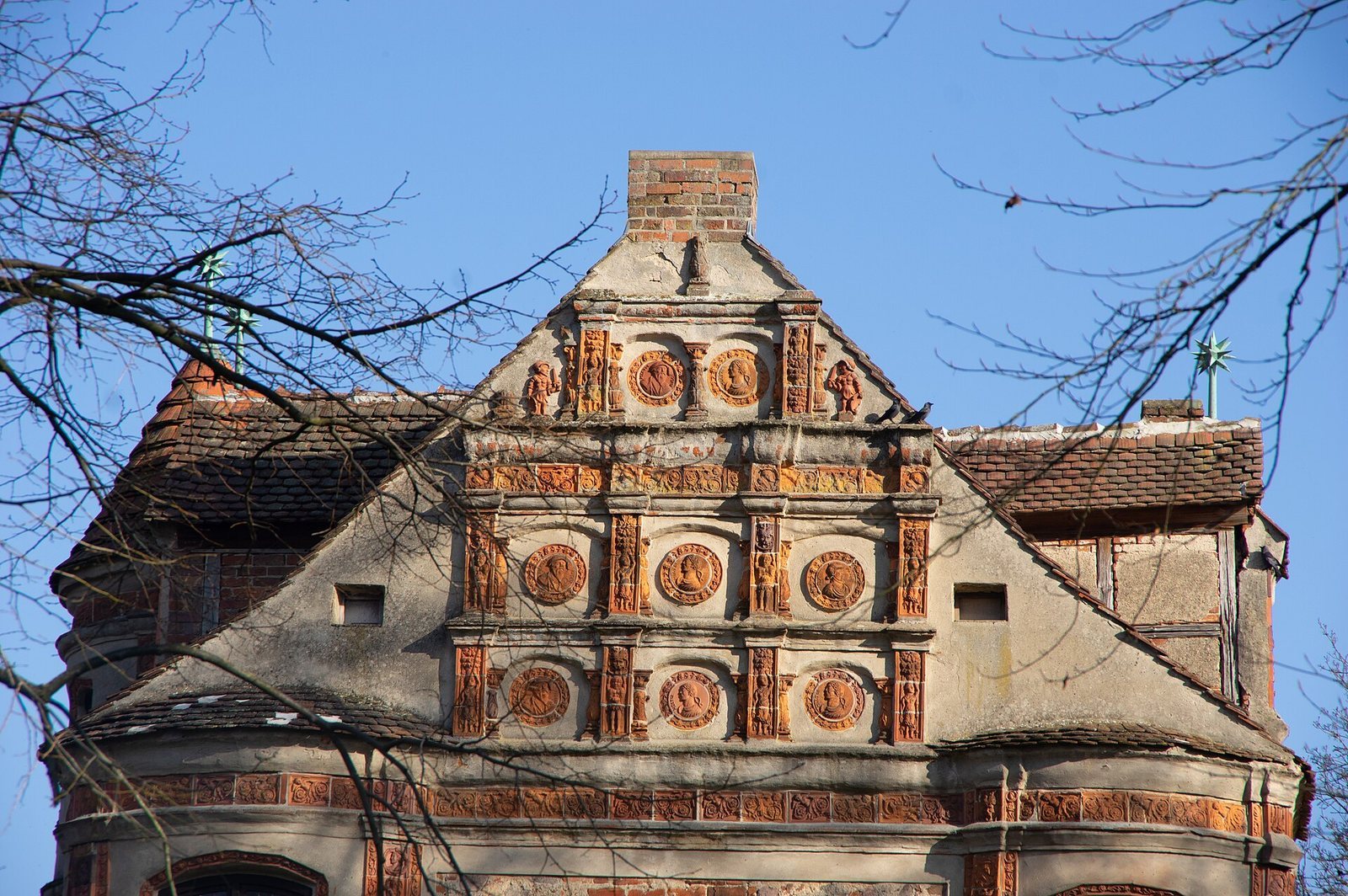
The preserved northern end of the west wing rises four storeys. Its windows have shallow arches, and a stair tower forms part of the surviving section. Two projecting bay windows, each three storeys high, frame the north front.
Decoration and interior
Terracotta ornament
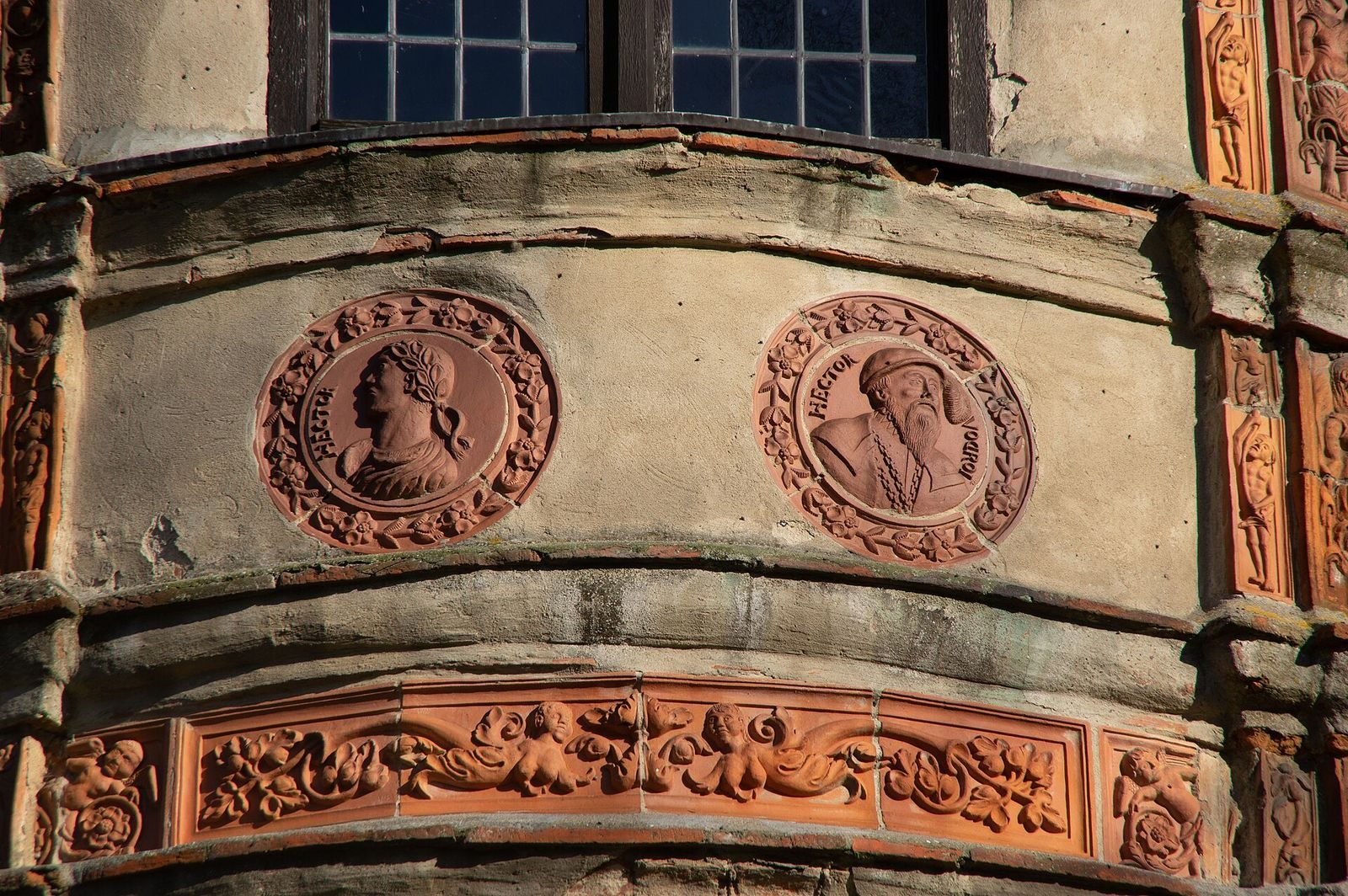
Carefully molded terracotta, originally painted, decorates the bay windows, gable panels, and upper section of the stair tower. The work probably came from the workshop of Statius von Düren, a Lübeck master craftsman. Its style resembles the Johann Albrecht style, associated with sixteenth-century Duke Johann Albrecht I of Mecklenburg and also found at the Fürstenhof in Wismar and Gadebusch Castle. Pilasters, shallow column-like projections on a wall, and friezes carry foliage, grotesque figures, and classical motifs. Portrait medallions show Paris, a Trojan prince, and Conrad von Rohr represented as Hector, a Trojan hero.
Rooms and furnishings
On the ground floor, a room divided into three bays has a cross vault formed by intersecting vaulted sections. An open fireplace is built into the north wall of the second upper storey. Niches divide part of the south wall on the third upper storey, where casts and original terracotta relief fragments are fitted. The furnishings include a restored council bench dated 1753 and portraits from the ancestral gallery of the New Castle. These depict Dettloff von Winterfeldt, who died in 1733, Georg von Winterfeldt, who died in 1773, and a married couple from the first half of the nineteenth century.