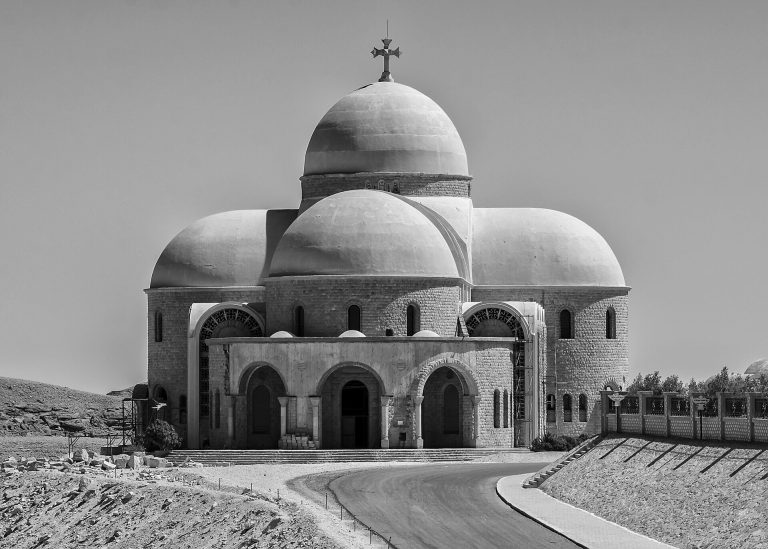
Monastery of Saint Anthony: A Coptic Orthodox Monastery in Egypt’s Eastern Desert
Site at a Glance
- Popularity
- Very High
- Country
- Egypt
- Primary era
- Medieval
- Eras represented
- Classical, Medieval
- Civilizations
- Ayyubid, Mamluk, Roman
- Site type
- Religious
- Remains
- Fortified Monastery
On this page23 sections
History
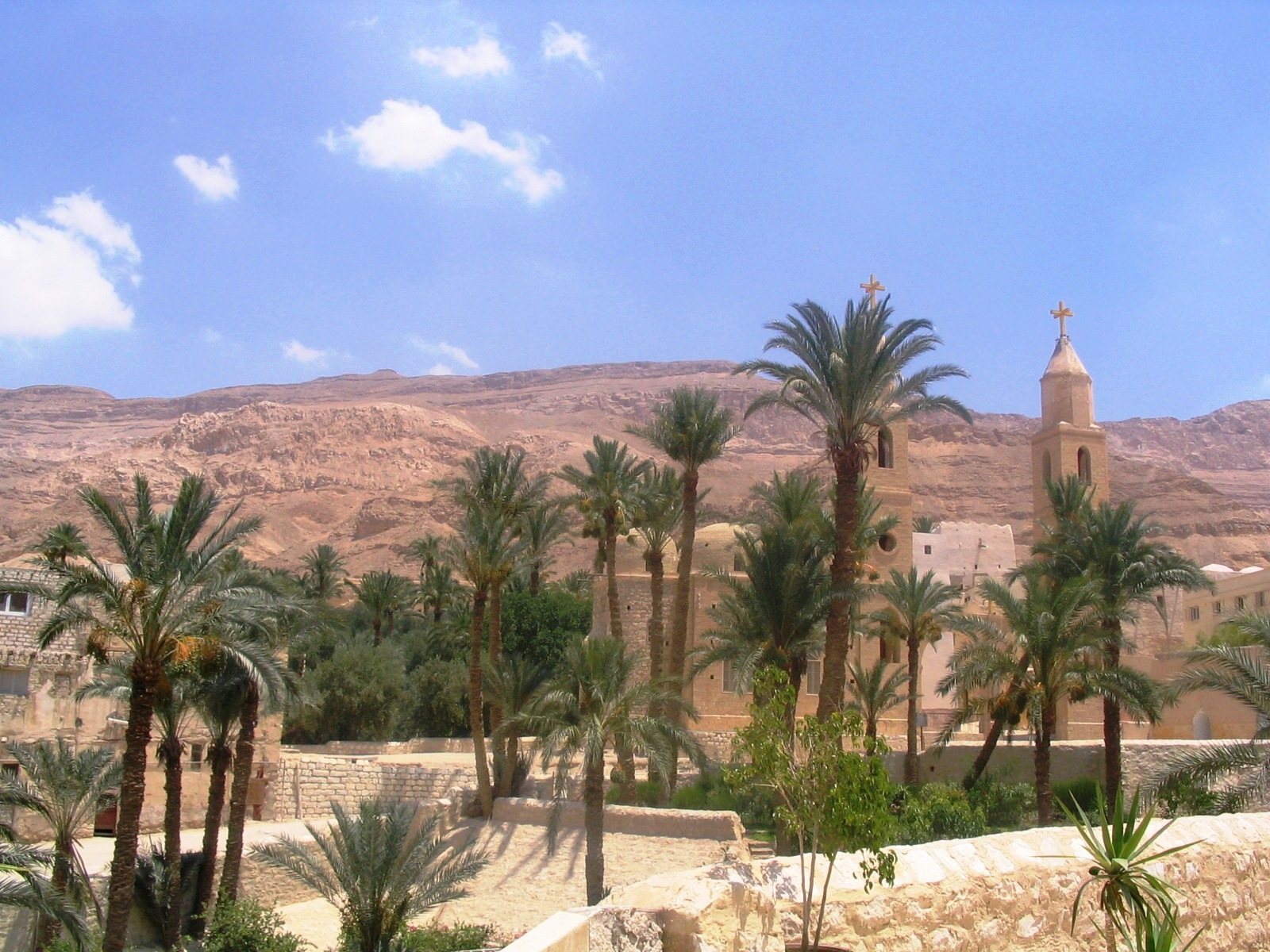
The Monastery of Saint Anthony is a Coptic Orthodox monastery in an oasis in Egypt’s Eastern Desert, amid the Red Sea Mountains. Followers of Anthony the Great, an Egyptian Christian ascetic, established it at the place associated with his hermitage. Construction is dated to 298–300, during the rule of Constantius Chlorus, a Roman Caesar, or junior emperor. The monastic community moved to this remote setting in 312.
From solitary retreat to monastic community
The first monks lived apart in individual cells, gathering to celebrate the Divine Liturgy, the central Christian Eucharistic service, and to eat in a shared refectory, or dining room. Over time, life at the monastery became more communal, moving beyond its early emphasis on solitary religious discipline.
Coptic and Melkite communities
During the sixth and seventh centuries, monks from Scetes, an Egyptian desert region known for its early monasteries, took refuge at Saint Anthony’s during Bedouin and Berber attacks. Coptic monks and Melkite monks occupied the monastery at different times and sometimes lived there together. Melkite Christians followed the Byzantine Christian tradition and formed a distinct community from the Copts.
In 615, John the Merciful, a Melkite patriarch, or senior church leader, sent money to Anastasius of Persia, then head of the monastery, and asked him to shelter Melkite monks fleeing Persian persecution. Melkite monks continued to oversee the community until the late eighth century.
In 790, Coptic monks from the Monastery of Saint Macarius the Great in Scetes took the remains of John the Short, a fifth-century monk who had lived and died at Saint Anthony’s. They entered at night disguised as Bedouins, using a deception involving a judge and the Melkite bishop, and carried the remains back toward Scetes.
Attacks, restoration, and medieval pilgrimage
Bedouins from the Eastern Desert repeatedly plundered the monastery and partly destroyed it in the eleventh century. During a Kurdish and Turkish rebellion, the defeated forces of their leader, Nasir al-Dawla, also pillaged Saint Anthony’s and the nearby Monastery of Saint Paul the Anchorite. The monastery was restored in the twelfth century and flourished in the centuries that followed. A fortress-like enclosure was built to protect it.
By the early thirteenth century, the monastery held substantial endowments and property in Misr, a name used for Egypt and, in some historical contexts, for the Cairo-Fustat urban center. European priests and diplomats visited during the later Crusades, and by the early fifteenth century Saint Anthony’s had become an established pilgrimage destination.
Destruction, rebuilding, and modern revival
In the late fifteenth century, Bedouins employed by the monastery devastated it and killed all its monks. Syrian monks later settled there and helped rebuild it in the early sixteenth century. Egyptian and Ethiopian monks also lived together at the monastery for a time. It subsequently declined into ruin, and its few remaining monks relied heavily on support from the nearby village of Bush. Franciscan missionaries sometimes used the site as a base during the seventeenth century.
Before the twentieth century, monthly camel caravans brought food and other necessities from Bush. The opening of the Suez–Ras Gharib road in 1946 made the monastery more accessible. A wider revival of monastic life in Egypt then helped renew its community. The Sunday School movement led by Anba Shenudah, a senior Coptic cleric, encouraged educated young men to become monks. The revival of monastic life under Pope Kyrillos VI, whose leadership ran from 1959 to 1971, also contributed to renewed spiritual life in the Coptic Church. The monastery’s monks numbered 24 in 1960, 69 in 1986, and about 120 monks and priests in 2010. It also serves as a center for retreats, youth programs, and religious conferences.
Remains
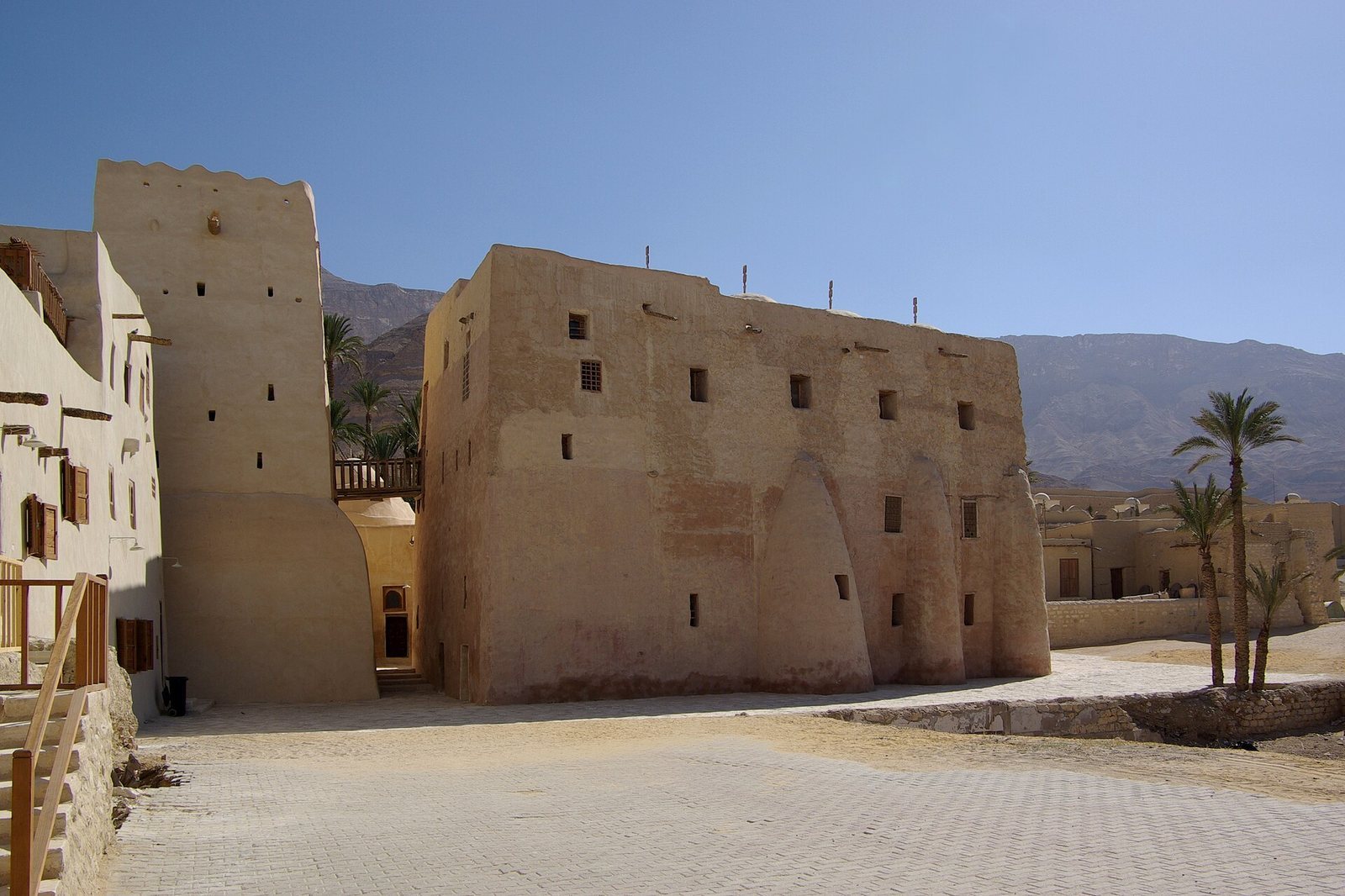
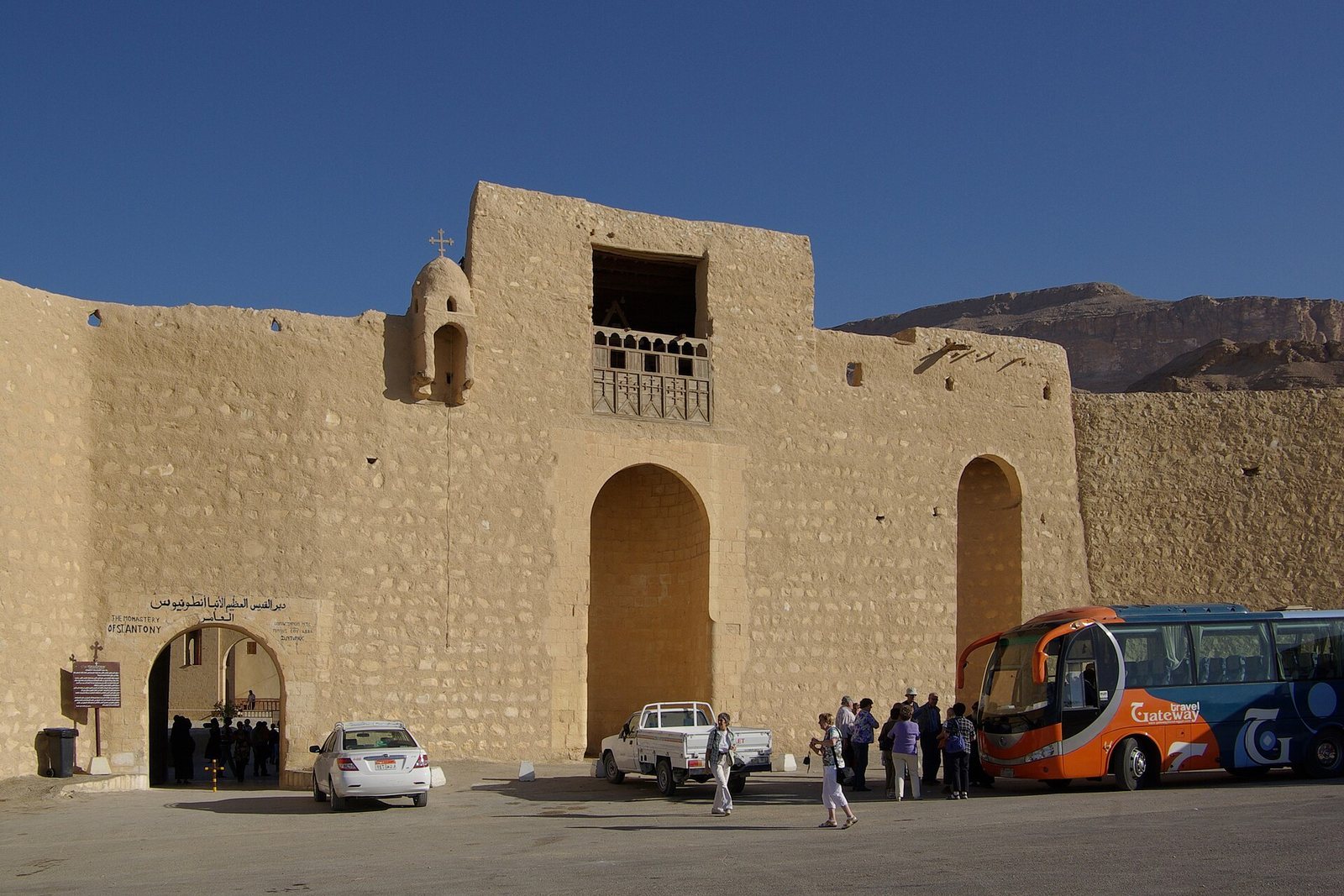
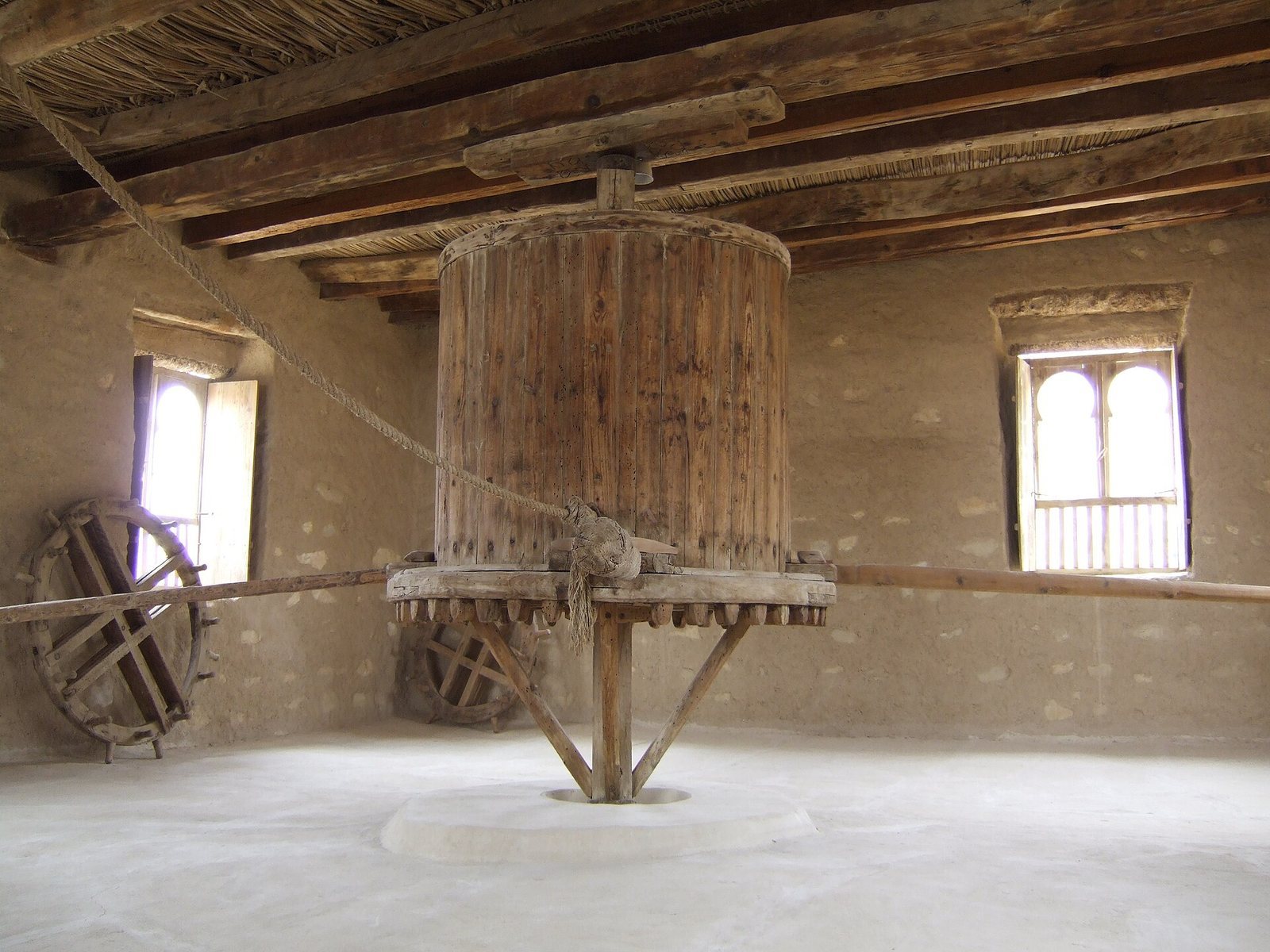
The monastery occupies about 10 hectares in a desert oasis. Its enclosed complex includes churches, gardens, a mill, and a bakery; the walls rise to as much as 12 metres. The surviving buildings and grounds bring together religious, residential, agricultural, and defensive features.
Enclosure and grounds
Walls and enclosure
The fortress-like enclosure forms the boundary of the monastery. Its substantial walls, which reach up to 12 metres high, helped protect the community. Pilgrims commonly inscribed their names, coats of arms, and dates of arrival on the walls.
Garden
By the early thirteenth century, a large garden within the walls contained about 1,000 palm trees, as well as apple, pear, pomegranate, and other trees. Vegetable beds, three continuously flowing springs, and a vineyard of one and one-sixth feddans, a traditional Egyptian unit of land, were also part of the grounds. A large, well-built structure stood in the garden.
Churches and monastic buildings
Twelfth-century church
This church has a central sanctuary with a very small apse, a recessed end of a church, and two sanctuaries at the sides, as well as a small choir. Its nave, or main body, is divided into two bays beneath large domes, with a broad arch between them. A small sanctuary in the southwest corner is dedicated to the four living creatures of the Apocalypse, symbolic beings in the Christian Book of Revelation; the creatures appear on its walls. A cross is painted in the apse. A passage along the church’s outer south wall holds the body of Saint Justus the monk and connects with the adjoining Church of the Apostles.
Church of the Apostles
Dedicated to Saints Peter and Paul, this church was renovated by Lutfallah Shaker in 1772. It has twelve domes, nine above the nave and three above the sanctuaries. The sanctuaries are fitted with inlaid wooden screens.
Fifteenth-century church
Built in the fifteenth century on the site of Saint Mark the Ascetic’s cell, this church was renovated by Hasaballah al-Bayadi in 1766. It has twelve domes.
Tower buildings
Two tower-like buildings stand north of the Church of Saint Anthony. The western building has storage rooms and a refectory on the ground floor, with the Church of the Virgin Mary above it. An inlaid screen spans that church. The eastern building is the monastery’s tower, and the Church of Saint Michael the Archangel occupies its third floor.
Church of Saint Anthony and library
A church dedicated to Saint Anthony contains his remains. The monastery’s library was originally intended to be a church by Pope Cyril IV, head of the Coptic Orthodox Church in the mid-nineteenth century. Because its orientation did not face east, it was never consecrated for worship and instead became a library. Its collection includes about 1,863 volumes of Coptic manuscripts. Bedouin raiders burned many manuscripts for fuel.
Paintings and manuscripts
Wall paintings
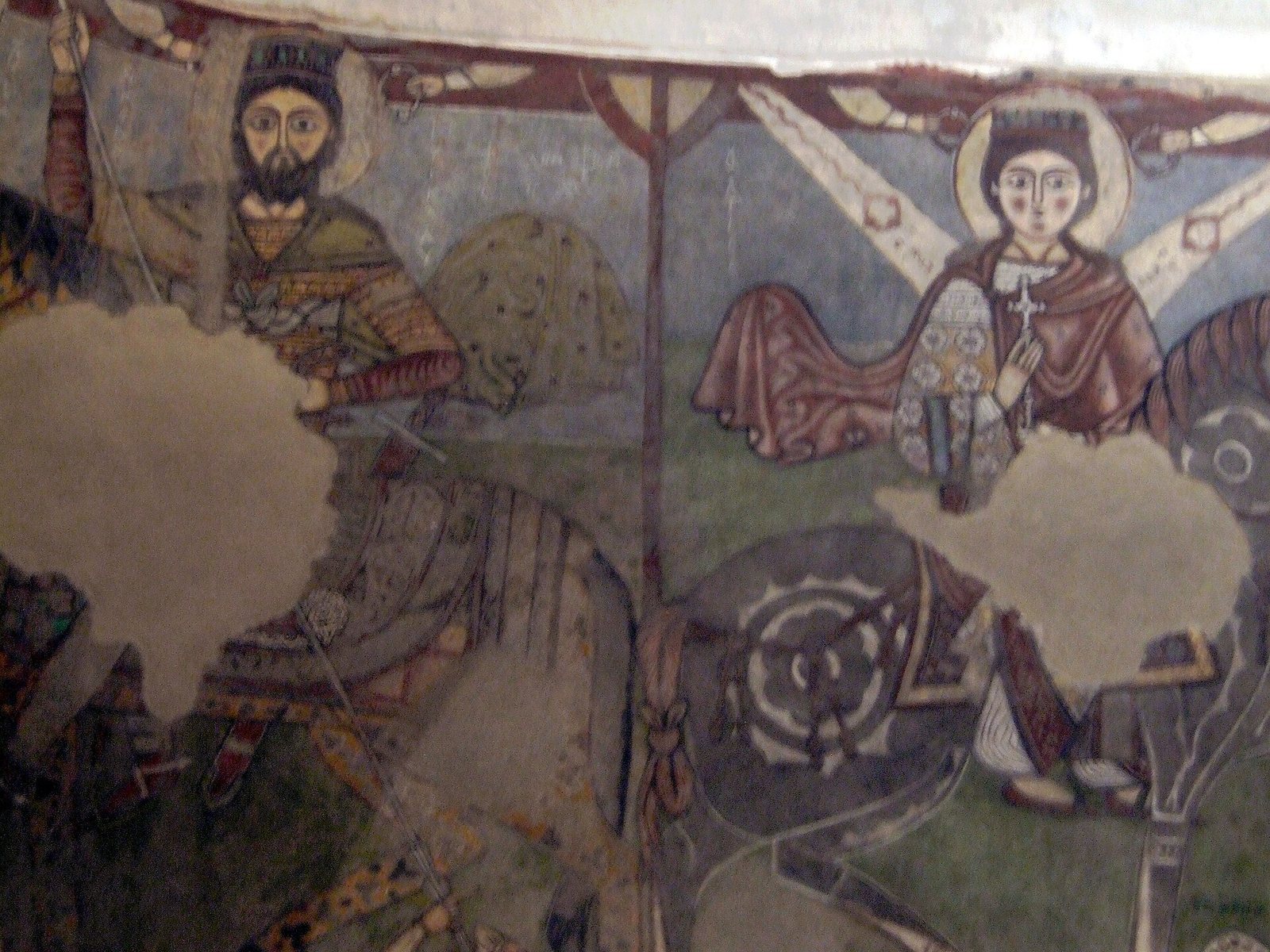
Frescoes, paintings made on wet plaster, cover much of the walls and domes of the twelfth-century church. The monastery’s paintings range in date from the seventh and eighth centuries to the thirteenth. They include brightly colored knights and more subdued depictions of hermits. Above a doorway, the underside of an arch bears a seventh-century image of Christ within an almond-shaped frame, flanked by busts of the twelve apostles. Soot, candle grease, oil, and dust have worn the paintings.
Saint Anthony’s desert retreat
Cave and hermitage
Saint Anthony’s cave is a natural opening in the rock near the southern part of Mount Galala, about two kilometres from the monastery and 680 metres above sea level. A winding stairway of about 1,150 steps leads to it. The hermitage is a very small space about seven metres from the cave’s narrow opening. Drawings also appear on the cave walls.
Spring
A spring associated with Saint Anthony lay beneath a very tall, narrow rock. Its water ran for roughly half a stone’s throw before disappearing into the sand. Pilgrims visited the spring as an act of devotion and believed it could heal illness.
Archaeological discoveries and restoration
Excavated monastic remains
Archaeological work uncovered fourth-century working quarters for monks, whose remains are now covered by a glass floor. In 2005, archaeologists also found fourth-century monks’ cells beneath the Church of the Apostles.
Modern restoration
A restoration campaign begun by the Egyptian government in 2002 included repairs to the enclosure wall, two principal churches, monks’ quarters, a defensive tower, and the monastery’s paintings. The work also repaired unsafe rooms, ceilings, and floors and added sewage, water, and electrical systems.