St Johann Parish Church in Rapperswil: A Medieval Catholic Parish Church
Site at a Glance
- Rating
- 4.8
- Popularity
- Medium
- Country
- Switzerland
- Primary era
- Medieval
- Eras represented
- Medieval, Early Modern, Modern
- Civilizations
- Holy Roman Empire, Swiss
- Site type
- Religious
- Remains
- Church
On this page12 sections
History
Foundation and parish independence
St Johann Parish Church in Rapperswil is a Romanesque Catholic church on Herrenberg in Switzerland, built around 1229 under Count Rudolf II and his son Rudolf III. Romanesque architecture is an early medieval style characterized by substantial masonry and rounded forms. The church served the new town on Herrenberg; before its construction, residents attended services at Busskirch, the earlier parish church on Lake Zurich’s upper shore.
Until 1253, St Johann remained legally subordinate to St Martin’s parish at Busskirch and, through it, Pfäfers Abbey, a monastery governed by an abbot that could hold authority over dependent parishes. In 1253, Rudolf III established Rapperswil as an independent parish. John the Baptist, a Christian prophet who baptized Jesus, has been its patron saint since that time.
Endowments and Gothic rebuilding
On 24 November 1446, Countess Elisabeth of Toggenburg endowed the church’s All Saints altar with 800 Rhenish gulden, a currency used in the Rhineland. Fundraising in Habsburg cities, territories of a European ruling dynasty, and a legacy from Countess Gutta of Reinach-Wertheim helped pay for a major Gothic rebuilding in 1493–97. Gothic architecture is a later medieval style associated with pointed forms, rib vaults, ceilings supported by intersecting ribs, and tracery, ornamental stonework in windows.
Reformation, fire, and rebuilding
Around 1531, following the Reformation, the sixteenth-century movement that led to the establishment of Protestant churches, Renaissance winged altars were placed in the side chapels. During the Baroque period, a European artistic and architectural era that followed the Renaissance, they were moved to other chapels. This relocation protected them from the fire of 30 January 1882, which badly damaged the church.
Art historian Johann Rudolf Rahn advised architect Xaver Müller during the rebuilding. The work was completed in 1885, and the church was rededicated on 6 October that year.
Music and parish life
Rapperswil musicians founded the Brotherhood of St Cecilia and St Catherine in 1737. The church’s musical tradition also includes works by Rapperswil-born church musicians Carl Greith and his father Franz Josef Greith; more than 1,000 compositions by the two are known. Franz Josef composed the melody of the Rütli anthem, a Swiss patriotic song associated with a meadow linked to the country’s founding traditions.
St Johann belongs to the Catholic parish of Rapperswil-Jona in the Diocese of St Gallen, a church district overseen by a bishop. The parish serves about 3,900 people and covers the former political municipality of Rapperswil. Jona has a separate Catholic parish.
Remains
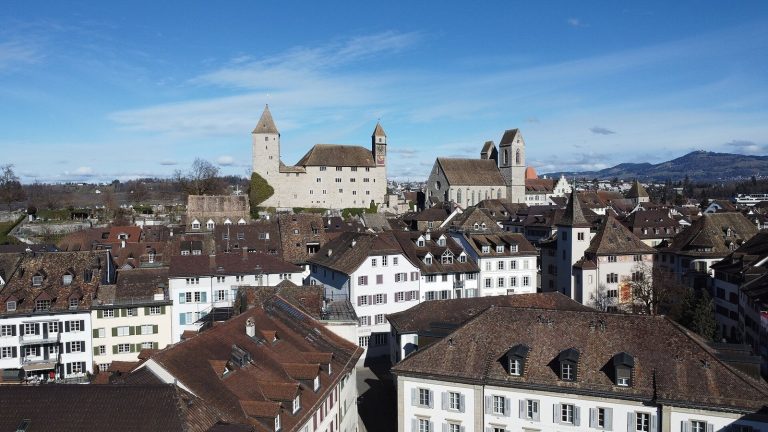
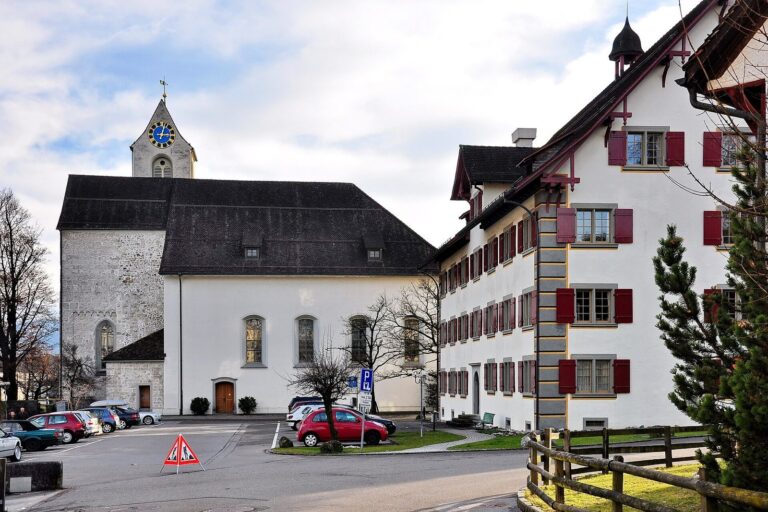
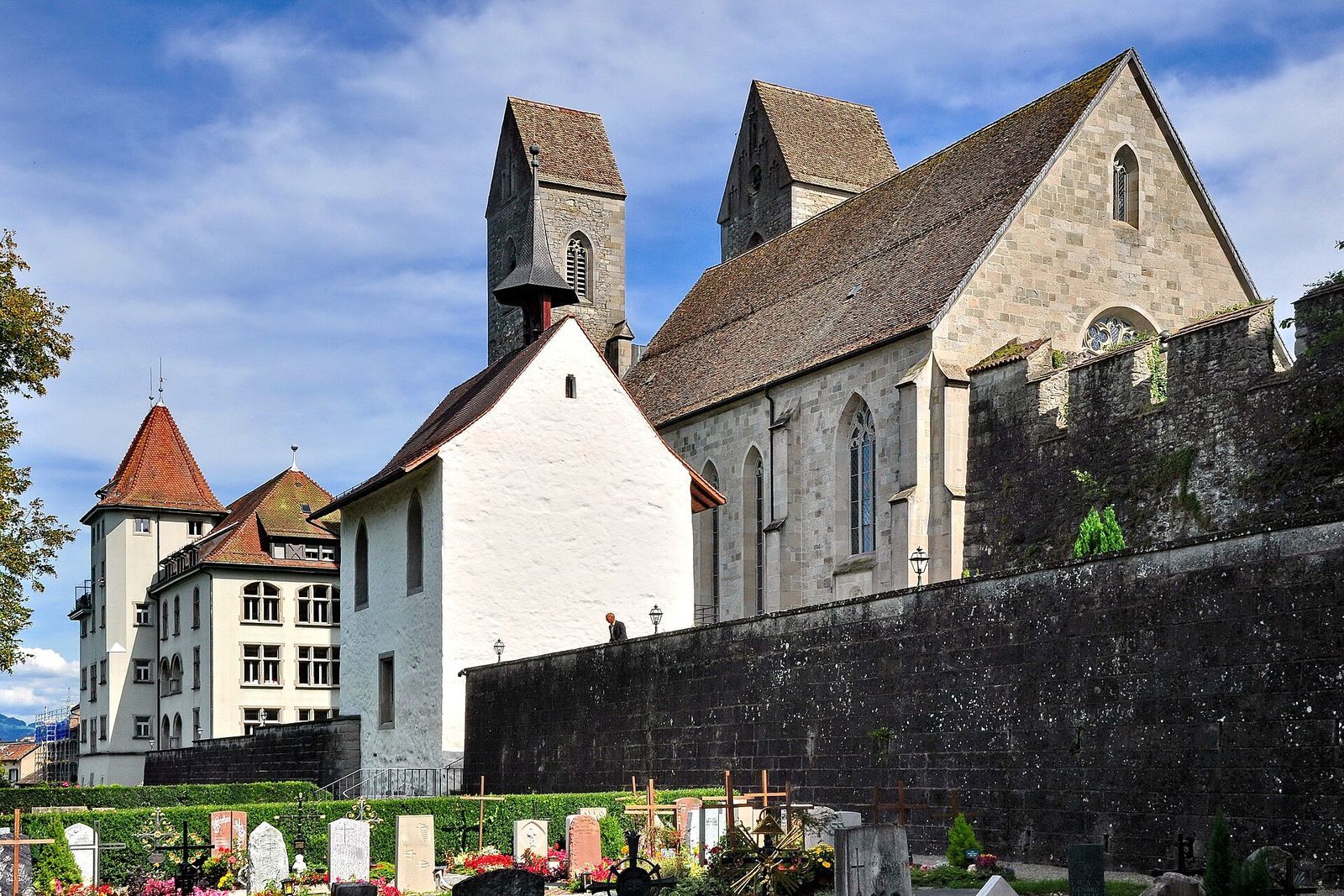
The church stands on the eastern slope of the castle hill in the northern part of Rapperswil’s old town, about 20 metres east of Rapperswil Castle and northeast of the town museum. The Catholic cemetery borders it to the north. The surviving structure brings together medieval towers and stonework with a later rebuilt interior.
Medieval church and towers
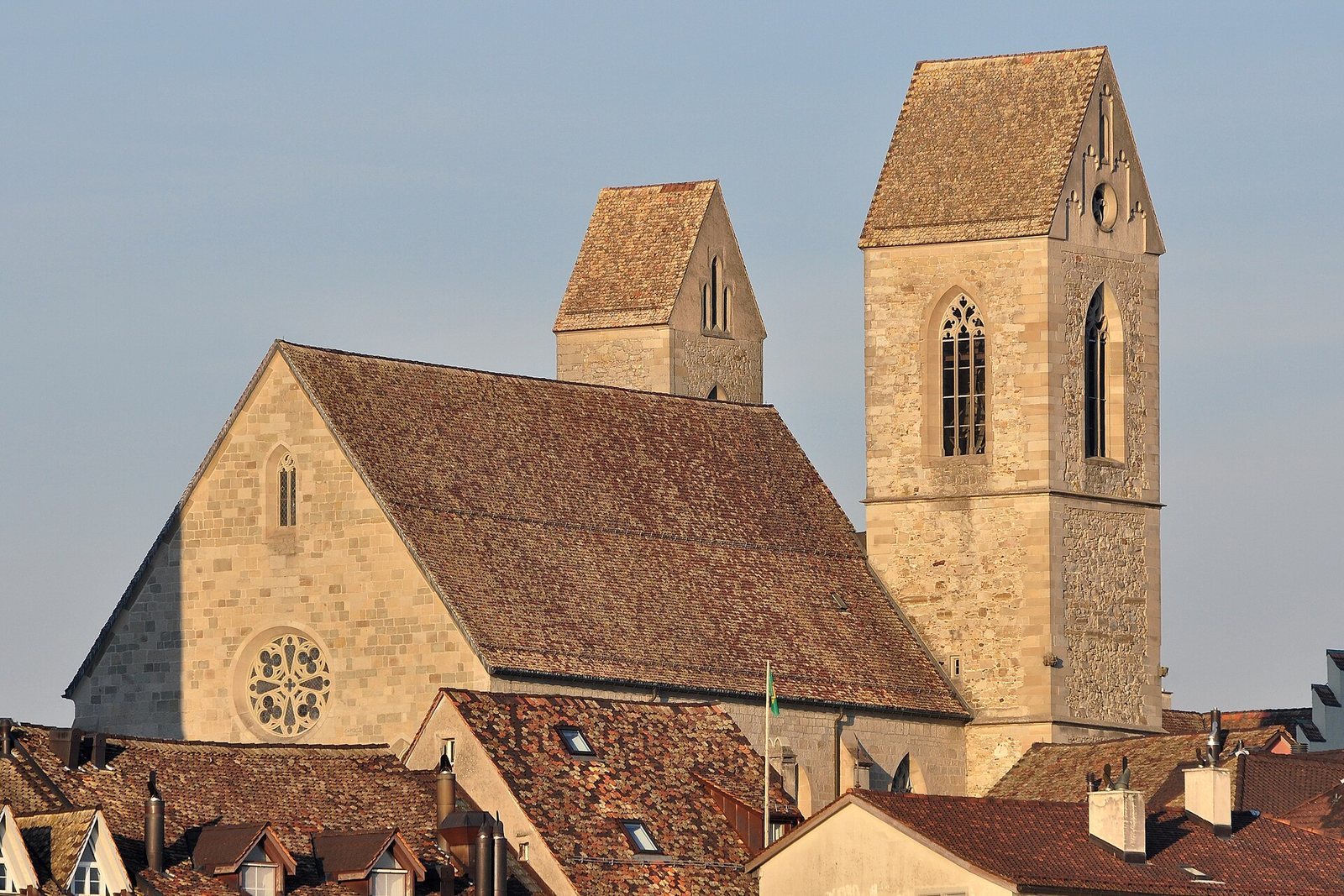
The original church was a single-hall building with a straight-ended sanctuary. Its Romanesque north tower belongs to the thirteenth-century church. In 1383 the building was raised and extended eight metres west toward the castle, and a substantial south tower was added in 1441. The three-sided Gothic choir, the area around the main altar, has a rib vault, a ceiling supported by intersecting stone ribs, and tracery windows. The south tower held the sacristy, a room for church furnishings. Its thick walls protected the sacristy and treasury during the fire; the treasury included goldsmiths’ work by Rapperswil makers Breny, Dietrich, Dumeisen, Rüssi, and Ysenschlegel.
Post-fire architecture and fittings
Rebuilt interior
In the rebuilding after the fire, the surviving towers were raised by 1.2 metres. The church received a new choir with a Neo-Gothic star vault, a later revival of Gothic design whose ribs form a star pattern. The main hall was extended by several metres and given a double-hipped wooden ceiling. The Neo-Gothic altars and pulpit were made by the Marggraf workshop in Munich.
Carved features and furnishings
The church’s southern wall retains medieval sandstone. Its sun-exposed position is cited as one reason Rapperswil’s first roses bloom there. A carved wooden feature decorates the staircase to the gallery. Other interior features include the entrance, main and side altars, a window, and a Madonna statue beside the left side altar. A carved console, or projecting support, bearing an angel and Rapperswil’s coat of arms dates to about 1440–50; it formerly belonged to the tower sacristy and is now in Rapperswil Town Museum. Benziger & Co. of Einsiedeln made the large chandelier in 1894.
Bells and organ
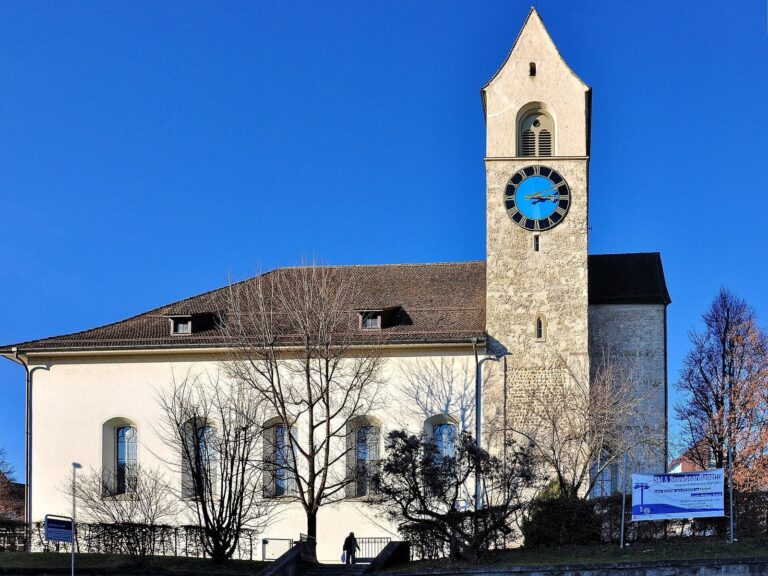
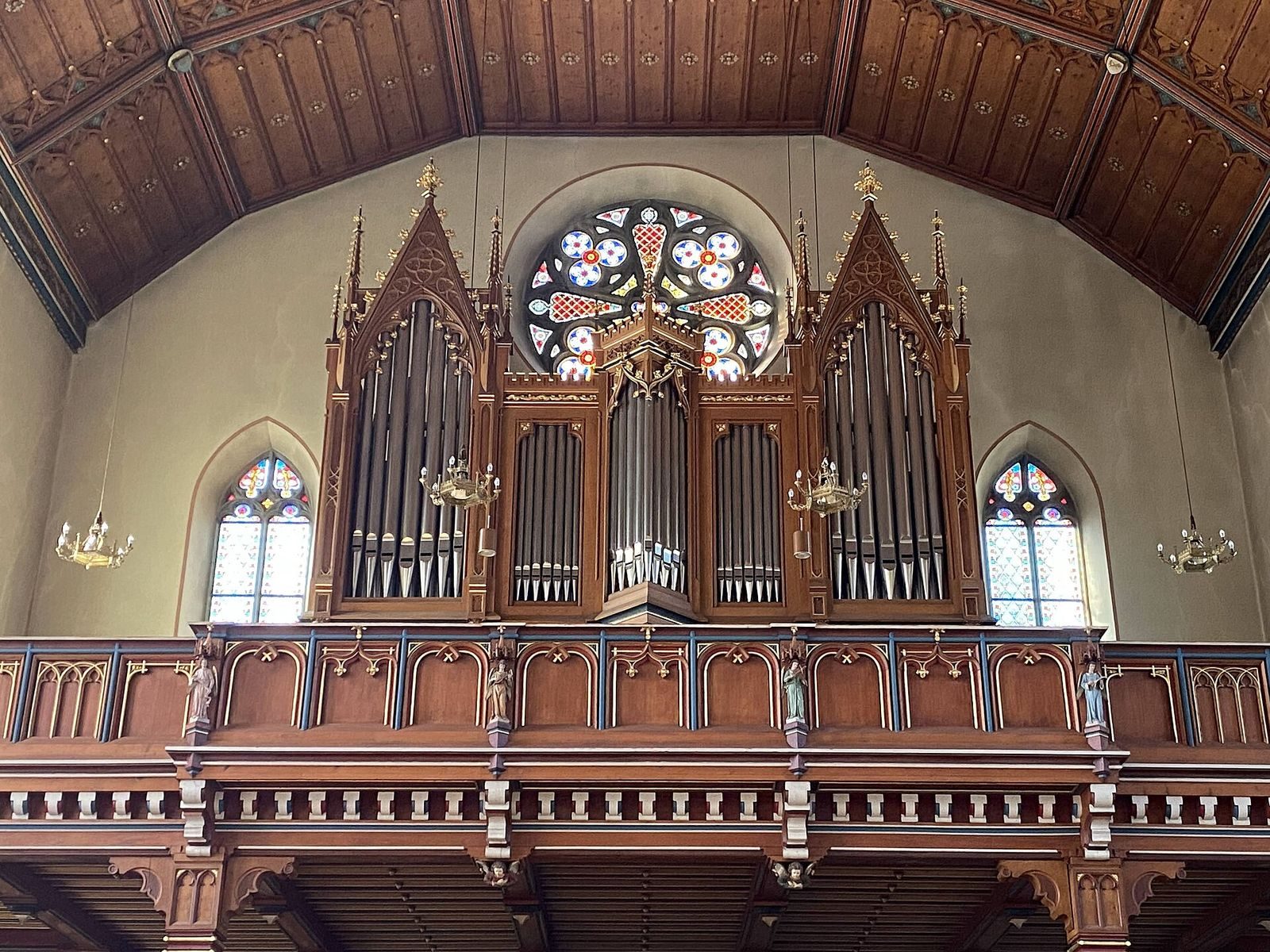
The south tower holds seven bells with a combined weight of about 16,000 kilograms. One historic bell dates to 1537; Friedrich Wilhelm Schilling of Heidelberg made six more in 1960. They hang in a heavy steel frame on straight steel yokes, the supports from which bells are suspended. The gallery holds a pipe organ installed in 1975 by the Mathis organ-building firm. It has 39 stops, which control sets of pipes, three manuals, or keyboards, and a foot-operated pedal. Mechanical connections link its keys and stops to the instrument’s mechanisms. Mathis Orgelbau AG modified the organ in 2010.
Chapel of Our Lady and cemetery
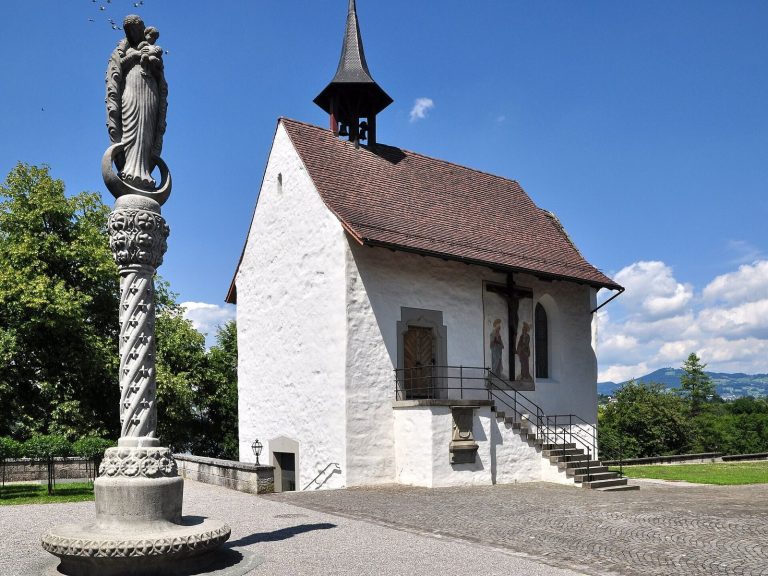
The separate Liebfrauenkapelle, or Chapel of Our Lady, stands a few metres northwest of the church. Built in 1489 on the site of an earlier ossuary, a place for the bones of the dead, it contains an ossuary dating to 1253, when Rapperswil became an independent parish and received a cemetery. The chapel overlooks Kempratnerbucht on the shore of Lake Zurich.