Sveti Đurađ Monastery: A Serbian Orthodox Monastery in Romania
Site at a Glance
- Popularity
- Medium
- Country
- Romania
- Primary era
- Early Modern
- Eras represented
- Early Modern, Modern
- Civilizations
- Austrian Empire, Habsburg, Habsburg Austria, Hungarian
- Site type
- Religious
- Remains
- Monastery
On this page14 sections
History
Sveti Đurađ Monastery is a Serbian Orthodox monastery in Mânăstire, Romania, dedicated to Saint George and part of the Eparchy of Temișvar, an Orthodox diocese. Its history spans a disputed medieval foundation, major rebuilding in the late fifteenth century, and repeated changes to its monastic community and estate.
Origins and foundation
Tradition places the monastery’s beginnings in the late eighth century, during the iconoclast controversy over the use and veneration of religious images. This account associates the foundation with Byzantine empress Irene and her son Constantine VI, but a medieval origin is considered more likely. A monastery on land belonging to the village of Saint George is dated to 1319, and an earlier religious house dedicated to the saint is said to have given the village its name.
The foundation is conventionally dated to 1485. In the second half of the fifteenth century, Serbian despot Đorđe Branković sought papal permission to establish twelve monasteries in the Hungarian kingdom. His son Jovan Branković built Sveti Đurađ. The monastery’s dedication connected it to Saint George, an early Christian martyr also venerated as a military saint.
Wars and eighteenth-century change
Successive wars brought three episodes of plunder and fire, destroying old charters and valuable books. The monastery’s known succession of superiors begins with Abbot Aristarch in 1486. Leontije held the office in 1613, while Panten served from 1699 to 1724. In 1666, monks from the Peć Patriarchate, a historic Serbian Orthodox center of authority, visited the monastery and were received by Abbot Joseph and the monk Simeon.
Donations helped the community complete most of its monastic quarters by 1764. The church received partial restoration in 1766 under Superior Simeon Matejević. Banat Serbian donors, among them Dimitrije Sekulić of Bavanište, contributed to the refectory and other buildings. Bishop Vikentije Jovanović Vidak gave 4,000 silver florins and 200 gold imperial ducats, funding a five-room residence for the superior. Archimandrite Pavel Kengelac, a writer who led the monastery during the later eighteenth century, was associated with the period when its icon screen was commissioned. Archimandrite Samuilo Maširević, another figure linked to the monastery, later became Serbian patriarch. The brotherhood sometimes numbered as many as fifteen monks; a count in 1771 recorded twelve.
The monastery’s relationship with state authorities was often contentious. In 1753, officials sealed its two watermills over a tax dispute. In 1772, the state took the monastery’s estate settlement at Šenđurać, which included about 1,500 jutars, a historical measure of land area. The monks refused an order to return a forest near the village of Saint George after taking possession of it in 1775. In 1782, they bought estate land and petitioned the emperor to restore property they claimed by long-standing right. They received 8,896 florins in compensation, the assessed value, without an auction.
Nineteenth-century estate and community
The monastery established a Dormition watermill in 1808 and a Saint Paul watermill in 1828. In 1830, contract settlers were placed on its estate under Archimandrite Kengelac. They included Serbs from Bačka and Romanians from nearby communities who had been expelled from their former homes on public-security grounds.
Archimandrite Stefan Mihajlović, superior from 1849 to 1875, paid the monastery’s debts, acquired vineyards at Šumik, and recovered a meadow measured at 103 chains, a unit used in measuring land. He also built a large food storehouse in 1866. Abbot Kalonim Đorđević, who served from 1883 to 1891, repaired both mills and purchased additional land. In 1859, visitor Ignjat Brlić noted that services were held in Serbian and Romanian. He also described a small Serbian monastic community serving in a Romanian-speaking area.
When the number of Orthodox monasteries was legally reduced, the brotherhood of the abolished Pártoș monastery moved to Sveti Đurađ with its belongings and compensation for its lost estate. In 1905, a Serbian agricultural cooperative associated with the monastery’s estate had capital of 9,282 crowns and was managed by laypeople. The monastic community itself was usually small in the early twentieth century, often comprising a superior and one or two monks.
Twentieth century and renewed monastic life
Twentieth-century agrarian reforms sharply reduced the monastery’s land. Romania’s 1921 reform cut its estate from 1,230 jutars to 202, and after the Second World War about ten hectares remained. From 1944, the buildings served for a time as a barracks and then as an office for the village agricultural cooperative. In the 1980s, workers from the local pork producer Comtim were housed there, and the buildings were also used to store animal feed.
Monastic life ended in 1950 with the death of Abbot Nikanor Savić. Parish clergy administered the monastery for about three decades. In 1989, retired senior priest Vojin Paskulović became a monk, taking the name Benjamin, and was later elevated to archimandrite. Monastic use resumed after 1990. In 2000, Dobrila Stanković became the nun Mother Evgenija, and Sveti Đurađ became a women’s monastery. She was its sole resident for a time and its last resident; she died in 2020.
Worship at the monastery is conducted in Serbian and Old Church Slavonic, a historical Slavic liturgical language.
Remains
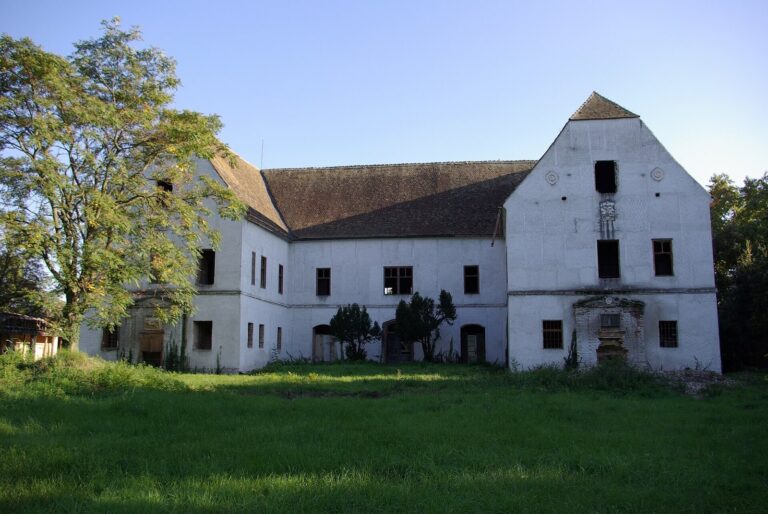
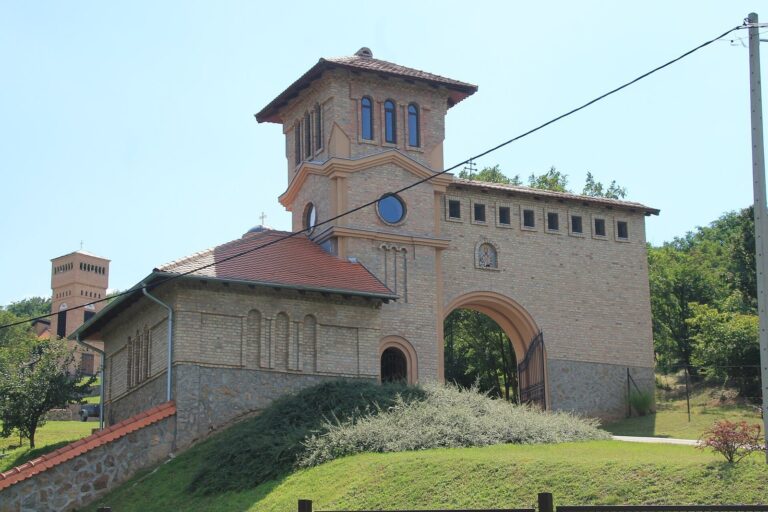
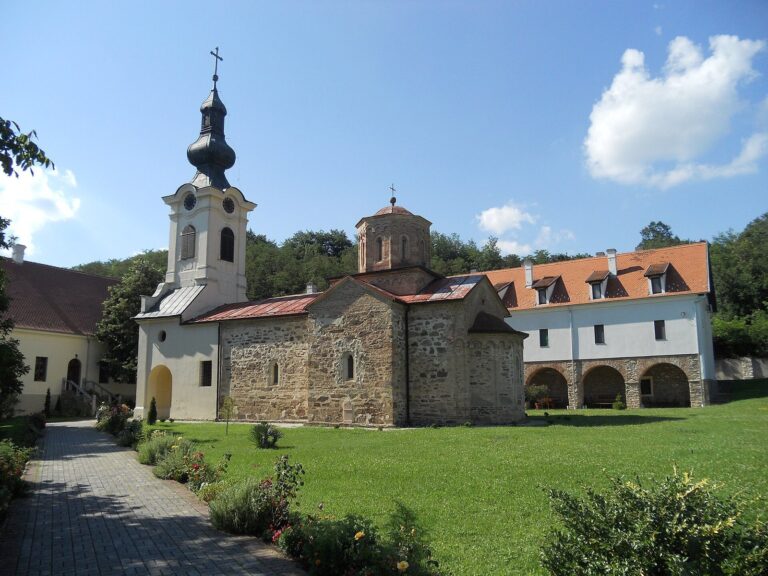
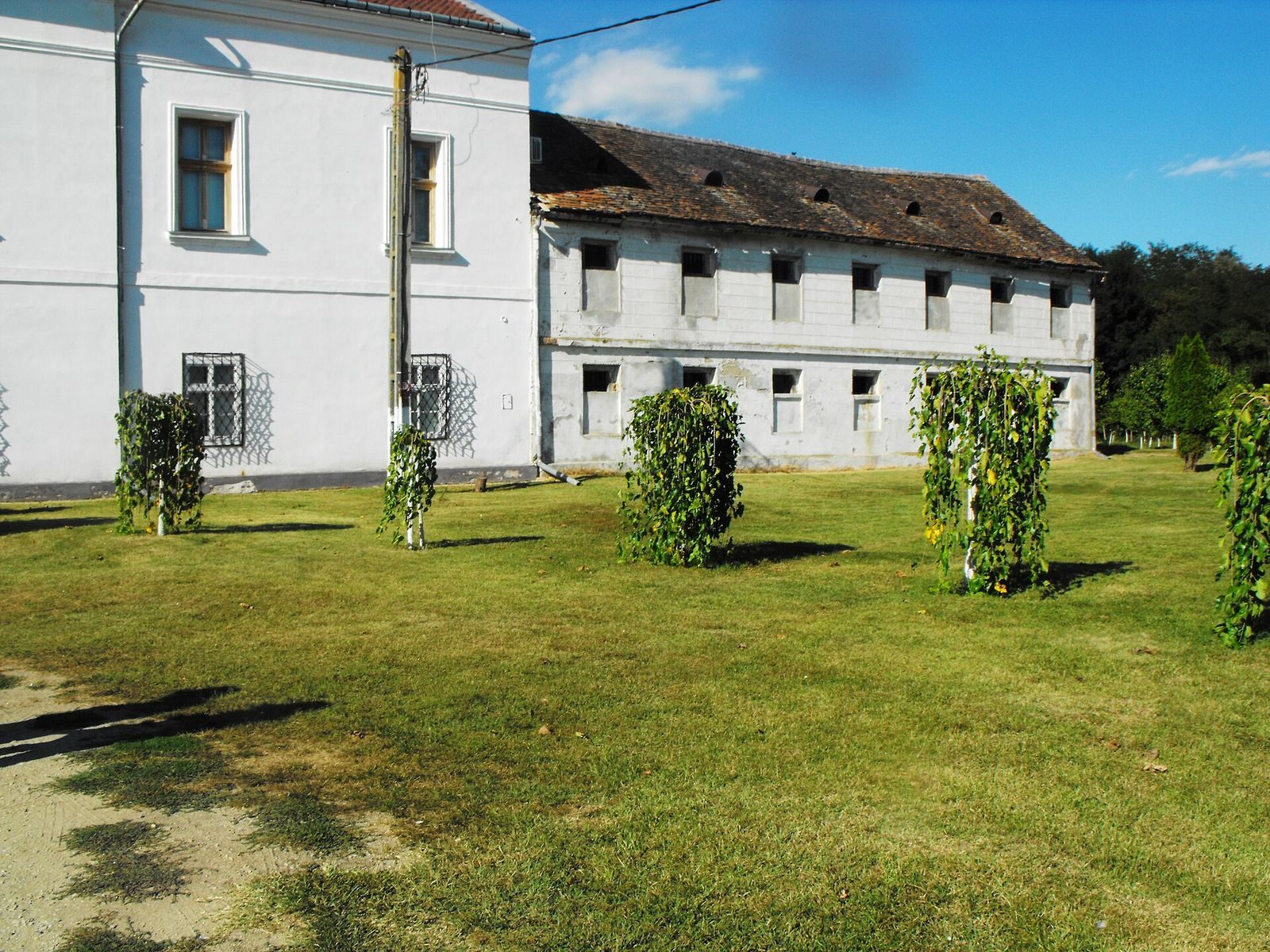
The monastery stands on the right bank of the Brzava River, near the Vršac-Timișoara road. A former village lay across the river on its left bank, with the water separating it from the monastery. A nineteenth-century description placed the complex in woodland beside the river. Its buildings include a brick, cross-shaped predecessor church and a larger successor, as well as monastic quarters, an enclosing wall, and facilities associated with the estate.
The church
Church building
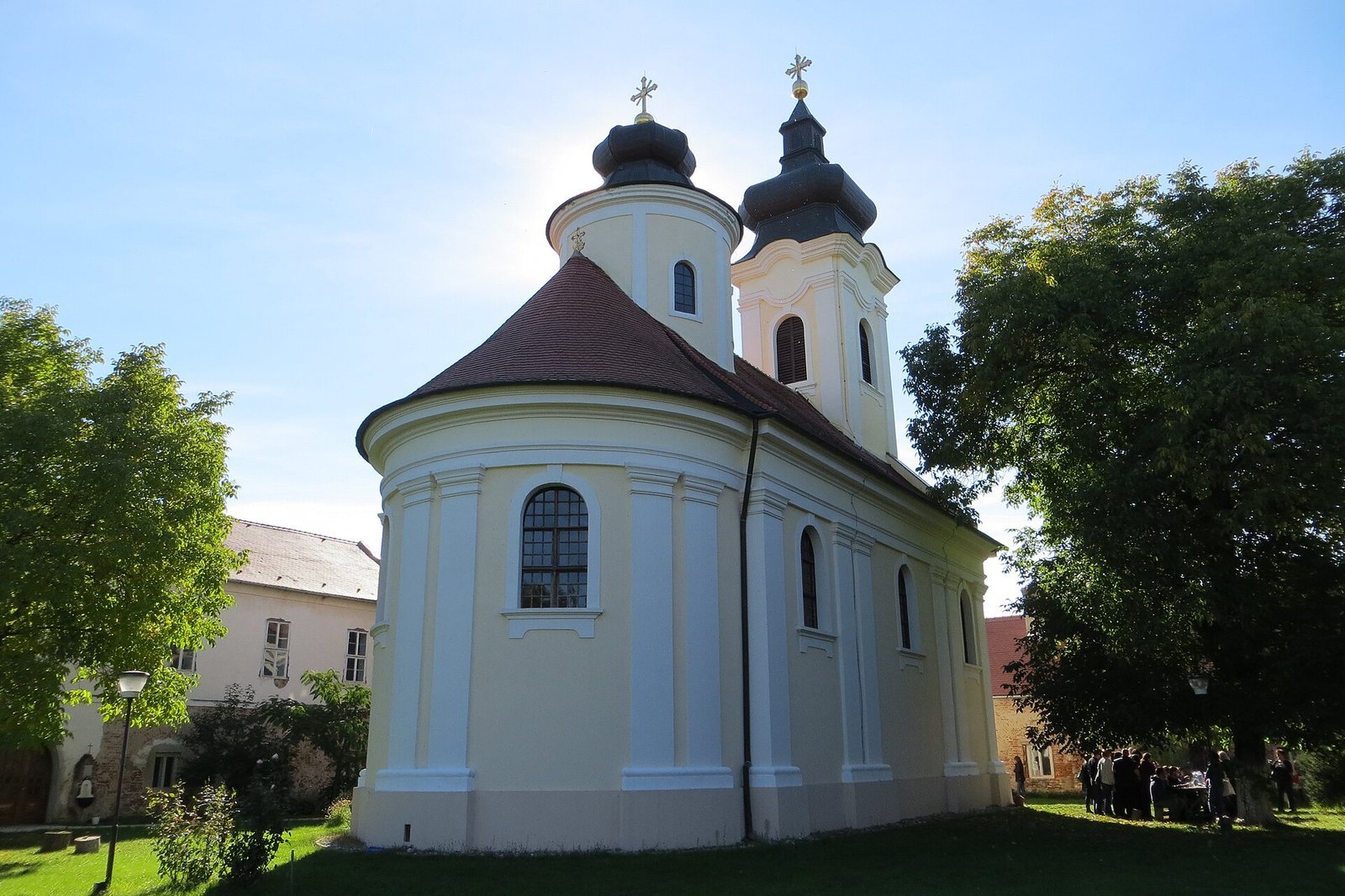
The first church, built in 1485 of fired brick, followed the Serbo-Byzantine tradition, combining Byzantine forms with Serbian features. It had a cross-shaped plan, a dome, and a separate bell tower, and remained until construction of the present church in 1793–1794. The later building is relatively large and Baroque, an ornate European style, while retaining elements of the earlier tradition. It has two domes; four bells and a clock were situated on one. The church was consecrated on 29 June 1794, during Abbot Augustin Petrović’s tenure. An altar slab found during repairs in 1793 carries an inscription naming Jovan Branković and recording the rebuilding of the church and monastery from their foundations in 1485.
Paintings and icon screen
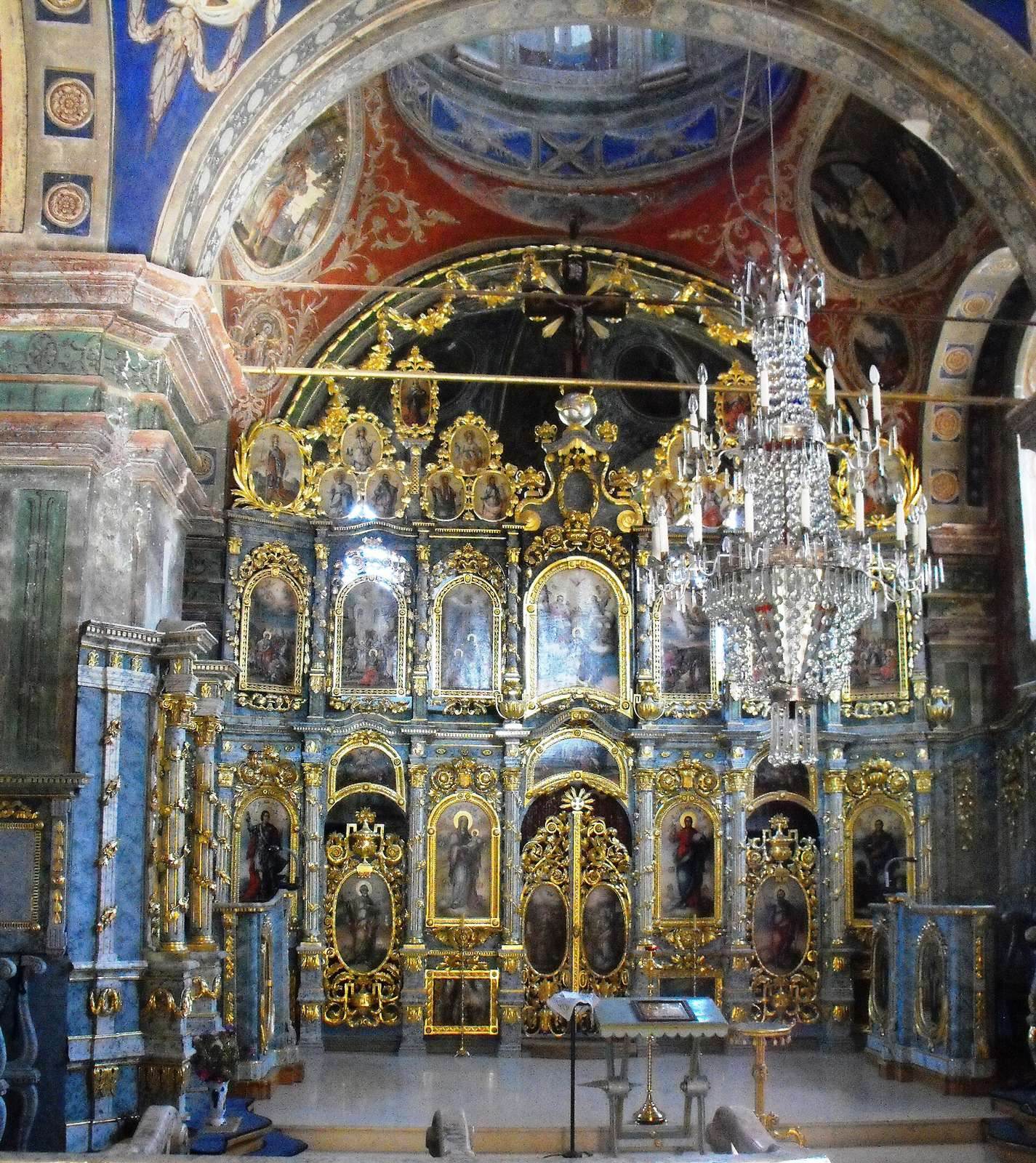
Pavle Đurđev, a painter from the village of Saint George, completed the church’s wall paintings in 1799 with help from his sons Sava and Vlajko and grandson Budiša. The paintings include a series of Serbian saints in the dome. That same year, woodcarver Avram Manuilović of Sombor made the icon screen, choir stalls, and episcopal throne in a classicist style. Jovan Isailović the Elder painted the icon screen in 1803–1804. Gilded and richly ornamented in the Serbian Baroque style, the screen separates the sanctuary from the main part of the church.
Icons and relics
An older Crucifixion icon, commissioned by Đorđe Pavla Teodorović, dates to 1748. Worshippers later paid for individual icons on the screen. Timișoara merchant Jovan Panajot funded the image of Saint George, and other donors included merchants Sofronije and Đorđe Stefanović. The Virgin’s throne holds a copy of the miraculous Bezdin, also called Vinča, icon of Mary. The church also houses a fragment of Saint George’s skull, brought to the monastery in the fifteenth century by Đorđe Branković, and a piece of the chain used to bind Saint Peter.
Monastic buildings and estate facilities
Quarters and enclosure
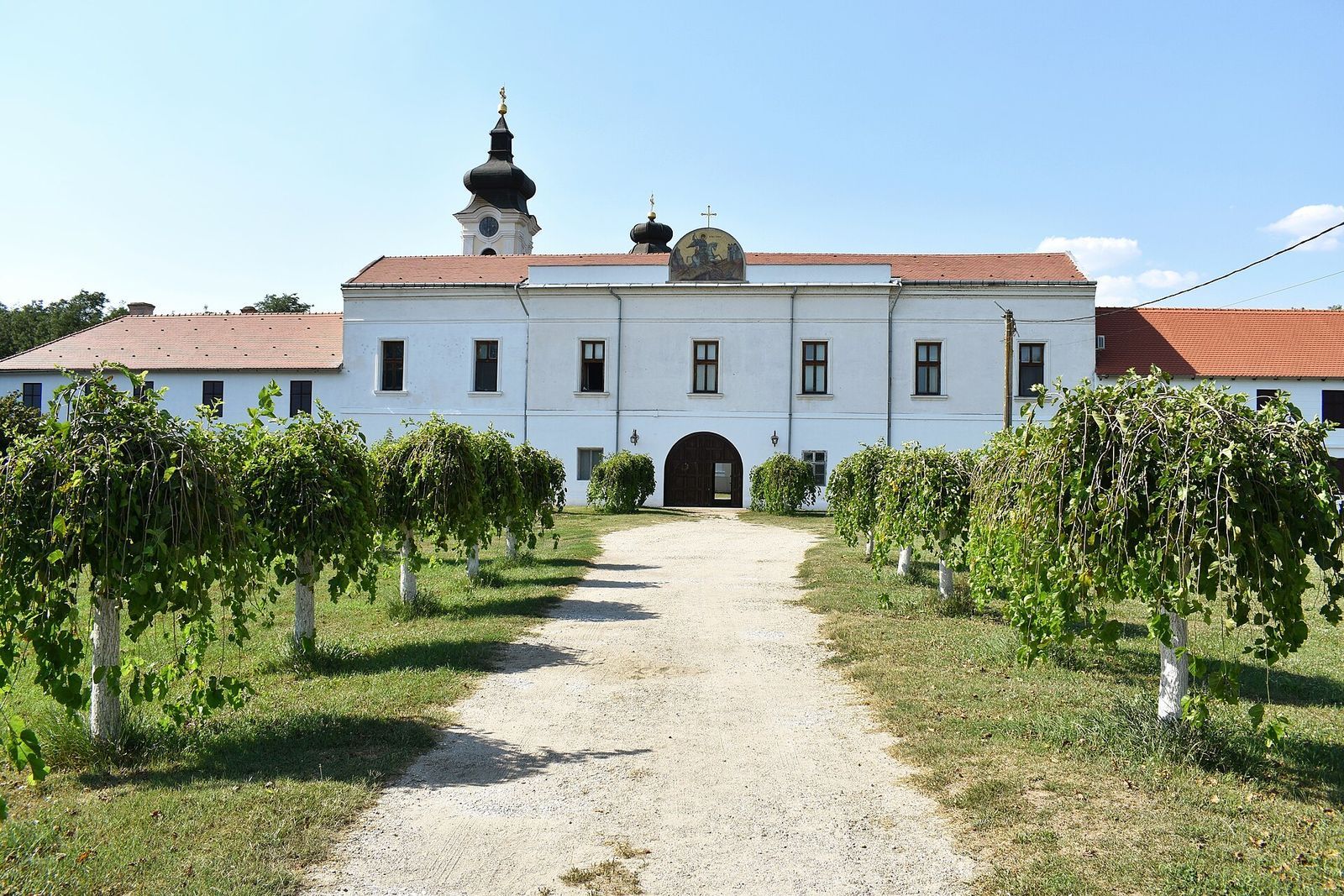
In 1771, the monastic quarters comprised twelve cells beneath one roof, alongside a refectory, several chambers, and three cellars. A separate five-room residence served the superior. A high wall enclosed the complex by 1779, during the leadership of Archimandrite Gerasim.
Mills, storehouse, and schools
The estate included the Dormition watermill, established in 1808, and the Saint Paul watermill, established in 1828; both were later repaired. A large food storehouse was built in 1866. Under Abbot Stefan Nikolić, the monastery also built school buildings in the village of Šenđurac and in the estate settlement of Mânăstire.
Library and archive
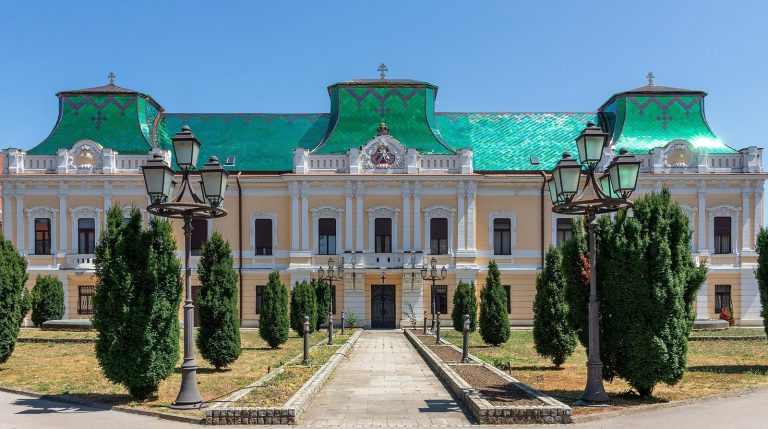
In the early twentieth century, the monastery’s library and archive held papers dating from 1760 and a Prayer Book of the Holy Virgin from 1623. Abbots Leontije and Silvester entered prayers in the book, and in 1651 Abbot Joseph wrote that it belonged to him. Most of the monastery’s treasures were later transferred to Timișoara; some are displayed in the museum collection at the Episcopal Palace.