Fort Hoo: A Nineteenth-Century Defense of Chatham Naval Dockyard
Site at a Glance
- Popularity
- Medium
- Country
- United Kingdom
- Primary era
- Modern
- Eras represented
- Modern
- Civilizations
- British
- Site type
- Military
- Remains
- Fort
On this page6 sections
History
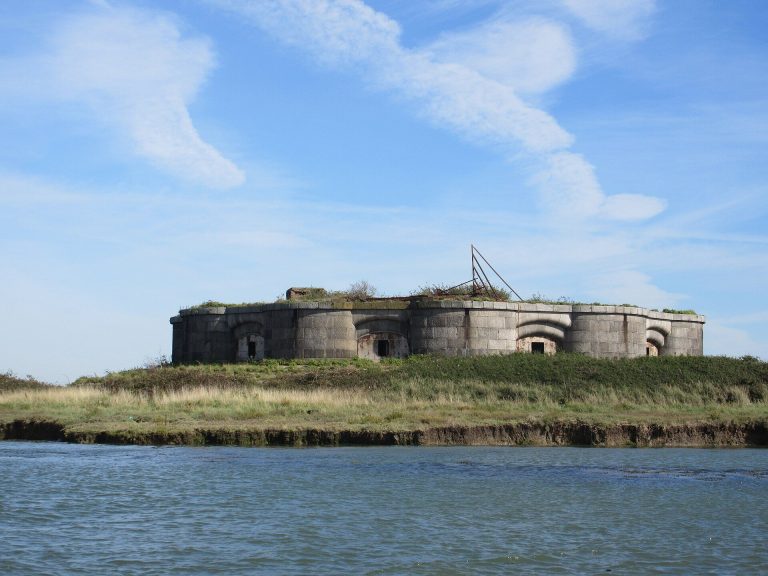
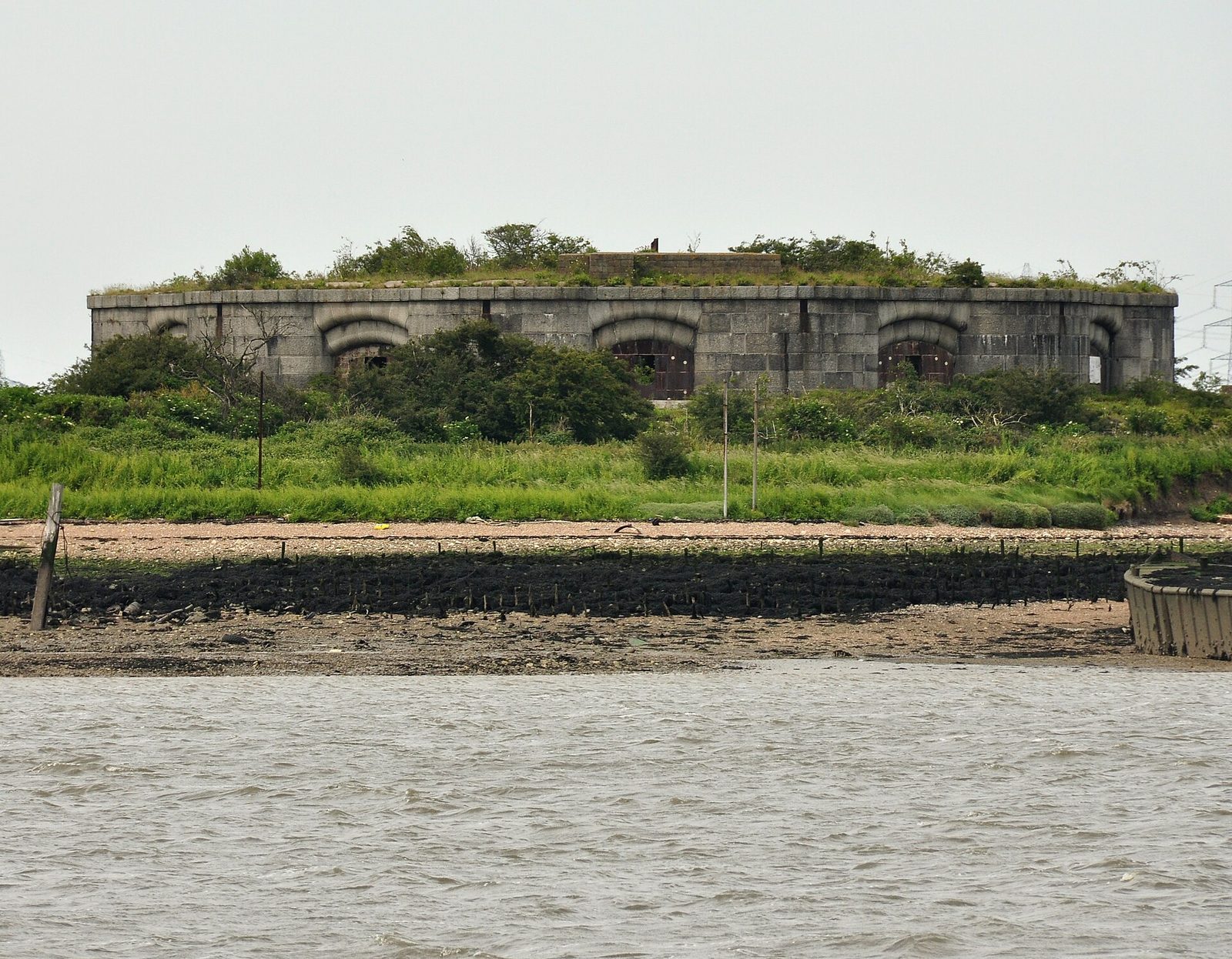
Fort Hoo is a nineteenth-century defensive fort on Hoo Island in the River Medway, United Kingdom, built to protect Chatham Naval Dockyard.
Construction and redesign
Construction followed recommendations from the 1859 Royal Commission, which reviewed Britain’s defenses and called for stronger protection of naval and coastal sites. Captain Siborne of the Royal Engineers, the British Army’s military-engineering corps, built the fort. Subsidence and major cost overruns led to a reduction from the original plan, and the work was completed in 1871. A proposed boom barrier, a floating obstruction intended to impede ships, between Fort Hoo and Fort Darnet was not installed. Fort Darnet lies about one kilometre downstream.
Military use and later status
Fort Hoo was decommissioned before the First World War. During the Second World War it returned to military use as an observation post. It became a Scheduled Monument in 1963.
Remains
Layout and gun positions
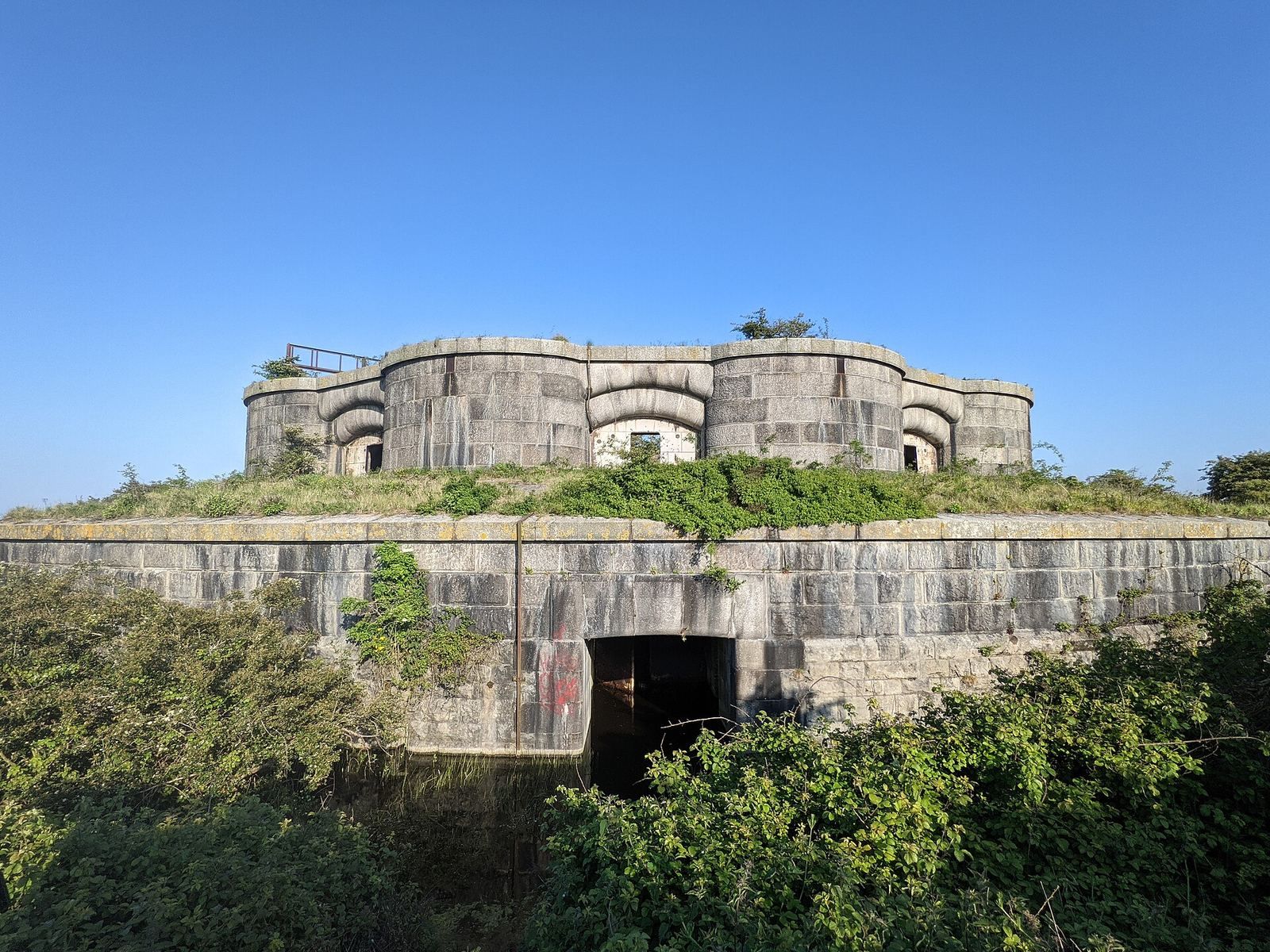
The fort was designed in a circular plan, originally with guns on two levels. Its completed arrangement has one tier of eleven 9-inch guns, with spiral-grooved barrels loaded from the muzzle. Each gun occupied its own casemate, an enclosed gun position, with a heavily armoured firing port. Brickwork and concrete skirts form part of the structure, which is in fair condition.
Second World War additions
Platforms and pillboxes were installed on top of the fort during its wartime use as an observation post.