Fort Amherst, Chatham: A Fortification Defending Chatham Dockyard
Site at a Glance
- Popularity
- Very Low
- Country
- United Kingdom
- Primary era
- Early Modern
- External website
- Open
- Eras represented
- Classical, Early Modern, Modern
- Civilizations
- British, Roman
- Site type
- Military
- Remains
- Fort
On this page12 sections
History
Fort Amherst is an 18th-century British fortification in Chatham, United Kingdom, built to defend Chatham Dockyard and the River Medway. Constructed between April and October 1756, it became part of a larger defensive system developed over the following decades.
Planning and construction
The Dutch raid on the Medway from 12 to 14 June 1667 caused extensive damage and helped spur plans to protect the dockyard. Land was acquired under parliamentary acts in 1708 and 1709. In April 1715, John Churchill, Duke of Marlborough, a prominent English military commander and statesman, surveyed the ground. An early proposal envisaged a continuous line of defenses from Gun Wharf to north of Brompton. A plan of the Chatham Lines, attributed to military engineer Hugh Debbrieg, was drawn by Joseph Heath in January 1755 and is now held at the British Museum.
Fort Amherst was built at the southern end of the Brompton Lines to guard against a possible French invasion. The defenses grew during the Seven Years’ War (1756–1763), a conflict that drove successive phases of work around Chatham.
Expansion and archaeological discovery
During the American Revolutionary War (1778–1783), the lines were strengthened. Amherst Redoubt, an enclosed defensive work at their southern end, later became Fort Amherst, while Townsend Redoubt stood at the northern end. In February 1779, workmen uncovered the foundation of a Roman building during construction. The clergyman and antiquarian James Douglas recorded the discovery and later included archaeological research in his book Nenia Britannica.
In the build-up to and during the Napoleonic Wars (1803–1815), a conflict that prompted further phases of Chatham’s defenses, the fortifications were enlarged under Debbrieg, Chief Engineer to Lord Amherst. Additional batteries were built, and brick was used to line ditches. From September 1802 to June 1811, prisoners, mostly convicts from St Mary’s Island, were compelled to extend the tunnels and build underground stores, shelters, ammunition rooms, barracks, gun batteries, and guardrooms. More than 50 cannons were mounted at Fort Amherst, and the last building work was completed around March 1820. Townsend Redoubt was built at about the same time as Fort Amherst; Fort Clarence and Fort Pitt followed between 1805 and 1815 to defend the southern approaches.
Changing military use and restoration
In December 1820, longer artillery ranges and improved weapons led to Fort Amherst’s defenses being declared obsolete. During the Victorian era, the fortified area served as a training ground, and practice sieges drew thousands of spectators. English novelist Charles Dickens described one such siege in The Pickwick Papers.
During the Second World War, the site served as an air-raid warning command post for Air Raid Precautions, Britain’s civilian air-defence arrangements, and the Royal Observer Corps, which monitored aircraft and reported air activity. After the war, restoration work opened up more of the fortification. In 1977, enthusiasts received Ministry of Defence permission to clear the site with the aim of restoring it. The Fort Amherst and Lines Trust bought the site in April 1980, and the Fort Amherst Heritage Trust now manages and operates it. English Heritage has described Fort Amherst as Britain’s most complete Napoleonic fortification and as nationally important. It was scheduled as an ancient monument in 1959, a legal designation for a historic or archaeological site in England.
Remains
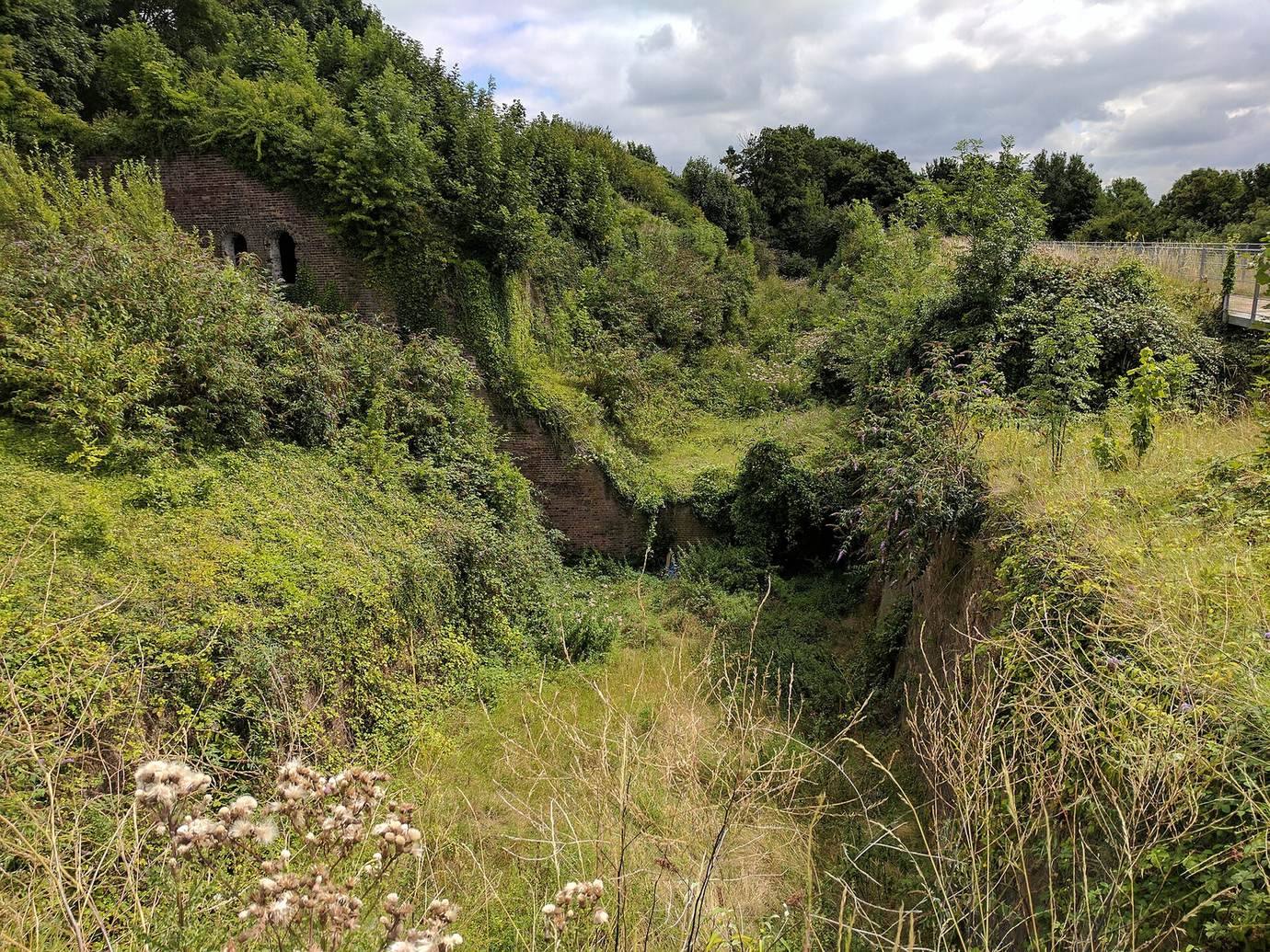
The physical defenses combine earthworks, brick-lined fortifications, outer walls, batteries, and tunnels cut into chalk cliffs. The arrangement includes the Chatham and Cumberland Lines, the redoubts and batteries, and underground works and barracks associated with Fort Amherst.
The Chatham Lines
The Chatham Lines included six bastions, projecting sections of defensive wall, built between January and August 1755. Their earthwork ditch was 9 metres wide, and a protective raised barrier, or parapet, stood 3 metres high. Four gateways with bridges provided entrances. The bastions were named Prince of Wales, Prince Williams, Kings, Prince Edwards, Prince Henry’s, and Prince Fredericks.
The Cumberland Lines
Fort Amherst and Townsend Redoubt were enclosed within the brick-lined earthwork defenses known as the Cumberland Lines. These extended along the eastern side of Chatham Dockyard towards St Mary’s Island; the area they occupied has since been built over.
Redoubts and gun batteries
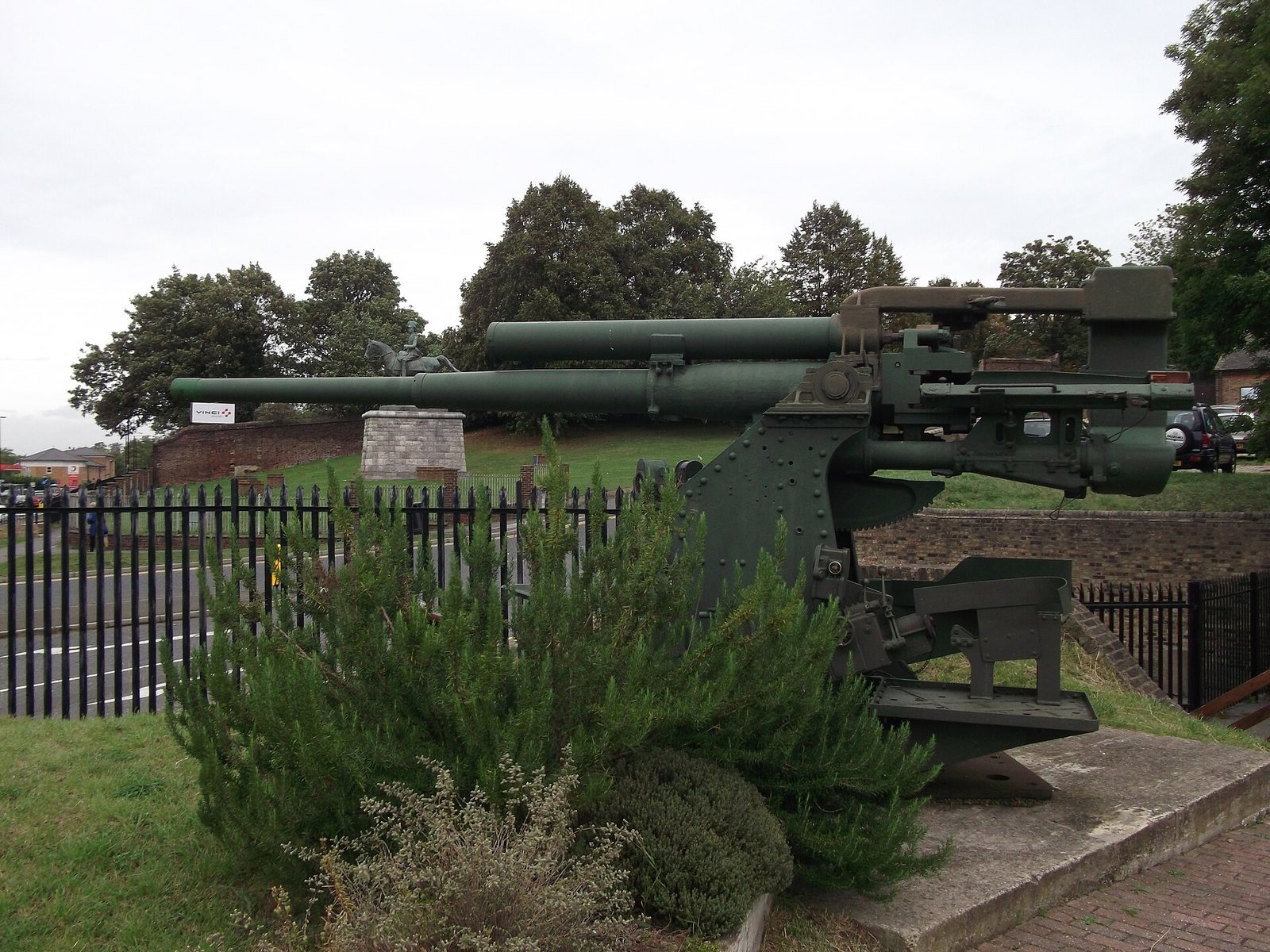
Amherst and Townsend Redoubts each carried 14 guns rated for 42-pound shot, 10 for 9-pound shot, eight for 6-pound shot, and two for 4-pound shot. The Cornwallis Battery was among the additional batteries installed during the Napoleonic-era expansion.
Tunnels and underground works
A network of tunnels cut into the chalk cliffs allowed ammunition to be moved around Fort Amherst. The underground complex also contained stores, shelters, magazines for ammunition, barracks, gun batteries, and guardrooms.
Barracks and outer walls
The Lower Lines included casemated barracks, meaning barracks with vaulted, protected spaces. Prince William’s Barracks stood within Fort Amherst, and the fort’s outer defensive walls are also part of the site.
Roman remains
The Roman finds included a building foundation, fragments of Roman brick and tile, and coins associated with Faustina and the emperor Claudius, who ruled from AD 41 to 54. The identity of the particular Faustina is uncertain.
Bicentenary Bridge
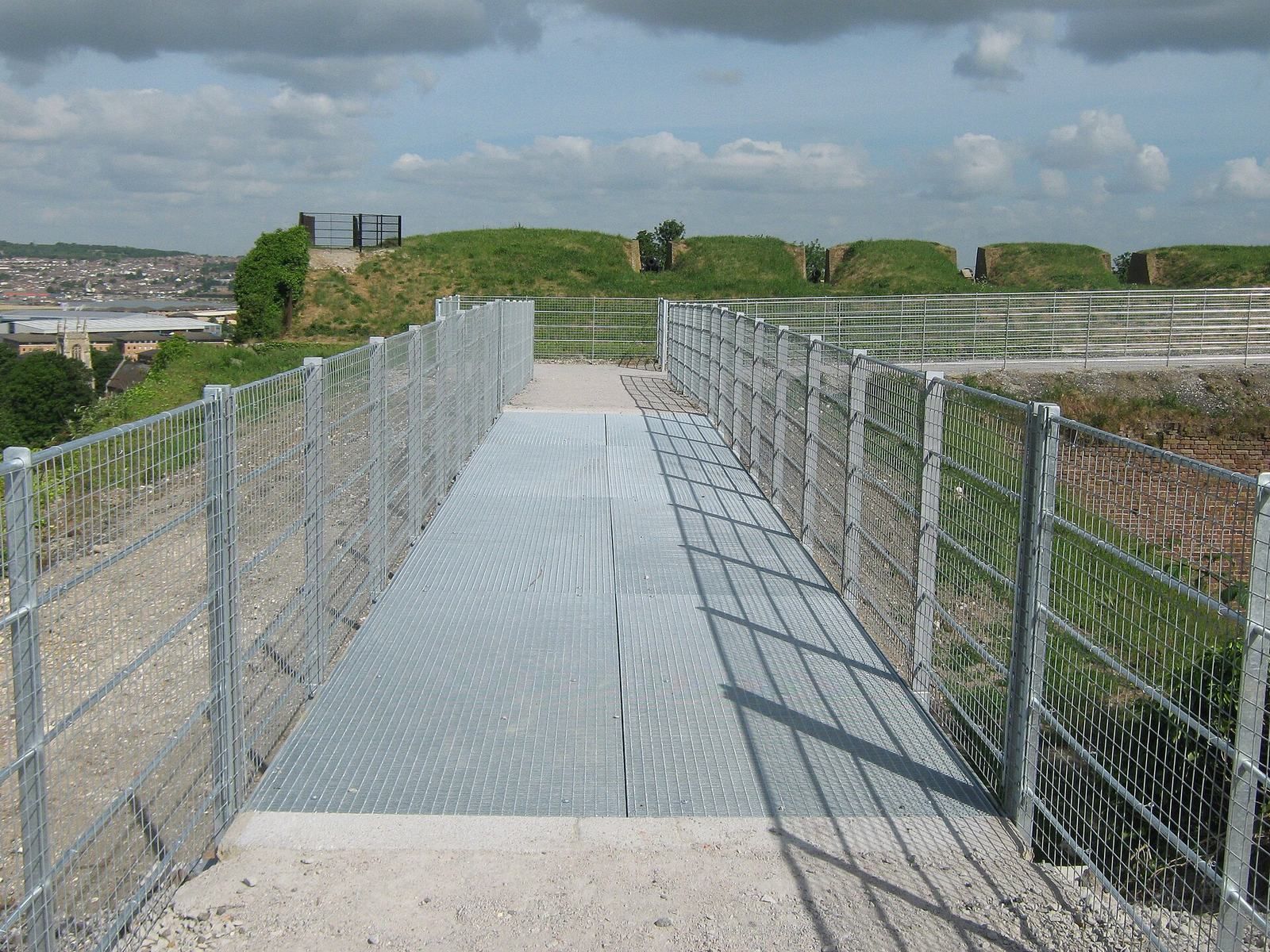
Royal Engineers designed, built, and assembled the Bicentenary Bridge in 2012. The bridge leads to Spur Battery and the Inner Lines, the defensive ditches dating to the Napoleonic period.