Blackfriars, Newcastle-upon-Tyne: A Medieval Dominican Priory
Site at a Glance
- Popularity
- Medium
- Country
- United Kingdom
- Primary era
- Medieval
- Eras represented
- Medieval
- Civilizations
- English
- Site type
- Religious
- Remains
- Monastery
On this page9 sections
History
Blackfriars is a former Dominican priory in Newcastle-upon-Tyne, United Kingdom, founded in 1239 by the wealthy Newcastle merchant Sir Peter Scott. The Dominicans belonged to a religious order founded by St Dominic shortly after 1200. As mendicant friars, they traditionally relied on alms rather than income from property, and were not permitted to own land or buildings. Blackfriars’ property was therefore held in trust for the community.
Medieval religious houses
Blackfriars was part of a wider network of religious communities in Newcastle. The city’s other mendicant houses were Carmelite Whitefriars, founded in 1262; Franciscan Greyfriars, founded in 1274; and Augustinian Austin Friars, founded in 1290. A Trinitarian priory, belonging to an order founded to ransom Christians held captive, followed in 1360. Newcastle also had St Bartholomew’s nunnery, established in 1086 near present-day Nun Street.
Blackfriars accommodated royalty during the fourteenth century. In 1334, King Edward III of England met Edward Balliol, a claimant to the Scottish throne, at the priory.
Dissolution and guild occupation
During the English Reformation under Henry VIII, Newcastle’s five mendicant communities and St Bartholomew’s Nunnery were dissolved. In 1539, their lands were sold to the town corporation and wealthy merchants. Blackfriars went to Newcastle’s mayor and burgesses. Fewer than 60 people remained in the city’s religious houses at the time. The priory church, sacristy, eastern half of the chapter house, and cloister were demolished.
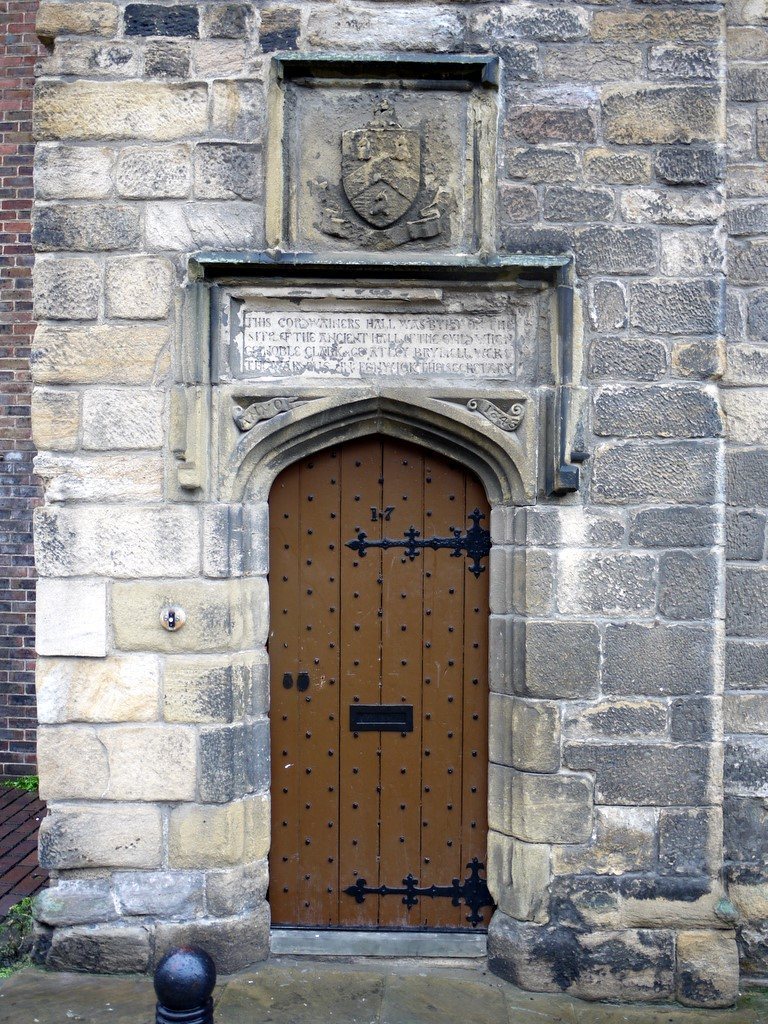
In 1552, the mayor and burgesses leased the surviving buildings to nine craft guilds, associations of people working in particular trades. The guilds made extensive changes in the late sixteenth and early seventeenth centuries. Their occupation probably helps explain why Blackfriars is the only one of Newcastle’s religious houses whose buildings survive. Guild meeting houses remained in use until the nineteenth century. Members met quarterly, and the rooms served other purposes between meetings. Ground-floor rooms provided rent-free homes for guild employees and people in need. The Tailors and Cordwainers guilds left for a time before returning.
Later changes and restoration
Further alterations were made between 1709 and 1739. The buildings deteriorated during much of the nineteenth and early twentieth centuries, and in 1937 the Saddlers’ property was declared unfit for habitation. Newcastle Corporation acquired Blackfriars in the early 1950s. A possible return of the Dominicans to the medieval priory did not happen. Restoration work took place from 1973 to 1981, while the Tailors’ Guild continued to meet there until 1974. Blackfriars received Grade I listing in 1954, England’s highest category of listed-building protection.
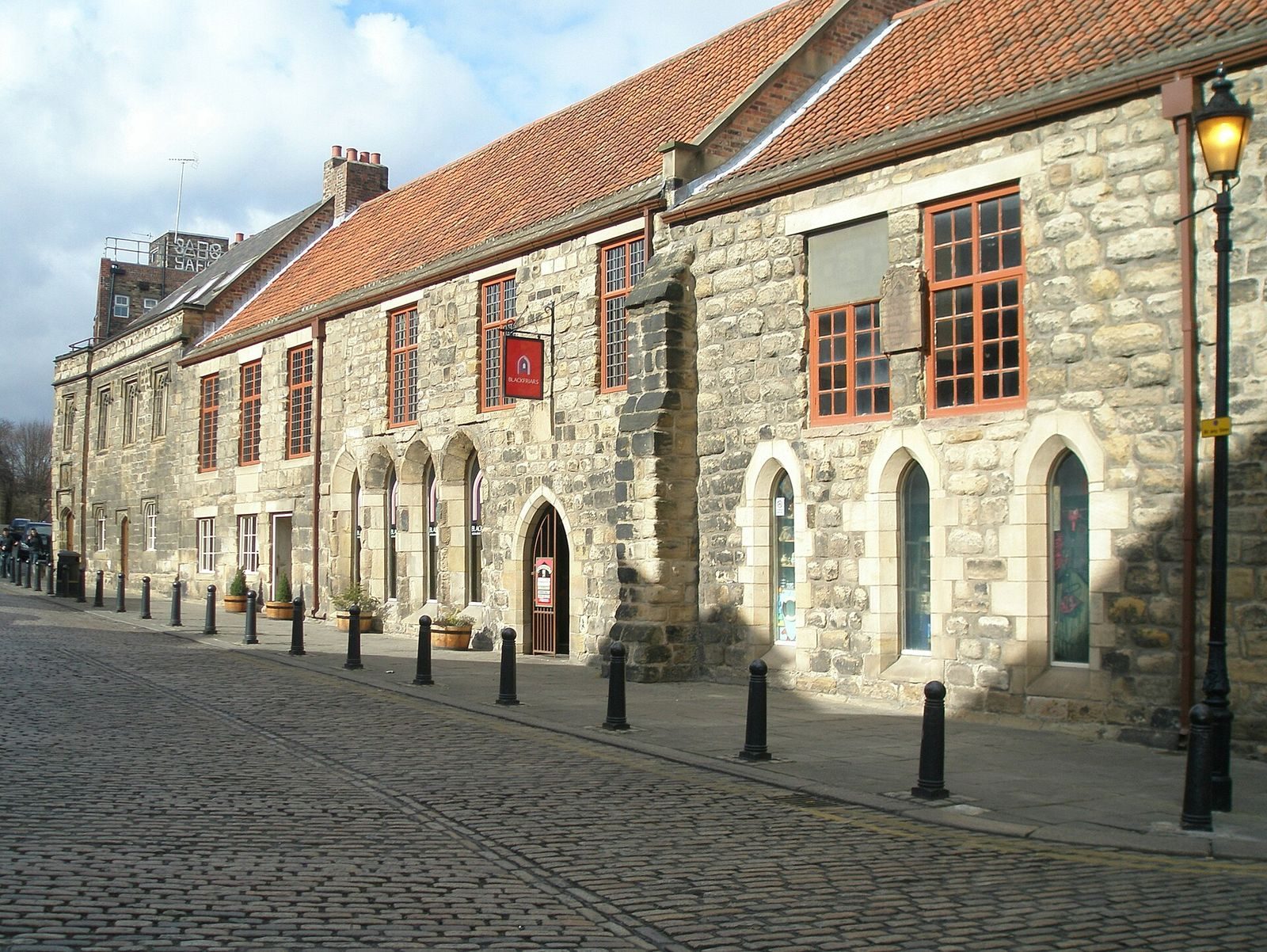
The Dominicans returned to Newcastle in the nineteenth century but established a new Blackfriars at St Dominic’s Priory on New Bridge Street. That priory opened in 1873. In 2020, the Dominicans left Newcastle, and the priory and church passed to the Roman Catholic Diocese of Hexham and Newcastle, a territorial administrative area of the church. Today the medieval complex houses craft workshops, a restaurant, and an exhibition about its history.
Remains
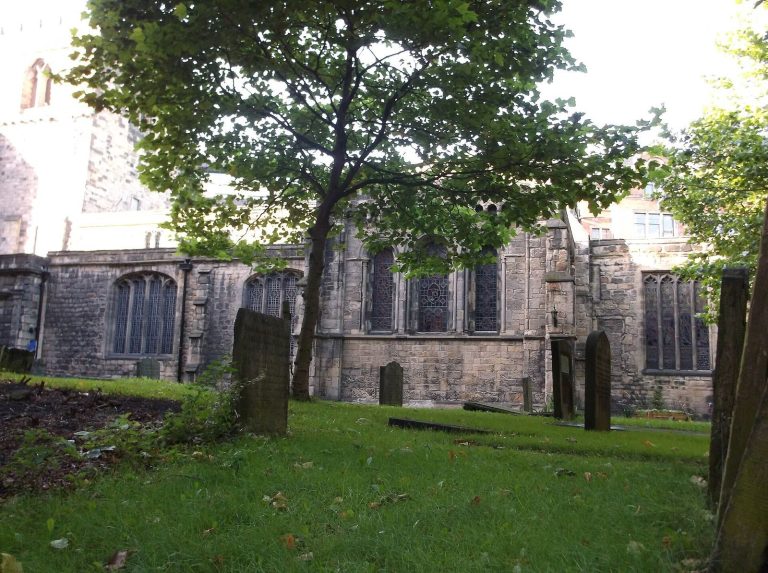
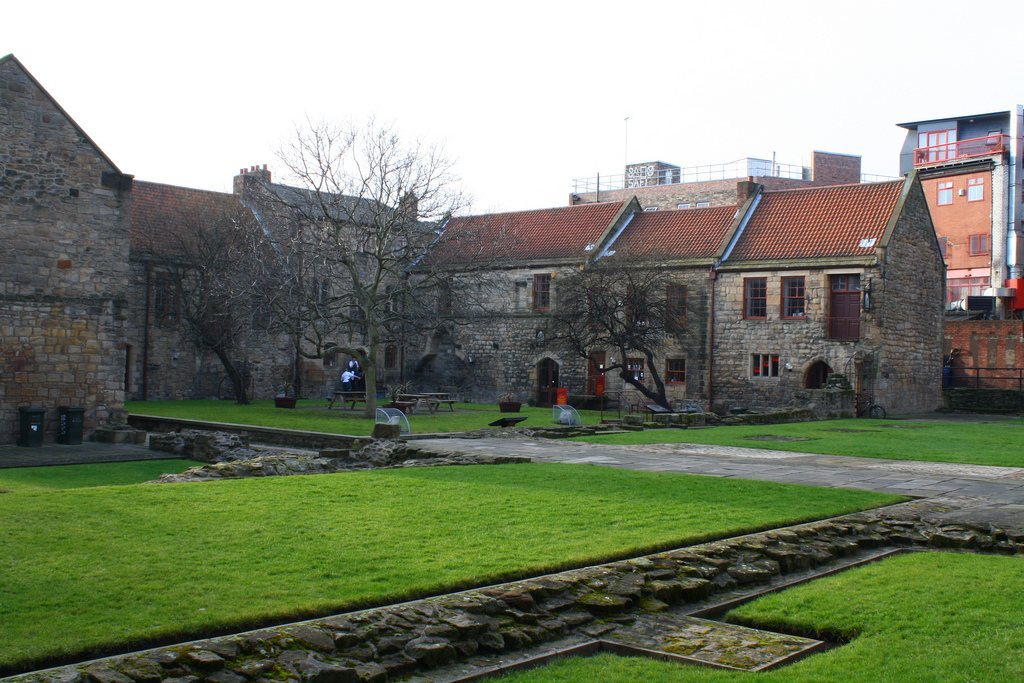
The former priory and its grounds covered seven acres (2.8 hectares) in north-west Newcastle, just inside the city walls. The site is now in the city centre, close to Chinatown and an intact section of the medieval town wall. The surviving remains are buildings from the cloister complex, once set within grounds that included gardens and smaller enclosed plots.
Surviving structures
Cloister and grounds
The medieval cloister was arranged around an open courtyard, or garth, about 69 feet (21 metres) square. A covered passage roughly 10 feet (3 metres) wide once surrounded it, though the passage does not survive. The priory grounds contained two gardens and four small enclosed plots, which provided a modest income.
Priory church
The church stood at the north end of the cloister. Its outline can still be traced in the grassy area.
Smiths Hall
The former Smiths Hall, also called the Freemen’s Hall, survives within the complex. The Tanners’ Guild continues to meet in the building.