St. Marien in Lünen: A Parish Church and Marian Pilgrimage Center
Site at a Glance
- Popularity
- Medium
- Country
- Germany
- Primary era
- Modern
- Eras represented
- Modern
- Civilizations
- German, Kingdom of Prussia
- Site type
- Religious
- Remains
- Church
On this page13 sections
History
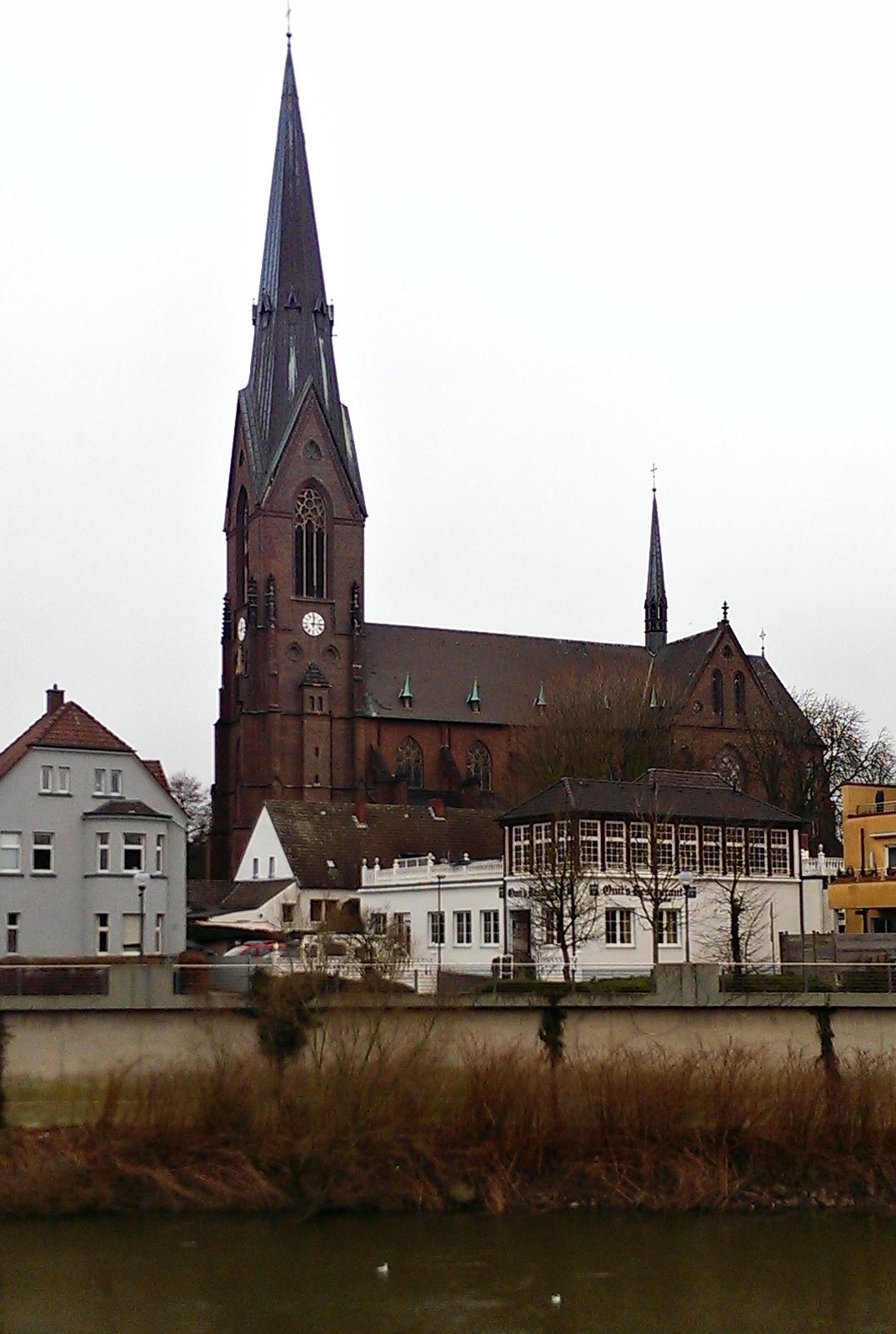
St. Marien in Lünen is a Roman Catholic parish church in Lünen-Nord, Germany, north of the Lippe River. The present Neo-Gothic basilica, a church with a central nave and side aisles, was built from 1894 to 1896 to replace an earlier church. Its parish served communities north of the river, and the church became a center of Marian pilgrimage.
Early church and pilgrimage
A register compiled in 1716 preserved a tradition that a wooden chapel or church had stood here since the time of Charlemagne, the Frankish ruler crowned emperor in 800. It may have been built using half-timbering. The church was first served by the neighboring parish of Werne. In 1018, a Romanesque stone church was built on a rise north of the Lippe as the parish church for Südluinen and the surrounding communities of Alstedde, Nordlünen, and Wethmar, later collectively called Altlünen.
In 1254, the church and town were destroyed after the battle at Wülferichskamp near Brechten. For several years the damaged church served as a fortress and prison. When it was rebuilt in Gothic forms, the earlier building’s Romanesque tower was the only part retained. Devotion to an image of Mary and the infant Jesus grew into a pilgrimage, which was established by 1319 and is regarded as the oldest in the Diocese of Münster. Pilgrimages and processions continued through periods of interruption caused by war, the Reformation, and the area’s contested border position.
Relocation and confessional change
By the early fourteenth century, the Counts of Mark, rulers of a Westphalian territory, had gained control of Lünen. Their rights north of the Lippe remained disputed. In 1336, Count Adolf II moved the town to the river’s south bank, considered safer strategically. The old settlement remained exposed and at a legal disadvantage, while its parish church acquired greater importance through the pilgrimage.
As the Reformation, the sixteenth-century movement that led to Protestant churches, spread through the County of Mark, St. Marien remained the only Catholic church in its northwestern part. In 1575, the Prince-Bishopric of Münster, a territory where the bishop also exercised secular rule, recognized the old town’s affiliation with the County of Mark. The county passed to Brandenburg in 1609. In 1729, King Frederick William I of Prussia ordered the church closed in retaliation after the Bishop of Münster restored Catholic worship at the Reformed church in Werth. St. Marien reopened in 1735.
Rebuilding and later parish life
On 7 January 1834, nine worshippers and a ferryman drowned in the flooded Seseke while returning to Beckinghausen after a service. Later in the nineteenth century, industrial growth brought a rapid increase in both Lünen’s population and its Catholic congregation. The parish decided to replace the old church with a larger building. Wilhelm Rincklake’s new basilica was constructed from 1894 to 1896 and consecrated that year by Hermann Dingelstad, Bishop of Münster.
In 1936, a celebration of six centuries of pilgrimage, attended by Bishop Clemens August von Galen, became a public expression of faith. St. Marien escaped major damage during the Second World War. The pilgrimage nearly faded after the war but later gained renewed strength. The church interior was redesigned in 1976. In 2023, a parish property plan was followed by a diocesan decision confirming St. Marien as the central church for the parish of St. Marien Lünen and the Lünen-Selm (Cappenberg)-Werne pastoral area.
Remains
The present church combines a three-aisled nave, a crosswise transept, a choir around the main altar, and an apse at the eastern end. Two side chapels flank the choir. The building is 66 metres long. Above the west entrance, a square bell tower rises to a slender, cone-shaped spire. The tower measures 83 metres to the top of its cross and rooster.
Architecture and interior
Plan and tower
The eastern apse has a five-eighths form, with an end shaped by five sides of an octagon. The basilica’s central nave is bordered by side aisles, while the transept crosses the church’s main axis. The west tower stands above the main portal and forms the building’s vertical accent.
Interior architecture
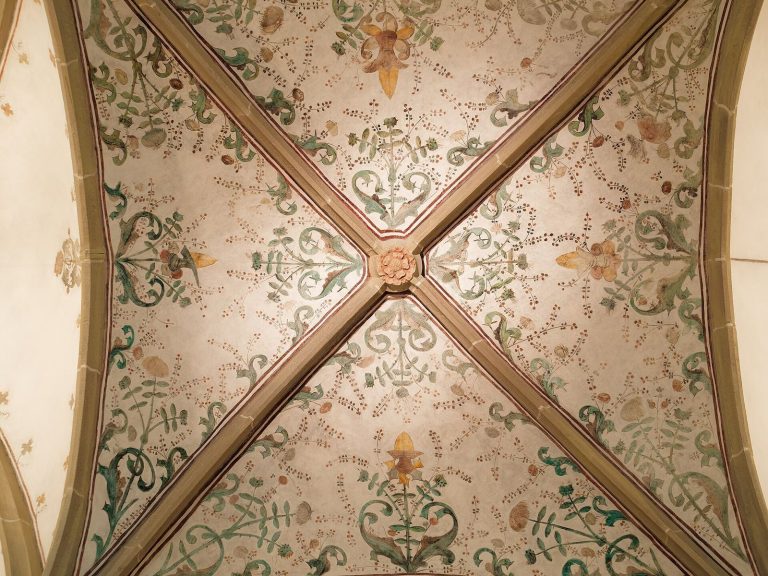
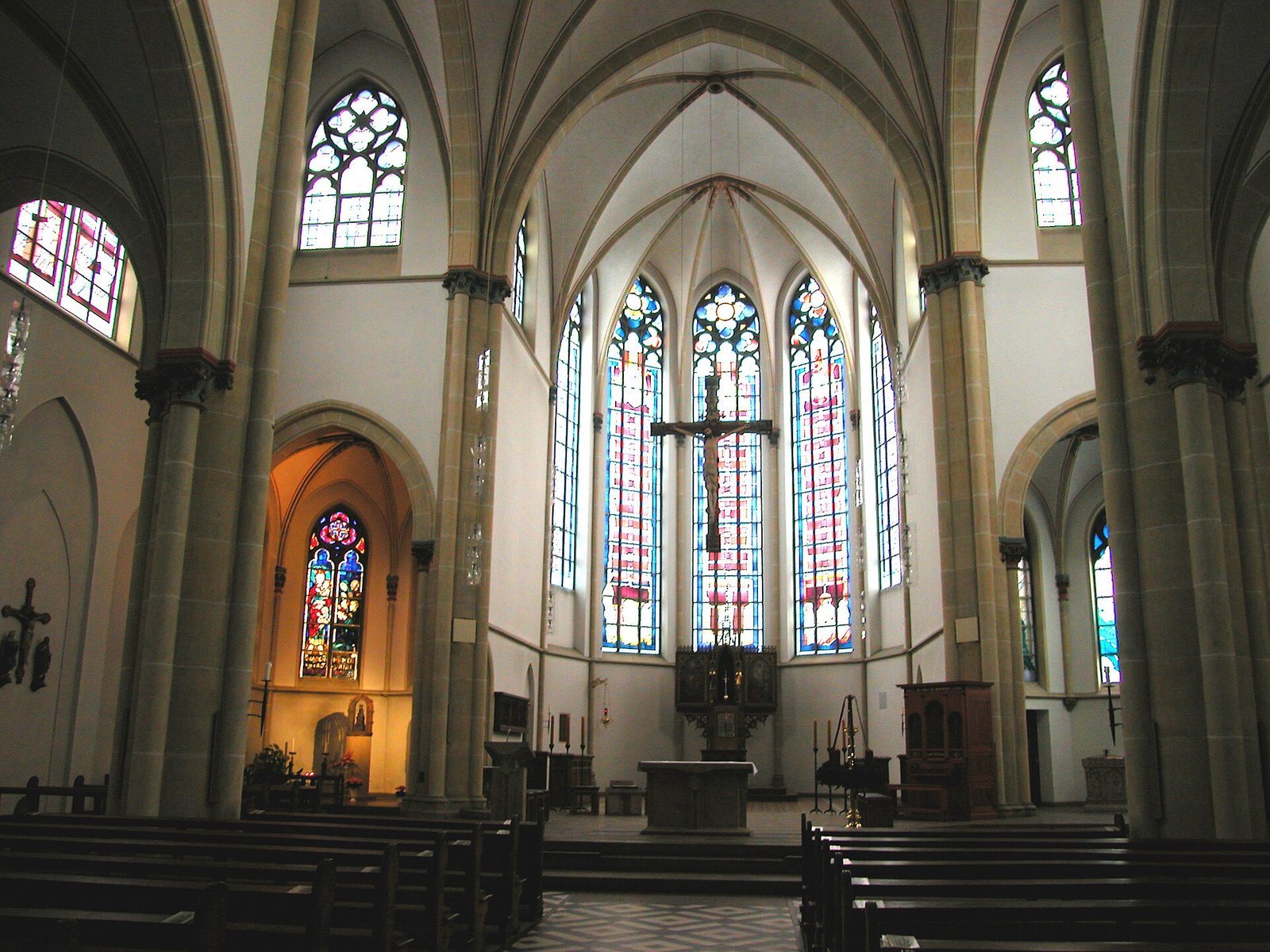
Inside, rib vaults, ceilings supported by projecting stone ribs, span the church. A clerestory, the high windowed section above the side aisles, brings light into the upper interior. Pointed arches, columns, and attached vertical shafts organize the space, while tracery, ornamental stonework dividing the windows, frames the openings. The interior’s appearance depends in part on the contrast between dark structural elements and pale surfaces.
Devotional art and furnishings
Marian chapel and furnishings
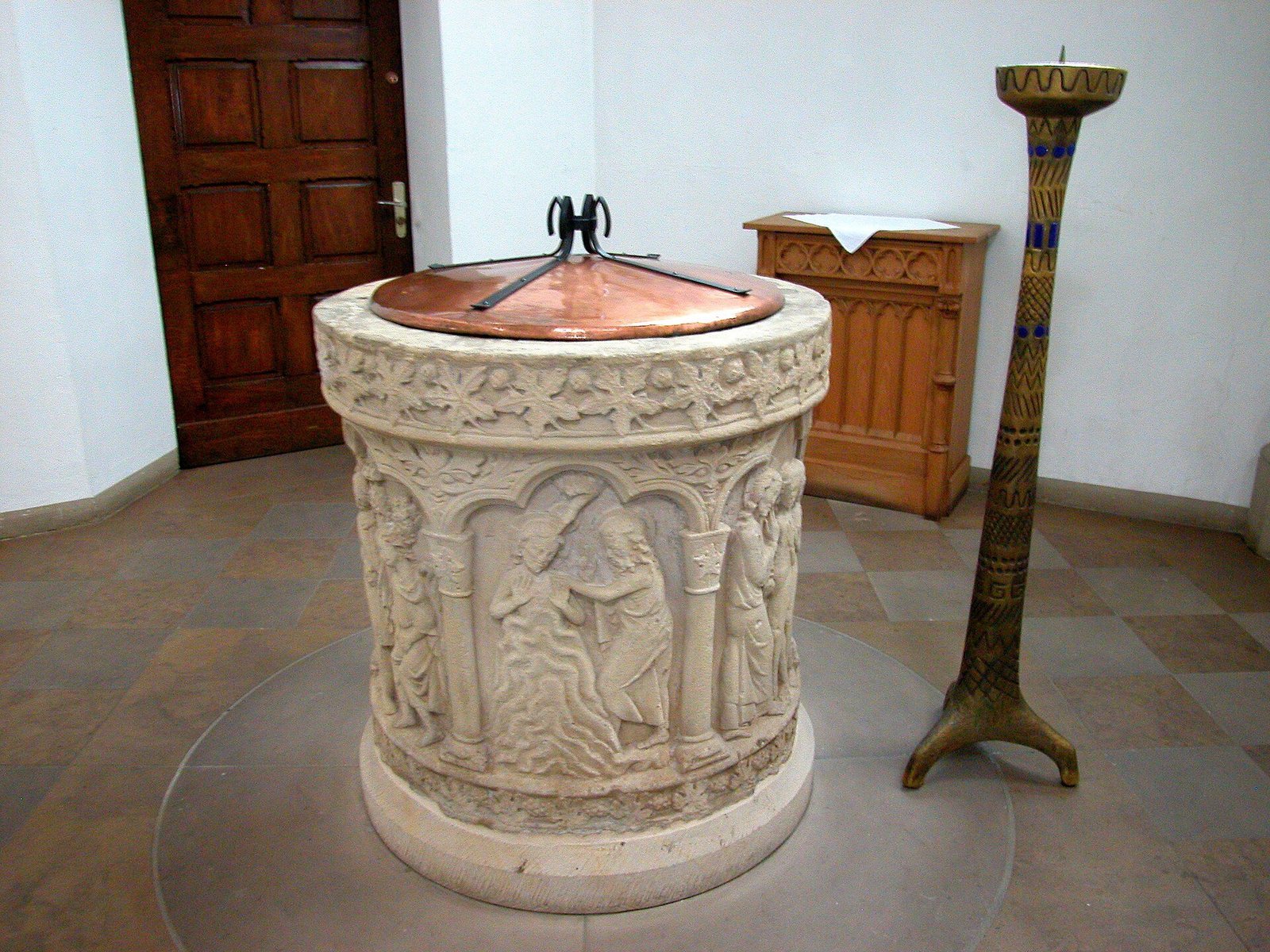
The north chapel beside the choir holds an oak sculpture of the enthroned Virgin and Child, made around 1260–1270. Crowned and venerated as a miraculous image, it housed Marian relics, including drops of blood associated with the Lubbert legend. The church also preserves furnishings transferred from its predecessor: a figural baptismal font made around the same time as the sculpture, and a large cross traditionally placed at the choir entrance, dating to the fourteenth century. A Neo-Gothic pulpit made in 1855 was converted into an altar in 2003. The chapel displays historical votive offerings, objects given in fulfilment of a vow or in thanks.
Commemorative sculpture
In front of the choir apse stands a larger-than-life Christ shown in blessing. Heinrich Bäumer the Elder of Münster made the figure in 1933 as a memorial to parish members killed in the First World War. Its dedication named 231 members of Altlünen’s Catholic community who had died for their country in faith in Christ, and was signed by the Catholic parish.
Stained-glass windows
Hubert Spierling created a cycle of stained-glass windows from 1991 onward, depicting biblical themes of death and life, sin and redemption. Wilhelm Rengshausen made the windows in the Marian chapel.
Organs and bells
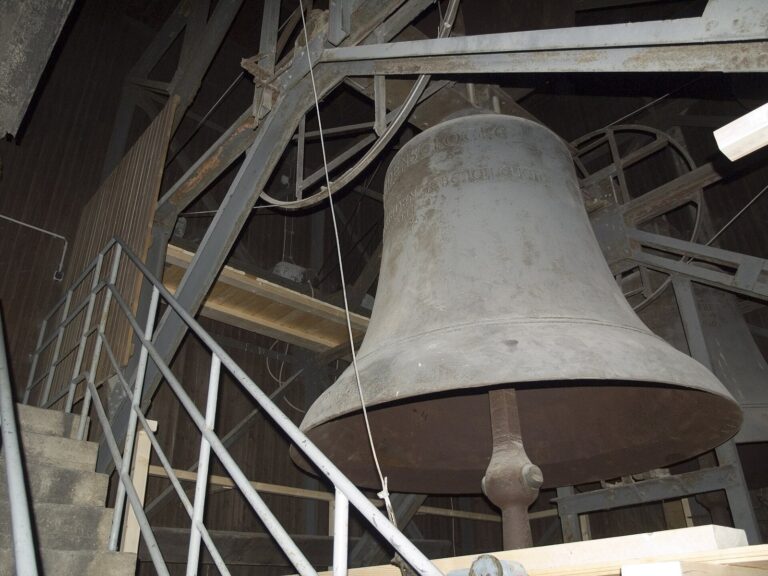
The main organ was built by the Gebrüder Stockmann firm of Werl from 1996 to 1998. It has 45 stops, or sets of pipes, three hand-operated keyboards, and a foot pedal. Its keys operate mechanically and its stop controls electrically; connections allow the keyboards to be combined with one another and with the pedal. A choir organ made by Henk and Gerrit Klop in 1983 was acquired for St. Marien in 2005. The west tower carries four cast-steel bells made in 1922, tuned to B natural, D, E, and F-sharp.