Hybernia Monastery: A Former Irish Franciscan Complex in Prague
Site at a Glance
- Popularity
- Medium
- Country
- Czechia
- Primary era
- Early Modern
- Eras represented
- Medieval, Early Modern, Modern
- Civilizations
- Austrian Empire, Habsburg, Habsburg Austria, Holy Roman Empire, Kingdom of Bohemia
- Site type
- Economic
- Remains
- Custom House
On this page9 sections
History
Hybernia Monastery is a former monastic complex on Republic Square in Prague, Czechia, established in 1355 for Milanese Benedictines and later developed by Irish Franciscans. Its history spans a Gothic convent, a Baroque monastery, and later civic and cultural uses. Books from its library helped form the renewed library of Charles University.
Benedictine convent
Charles IV, king of Bohemia and Holy Roman Emperor, established a convent of Milanese Benedictines who followed the Ambrosian rite, a liturgical tradition associated with Milan. Their church was dedicated to St. Ambrose. During the Hussite Wars, fifteenth-century conflicts in Bohemia associated with the religious movement inspired by Jan Hus, the monks fled and the convent suffered severe damage. King George of Poděbrady later restored it on a smaller scale.
Irish Franciscans
In 1629, Emperor Ferdinand II gave Irish Franciscans, members of the religious order founded by Francis of Assisi, permission to establish a monastery here. The foundation is dated to 1629–31. The friars acquired houses on the site, then built a purpose-made monastery between 1641 and 1654. Work on a new Baroque church, dedicated to the Immaculate Conception of the Virgin Mary, began in 1653 to plans by Carlo Lurago, an Italian-born architect working in Bohemia.
The friars reportedly became the first to grow potatoes in Bohemia, cultivating them in the monastery garden in the early eighteenth century.
Books and the monastery library
The library held part of the Šternberk family’s book collection, including gifts associated with the brothers Ignác Karel and Václav Vojtěch ze Šternberka. Václav Vojtěch, a count who supported the arts and pursued scholarly work, donated books and sought to keep the library open to the public. A proposal for him, his daughter Marie Terezie Paarová, and the friars to manage it did not proceed.
On 12 June 1724, the friars agreed with Prague University to transfer half the library’s holdings, particularly its books on law and medicine. The Šternberk collection became the basis of the university’s renewed library. After the monastery closed, books from its library, including part of that collection, went to the National Library.
Dissolution and customs use
Emperor Joseph II’s church reforms led to the monastery’s dissolution in 1786. The buildings were cleared on 12 September 1787 and placed under military administration. Major General and engineer Andreas von Heillmann drew up a conversion plan, but the army did not proceed because the work would have been too costly.
The church was deconsecrated in 1806. The former monastery was converted into a customs office between 1808 and 1811, and the church followed by 1813. The nearby street V Celnici takes its name from the customs office.
Exhibition and commercial uses
The former church was adapted as an exhibition hall between 1938 and 1949 and served that purpose until 1991. Since then, it has been used occasionally for exhibitions, chiefly for the Hybernia theatre. In 2015, the Czech state sold the former monastery building at auction. In 2025, its owner acquired the neighboring House U Hybernů and began converting the monastery building into offices and commercial premises.
Remains
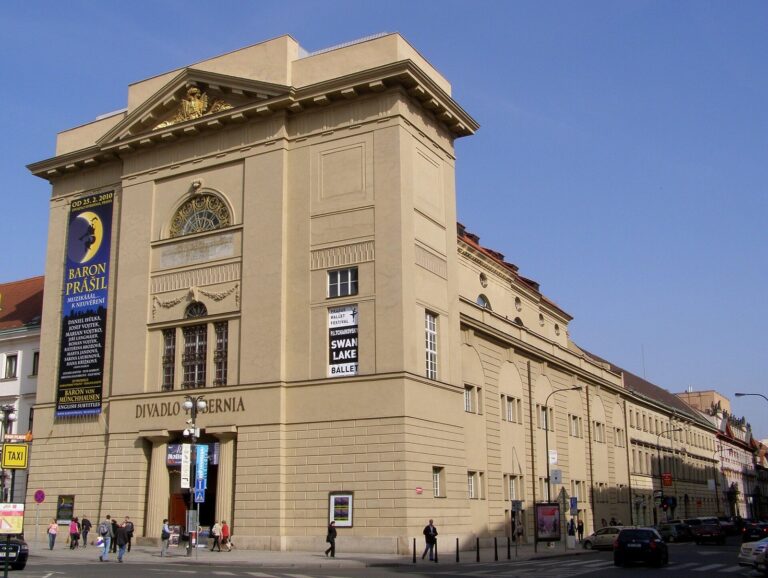
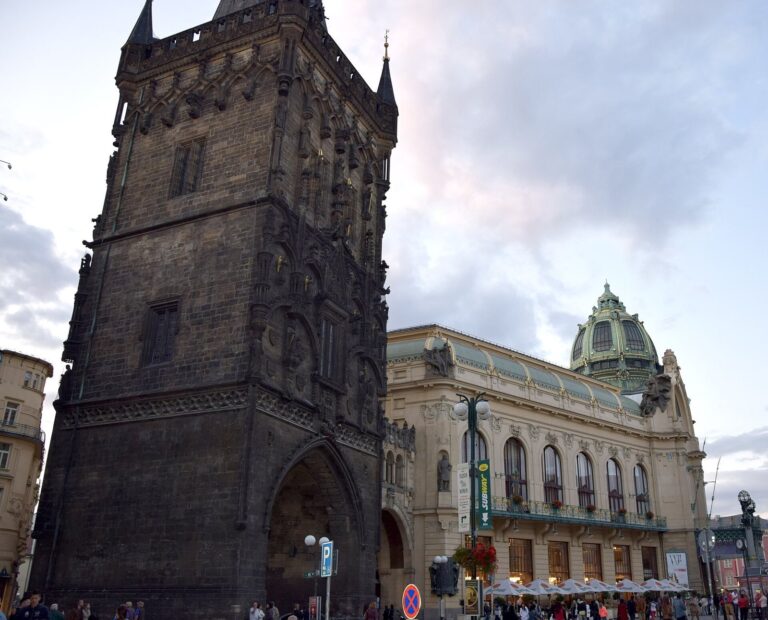
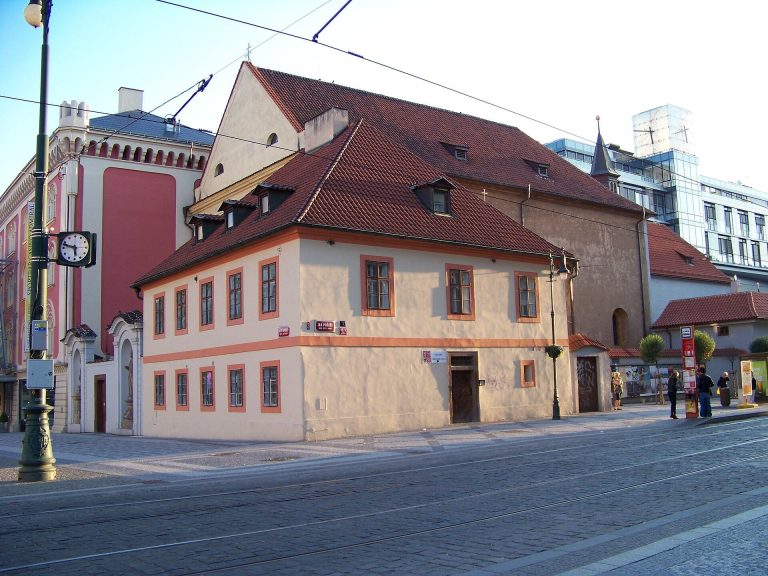
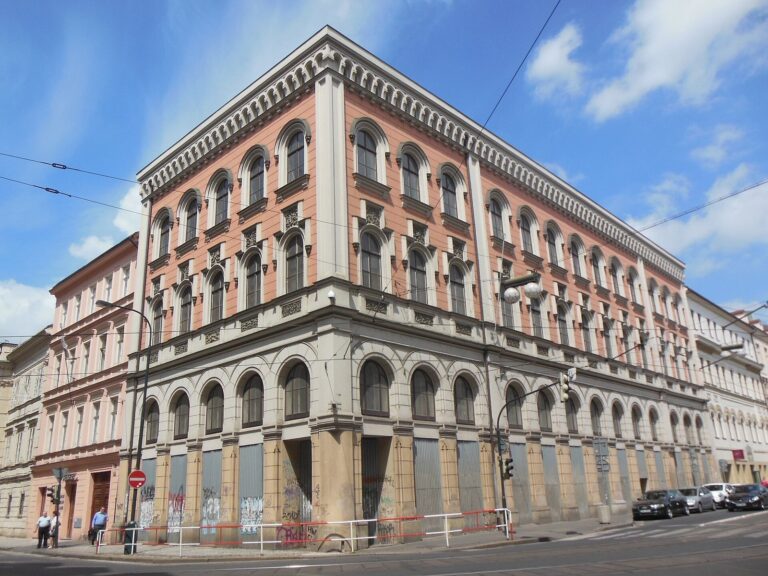
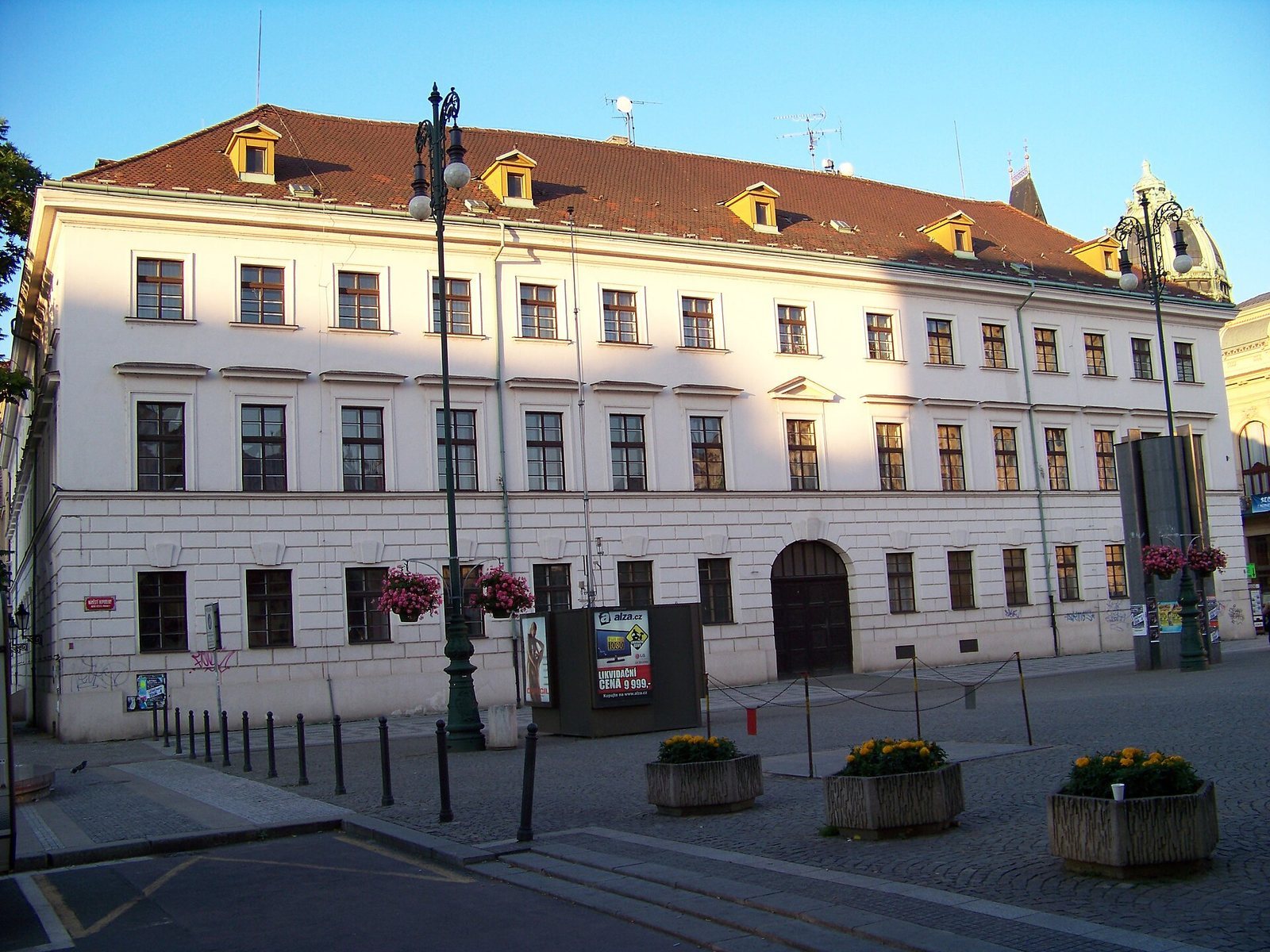
The former monastery and church occupy the southern side of Republic Square in Prague’s New Town, opposite the Municipal House. The church stands at the corner of Hybernská Street. The surviving buildings reflect successive changes: the monastery was rebuilt in the Empire style, an early nineteenth-century neoclassical style, while the former church took on a substantial classical appearance.
Former monastery
The monastery is an early Baroque building later rebuilt as a customs office. Its façades are regularly divided and restrained in appearance, reflecting its altered civic use.
Former church
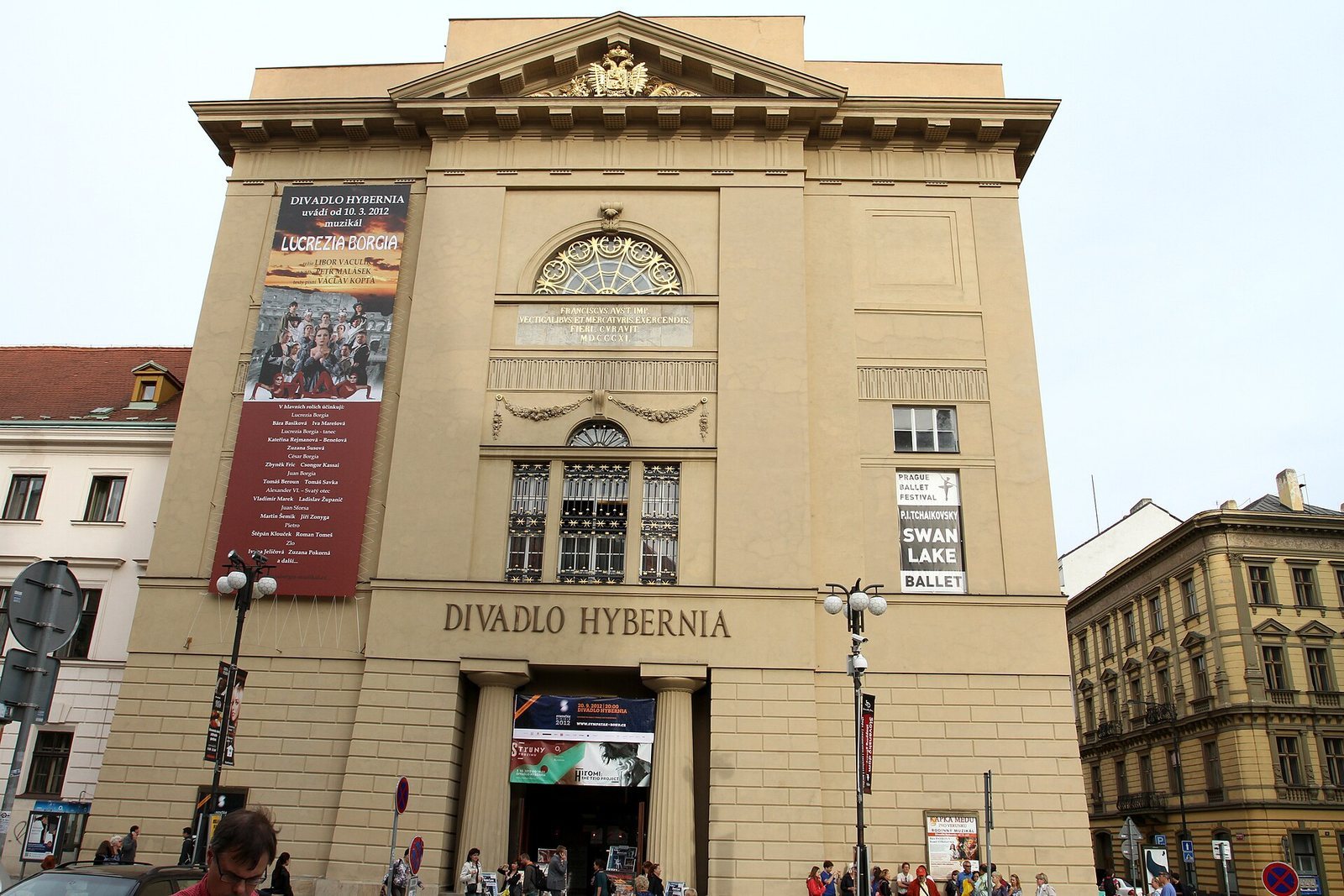
Now known as House U Hybernů, the former church was transformed from a Baroque building into a classical-style structure. Its Baroque stucco decoration was removed and a new entrance portal, framed by massive Doric columns (a classical column style), was added. A gilded inscription on the façade names Emperor Francis I and gives the year 1811 in connection with the customs office’s opening. The church’s Baroque tower, once topped by a dome, was demolished in 1806.