Himmelspforten Monastery in Würzburg: A Cistercian Nunnery and Carmelite Convent


Site at a Glance
- Popularity
- Medium
- Country
- Germany
- Primary era
- Medieval
- Eras represented
- Medieval
- Civilizations
- Holy Roman Empire
- Site type
- Religious
- Remains
- Monastery
On this page8 sections
History
Foundation and relocation
Himmelspforten Monastery is a Catholic convent in Würzburg, Germany, founded in 1231 by Bishop Hermann I of Lobdeburg as a Cistercian nunnery. The Cistercians were a Catholic monastic order that developed from the Benedictine tradition. The original community was established at Himmelstadt, near Zellingen, and dedicated to Mary and John the Evangelist. Saint Nicholas was added as a dedication later.
The convent owned extensive land and vineyards around Himmelstadt, as well as estate buildings in the village center. It was repeatedly attacked, and the knight Herold of Zellingen unlawfully took monastery property. Pope Innocent IV approved a move in 1251, and Bishop Hermann I ordered the transfer in 1253 to Himmelpforten near Würzburg. From about 1248, while the new convent was being prepared, the nuns lived at Schönau monastery.
Prosperity and dissolution
The church is dedicated to the Assumption of Mary and is described as one of Germany’s oldest Cistercian churches. The monastery prospered again under Prince-Bishop Julius Echter of Mespelbrunn, who held both ecclesiastical and territorial authority. During his time, the complex was remodeled several times.
In 1804, secularization, the transfer or suppression of church institutions and property under secular authority, brought the monastery to an end. Its buildings were later used as a military hospital and then as a tobacco factory.
Carmelite community and later uses
Discalced Carmelite nuns, a reform branch of the Carmelite order, moved into the monastery in 1844. From 1925, they lived in a side annex. The nuns make candles, icons, and liturgical textiles, fabrics used in Christian worship. Part of the former monastery has served as the Diocese of Würzburg’s education and retreat center since 26 January 1926.
On 15 July 1998, the Colombian Peace Council and the National Liberation Army (ELN), an armed political organization in Colombia, reached a peace agreement at Himmelspforten under the mediation of the Catholic Church. The agreement included a commitment to renounce kidnappings as a source of income.
Remains
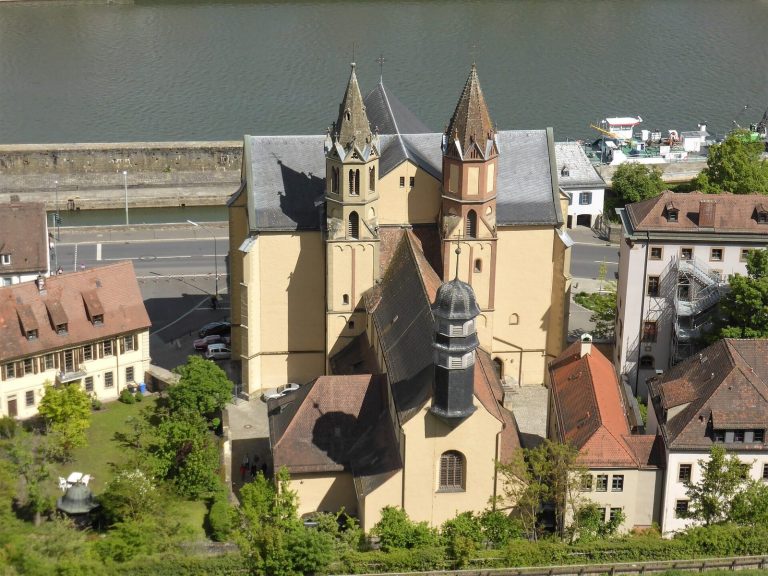
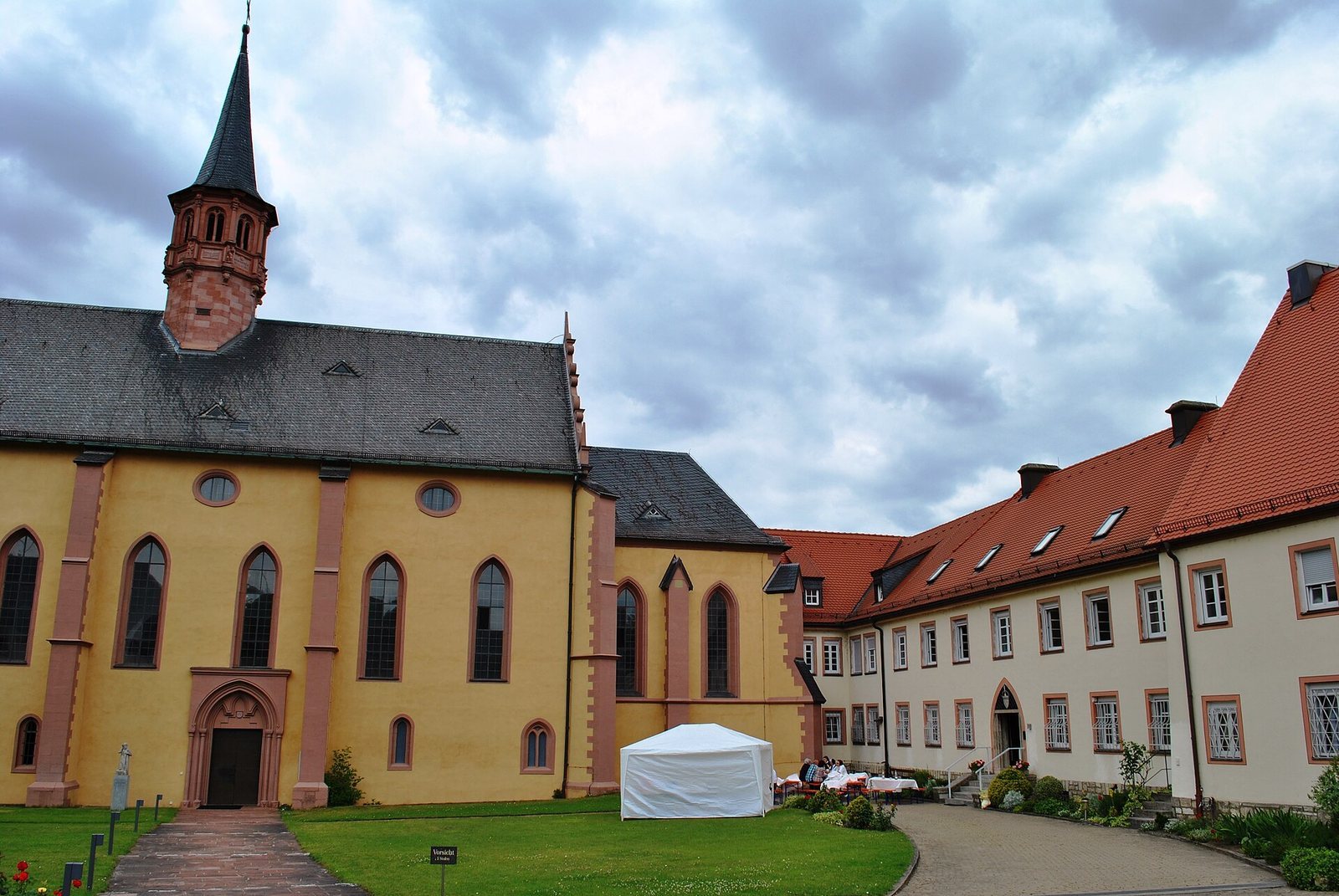
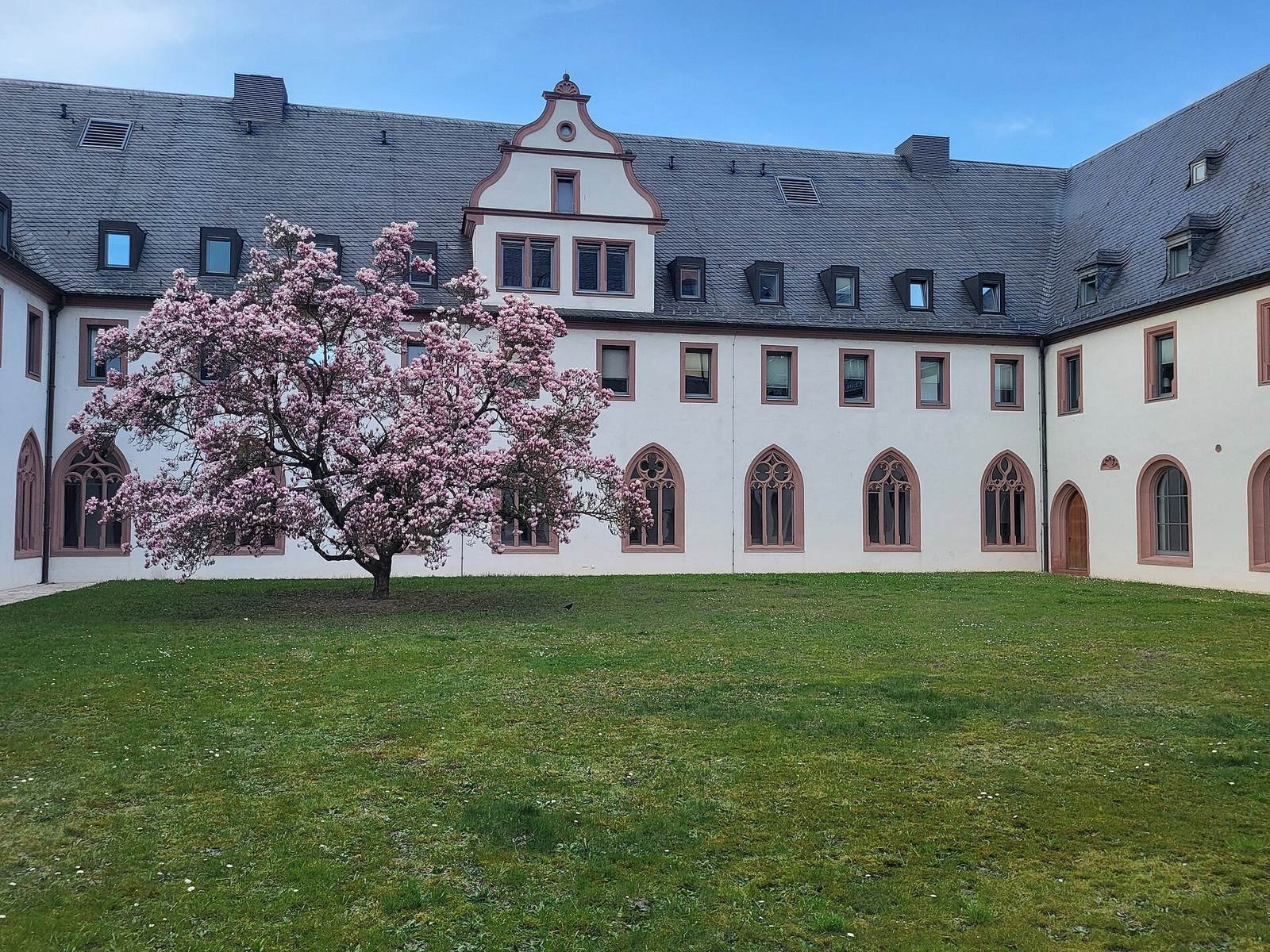
The surviving complex comprises the monastery church and convent buildings, with a retreat house beside the convent. Its present fabric includes both historic features and areas renewed after wartime damage.
Church
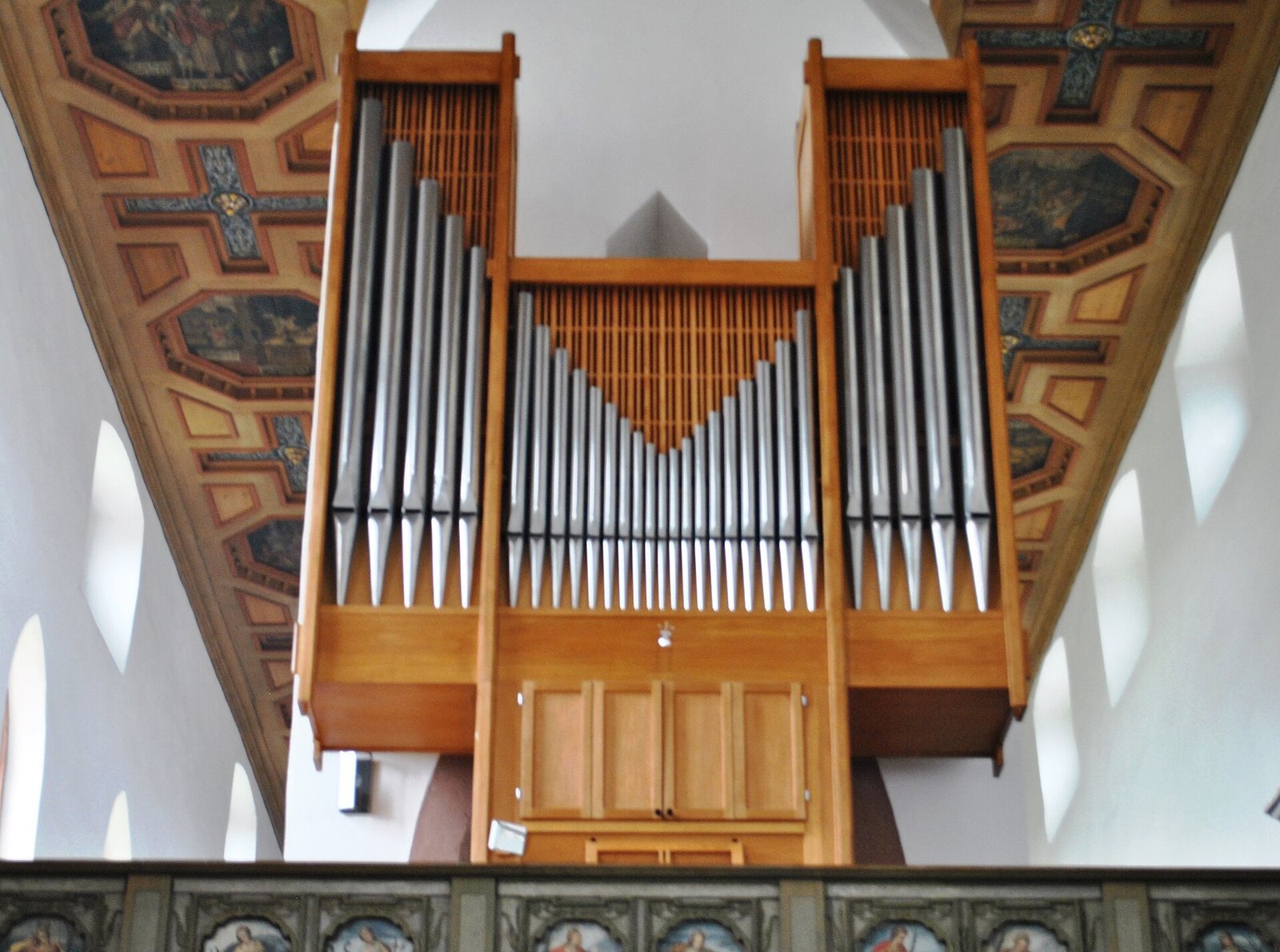
The church has a stair tower and a coffered ceiling, and an organ is also part of its interior. These features belong to the surviving church within the monastery complex.
Convent and retreat house
After extensive damage during the Second World War, the north and west wings were demolished. The retreat house was fully renewed by 1967. A further modernization, completed in 2005, was intended to preserve historic architectural evidence.
Himmelstadt estate
Some buildings from the convent’s former estate in Himmelstadt remain preserved in the village center.