Poppiano Castle: A Medieval Fortress and Later Villa in Italy
Site at a Glance
- Rating
- 4.7
- Popularity
- Medium
- Country
- Italy
- Primary era
- Medieval
- Eras represented
- Medieval, Modern
- Civilizations
- Italian, Republic of Florence
- Site type
- Domestic
- Remains
- Castle
On this page8 sections
History
Medieval origins and Florentine defense
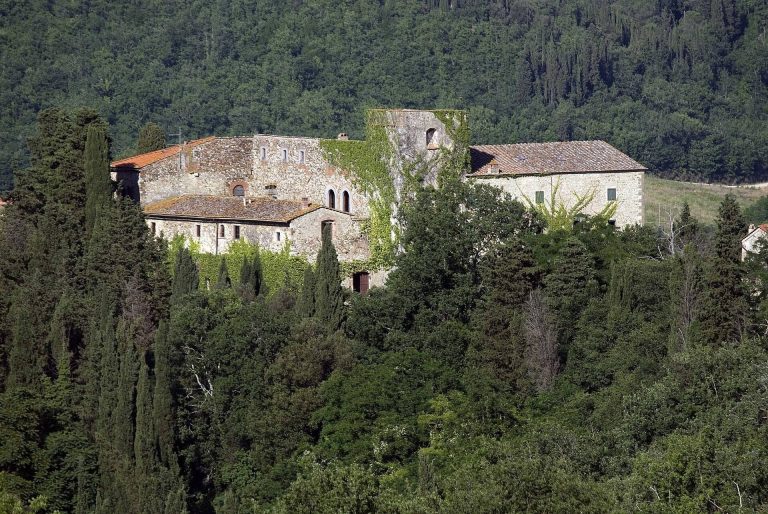
Poppiano Castle is a medieval fortress in Italy, built around or shortly after AD 1000. By 1199, it belonged to the Guicciardini family, which has owned it for nine centuries and remains its owner. The name may derive from either of two Roman clans, the Papia or the Poppea.
In the Middle Ages, Poppiano formed part of Florence’s defensive system. In 1359, Giovanni Acuto, the Italian name of English-born military commander John Hawkwood, camped at Poppiano while returning from a battle.
Siege and later transformations
The castle was damaged during the 1529 siege of Florence. Its owner at the time, Francesco Guicciardini, a Florentine statesman and historian, later recalled the damage. In the eighteenth century, the castle was converted into a villa. After an earthquake in 1812, a major nineteenth-century renovation reshaped it in the Neo-Gothic style, a revival of Gothic forms. The restoration drew on designs for Guicciardini family residences between the Val di Pesa and Val d’Elsa, reflecting eighteenth-century fashion.
Since the twentieth century, the estate’s commercial activities have included producing wine and olive oil. The property remains a private residence.
Remains
Site layout and architecture
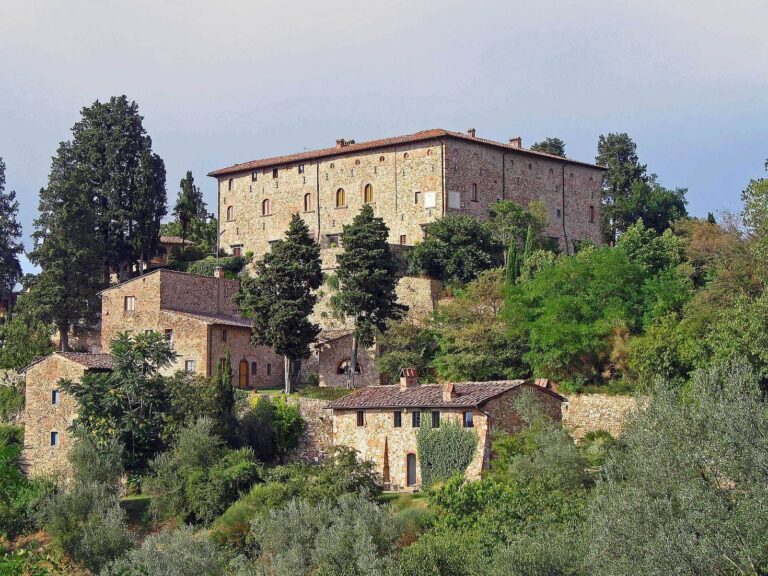
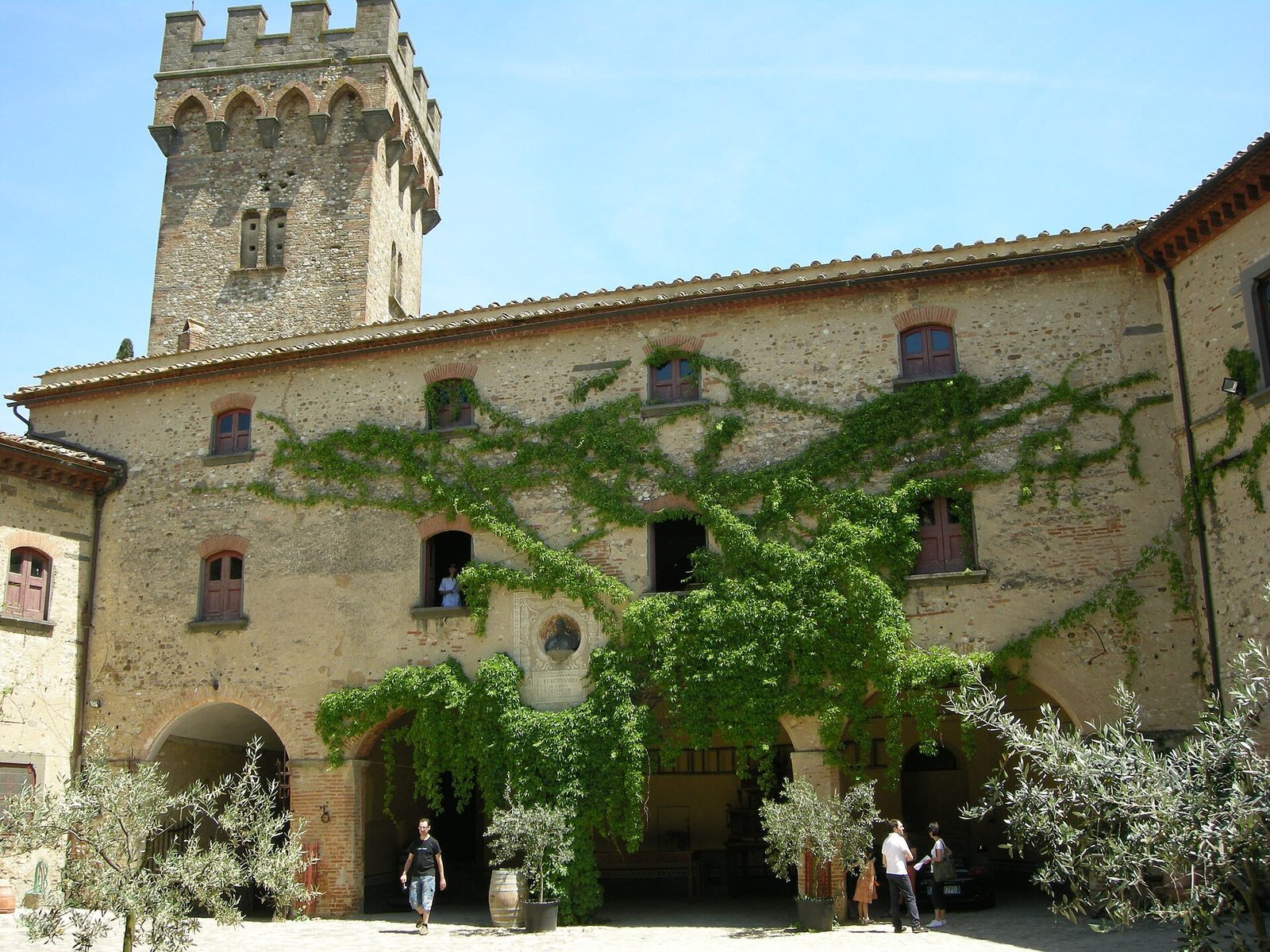
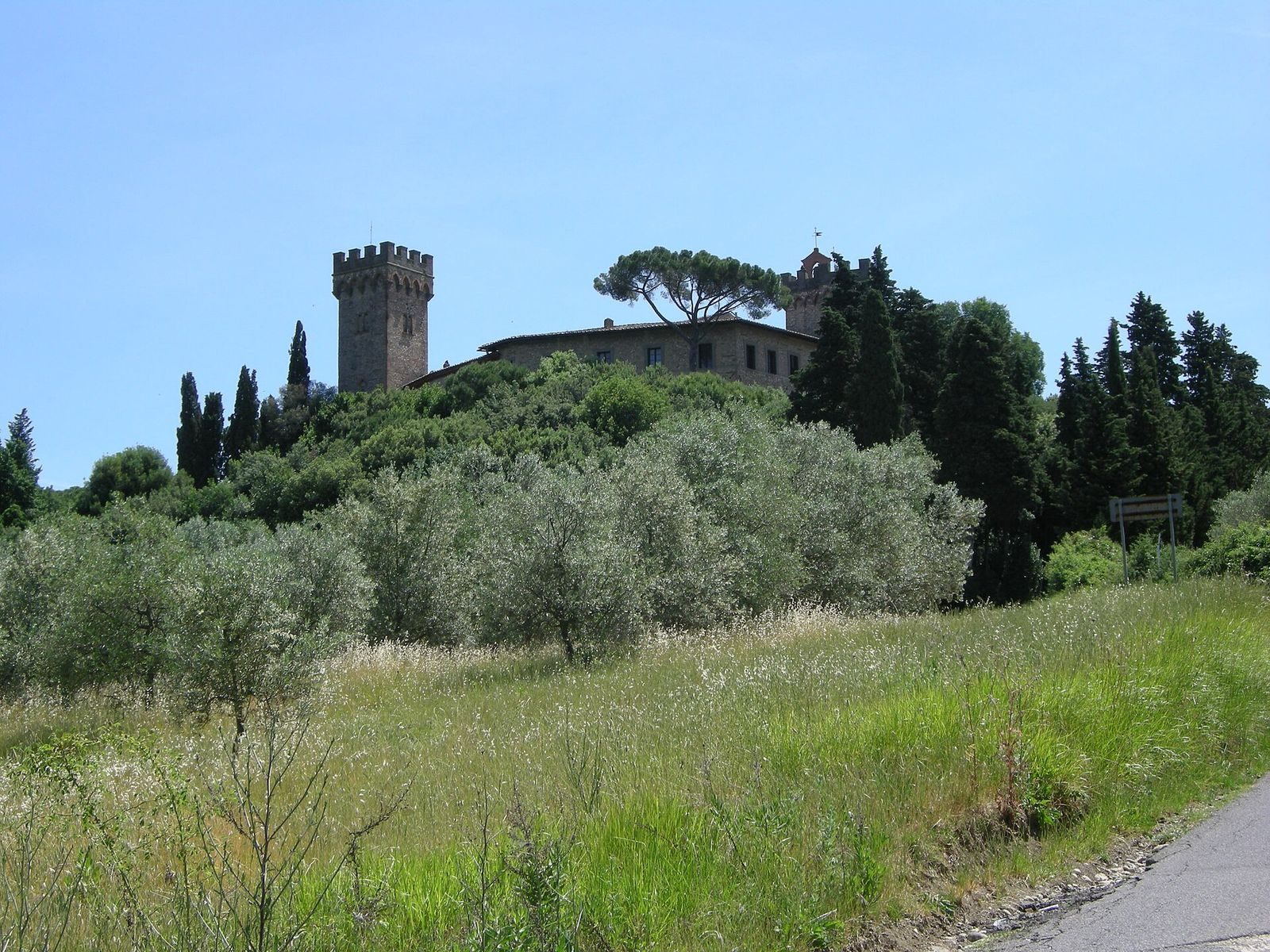
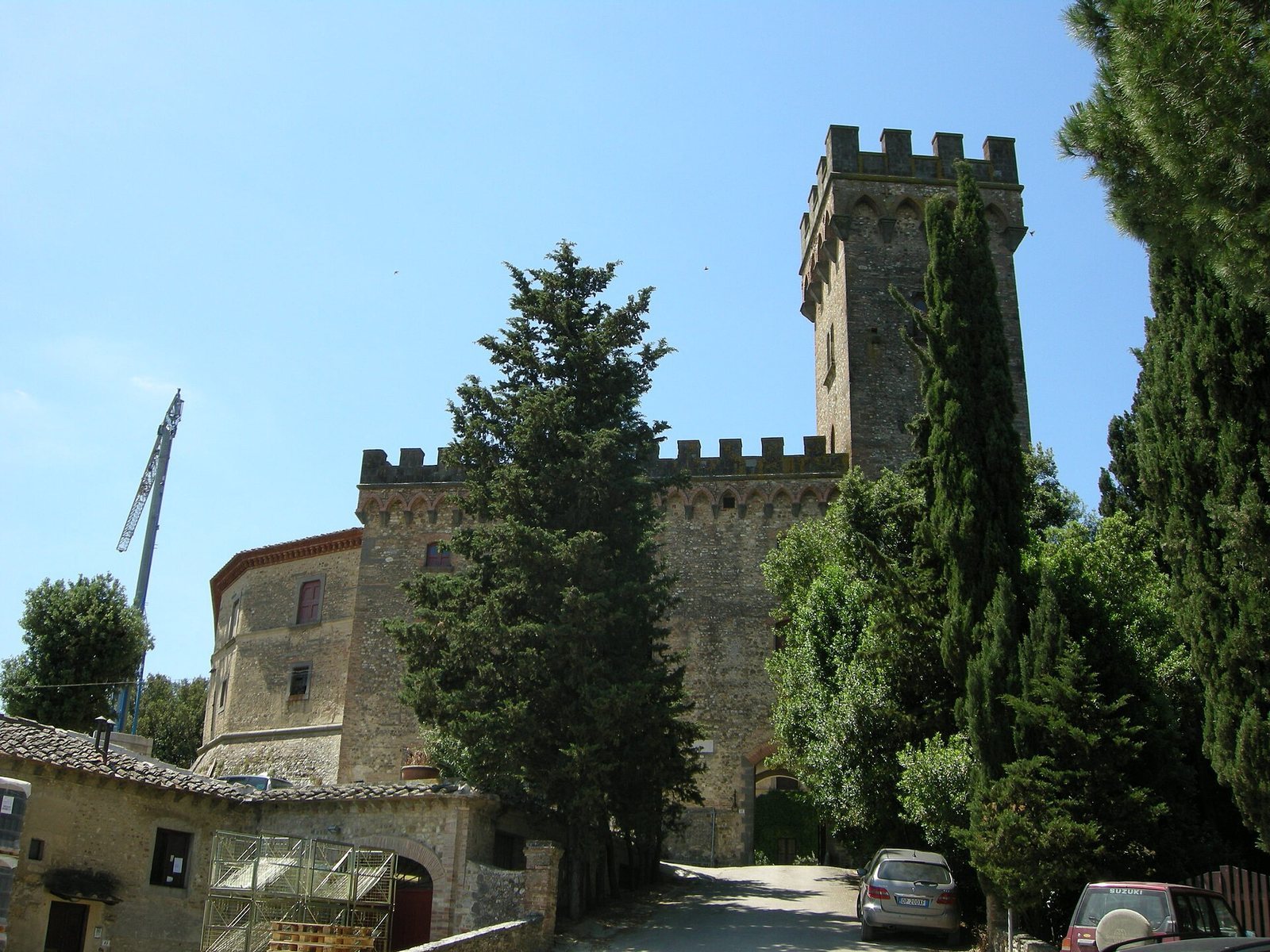
Poppiano Castle occupies a hill with a natural panoramic terrace, surrounded by the old village. Its plan is L-shaped, and in the Middle Ages Poppiano was enclosed by three circuits of walls. The upper storey is a nineteenth-century Neo-Gothic addition.
Castle
A small turret stands where the castle’s two wings meet. A stone staircase on the south side leads to the upper storey, whose crenellations form a wall top of alternating raised sections and gaps.
Chapel and altar painting
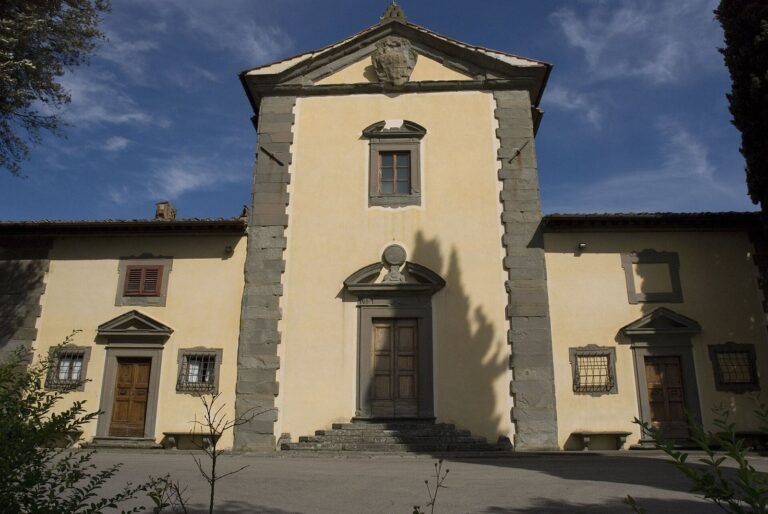
A chapel dating to 1930 stands in the villa’s forecourt. Its altar holds The Glory of Saint Nicholas of Bari, a canvas painted in 1640 by Giovanni Martinelli for Count Francesco di Gualtierotto Guicciardini. The painting’s nuanced gray-blue tones and restrained manner differ from Martinelli’s earlier Roman Caravaggist style, influenced by Caravaggio’s naturalism and dramatic use of light and shadow. The saint’s foreshortened pose uses perspective to suggest projection into space, echoing Martinelli’s wall painting at the Oratory of the Vanchetoni, a small place of worship.
Lemon house
A small lemon house, a building associated with growing or sheltering citrus, lies beneath the terrace embankment.