Neu-Habsburg Castle: A Habsburg Administrative Center in Switzerland
Site at a Glance
- Rating
- 4.3
- Popularity
- Very Low
- Country
- Switzerland
- Primary era
- Modern
- Eras represented
- Medieval, Modern
- Civilizations
- Habsburg, Holy Roman Empire, Swiss
- Site type
- Domestic
- Remains
- Castle
On this page6 sections
History
Habsburg foundation and administration
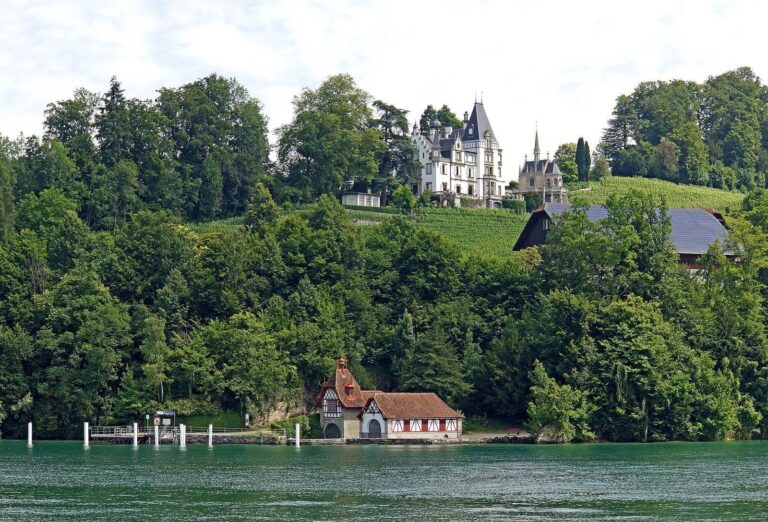
Neu-Habsburg Castle is a medieval fortification in Meggen, Switzerland, on the shore of Lake Lucerne. The Habsburg ruling dynasty built it in 1244–1245, possibly to replace an earlier fort at Meggenhorn. In 1244, income from the land was granted to Fraumünster Abbey, a medieval convent for women in Zurich.
The castle may initially have been a summer residence for Rudolf I, a Habsburg count elected King of the Romans in 1273. It later served mainly as an administrative center for Habsburg possessions in Weggis, Lippertschwil, Küssnacht, Immensee, Kehrsiten, Greppen, Udligenswil, Arth, and Holzhäusern.
Damage, destruction, and rebuilding
In 1245, the castle was damaged after Pope Innocent IV excommunicated Holy Roman Emperor Frederick II at the First Council of Lyon. Excommunication was a formal church penalty that excluded a person from receiving the sacraments and certain forms of church participation.
The Old Swiss Confederacy, an alliance of Swiss communities that developed into the Swiss Confederation, formed in 1291. The castle was regarded as an obstacle to the alliance and was destroyed in 1352, after Lucerne joined it. A later castle was built in 1871.
Remains
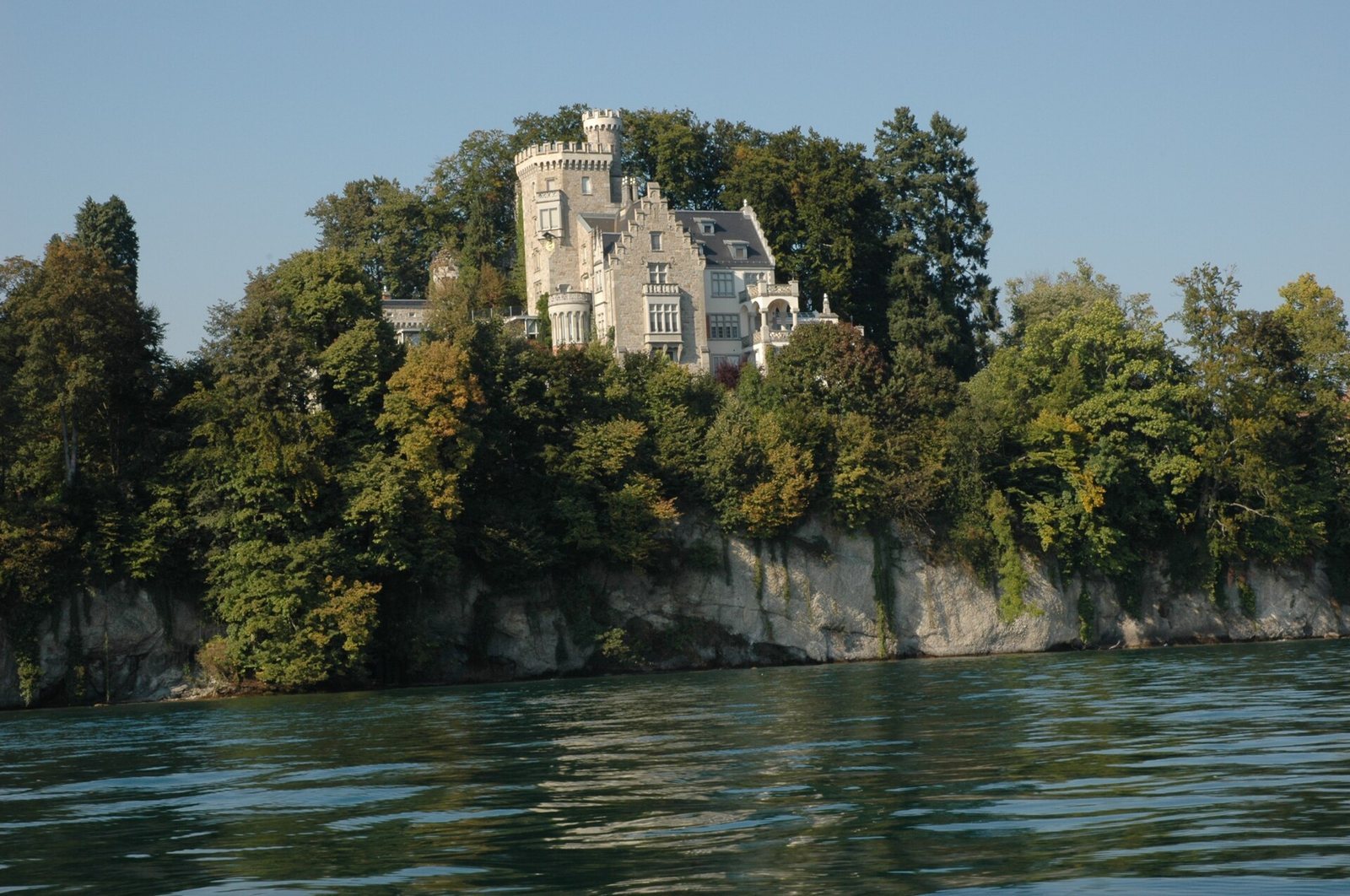
At Meggen on Lake Lucerne, the site combines a later castle with remains of the medieval fortification beneath it.
Medieval fortification
Surviving parts of the original castle include a square main tower, a thick wall that enclosed the fortification, and several other buildings. The later castle was built on the medieval ruins.
Later castle
The later building is in the Gothic Revival style, a nineteenth-century architectural style that drew on medieval Gothic forms.