St. Maria ad Gradus: A Medieval Collegiate Church in Cologne
Site at a Glance
- Popularity
- Medium
- Country
- Germany
- Primary era
- Medieval
- Eras represented
- Medieval
- Civilizations
- Holy Roman Empire
- Site type
- Religious
- Remains
- Church
On this page8 sections
History
Foundation and medieval role
St. Maria ad Gradus was a medieval Catholic collegiate church in Cologne, Germany, founded by Archbishop Hermann II on the site of a baptistery belonging to Cologne Cathedral. Construction began under Hermann and was probably completed around 1062. A charter issued by Archbishop Anno II in 1075 stated that the church followed Hermann’s plan and was built with his funds.
A community of clergy called canons served the church, which belonged to the Diocese of Cologne. It had its own immunity district, an area exempt from the city’s jurisdiction and taxes. The church also served as a ceremonial reception church, where important visitors were welcomed on behalf of the Cathedral. Relics of St. Agilolfus, a saint associated with Cologne, were transferred there during its early history.
St. Maria ad Gradus was also the burial place of Richeza of Lotharingia, Queen of Poland and granddaughter of Holy Roman Emperor Otto II and his wife Theophanu. Richeza died in March 1063. Her remains were transferred to Cologne Cathedral in 1817.
Fire and Gothic enlargement
A fire damaged the church in the late 11th century, after which it was rebuilt. It was enlarged later in the Gothic style.
Dissolution and demolition
After French forces occupied the Rhineland in 1794, religious foundations were dissolved. The collegiate foundation at St. Maria ad Gradus closed in 1802. The church was not made a parish church because it stood close to Cologne Cathedral, Great St. Martin, and St. Andreas, and the area had no need for another parish church. After a period of use as a warehouse, the building was demolished in 1817. In 1827, the remaining fabric and foundations were removed as the Cathedral hill was cleared for work on the restoration and completion of the Cathedral.
Remains
Plan and surviving fabric
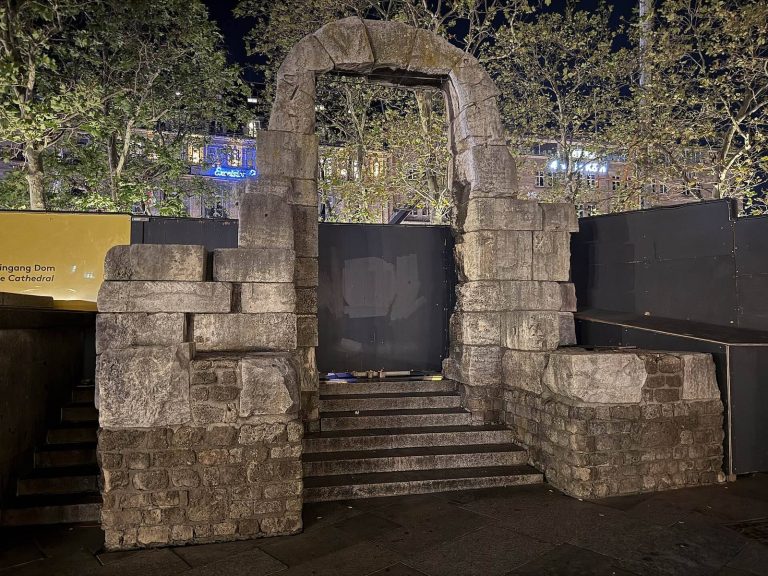
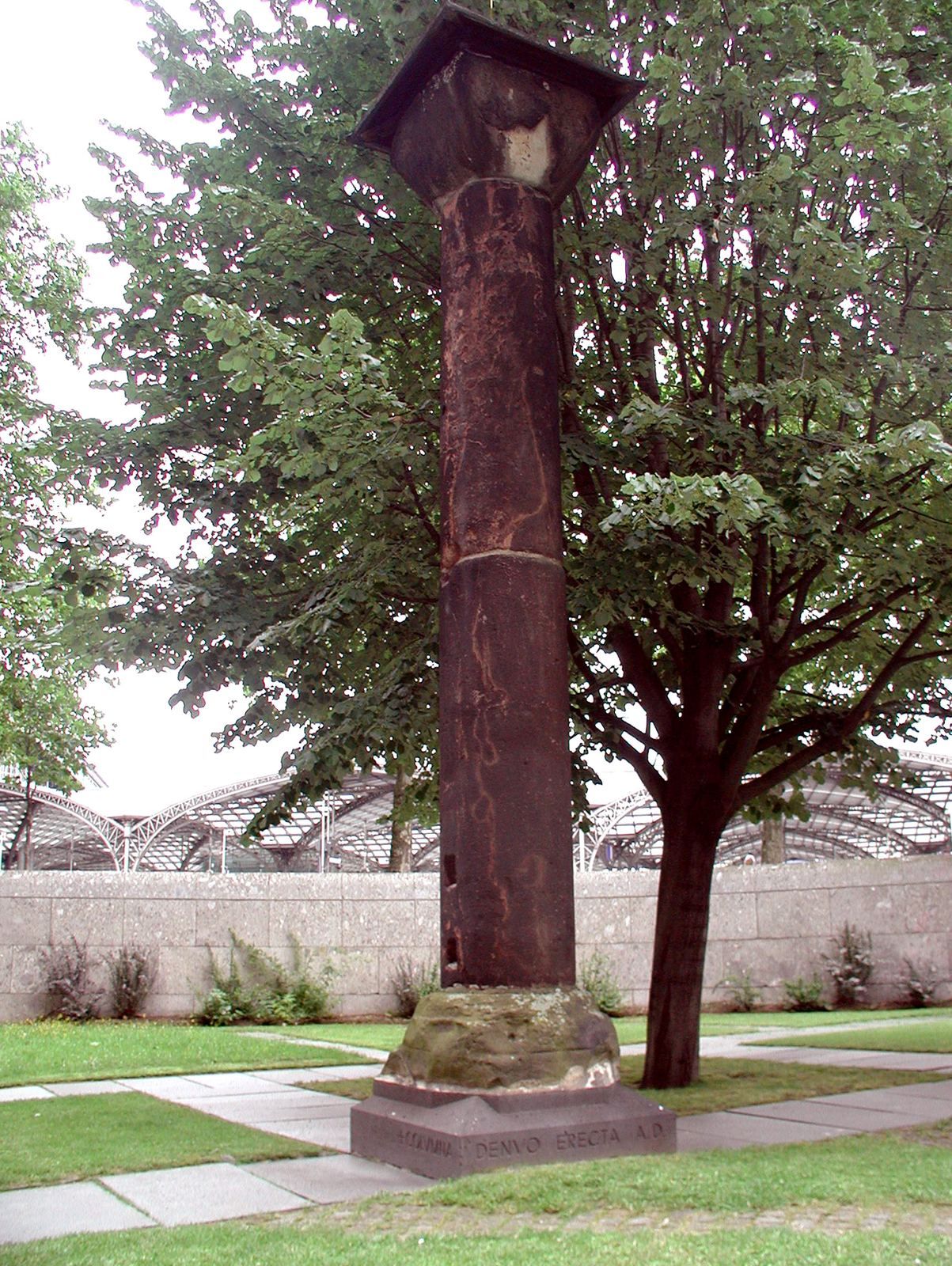
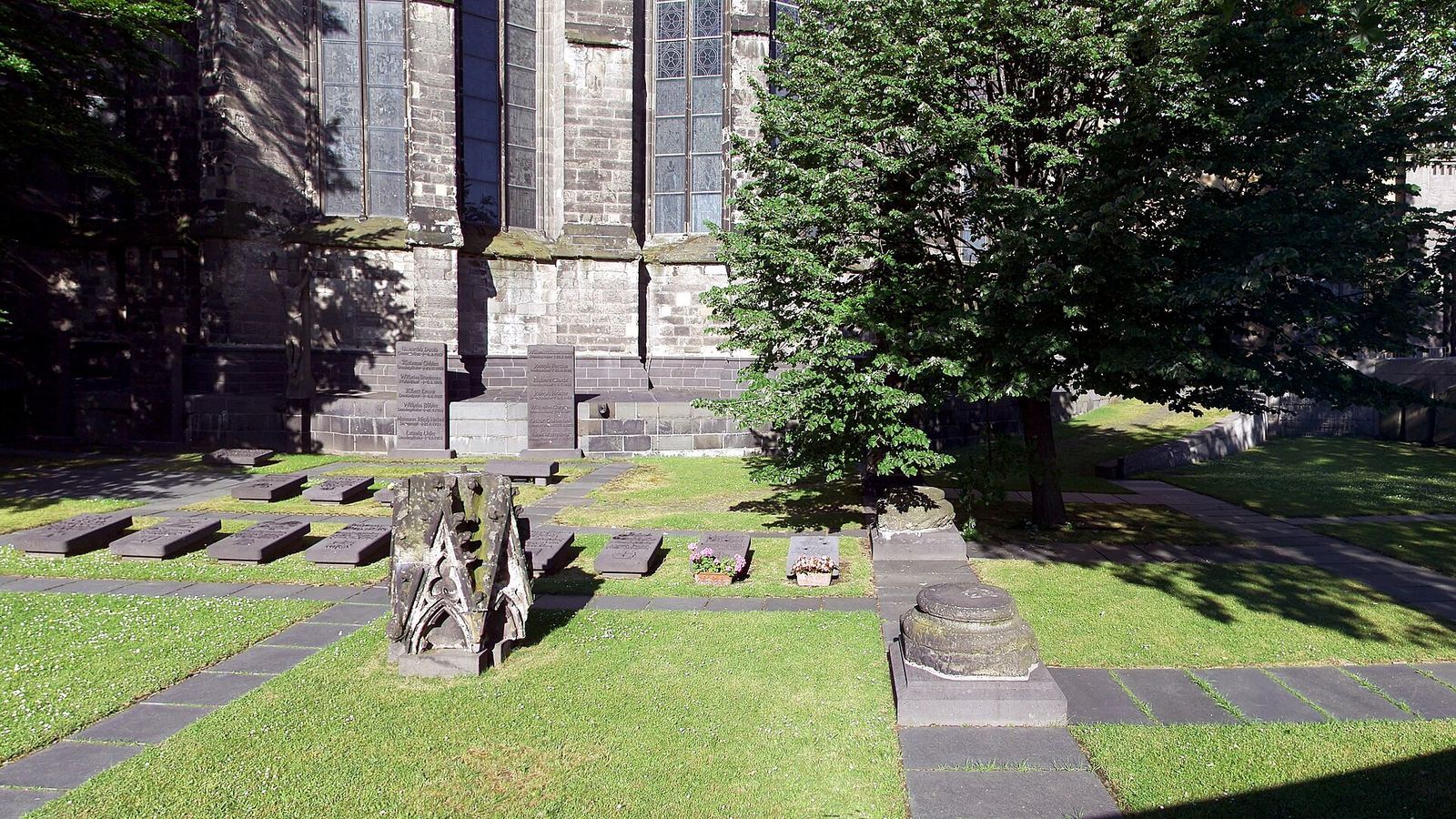
St. Maria ad Gradus stood east of Cologne Cathedral, between the Cathedral and the Rhine. Its plan was that of a two-choir basilica, a church with choir areas at both ends of its main axis. It had cross-arms at the west and east ends and measured about 55 metres long by 42 metres wide. A double row of columns, open toward the church interior, connected it to the Cathedral. A separate chapel on the church premises was dedicated to Saint Afra. Fragments survive among the graves of Cathedral clergy behind the Cathedral’s curved eastern end. These include a freestanding column with its carved top, from the connecting colonnade and known as the Cathedral Column.
Manuscripts and excavated finds
Excavations at the Cathedral in 1866 yielded finds associated with St. Maria ad Gradus, which were sent to several museums. A Gospel manuscript from the church is held by the Cologne Diocesan Library. The Richeza Gospel, which also belonged to the church, is held by the Hessian State and University Library in Darmstadt.
Altars, sculpture and bells
The church’s Agilolfus altar and shrine are now in Cologne Cathedral. In 1803, parishioners of Bliesheim, formerly dependent on the collegiate church, received a crucifix with attendant figures made in the workshop of late-medieval sculptor Master Tilman. The original is now in the parish church of St. Lambert in Bliesheim. At least three bells were transferred to other churches. A bell dedicated to the Virgin Mary and All Saints, dated either 1354 or 1356 and 1.17 metres in diameter, survives at St. Mauritius in Bachem. Two bells dedicated to the Virgin Mary, cast by Christian Duisterwalt in 1416 and 1424, measure 1.25 and 1.09 metres across and were moved to St. Peter. The smaller of these survived the Second World War and was welded in 1960. A model of the church is held by Cologne’s Historical City Museum.