Saint-Martin-au-Val Church in Chartres: A Former Convent Church
Site at a Glance
- Rating
- 4.4
- Popularity
- Very Low
- Country
- France
- Primary era
- Medieval
- Eras represented
- Medieval, Modern
- Civilizations
- French, Merovingian
- Site type
- Religious
- Remains
- Church
On this page11 sections
History
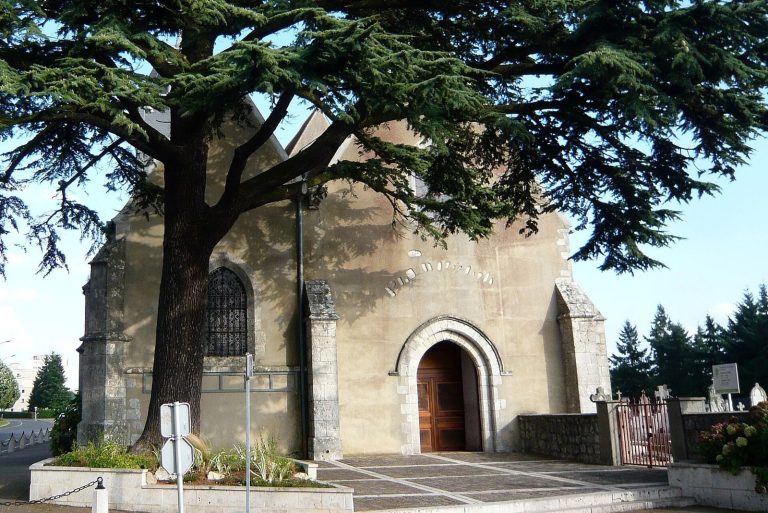
Saint-Martin-au-Val Church is a former convent church in Chartres, France, and is the city’s oldest church. It has a Romanesque plan, a medieval western European design, and construction phases assigned to the 11th, 15th, and 19th centuries, while its foundation is also dated to the 12th. The church is the sole surviving part of its monastery.
Monastic foundation
The monastery is mentioned in the Life of Saint Lubin, which says that Lubin, a bishop of Chartres later venerated as a saint, was buried there. In 1128, the monastery became a priory, a religious house attached to a larger institution, under Marmoutier Abbey at Tours, a major monastery.
Damage and rebuilding
In 1568, Calvinists, Protestants who followed John Calvin’s teachings, devastated the church and convent. The church was burned, graves and tombs were violated, and the convent buildings were ravaged. The buildings were pillaged again during the 1591 siege of Chartres.
A complete restoration followed in 1648, when several bays, or divisions of the interior, were removed, shortening the church by about 20 metres. In 1663, the church and its grounds passed to Chartres’s Capuchin community, a reform branch of the Franciscan religious order. The convent buildings were rebuilt, and the church floor was raised by two metres.
Hospice, restoration, and excavation
After the convent was confiscated and sold as national property during the French Revolution, it became a hospice, and the church served as its chapel. In 1845, Ferdinand de Reverdy left his property to the Chartres hospices on the condition that the chapel be restored to its original state. Preliminary excavations took place in 1858–1862, before rebuilding work and major alterations carried out from 1858 to 1864.
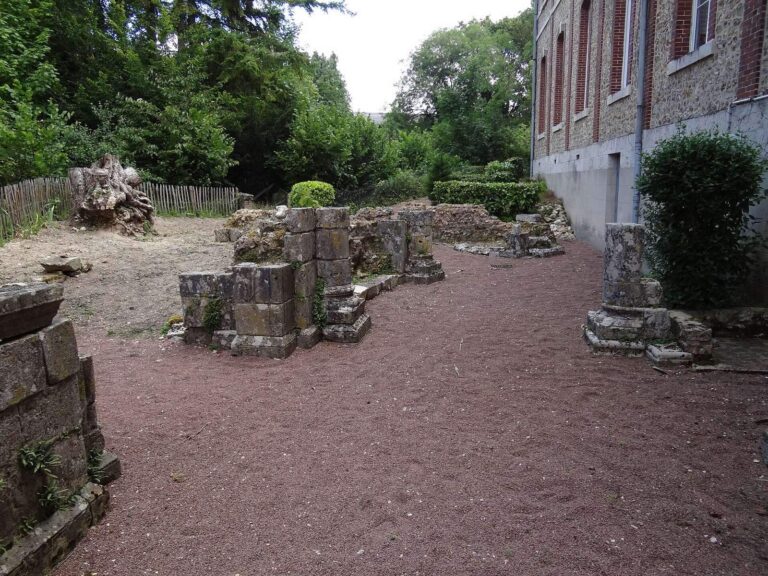
The church stands at the center of a six-hectare Gallo-Roman sanctuary, from the period and culture shaped by Roman rule in Gaul. Excavations began there in 2006, followed by a planned excavation campaign in 2011. Further excavation from 2013 suspended worship, although the church was not formally taken out of use. Following restoration, Bishop Philippe Christory, the diocesan bishop of Chartres, reopened it for worship on 20 December 2025 and celebrated Christmas Mass there. The church has been classified as a French historic monument, a formal heritage-protection status, since 1886.
Remains
The church stands within the grounds of the former Saint-Brice hospital, at the center of the Gallo-Roman sanctuary. Its oriented Romanesque plan measures 50 metres long by 39 metres wide, with a stated area of 1,420 square metres.
Church plan and interior
Exterior and plan
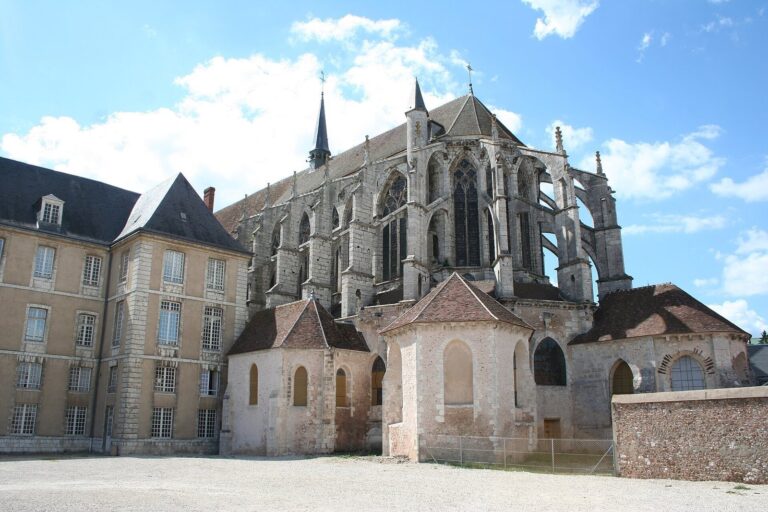
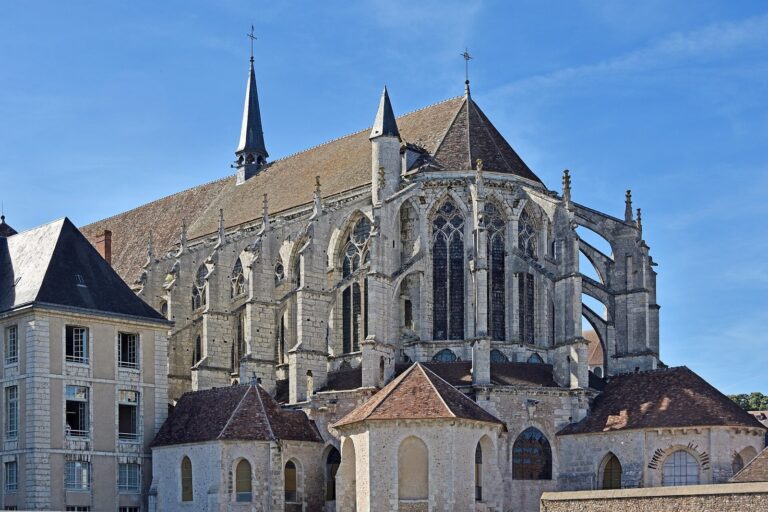
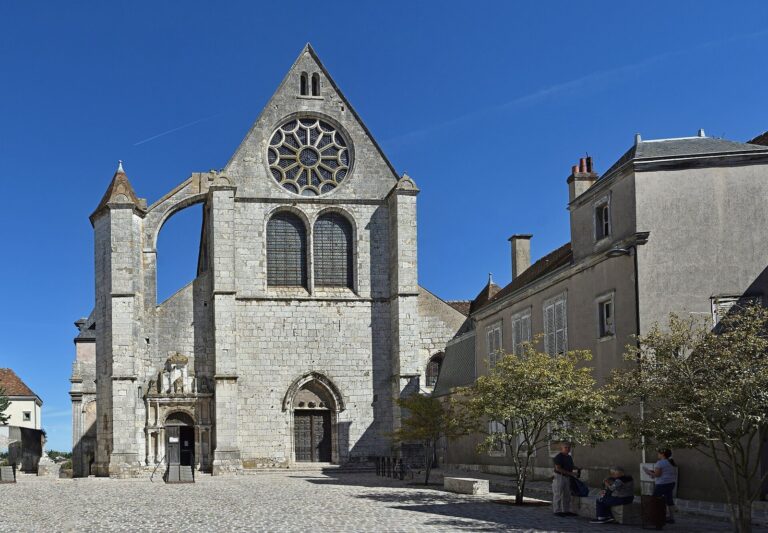
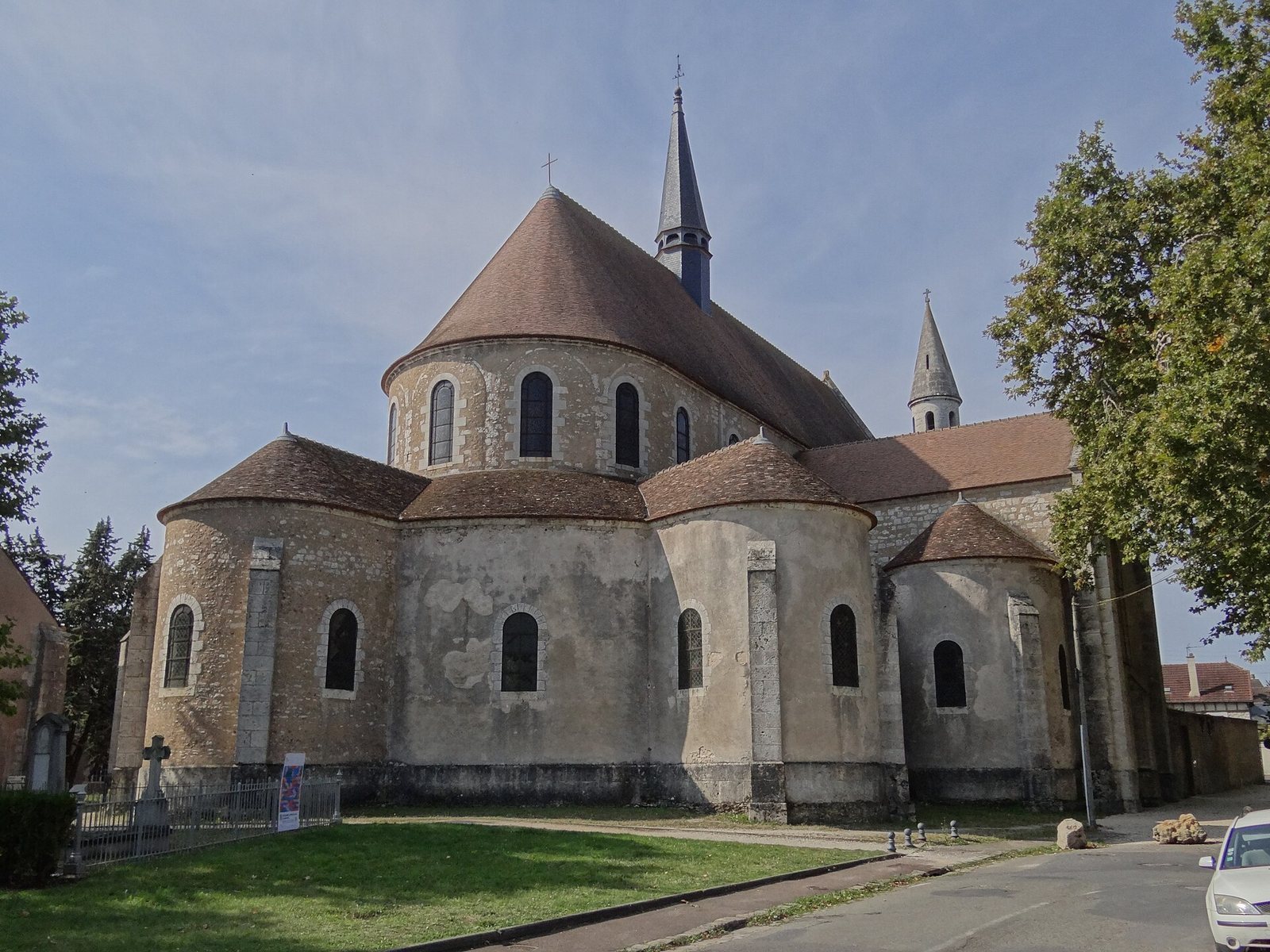
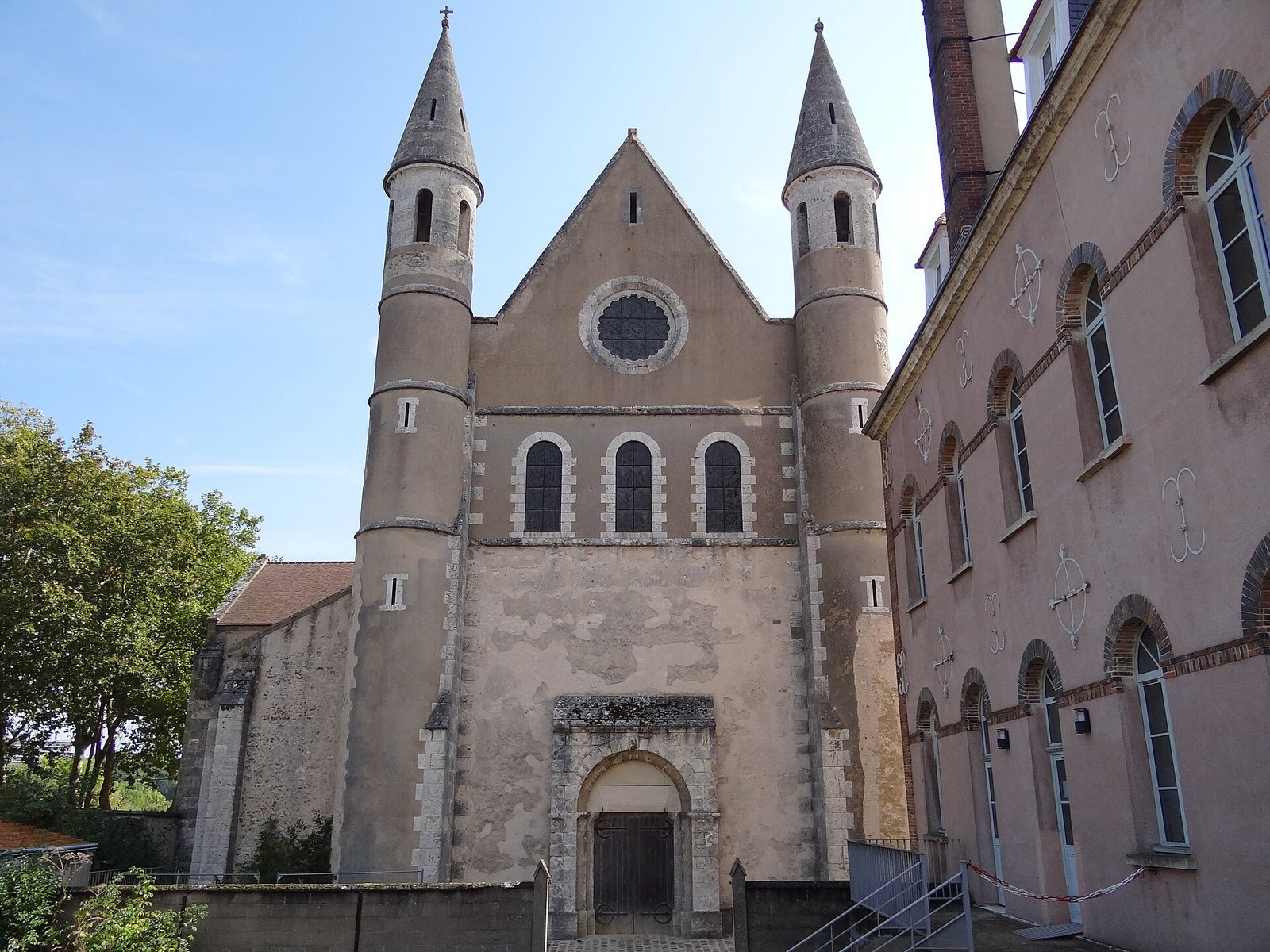
The church’s rounded apse, the curved end of the building, has three chapels; two more chapels are attached to the arms of the transept, the crosswise section of the church. The 19th-century western façade has a small tower at each end, with the principal entrance on the west side. A south façade is also identified.
Nave, choir, and crypt
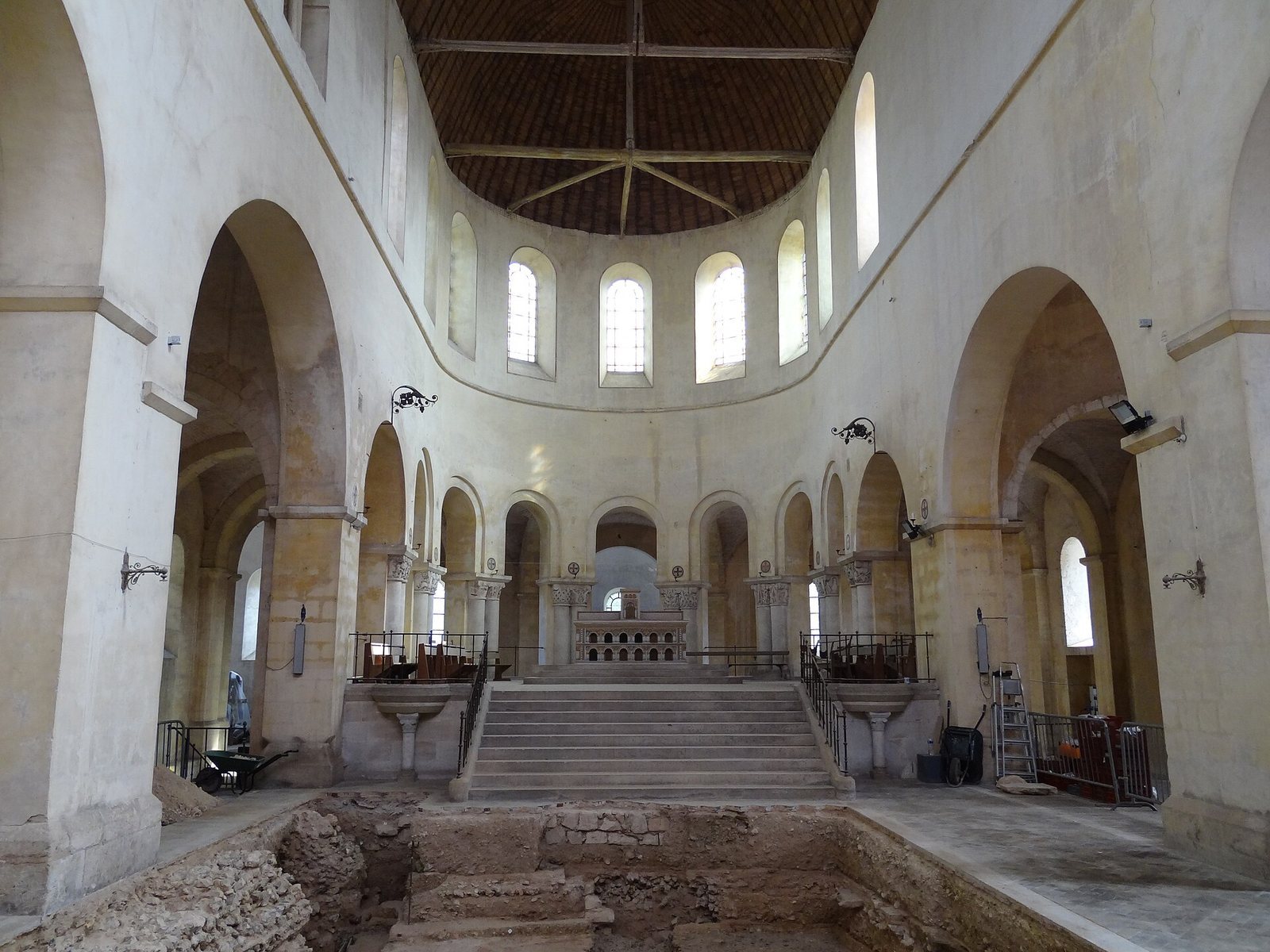
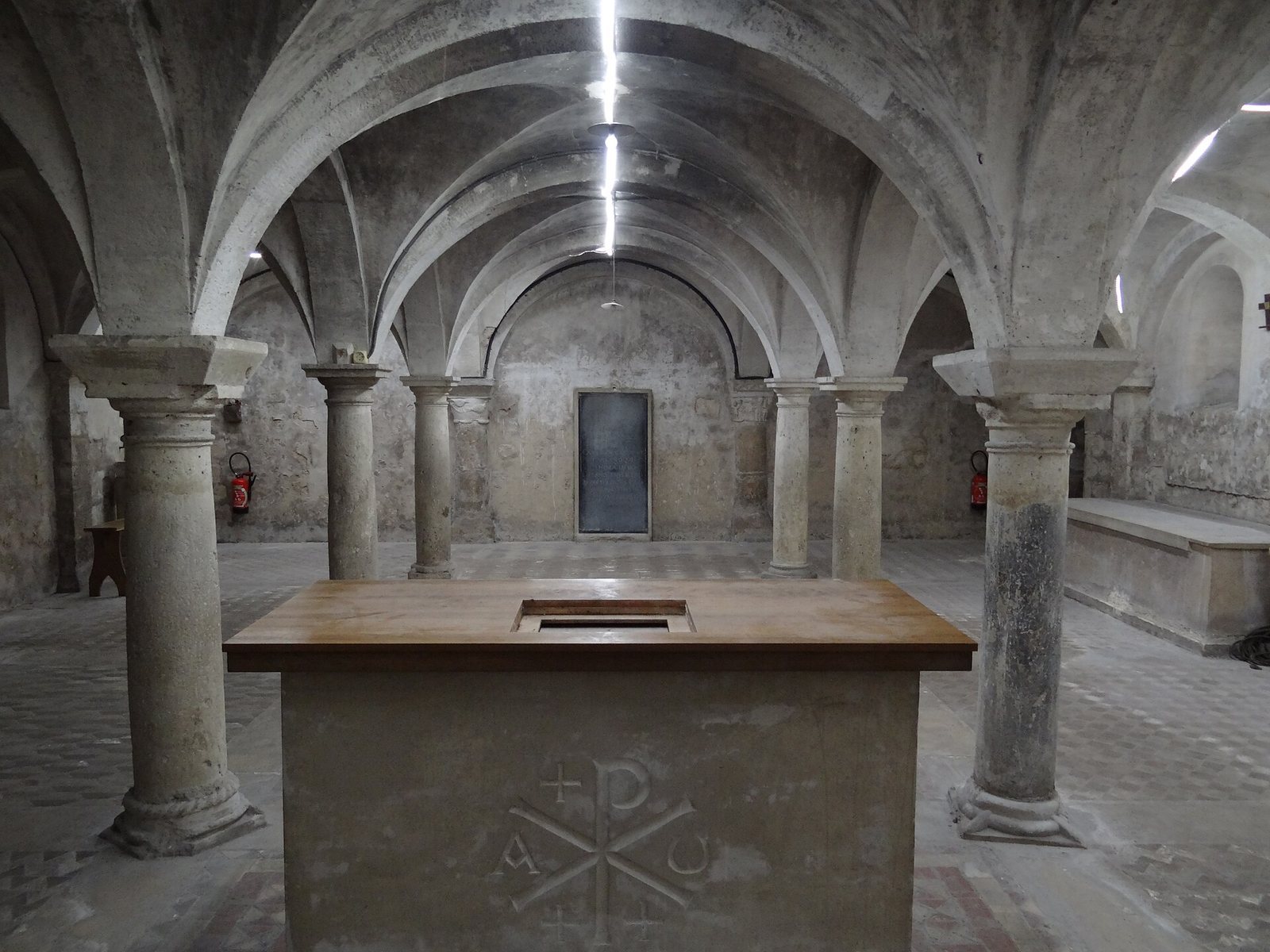
The nave, the main body of the church, now has three bays, four fewer than in the 11th-century arrangement. The choir, the area reserved for clergy and singers, is raised above the nave, while the ambulatory, a passage around the choir, is lower. Beneath the choir is a crypt, a chamber under a church. It contains Merovingian masonry, from the early medieval Frankish dynasty, as well as an arcade of arches around the choir, carved capitals bearing figures or scenes, and a pillar base. A capital, the top of a pillar, suggests that an earlier church may have occupied the site. A secondary altar stands on the north side.
Nave excavations in 1858–1862 uncovered ten Merovingian sarcophagi, or stone coffins. A child’s sarcophagus is also among the finds associated with these excavations.
Burial places
Tombs in the church
Saint-Martin-au-Val was, with the Church of Saint-Pierre, a customary burial place for the bishops of Chartres. The church contains the tomb of Jean-Baptiste-Joseph de Lubersac (1780–1802) and a recumbent effigy of Claude-Hippolyte Clausel de Montals (1824–1852), a sculpted figure shown lying down.
Eastern cemetery
A small enclosed cemetery lies east of the church along rue Georges-Brassens. It commemorates the building’s benefactors, including Ferdinand de Reverdy, and each grave has a plaque explaining the person’s connection with the site. The cemetery includes the grave of Marie-Charlotte Midy, widow Renouard de Saint-Loup (1767–1834), and that of Édouard Auguste Demolliens (1836–1898), formerly a chaplain at Saint-Brice. A monument to Father Pierre Louis Bordier bears an inscription expressing the gratitude of the administrators, his family, many friends, older people, orphans, and the Sisters of Saint-Paul.