Harun al-Rashid Mausoleum: Abbasid Burial Site in Mashhad
Site at a Glance
- Popularity
- Very High
- Country
- Iran
- Primary era
- Medieval
- Eras represented
- Medieval
- Civilizations
- Ghaznavid, Ilkhanate
- Site type
- Religious
- Remains
- Tomb
On this page7 sections
History
Abbasid burials
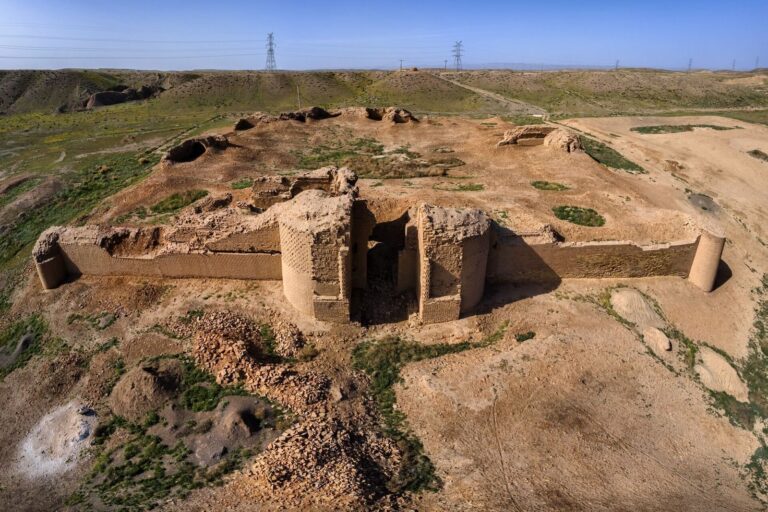
The Harun al-Rashid Mausoleum is a shared burial place within the Imam Reza shrine complex in Mashhad, Iran. Harun al-Rashid, the fifth caliph of the Abbasid dynasty, died in Tus in 193 AH (808/809 CE) while traveling to Khorasan to suppress a revolt led by Rafi’ ibn al-Layth. Harun was buried at a former residence of Hamid ibn Qahtaba, a commander under the revolutionary leader Abu Muslim al-Khurasani. Harun’s son, al-Ma’mun, raised a dome over the grave, which became known as Harun’s Dome.
In 202 AH (817/818 CE), Ali al-Ridha died after being poisoned and was buried beside Harun by al-Ma’mun. Ali, regarded in Twelver Shi’ism as the eighth Imam, or religious leader in a line held to possess special authority, had asked to be buried near Harun. His will specified a grave beside the wall, three cubits from Harun’s.
Destruction and development of the shrine
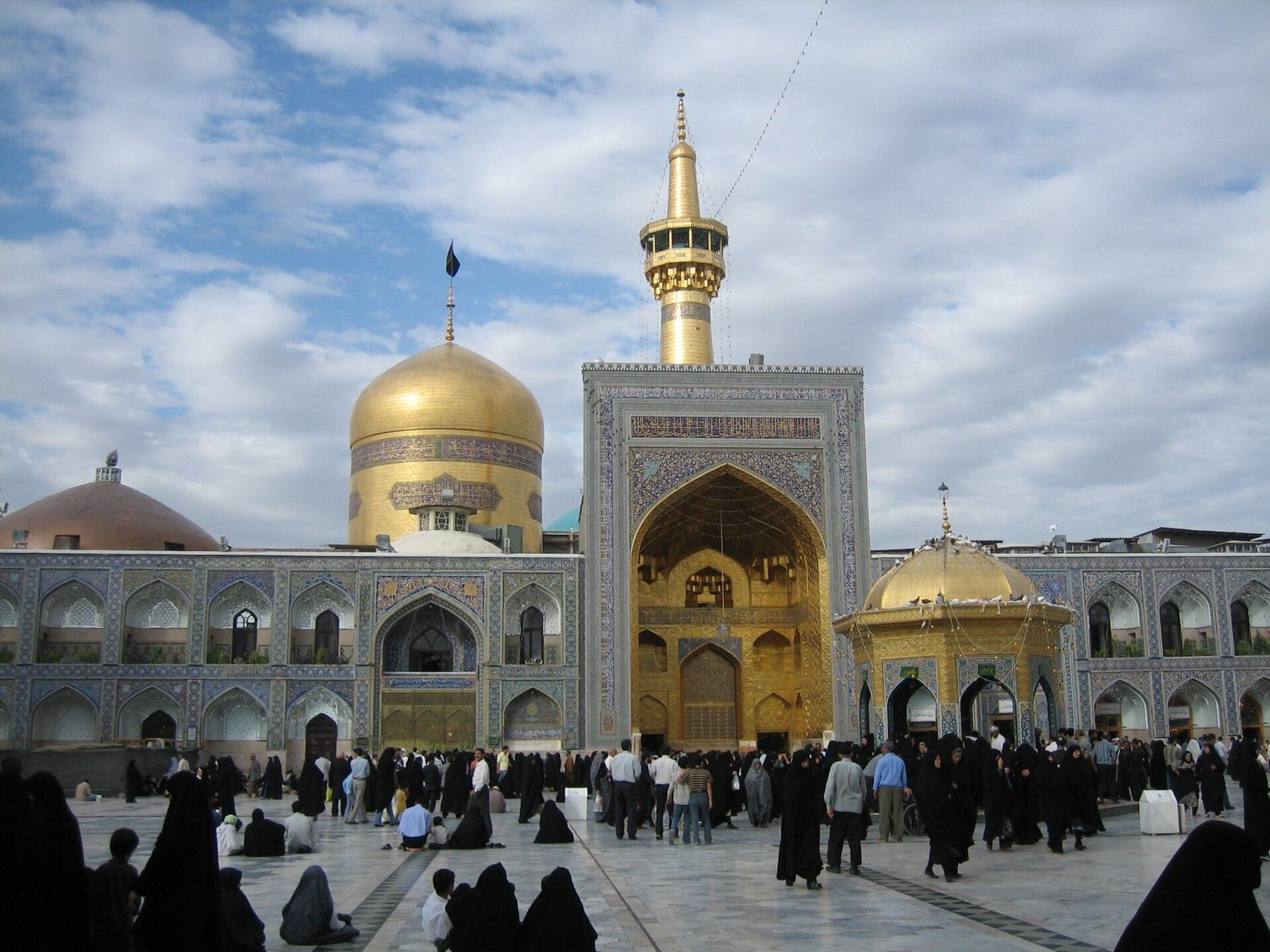
In 380 AH, Emir Sebuktigin destroyed Harun’s Dome. Sultan Masud ibn Sebuktigin later placed a gilded shrine over the shared graves. The city came to be known as the Mashhad of al-Ridha and al-Rashid. The present Imam Reza shrine dates to the 14th century, when Öljaitü, a Mongol ruler in Iran, converted to Twelver Shi’ism. During the Safavid period, Harun’s name was suppressed for religious reasons. Much of the shrine complex’s elaborate decoration dates to the Safavid and Qajar dynasties.
Modern history and status
Early in Iraqi president Ahmad Hasan al-Bakr’s rule, Iraq sought to have Harun’s remains returned to Baghdad, regarding him as a figure associated with the city’s golden age. Iran refused and asked in turn for the remains of Abd al-Qadir al-Jilani, arguing that he had been born in Gilan, Iran. Iraqi historians instead placed his birthplace in Jilan near al-Mada’in in Iraq. The dispute ended after an Arab state intervened. The mausoleum remains an active Shia Muslim site within the Imam Reza shrine complex. The complex entered Iran’s National Heritage List in 1932 and UNESCO’s Tentative World Heritage List in 2017.
Remains
Harun and Ali al-Ridha’s mausoleum
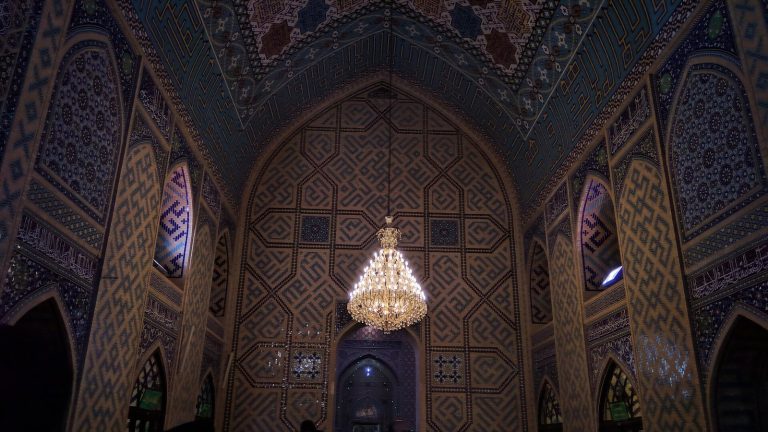
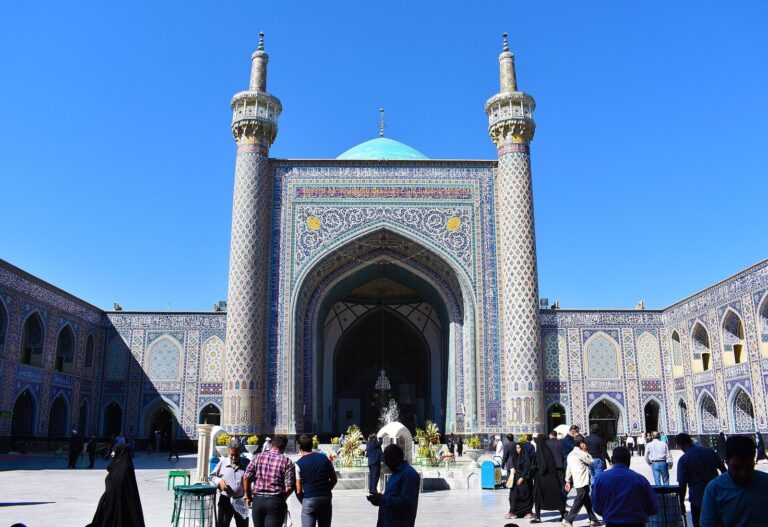
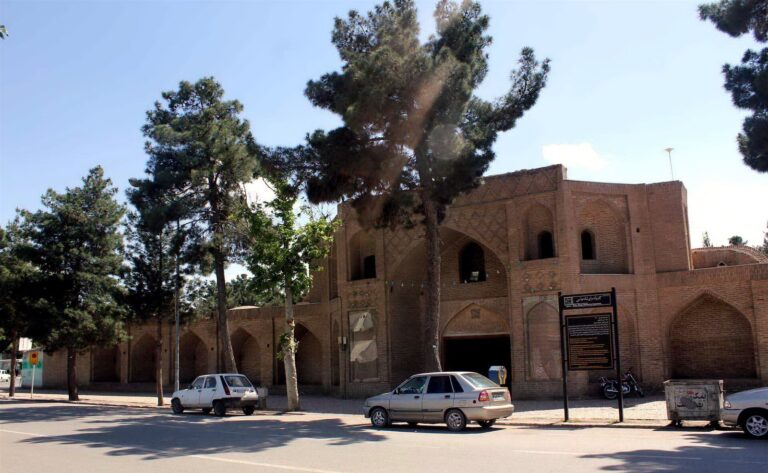
The mausoleum stands within the Imam Reza shrine complex in central Mashhad. Harun’s and Ali al-Ridha’s graves lie beside one another beneath a shared dome, within the same mausoleum and mosque. The wider complex is encircled by a roundabout. Noghan borders it to the north; Imam Reza Street and Bayt al-Maqdis Roundabout lie to the south, with Nawab Safavi Street to the southwest and Ayatollah Shirazi Street to the northeast.
The 14th-century Moroccan traveler Ibn Battuta described a large dome in a religious lodge beside a school and mosque, with walls faced in glazed tile. He noted that the principal tomb stood on a raised wooden platform covered with silver plates, with silver lamps suspended beneath it. The dome’s door was silver, with silk embroidered in gold hanging over it, and carpets covered the surrounding area. Harun’s grave lay opposite the other tomb, with a separate platform for candlesticks.
The wider shrine complex
The complex also includes the Goharshad Mosque, adjacent to the shrine and completed in 1394, as well as several theological colleges. The best-known of these is the college of Mirza Ja’far Khan.