Palazzo del Seggio: Venetian Merchants’ Center and Former Town Hall in Lecce
Site at a Glance
- Rating
- 4.2
- Popularity
- Medium
- Country
- Italy
- Primary era
- Early Modern
- Eras represented
- Early Modern
- Civilizations
- Habsburg, Habsburg Spain, Kingdom of Naples, Spanish
- Site type
- Civic
- Remains
- Palace
On this page6 sections
History
Construction and commercial role
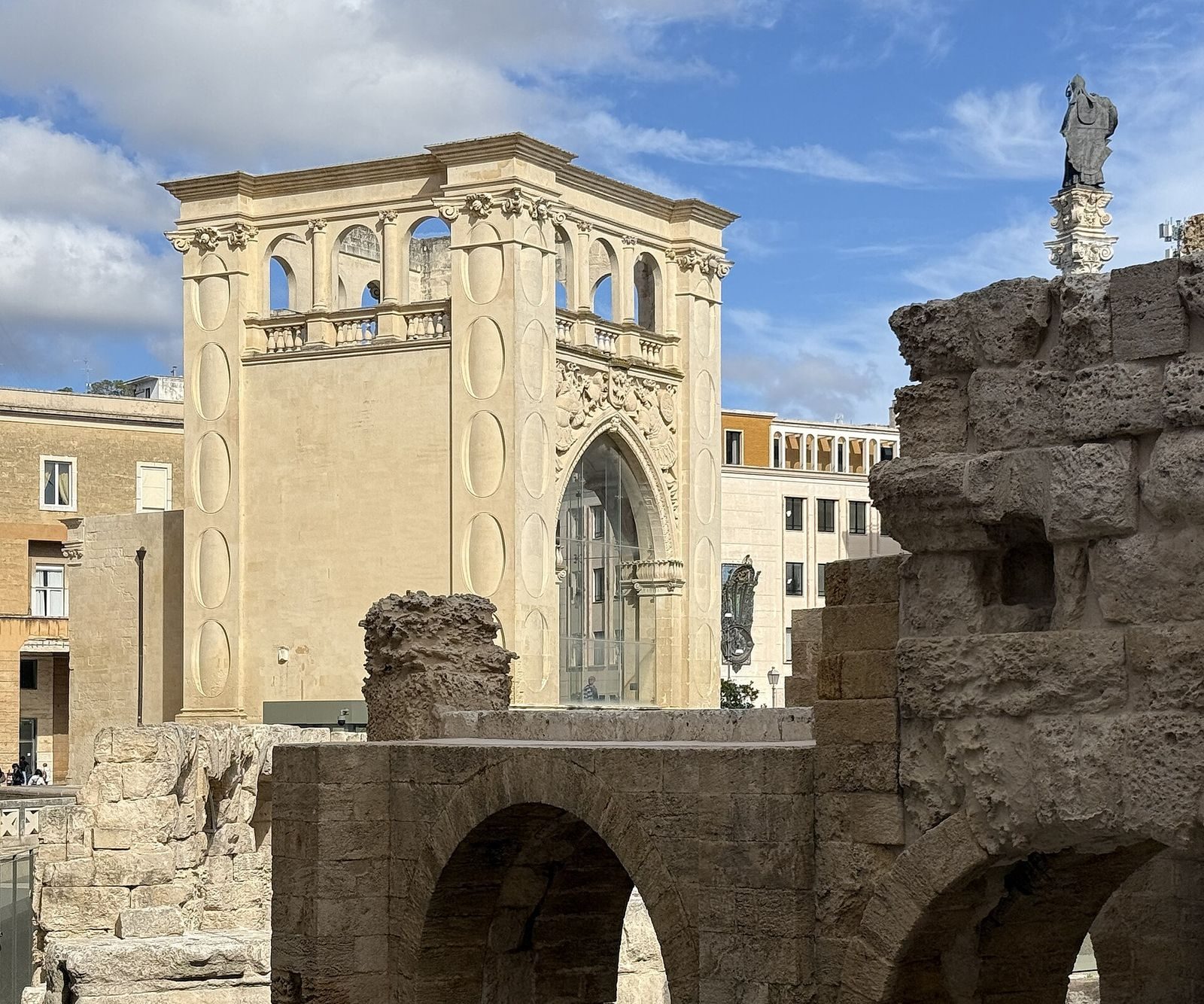
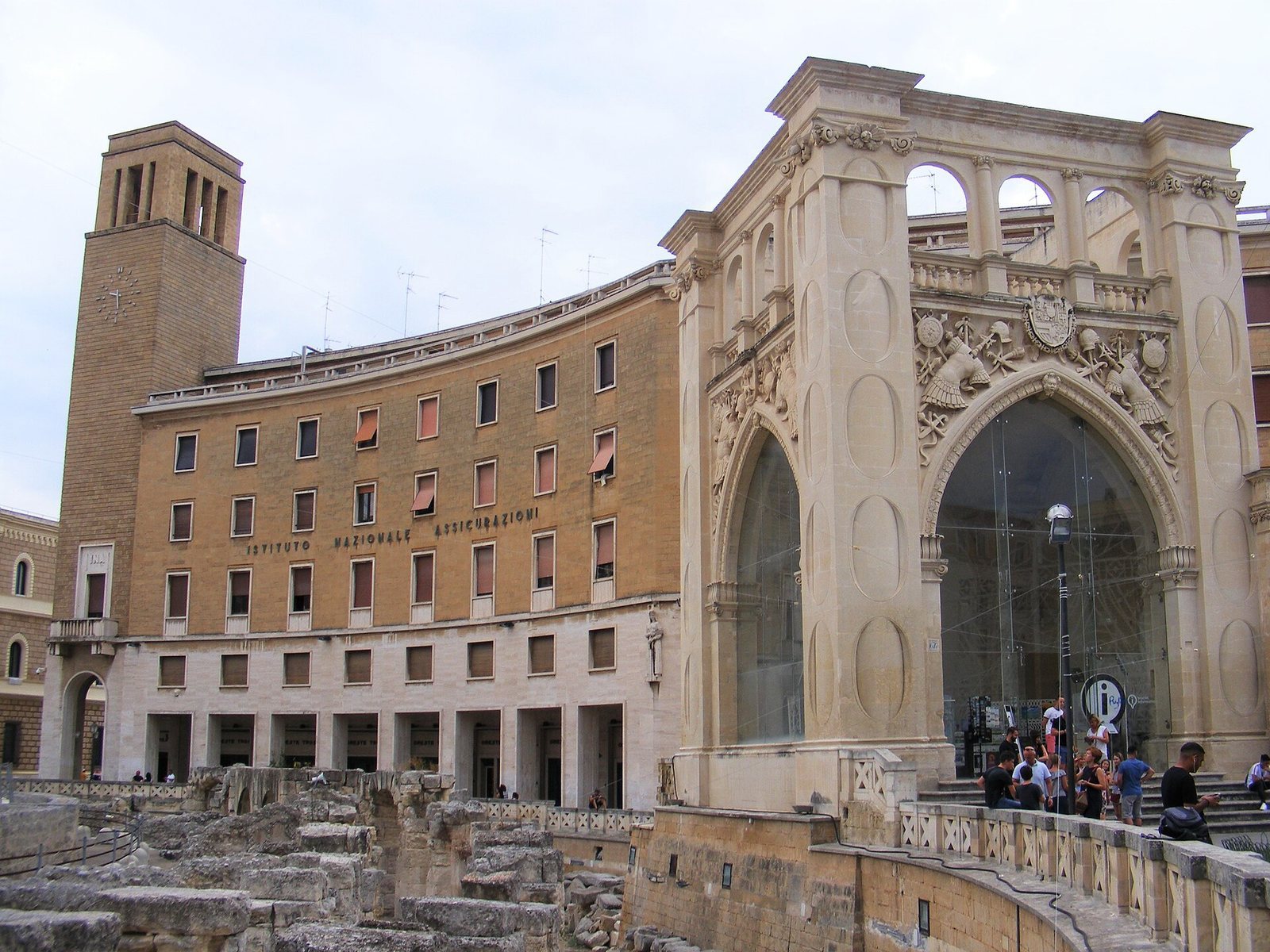
Palazzo del Seggio is a late-sixteenth-century palace in Lecce, Italy, built in 1592 in a blend of Gothic and Renaissance styles to serve Venetian merchants as a center for commercial contacts and transactions. An earlier building on the site was demolished in 1588. The replacement was commissioned by Pietro Mocenigo, then Lecce’s mayor, and designed by architect Alessandro Saponaro. At the time, the square was called Piazza dei Mercanti, or Merchants’ Square.
Municipal and later uses
The palace served several institutional purposes and was Lecce’s town hall until 1851. It later became a municipal exhibition space, hosting exhibitions and other events from the late twentieth into the early twenty-first century. Palazzo del Seggio is recognized as Italian national heritage.
Remains
Palace architecture and features
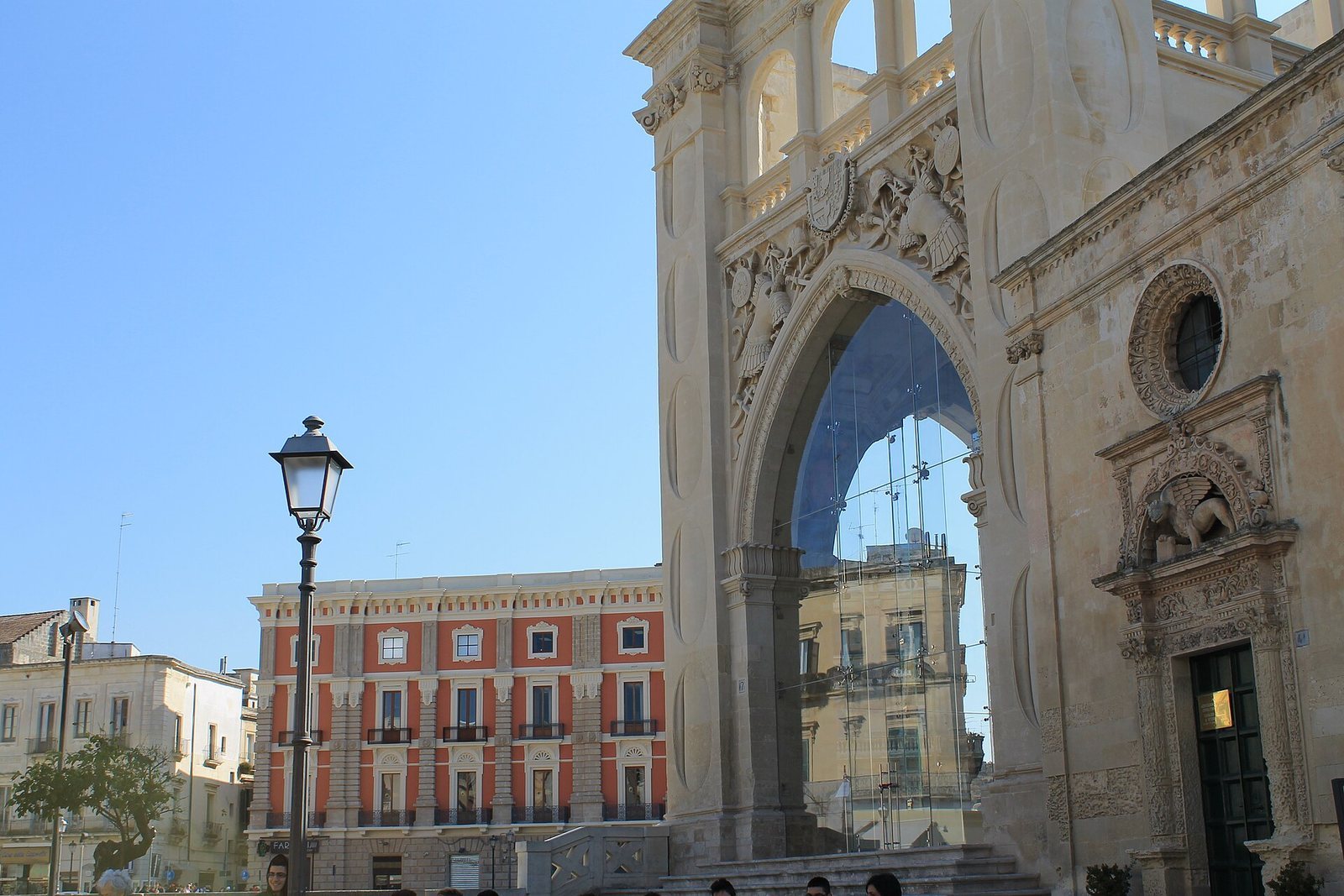
The cube-shaped palace combines medieval Gothic forms with Renaissance architecture shaped by renewed interest in classical styles. Four pillars have oval openings that reveal columns, while large pointed arches span the spaces between them, with loggias, or open-sided galleries, above. Coats of arms, armor, and trophies decorate the exterior. The corner pillar probably echoes a design associated with Gabriele Riccardi, a sixteenth-century architect linked to Lecce; a similar pillar appears at the corner of the right flank of the Basilica of Santa Croce. Period prints of the square show that the palace once had a clock topped by two statues. Inside, it houses the original copper statue of Saint Oronzo, Lecce’s patron saint. A copy now stands atop the nearby column where the original was formerly placed.
Buildings around the square
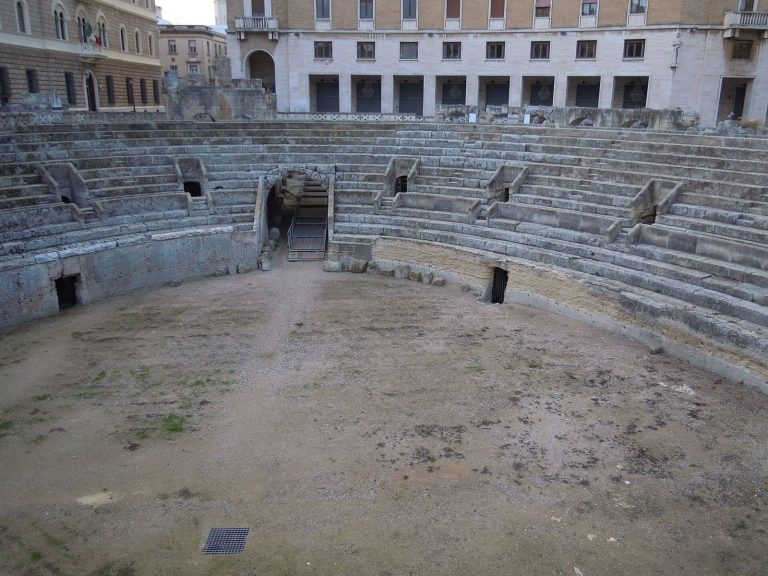
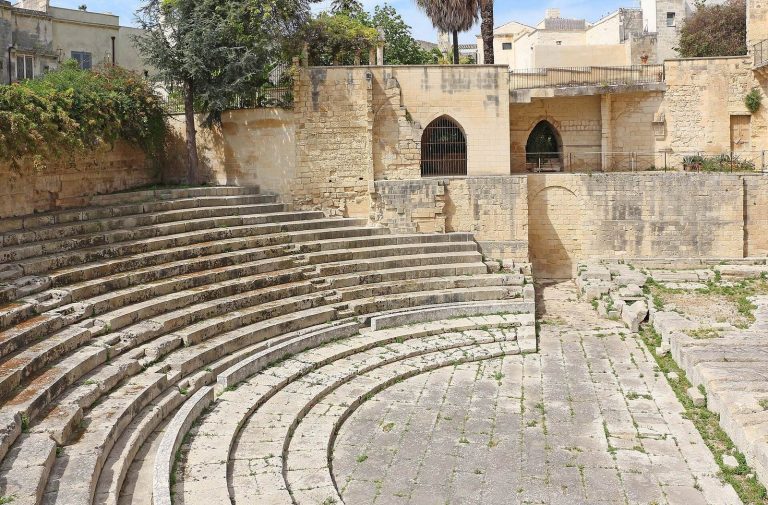
The Roman theatre stands across from the palace, while the small church of San Marco is immediately beside it. The church dates from the same period as the palace and is dedicated to the patron saint of Venice and the Republic of Venice. Above its entrance, a lion, the traditional symbol of Mark the Evangelist, identifies the church’s dedication.