Rzucewo Palace: A Neo-Gothic Residence and Estate in Poland
Site at a Glance
- Popularity
- Medium
- Country
- Poland
- Primary era
- Modern
- Eras represented
- Early Modern, Modern
- Civilizations
- German, Kingdom of Prussia, Polish–Lithuanian Commonwealth
- Site type
- Domestic
- Remains
- Manor House
On this page6 sections
History
Early manor and eighteenth-century palaces
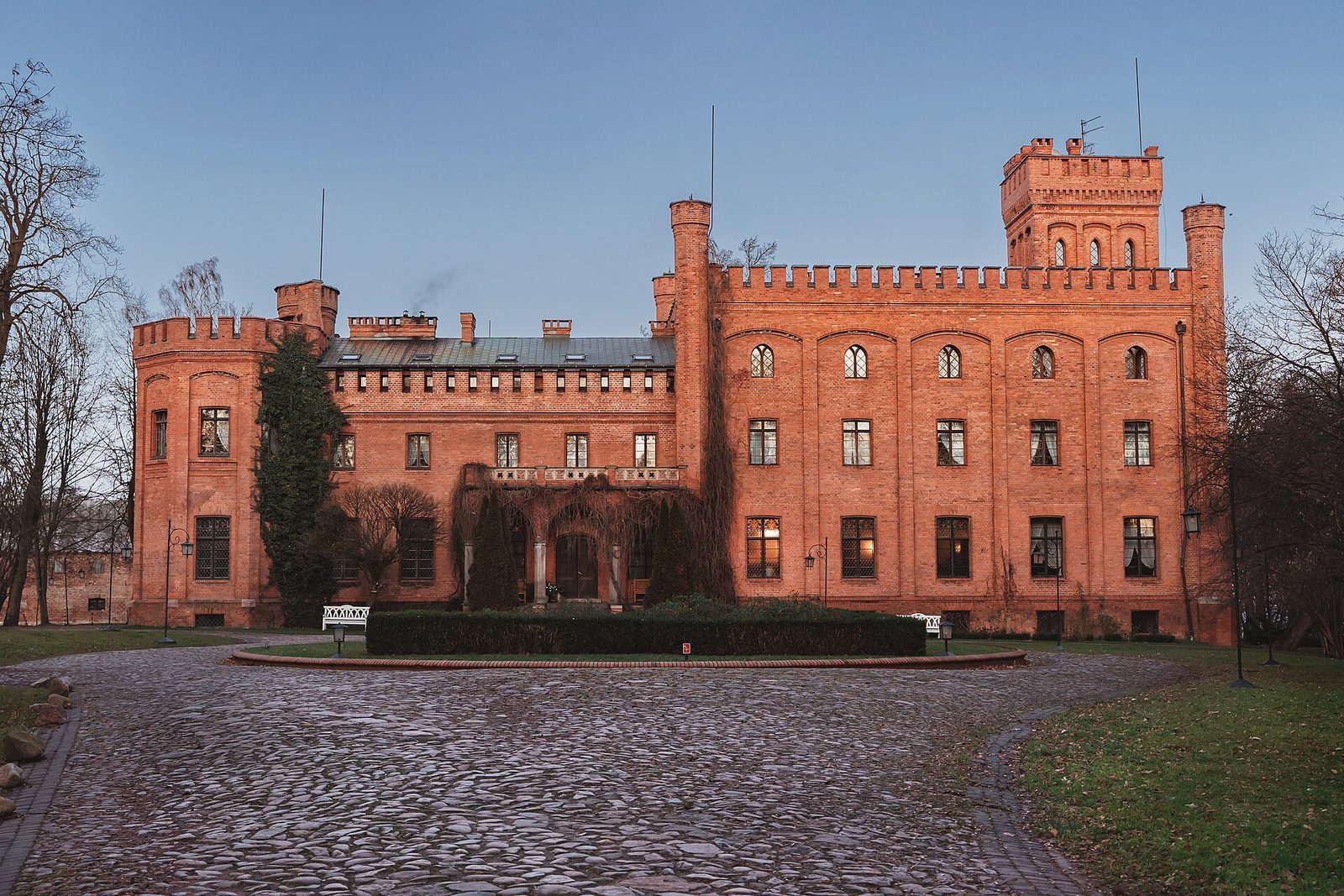
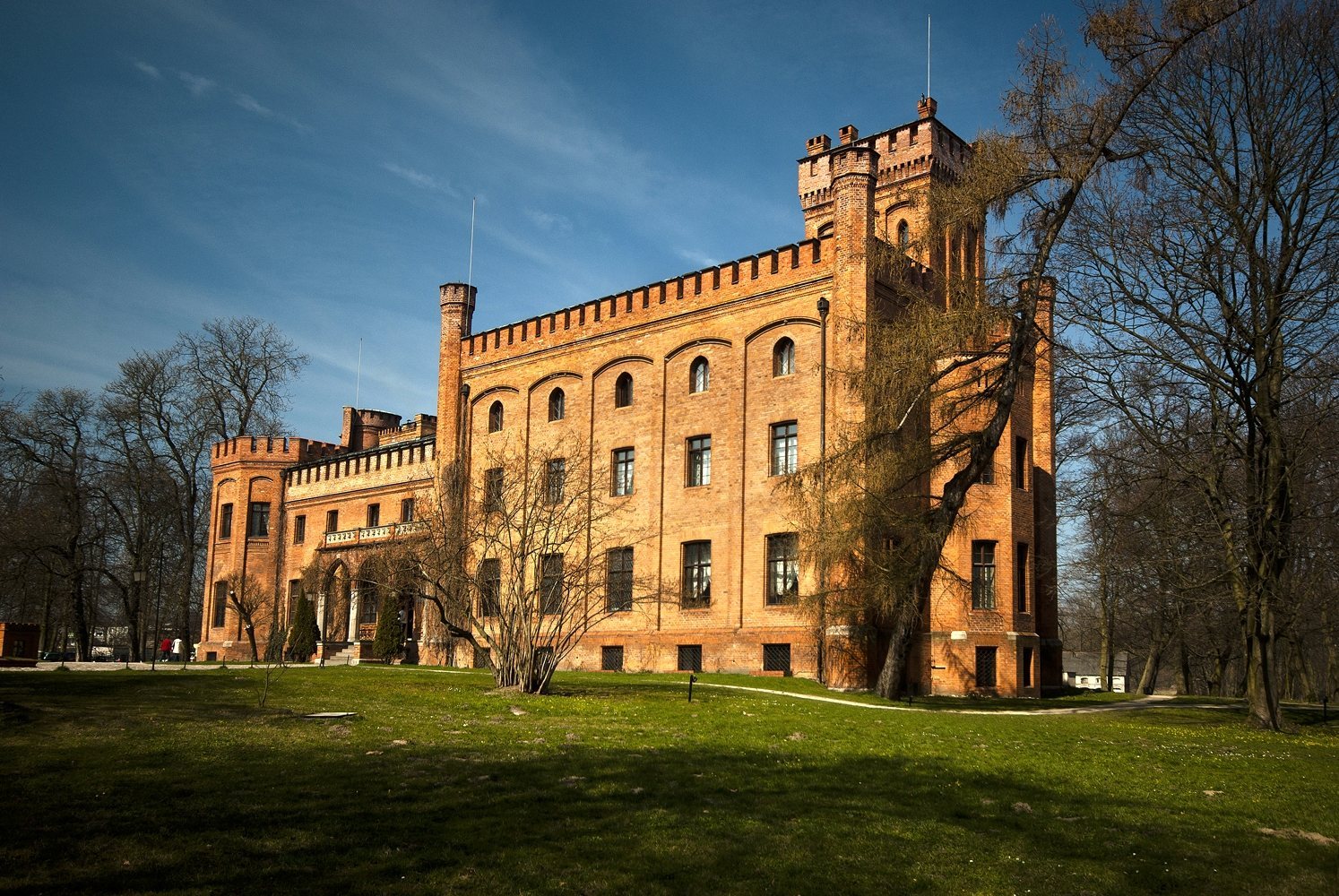
Rzucewo Palace is a Neo-Gothic residence on Kępa Pucka beside Puck Bay in Poland, built between 1840 and 1845 for Gustav Friedrich Eugen von Below. Its estate had earlier held several residences and passed through the hands of noble and royal families.
An early manor is dated to 1576, when Ernst von Weiher acquired the estate and had a residence built. Another tradition connects the noble residence with Jan Wejher, who owned the property from 1597 to 1626. During the seventeenth century, the estate passed to Michał Kazimierz Radziwiłł and Maria Kazimiera de la Grange, queen consort and later queen dowager; both lived there for periods. After 1685, under Sobieski-family ownership, a Baroque palace was built. The estate is also known as Jan III Sobieski Castle and is described as a former residence of John III Sobieski, king of Poland from 1674 to 1696. By 1720, ownership had passed from Jakub Sobieski to Jerzy Piotr Przebendowski.
From 1769 to 1772, Ignacy Przebendowski demolished the two earlier palaces and constructed a Rococo residence, an ornate style developed in eighteenth-century Europe. Alexander Gibsone, the British consul in Gdańsk, acquired the estate in 1782 and gave it to Otto Heinrich von Keyserlingk. During the Napoleonic Wars, the manor was confiscated and destroyed.
The nineteenth-century residence
Ownership passed to Gustav Friedrich Eugen von Below in 1837. The present palace and estate-farm complex were built for him from 1840 to 1845, to a design by Friedrich August Stüler, a Prussian architect known for major nineteenth-century building projects.
In 1851, Friedrich Wilhelm IV, king of Prussia from 1840 to 1861, visited the estate to observe a solar eclipse that was especially visible in West Prussia. The von Below family retained the property until 1945, when it was taken over under communist rule and converted into an agricultural school. After refurbishment, the palace became a hotel in 1994. It was registered as a historic monument on 19 July 1985.
Remains
Palace and setting
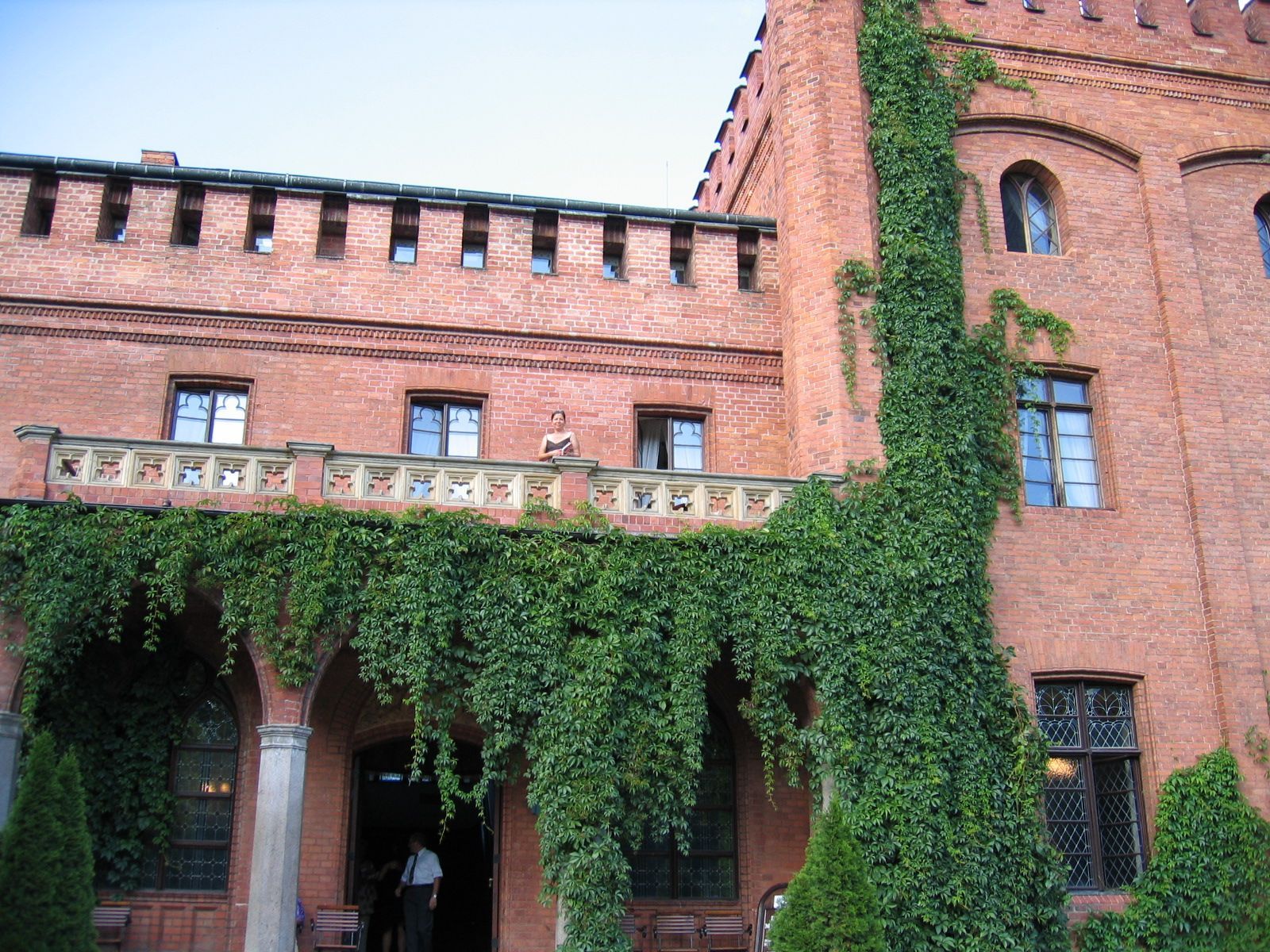
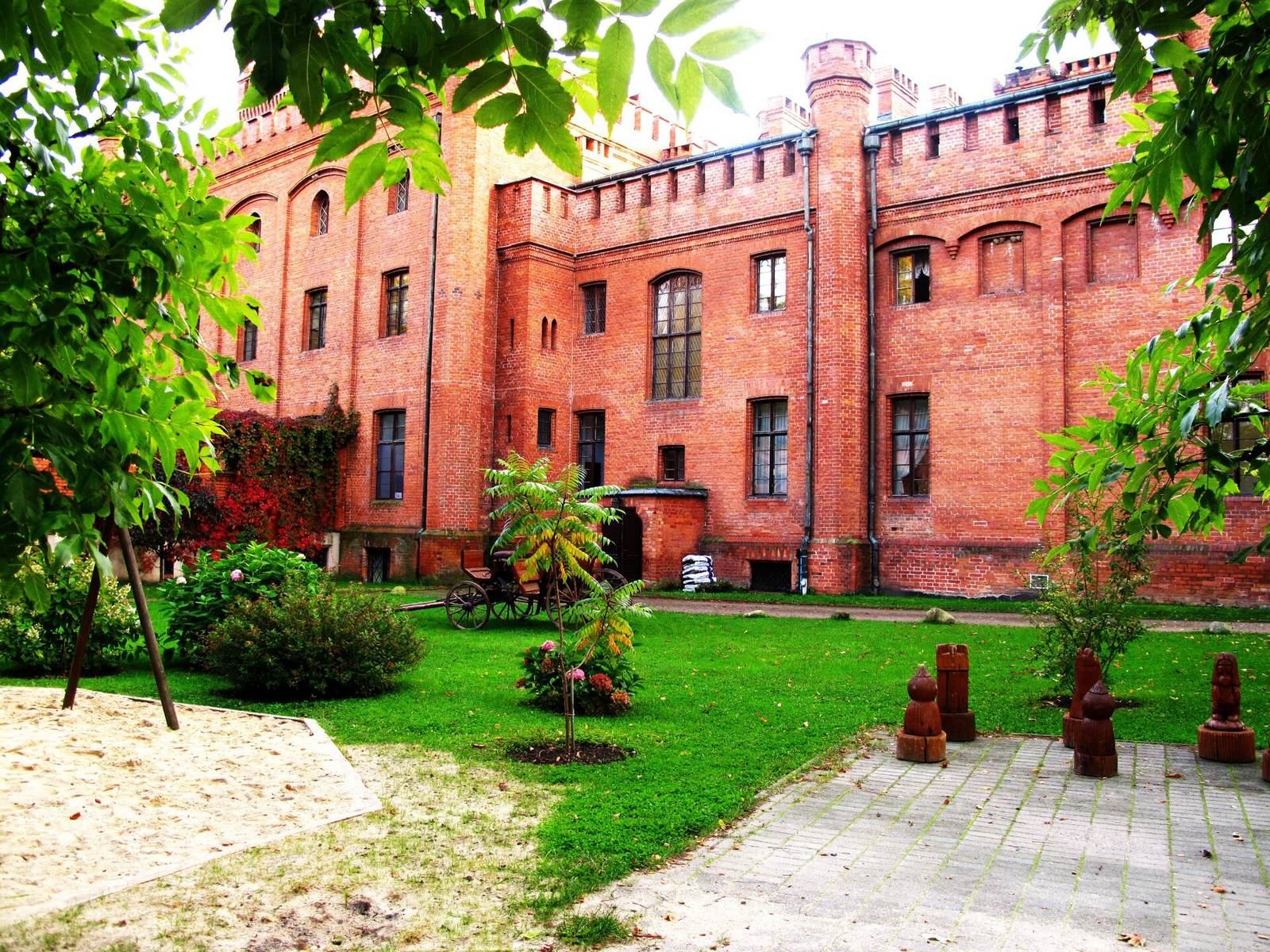
The present palace is a brick Neo-Gothic building within an estate complex. Its park extends to the cliff coast. Above the entrance, an arch displays labeled coats of arms for Gustav Friedrich von Below and his wife, Friederike Caroline von Keyserlingk, set on a harp.
Park and estate buildings
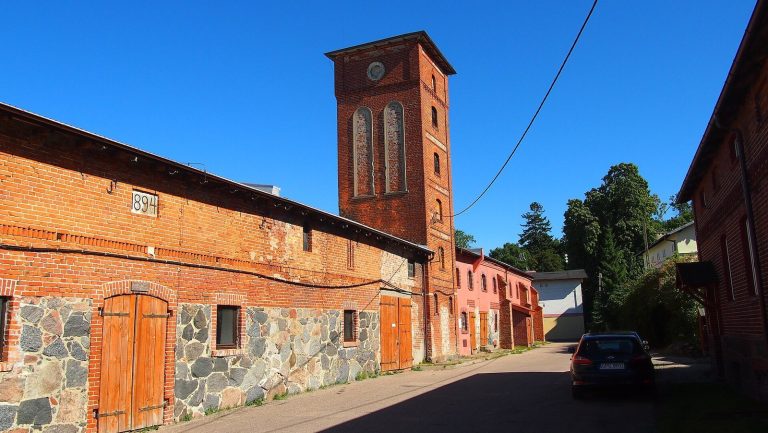
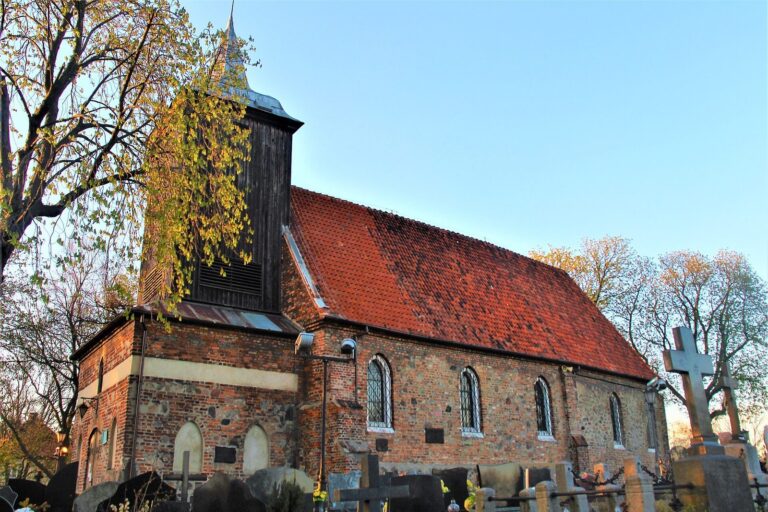
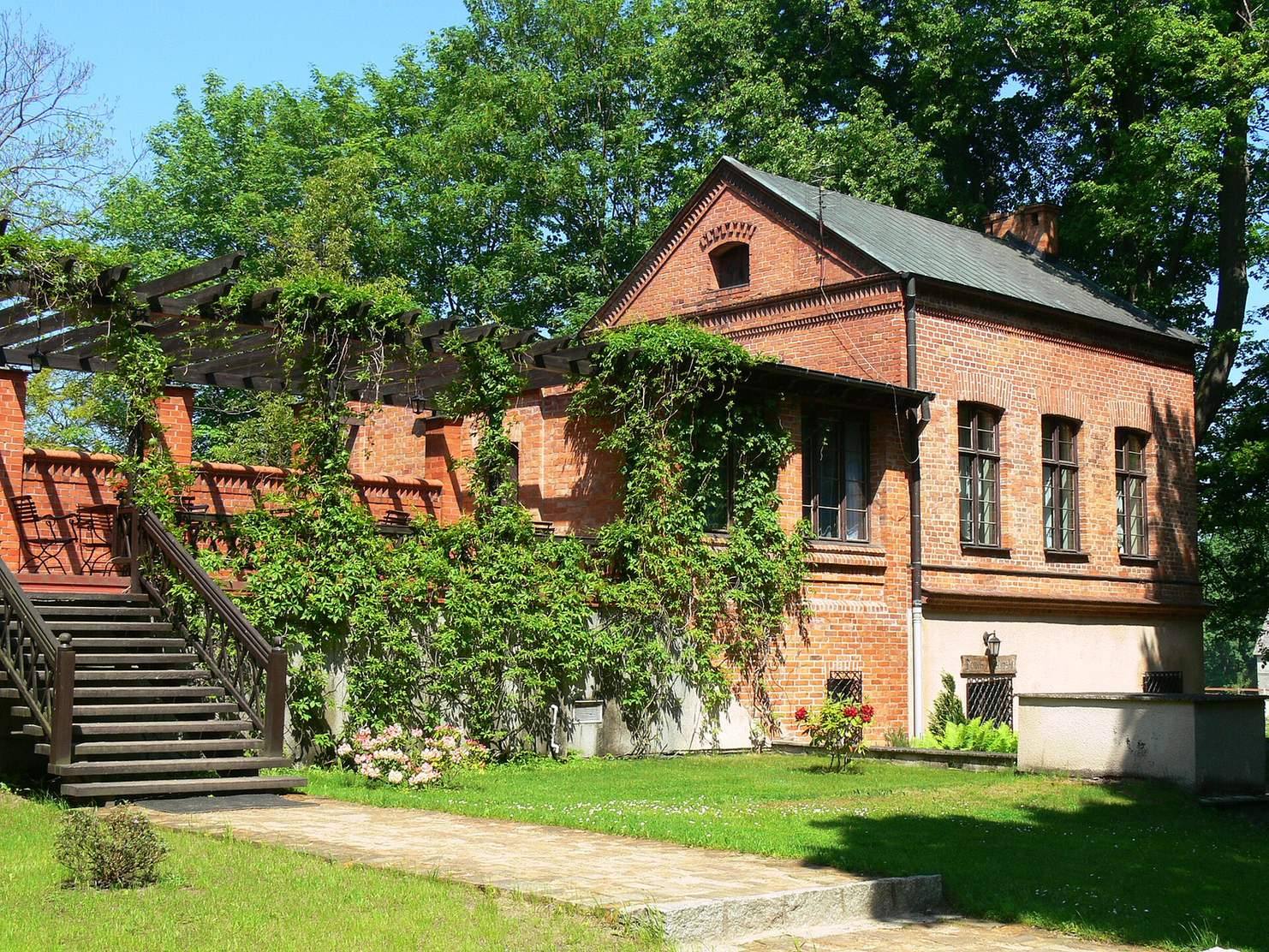
The grounds include Sobieski Avenue, a lime-tree avenue dating from around 1700, as well as a burial chapel built in 1860 and a garden house from the second half of the nineteenth century. The associated farmstead contains buildings from the eighteenth and nineteenth centuries, including a granary, a stable, and a pigsty dated to 1890.