Caspersbroich Castle: A Manor and Knightly Estate in Solingen
Site at a Glance
- Popularity
- Medium
- Country
- Germany
- Primary era
- Medieval
- Eras represented
- Medieval, Modern
- Civilizations
- German, Holy Roman Empire
- Site type
- Domestic
- Remains
- Castle
On this page4 sections
History
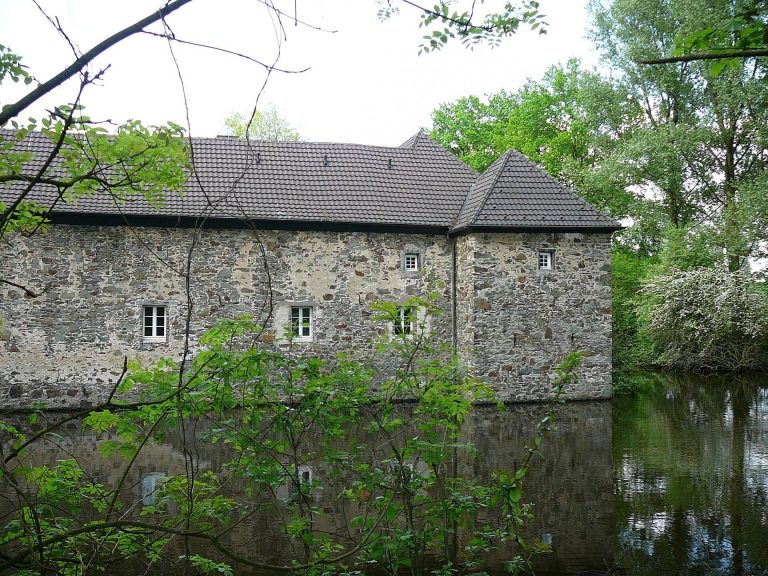
Caspersbroich Castle is a former manor and knightly estate in the Itter valley at Solingen, Germany, established around 1220 by a vassal of Count Engelbert of Berg.
From manor to noble estate
The vassal settled beside the Itter and made marshland suitable for farming before establishing the manor. A vassal held land from a superior in return for duties. Engelbert was a medieval count of Berg, a territory in the Rhineland, and later became archbishop of Cologne and was known as Saint Engelbert.
Until 1808, the estate belonged to Wald parish, an ecclesiastical district. Its lords also held small rural properties at Buschenhaus, Hagscheid, Sombers, Hülsberg, and Zwengenberg, where obligations were owed to a superior lord. In 1438, Caspar von Pertsdorf bought the estate and developed it into a knightly seat, meaning an estate associated with a knight or noble family. He headed the Solingen administrative district, a territorial unit of local government, from 1460 to 1480. Around 1518, the estate passed through the marriage of heiress Elisabeth von Pertsdorf to the lords of Bawyr, who sold it around 1676 to Bernhard Everhard von den Bottlenberg.
Changing ownership and later alterations
The Romberg family acquired Caspersbroich through marriage in 1772. Clemens Conrad Franz von Romberg sold it in 1809, and in 1810 Johann Adolf Holthausen, a former tenant, bought the estate, bringing it into non-noble ownership.
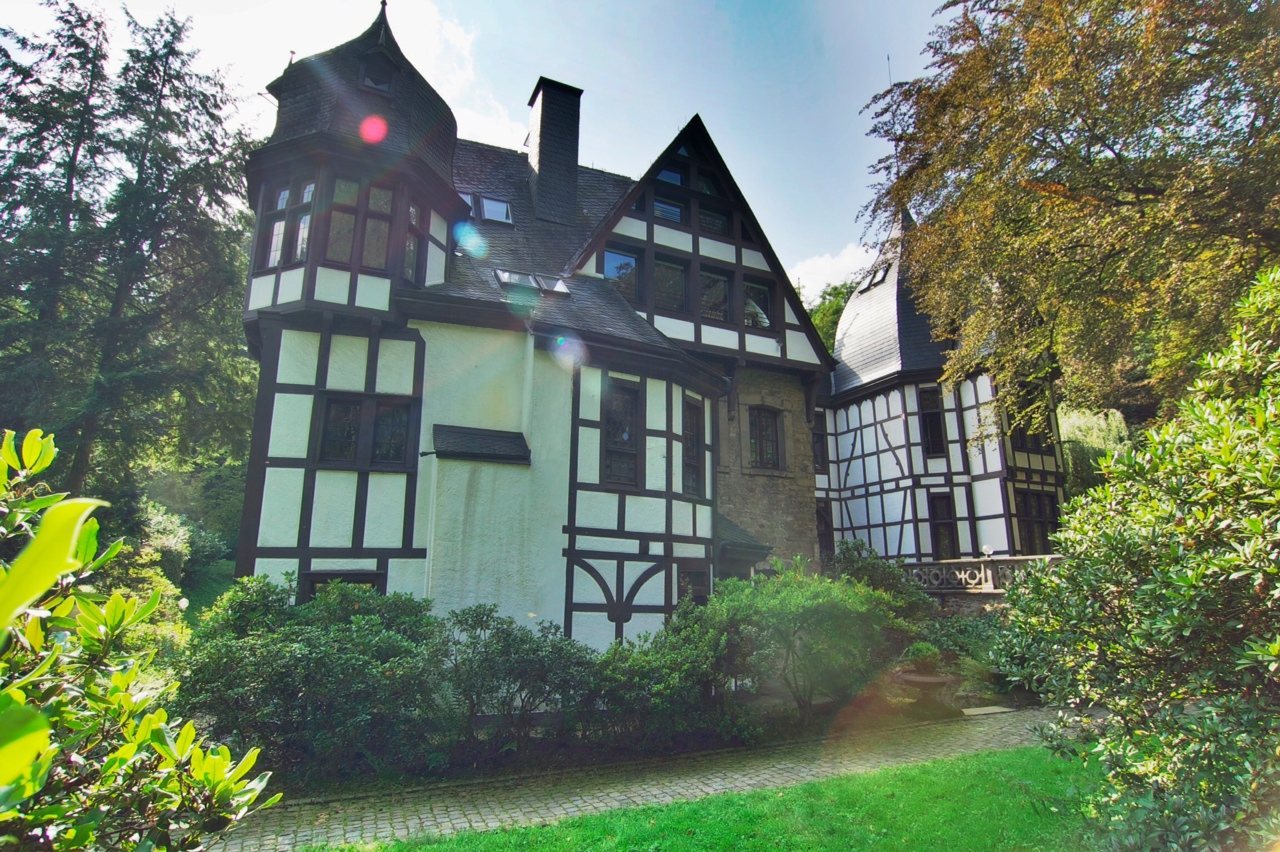
In the 1860s, the Bergisch-Märkische Railway Company acquired the complex. It later passed to various entrepreneurs and industrialists from the Bergisches Land, a historic region in western Germany. In 1883, architect Gerhard August Fischer prepared plans for alterations and an enlargement of the castle.
Actor Claus Gorges of Düsseldorf bought the badly deteriorated estate in 1964 and renovated it. Banker Alfred Herrhausen lived on the castle grounds from 1975 to 1984.
Remains
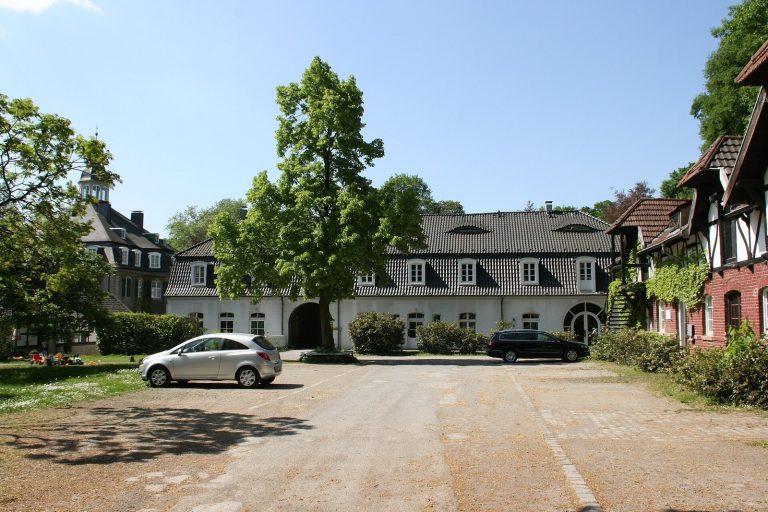
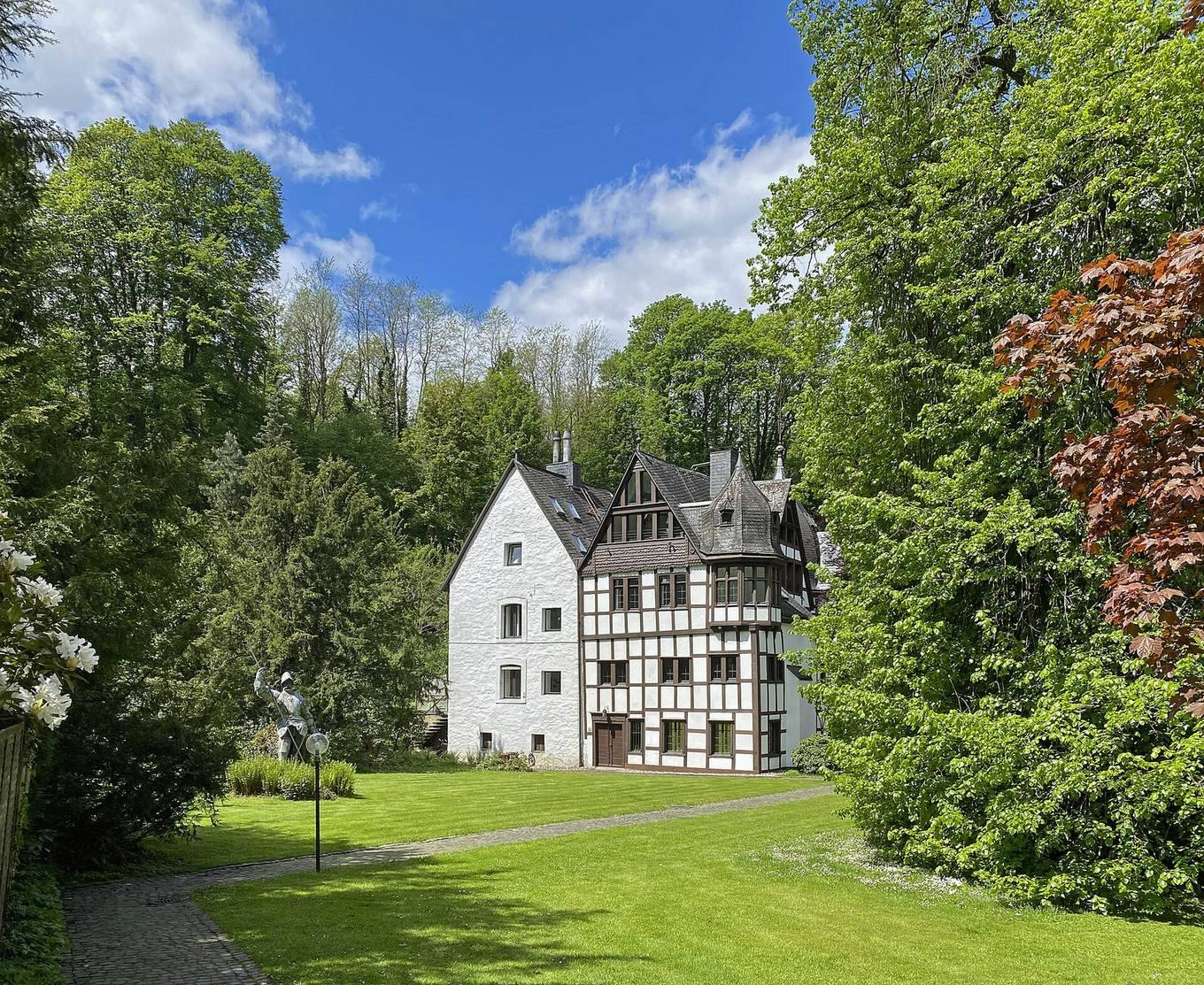
The complex lies in the Itter valley, in the Ohligs district of Solingen. Its built form developed from a manor house into a knightly estate and was later enlarged and redesigned.
A railway embankment for the Gruiten-Deutz line was built immediately in front of the castle. The complex was adapted for condominium housing.