Orsan Priory: A Fontevraud Nunnery in Maisonnais, France
Site at a Glance
- Popularity
- Medium
- Country
- France
- Primary era
- Early Modern
- Eras represented
- Early Modern
- Civilizations
- French
- Site type
- Religious
- Remains
- Monastery
On this page13 sections
History
Foundation and pilgrimage
Orsan Priory was a nunnery of the Order of Fontevraud at Maisonnais in France, founded in 1107 by the religious reformer Robert of Arbrissel. It was one of 18 priories he established in Berry during the decade after arriving there. The priory is associated with the Romanesque style, a form of medieval European architecture. Its land was then marshy and uncultivated, and was probably given by Adelard of Châteaumeillant.
The first nuns lived in a wooden building. Agnès de Châteaumeillant became their first prioress under the protection of Léger, the senior church official of the Archdiocese of Bourges. Agnès was Adelard’s former wife; their marriage had ended because they were related. The priory church was completed in 1113, and the Fontevraud Rule, which set out principles for religious life, received Pope Calixtus II’s approval in 1119.
Orsan prospered soon after its foundation, with regional lords taking it under their protection. Disputes with other monasteries brought Robert back in 1116 to resolve them, and he probably died at Orsan. He left his heart to the priory and the rest of his body to Fontevraud. Léger later gave his country house to the nuns and asked to be buried near Robert’s heart. People made pilgrimages to Orsan because Robert was regarded as a saint and miracles were attributed to his relic.
Agnès is said to have been exiled by Pétronille de Chemillé, an early leader of the Fontevraud community, to a Fontevrist monastery at Vega de León in present-day Spain. The exile may have followed Pétronille’s view that Agnès had not adequately supported an attempt to return Robert’s remains to Fontevraud.
Estate and religious life
The priory prospered for about five centuries, expanding its estate through donations. By 1668, 22 nuns lived there. Three dependent houses grew from Orsan: Longefont on the Creuse, founded with a donation from Pierre Isambert; Glatigny on the Tournon; and Jarsay. Orsan also held property at Vigoulant in Indre and the chapel of Hérat with its dependencies.
The church of Saint-Pierre-et-Saint-Paul at Maisonnais, formerly dedicated to Saint Hippolyte, belonged to Orsan, which provided worship for the parish. Later, the nuns appointed a cleric to conduct services and rented him the presbytery. The priory’s library held Latin books, Bible commentaries, and works explaining the writings of the Church Fathers, influential early Christian theologians. Scholastic and dogmatic theology made up 15 percent of the collection, compared with an average of 5 percent in other orders.
War, rebuilding and restoration
Orsan escaped the Hundred Years’ War but suffered during France’s Wars of Religion, a period of conflict between Catholics and Protestants. In 1569, the buildings were looted and burned, forcing the nuns to flee to Châtelet castle. They returned a year later to find many documents missing. Farmers and tenants then refused to pay rents and dues, and lawsuits accompanied the priory’s decline.
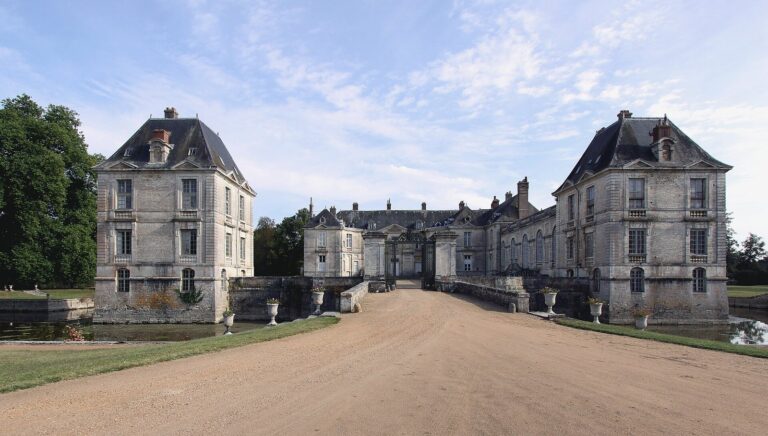
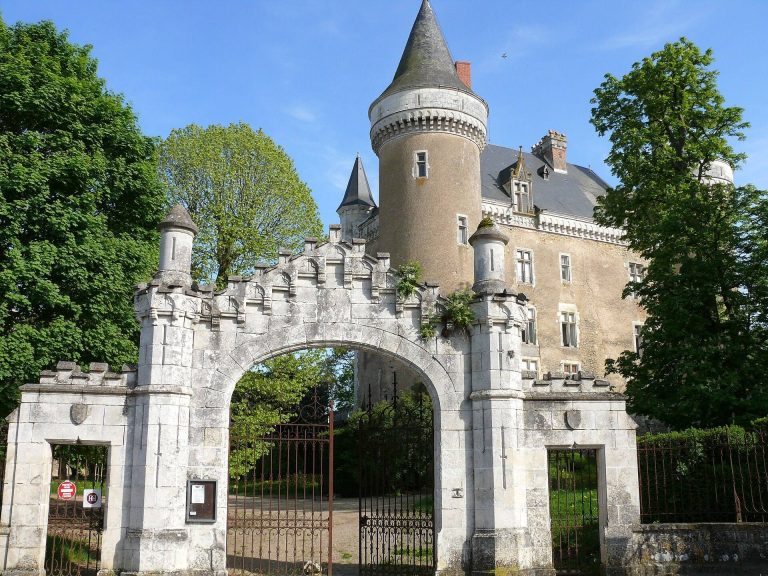
Éléonore de Bourbon, Abbess of Fontevraud, supported the rebuilding of the priory in 1596. The enclosure and main gate were completed in the eighteenth century. The French Revolution brought the priory’s suppression and the sale of its property. The buildings were later used as a stone quarry and for farming, a use that continued until 1989. The original monastic buildings received French historic-monument designation on 27 March 1926.
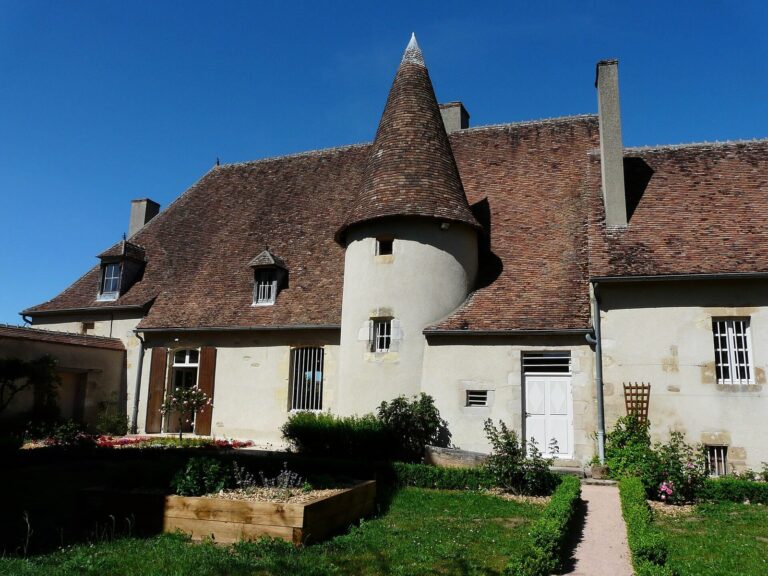
In 1990, the priory and 40 hectares of surrounding woods and meadows were bought for restoration, which began in 1991. By then, the walls were dilapidated and the roofs worn; the work consolidated the walls and replaced windows. A chicken coop, pigsty, and metal shed had been added to the farmyard during the 1950s. In 1992, gardens were created to evoke medieval monastic gardens rather than reproduce a former design, drawing on medieval drawings and manuscripts.
Remains
Buildings around the farmyard
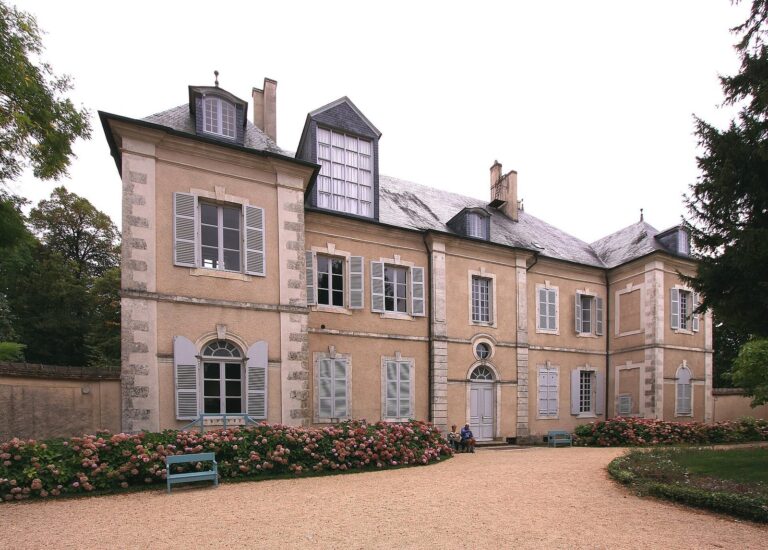
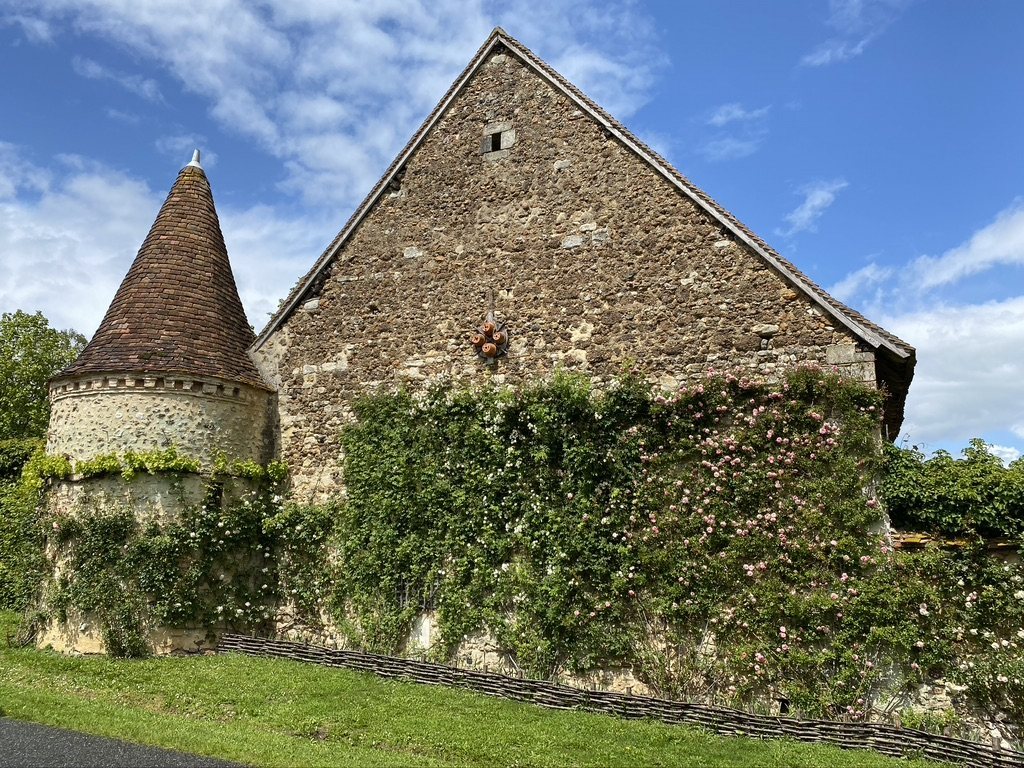
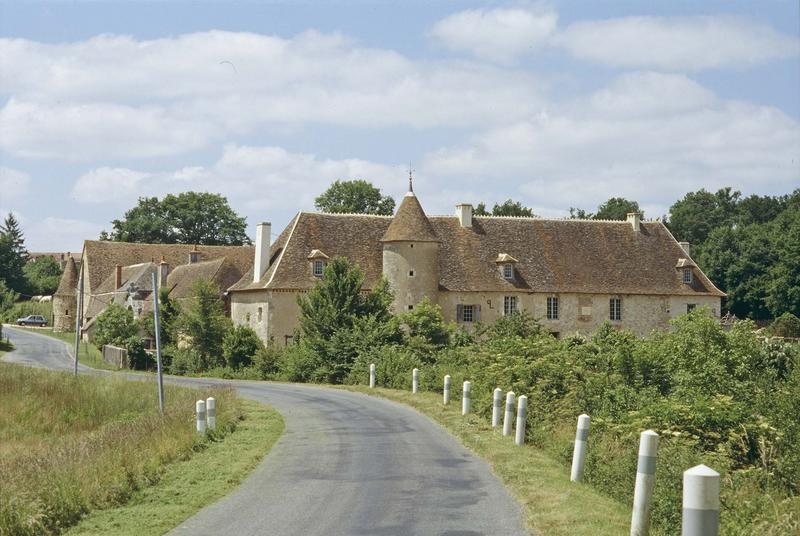
The surviving group is arranged around a former farmyard. Four substantial buildings stood around the disused yard in 1990. The complex is described as Romanesque, while its main residential block reflects rebuilding in the sixteenth and eighteenth centuries.
Main residential block
The principal residential building is one of the retained structures around the farmyard. Its rebuilding in the sixteenth and eighteenth centuries gives this part of the complex a later history than the priory’s original foundation.
Carriage gate and monastic rooms
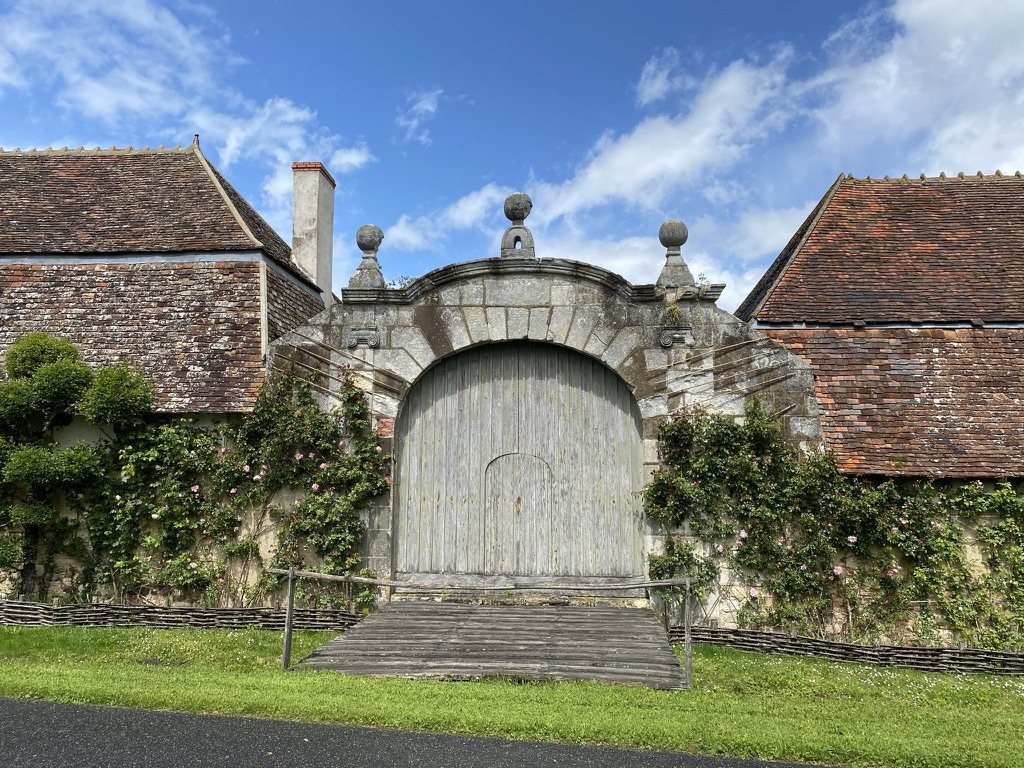
The chapter house, where the community met for readings and business, the refectory, or communal dining hall, and the kitchen lie beneath the carriage gate. The enclosure and main gate belong to the eighteenth-century phase of the priory.
Portico and lantern
A retained portico includes a lantern of the dead, a cemetery structure with a raised chamber for a light traditionally associated with the dead.
Prioress’s parlour
The prioress’s parlour, panelled and situated on the ground floor, is another retained interior feature.
Bourbon Tower and carved stone
The Bourbon Tower survives among the priory’s principal features. A carved stone bears Éléonore de Bourbon’s arms and the date 1596, set between two crosses.
Gardens
The gardens are laid out around an initial green enclosure with a fountain at its center. Their features include medicinal-herb gardens, orchards, an avenue of berry-producing shrubs, a labyrinth, and a rose garden also known as the Garden of Mary. A raised vegetable garden, a formal arrangement of beds called a parterre, pergolas, and a grove of olive trees add further planted areas. A flower meadow marks paths that follow the stream toward the woods. The design brings together practical use, symbolism, and harmony, and applies historical methods for vines, hedges, and raised beds.
Choir furnishings
Sixteenth-century choir stalls made for Orsan are now in the abbey church of Notre-Dame de Puyferrand at Châtelet.