Condat Abbey: A Monastery and Pilgrimage Center in France
Site at a Glance
- Popularity
- Medium
- Country
- France
- Primary era
- Medieval
- Eras represented
- Medieval, Early Modern
- Civilizations
- French, Holy Roman Empire
- Site type
- Religious
- Remains
- Cathedral
On this page13 sections
History
Condat Abbey, later known as Saint-Claude Abbey, began as a hermitage around 420 at the confluence of the Bienne and Tacon rivers in present-day Saint-Claude, France. Founded by Romanus, it developed into a monastery whose pilgrimage following, schools and far-reaching network of religious houses shaped the history of the surrounding region.
From hermitage to monastery
Romanus was joined by his brother Lupicinus and other followers. Their strict religious discipline drew on the teachings of Basil, Pachomius and John Cassian, and included fasting, long periods of silence and manual work. As the community grew, the monks established farm holdings, probably at Étables, Villard-Saint-Sauveur, Septmoncel and Cinquétral. Lupicinus founded a dependent monastery at Lauconne, while their sister Yole established a community for women at Balma, near Pratz. To support the expanding houses, Romanus and Lupicinus appealed to King Chilperic I, who granted land, regular supplies of grain and wine, and income from royal resources.
At the beginning of the sixth century, the fourth abbot, Oyend, reorganized the original settlement into a more structured monastery. After a fire destroyed its buildings, he replaced them with a larger community and regularized shared religious life, including the singing of psalms. From the eighth century, the abbey was known as Saint-Oyand-de-Joux, a name used through much of the Middle Ages. Oyend’s successor, Antidiole, built a church over his grave and obtained relics of Saints Peter, Paul and Andrew from Rome. The church of Saint-Pierre became a focus for pilgrims, and the community’s practice developed toward Benedictine observance, a way of monastic life guided by the Rule of Saint Benedict. The abbey was formally Benedictine, though it did not follow a strict form of the rule.
Under Abbot Olympe, a settlement grew from houses at Les Moulins toward the monastery. Laypeople could attend services there only on certain feast days, so a chapel dedicated to Saint Stephen was built north of the abbey. As the population increased, Abbot Sapient enlarged it into a church. After a fire, the building was rebuilt and dedicated to Saint Romain.
Claude, the twelfth abbot, was elected in 681 and died in 699. He strengthened the monastery’s religious standing and pilgrimage following, and in 685 was also elected archbishop of Besançon while remaining abbot. Devotion to Claude at his tomb gave the monastery its enduring name: Saint-Claude appeared as a name in the thirteenth century and became established in official use in the sixteenth.
Imperial ties and pilgrimage
The abbey expanded in the eighth century and received land through grants associated with Pepin the Short and Charlemagne. Its estates supported dependent religious houses, called priories, in several dioceses. By the late twelfth century, the abbey’s network included 34 priories, 108 churches and 27 chapels. Its school and library also became well-known centers of learning and trained prominent members of the clergy.
In the mid-ninth century, Emperor Lothair I appointed Abbot Remi archchaplain, a senior cleric at the imperial court. The position gave Remi precedence among the empire’s bishops and responsibility for resolving church disputes. Because his duties took him away from the abbey, he entrusted its daily leadership to a prior. In 852, Lothair confirmed the abbey’s rights and possessions. In 952, Abbot Bozon placed it under the protection of Otto I. The monastery retained religious autonomy but became closely connected to the empire’s feudal system. In the early twelfth century, Pope Paschal II placed it under the protection of the papal office in Rome and granted its abbots the right to wear a bishop’s ceremonial headpiece and ring. After the Investiture Controversy, a dispute between popes and secular rulers over appointments to church offices, temporal authority over the abbey returned to the emperor.
Around 1160, Abbot Aymon had Claude’s tomb opened, and the body was found remarkably well preserved. The discovery drew more pilgrims. A child who died in the crowd was believed to have revived after touching the wooden shrine, further encouraging devotion. Pilgrimages became closely tied to the abbey’s income and standing. In 1184, Emperor Frederick Barbarossa confirmed its possessions and legal rights and granted it permission to mint coins.
Defences and changing monastic life
In 1291, King Rudolf I of the Romans appointed John I of Chalon-Arlay as the abbey’s advocate, its legal representative and protector. In 1299, Abbot Étienne of Saint-Cergues strengthened its defenses, and walls and towers enclosed the town. The abbey also arranged protection for its wider estates, securing the support of Amadeus V, Count of Savoy, in 1301.
The abbey’s growing wealth and increasingly aristocratic character weakened the observance of the Benedictine rule from the fourteenth century. From the thirteenth century, admission as a monk was restricted to men able to prove noble descent through sixteen lines of ancestry. During the Western Schism, when rival claimants to the papacy were based in Rome and Avignon, Abbot Guillaume de La Baume supported Clement VII of Avignon. Clement appointed him bishop of Sion. A papal decree of 1384 directed the enlargement of the pilgrimage church of Saint-Pierre as a cathedral.
Reforms followed growing laxity in the mid-fifteenth century. Under Pope Nicholas V, visiting church officials restored discipline, limited the community to 36 members, enforced silence and sharply restricted monks’ outings. Abbot Étienne Fauquier was associated with these reforms. Pilgrims included the French kings Louis XI, who visited Claude’s tomb in 1456 and 1482, and Anne of Brittany, who made a pilgrimage in 1499. In 1510, the abbacy entered the commendatory system, in which an abbot could hold its office and revenues without necessarily living in the monastic community, further strengthening its aristocratic character.
Fire, war and French rule
A major fire in 1512 devastated much of the old monastic complex and badly damaged the church of Saint-Claude. Abbot Ferdinand de Rye later restored the monastery and abbatial palace after a fire in the sixteenth century. During the Thirty Years’ War, armies reached the region, the abbey’s defenders withdrew and the monks were evacuated. Weimar troops left the deserted monastery untouched, but French forces under Philippe de La Mothe-Houdancourt later plundered it and burned its lands. The Treaty of Nijmegen in 1678 brought Saint-Claude and the Franche-Comté under French rule.
In 1680, Cardinal César d’Estrées became abbot, and a new hospital was built in Saint-Claude to replace an older hospice that had been destroyed several times. In 1742, under Louis de Bourbon-Condé, the monastery was secularized and turned into a chapter of 16 canons, clergy serving a church without following a monastery’s communal rule. Four senior officials led the chapter. The same church reorganization created the diocese of Saint-Claude, in part to serve Catholics living near Geneva and strengthen the church’s presence there. The abbey church became the cathedral.
Revolution and dissolution
The abbey held extensive jurisdictional rights and collected dues across the Terre de Saint-Claude. These included mortmain, a restriction on serfs’ ability to pass property to their heirs, as well as taxes and required labor. Voltaire and the lawyer Christin campaigned against these obligations, but a 1775 judgment left them in force. The Revolution abolished the servile obligations in 1789, with implementation following in 1790. The canons’ chapter was dissolved, and church property was nationalized in 1789. The abbey buildings and canon houses were sold in 1791 and later disappeared.
In 1794, the revolutionary representative Lejeune ordered Claude’s relics destroyed. He had the body broken apart and burned. A servant recovered a skull and bones the following day, and a local inhabitant saved one of Claude’s arms. Lejeune later had the remaining relics thrown into the Bienne at Les Coinchettes. A large fire swept through Saint-Claude in 1799, killed 80 people and reached the cathedral and hospital.
Remains
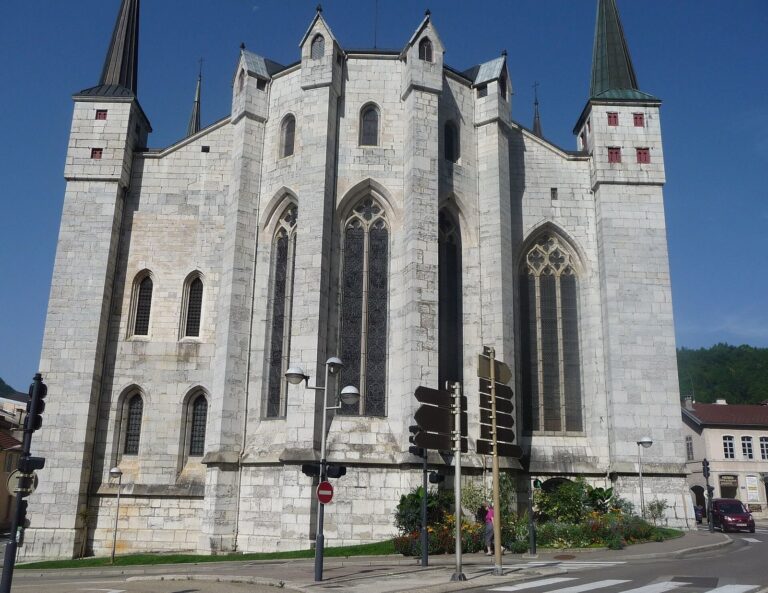
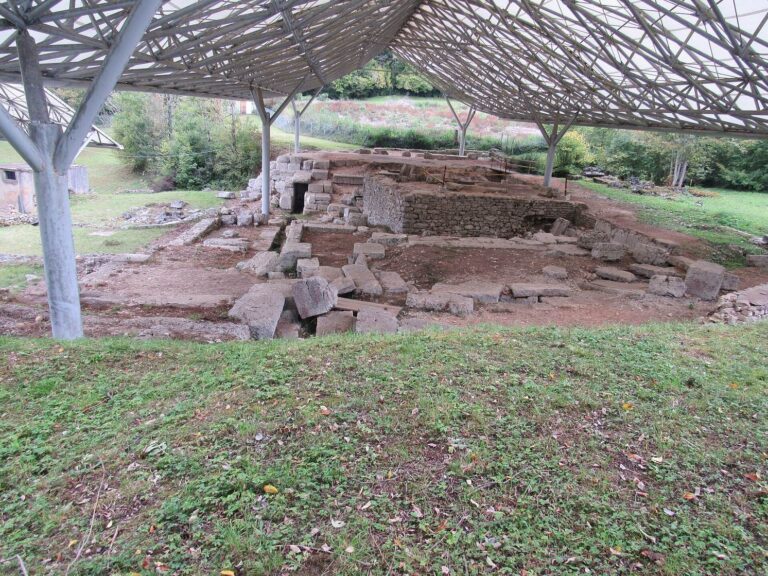
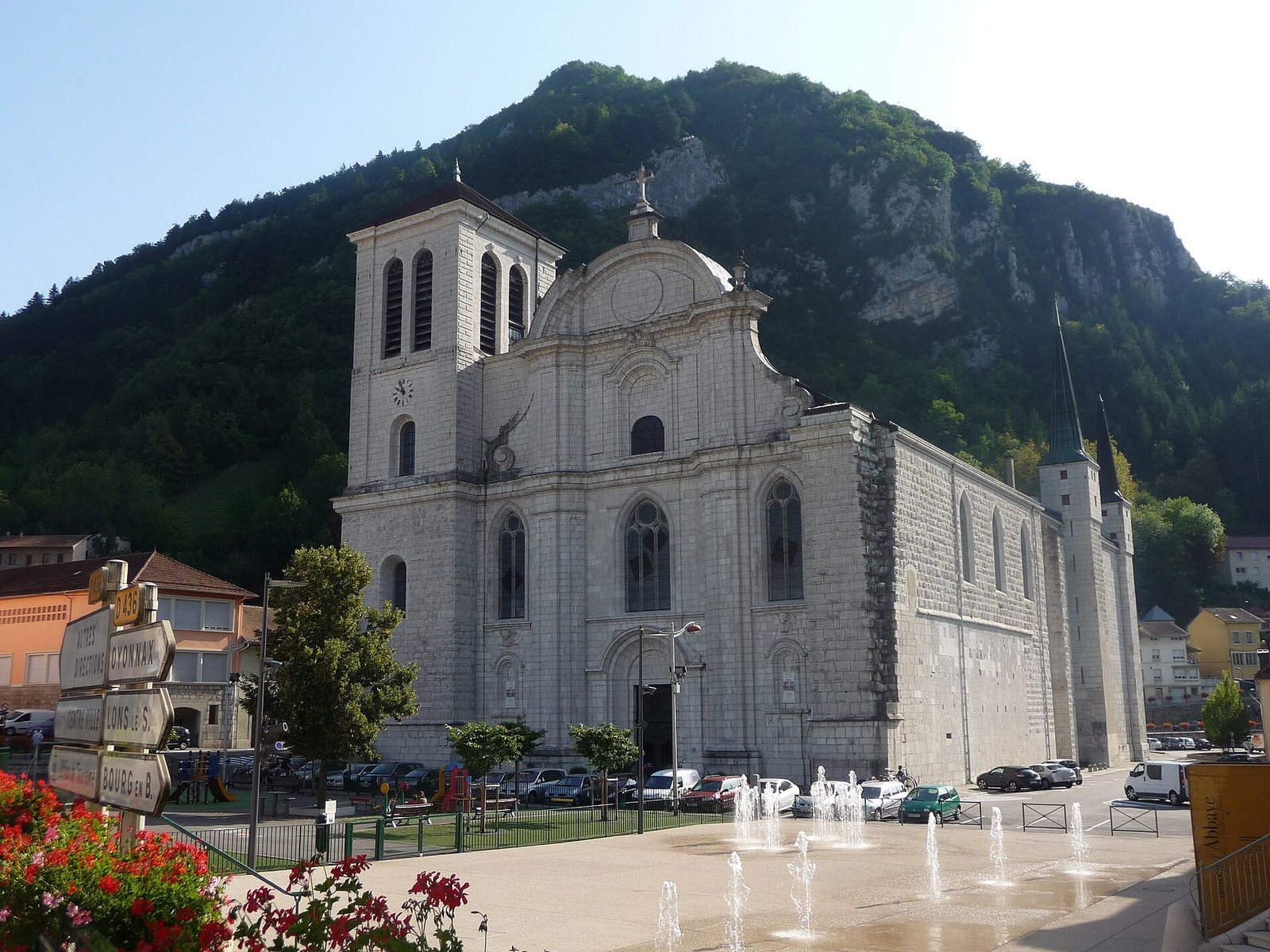
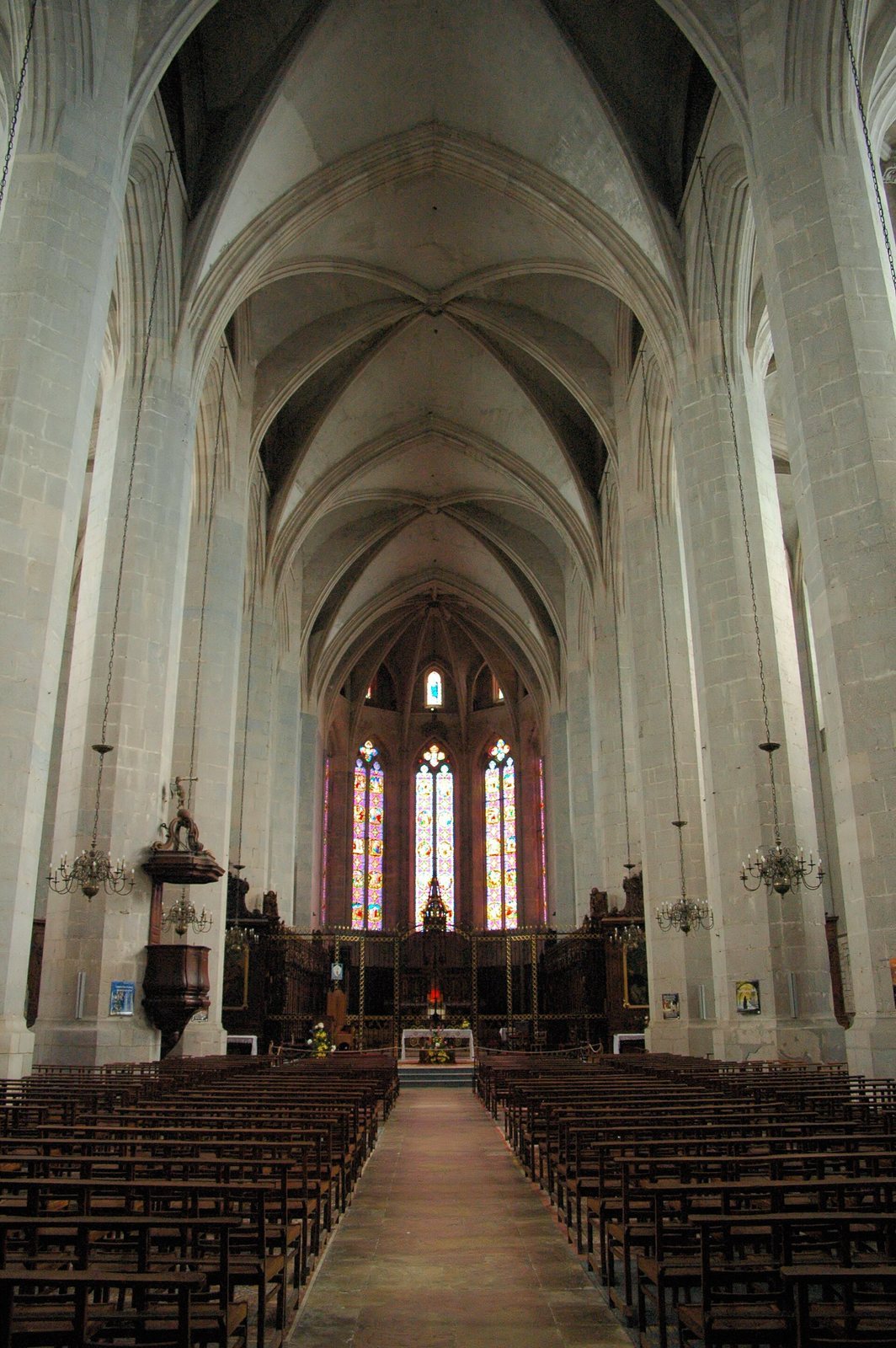
The abbey occupied a rocky headland at the meeting of the Bienne and Tacon rivers, near a settlement that guarded a route toward the Swiss plateau. A grotto and the Rochette stream were associated with the first hermitage, and Roman ruins were also present at the site. The monastery grew from scattered cells into a larger complex; its former abbey church, rebuilt in the fourteenth century and later remodeled, is the principal surviving remnant and now serves as Saint-Claude Cathedral.
Early monastic layout
The earliest monks lived in separate cells near the grotto and at the foot of a low hill. After the early-sixth-century fire, Oyend replaced wooden buildings with stone structures and enlarged the settlement. He added a dormitory, a room for copying books and a library, and replaced the small cells and oratory with larger shared accommodation and a church.
Churches and cloister
The complex contained the church of Saint-Claude and the church of Saint-Pierre, linked by an extensive cloister. A later Saint-Pierre church, begun with financial support from Jean de La Grange, was completed in 1726. One of the churches was richly furnished, with finely worked choir stalls and valuable paintings. Its bell tower held ten bells, including one weighing 9,000 pounds by the old French measure, and the churches possessed valuable sacred vessels and ornaments. Chapels dedicated to Saints James, Lawrence and Maurice were associated with Saint-Claude, with lamps kept burning through the night. The Saint Stephen chapel stood on a rise north of the abbey; after its enlargement and rebuilding under the name Saint Romain, it was still standing shortly after the Revolution.
Enclosures and abbey precinct
A square enclosure, strengthened by towers and connected to a fort, protected the abbey. Walls and towers also enclosed the town. The abbatial palace stood against the new church and the church of Saint-Claude along one side of Saint-Pierre Square; the cathedral and religious houses occupied the other sides. A fountain stood in the square, which opened toward the town through a gate flanked by the Clock Tower, also used as a prison. Three other gates served routes toward Geneva via Septmoncel, toward Bouchoux and from Rue Neuve. The religious residences were spacious and had gardens.
Pilgrim lodgings
Lodgings for pilgrims stood outside the monastery enclosure. Men and women were housed separately, with lay brothers and lay sisters caring for them. The lodgings could also provide nursing for sick pilgrims.
Claude’s shrine
Claude’s body was kept behind the high altar in a wooden shrine covered with silver plates. The shrine was opened on several occasions, including in 1448, 1699 and 1754. At the 1754 inspection, the body was described as human-sized and largely intact, with its parts still naturally connected and some tissues retaining elasticity. The nose cartilage and most of the right little finger were missing, and the skin had darkened.
Archive tower
The abbey’s archive room occupied a strong tower on the southern side, positioned to protect its contents from fire. It held charters, records of the estates and other documents relating to the monastery.