University College, Oxford: A College Founded in 1249
Site at a Glance
- Popularity
- Very High
- Country
- United Kingdom
- Primary era
- Early Modern
- Eras represented
- Early Modern, Modern
- Civilizations
- British, English
- Site type
- Civic
- Remains
- University
On this page15 sections
History
University College, Oxford, is a college of the University of Oxford in Oxford, United Kingdom, founded in 1249 by William of Durham, a cleric and archdeacon, a senior church official. He provided funds for ten or twelve Masters of Arts, holders of university arts degrees, to study theology, the study of religion. In 1253, the college acquired a property later known as University Hall.
The Alfred tradition and early membership
A story that King Alfred founded the college in 872 emerged in the fourteenth century. Alfred the Great was a ninth-century king of Wessex, later remembered as an English king. The tradition linked him with the college’s heraldic emblem and the reigning monarch’s role as Visitor, an office of formal oversight. It also provided the basis for the college’s millennium celebration in 1872. The foundation story is now regarded as fictional. University College claims to be Oxford’s oldest college, a distinction disputed by Balliol and Merton.
Until the sixteenth century, the college’s members were scholars studying theology. Students became a more usual part of its membership after that period.
Expansion and rebuilding
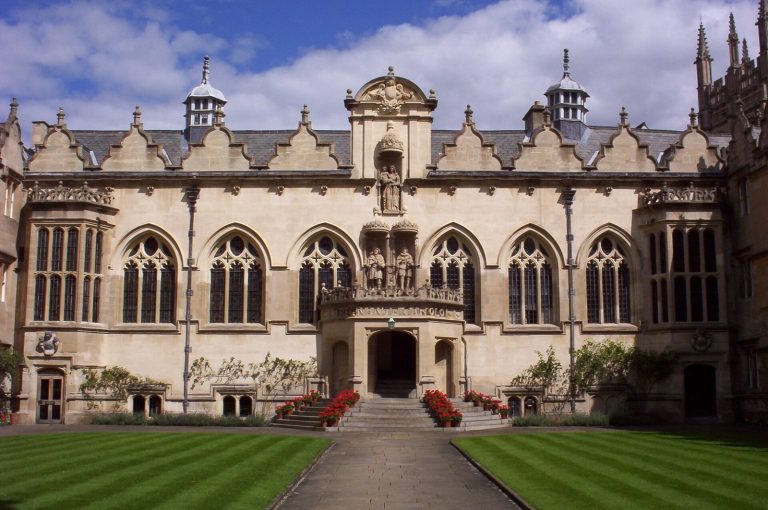
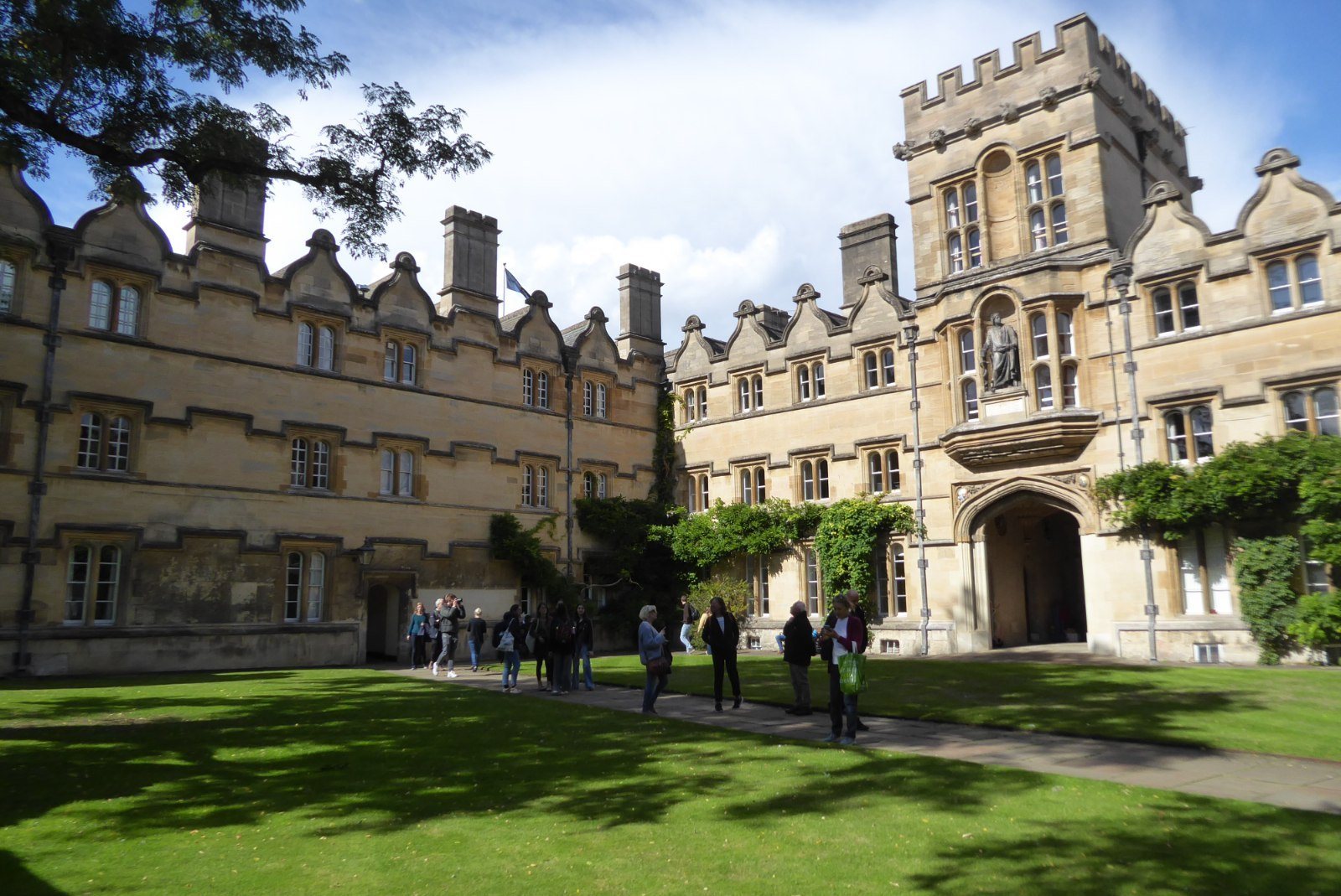
The college acquired four properties on its present site south of the High Street in 1332 and 1336, and a quadrangle, a courtyard enclosed by buildings, was constructed in the fifteenth century. As the college grew in size and wealth, its medieval buildings gave way to the Main Quadrangle during the seventeenth century.
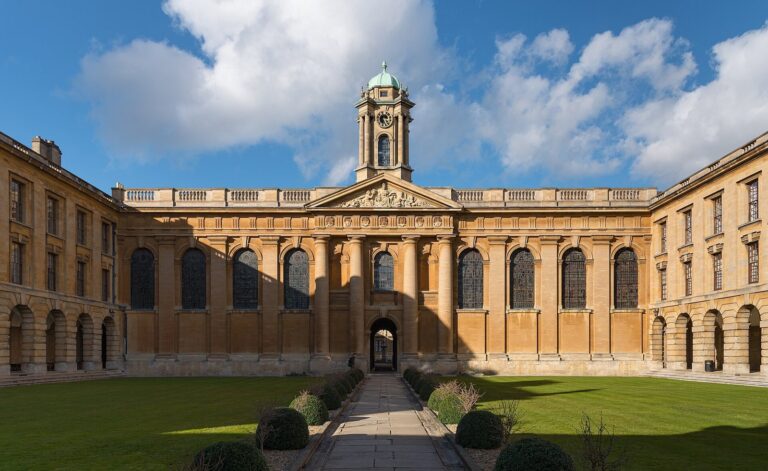
The foundation stone for the Main Quadrangle was laid on 17 April 1634. Construction was interrupted by the English Civil War, a conflict between supporters of the monarchy and Parliament, and the building was completed in 1676. Robert Boyle and his assistant Robert Hooke lived in Deep Hall while it belonged to Christ Church. In the mid-seventeenth century, Boyle also contributed to the completion of University College’s hall.
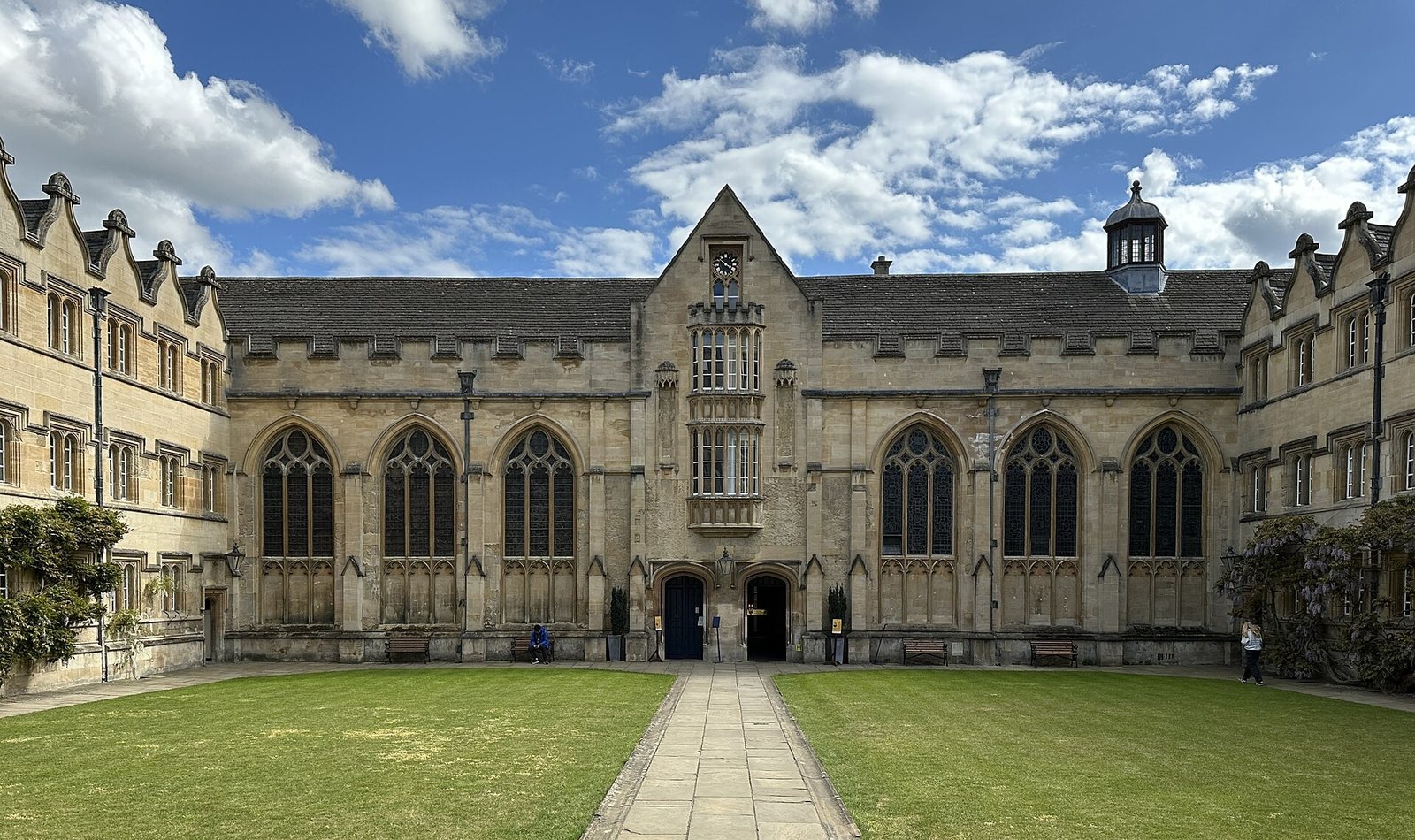
The Radcliffe Quadrangle was completed in 1719 with funds from the will of former student John Radcliffe, a physician and academic. The college library followed in 1861.
Membership and college customs
After being an institution for men, University College admitted women for the first time in 1979. Before Formal Hall, a ceremonial college meal, a grace, or prayer of thanks, is read by a Scholar, a student holding a scholarship, and the person at the head of High Table, the table for senior members. That person is usually the Master, the college’s head, or the most senior Fellow present. The college’s grace is the longest at Oxford and perhaps at Cambridge.
Remains
The central college site
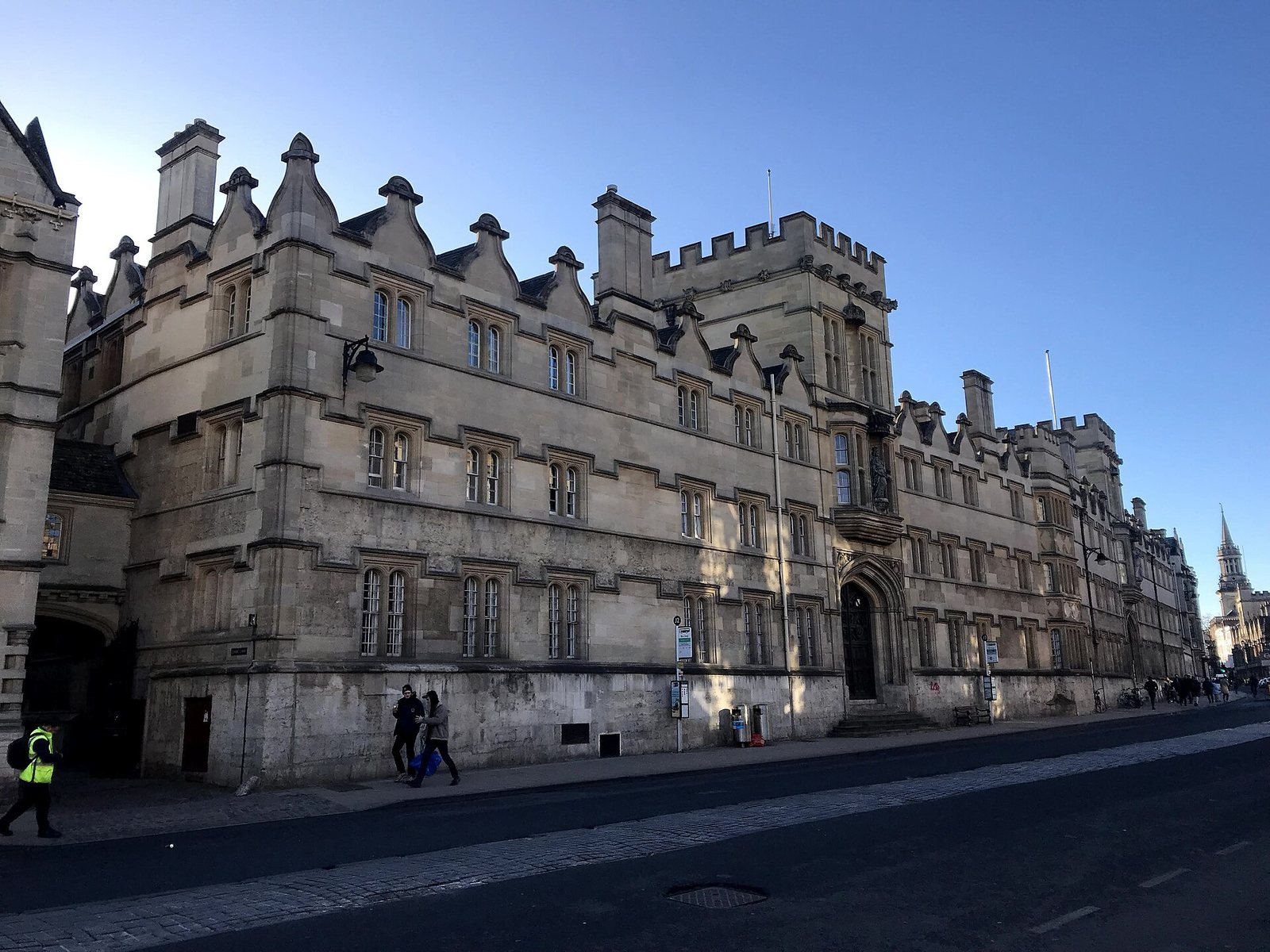
The main entrance is on the High Street, and the college grounds are bounded by Merton Street and Magpie Lane. College-owned Logic Lane runs through the centre and divides the site.
Western side
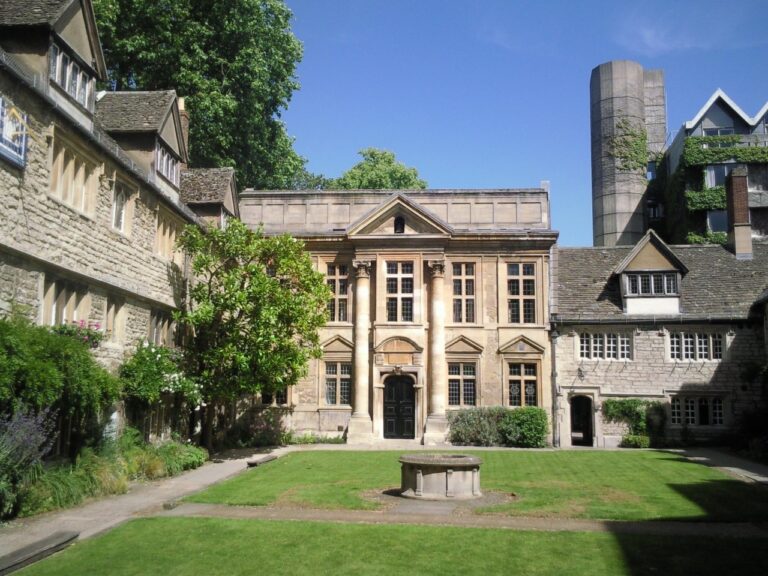
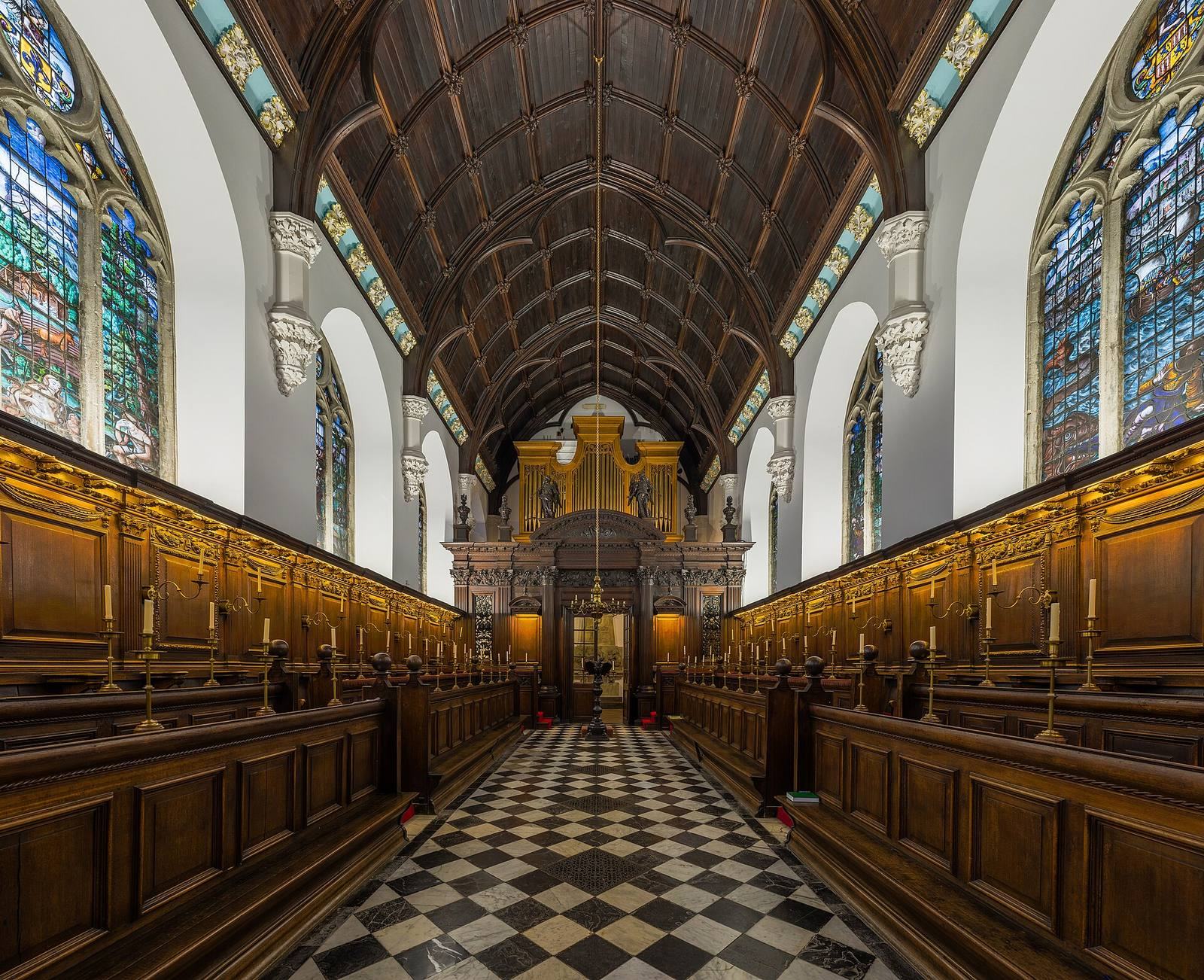
The western side contains the library, hall, chapel, and two quadrangles, which accommodate students and college offices.
Eastern accommodation
Student rooms on the eastern side are situated above shops on the High Street, along Merton Street, and in the separate Goodhart Building. The building is named after Arthur Lehman Goodhart, a former Master of the college.
Memorials and sculpture
Shelley Memorial
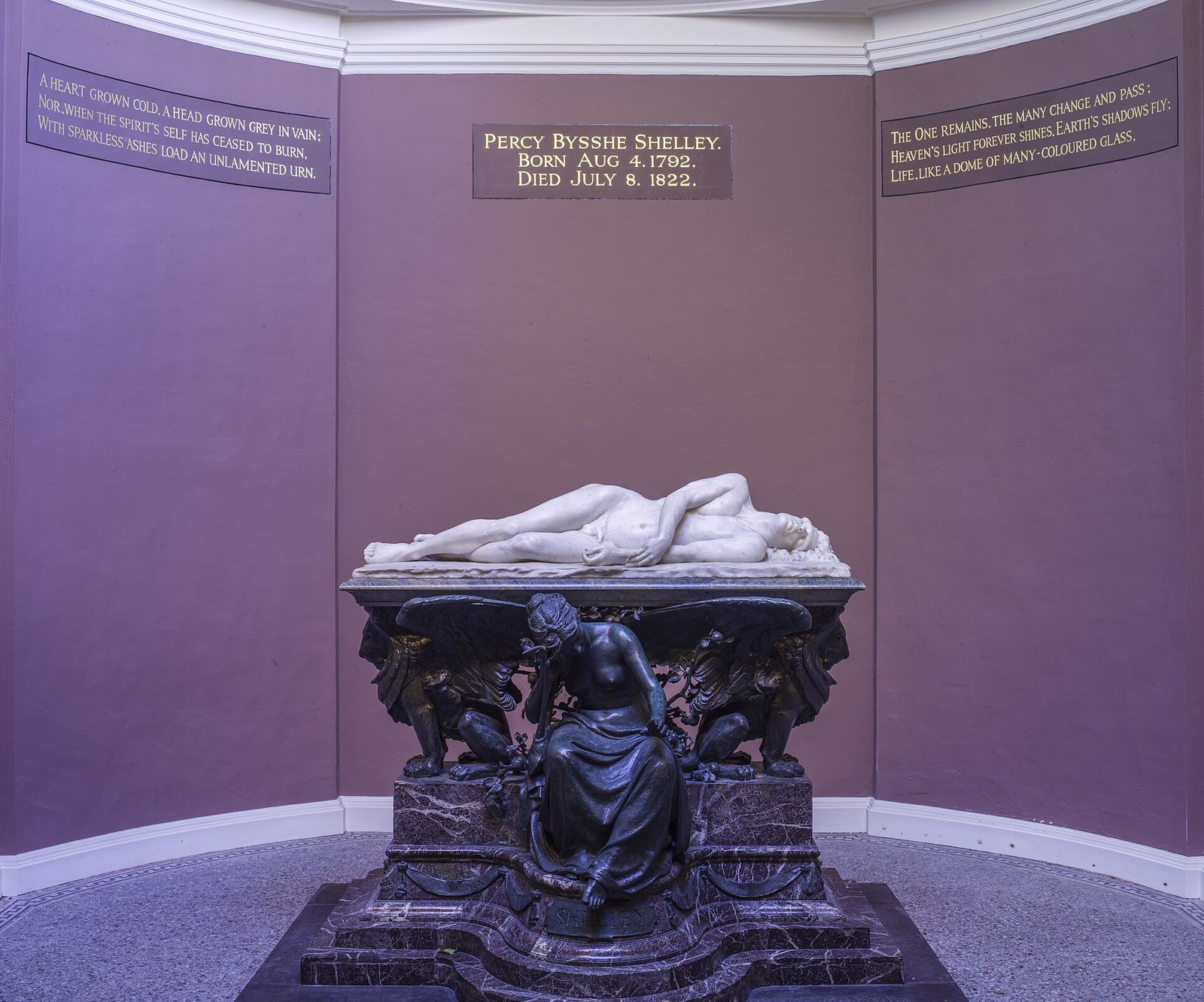
A purpose-built structure for the Shelley Memorial occupies the former site of Deep Hall. It contains a statue by sculptor Edward Onslow Ford depicting the English Romantic poet Percy Bysshe Shelley lying dead on the Italian shore.
Statue of James II
A statue on the south side of the western gateway depicts James II of England, also known as James VII of Scotland, the same monarch with different regnal numbers in the two kingdoms. It is one of only two surviving statues of him in the United Kingdom.
Student accommodation and recreation facilities
Staverton Road annexe
The college annexe on Staverton Road in north Oxford houses undergraduates in their second year and some graduate students.
Boathouse
The University College Boathouse was completed in 2007 and is shared with the boat clubs of Wolfson, St Peter’s, and Somerville Colleges.
Sports ground
The college owns a sports ground near Abingdon Road, used for football, rugby, cricket, tennis, and bowls.