Omeriye Mosque: An Ottoman Mosque in Nicosia, Cyprus
Site at a Glance
- Rating
- 4.3
- Popularity
- Medium
- Country
- Cyprus
- Primary era
- Early Modern
- Eras represented
- Medieval, Early Modern
- Civilizations
- Crusader, Kingdom of Cyprus, Ottoman
- Site type
- Religious
- Remains
- Mosque
On this page11 sections
History
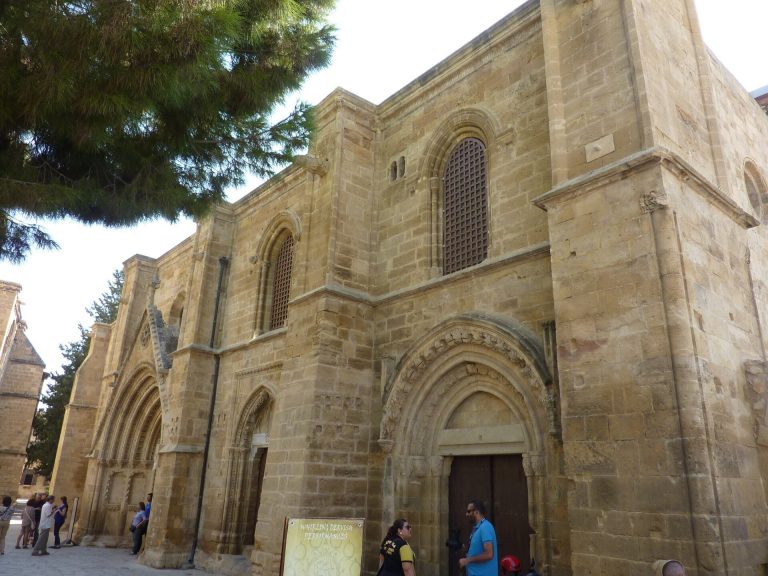
The Omeriye Mosque is an Ottoman mosque in the southern part of Nicosia’s old walled city in Cyprus, completed in 1571 on the site of an Augustinian monastery and the Church of Saint Mary. The church dates to the first half of the fourteenth century and is classified as Gothic.
Augustinian church and monastery
The monastery and its church occupied the site before the Ottoman conquest. In the fifteenth century, one monastery building served as a hostel. Historian Louis de Mas Latrie later connected the mosque with Saint Mary’s Church, citing two tombstones bearing Augustinian monks’ names that lay in the mosque floor until 1940. A ruined monastery was still present in the seventeenth century.
Ottoman conquest and conversion
During the Ottoman–Venetian War of 1570–73, a conflict between the Ottoman Empire and Venice that included the conquest of Cyprus, the church was heavily damaged in the 1570 siege of Nicosia. After the Ottoman conquest in 1571, commander Lala Mustafa Pasha ordered a mosque on the site, and it was completed that year.
The mosque’s name honors Umar ibn al-Khattab, the second caliph, a successor to Muhammad who led the Muslim community. A popular tradition says Umar was buried there. A Turkish tradition instead relates that he visited Nicosia on his way to Egypt and spent a night in the church’s narthex, its entrance vestibule. Turkish Cypriot folklore holds that the mosque was the first place where Turks prayed on the island after the 1571 conquest.
Continued religious use
After the 1974 Turkish invasion of Cyprus, Omeriye Mosque became one of the most important Muslim places of worship in the non-Muslim part of the island and of Nicosia. It remains active, serving Muslim residents of the old city, including Arab and African communities, as well as Turkish Cypriots who cross into the city’s southern part to worship.
Remains
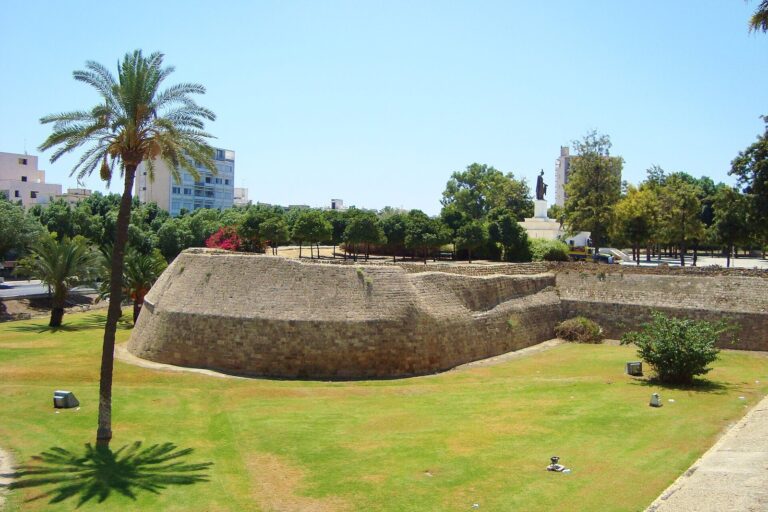
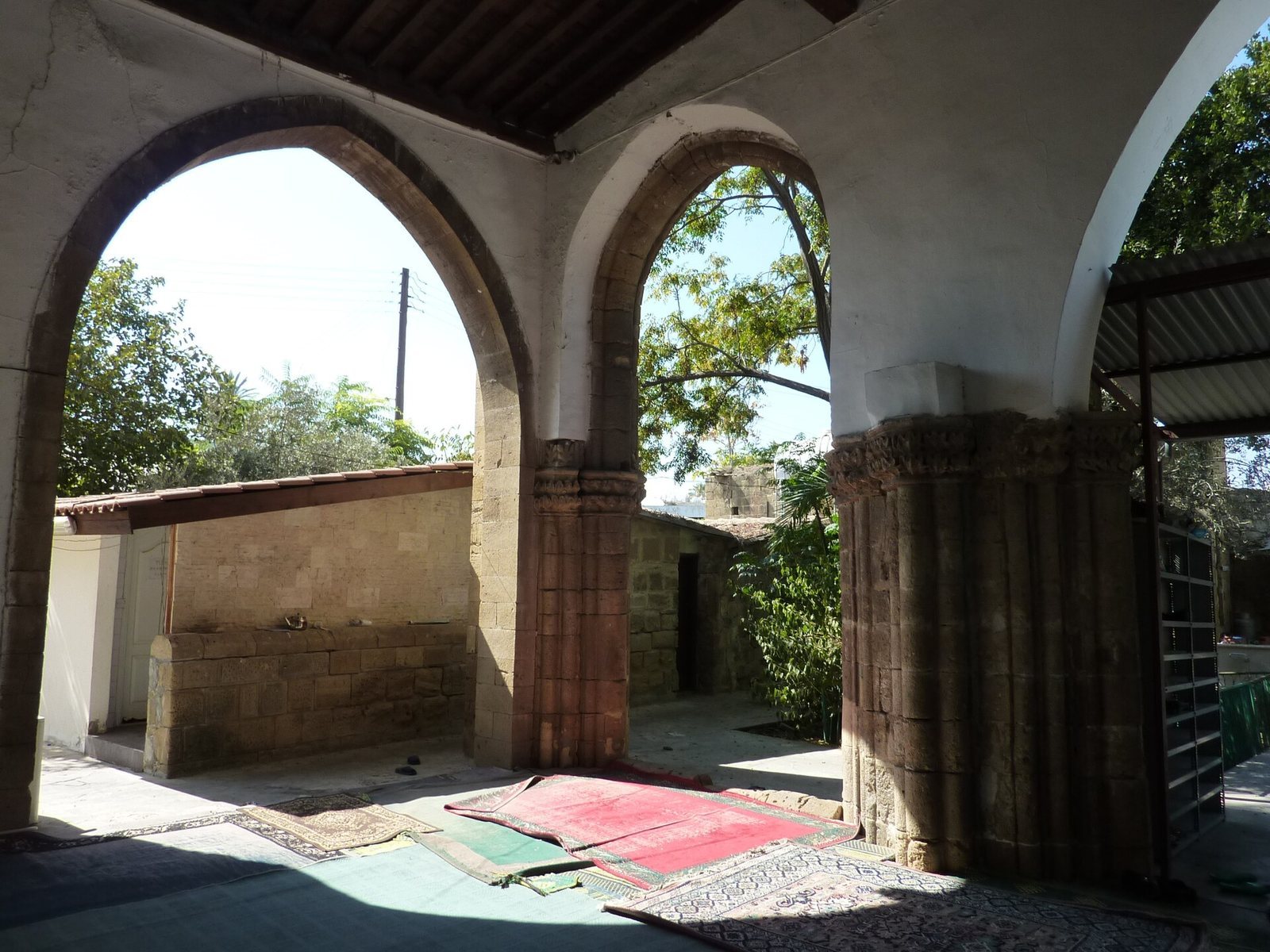
The mosque stands between the Costanza and Podocataro bastions, projecting defensive structures in Nicosia’s Venetian walls, and near the Archbishopric and other churches. Its ground plan follows that of the former church, adapted for Islamic worship, and measures approximately 60 by 20 metres. The site combines surviving medieval church fabric with Ottoman features.
Church and mosque fabric
Church of Saint Mary
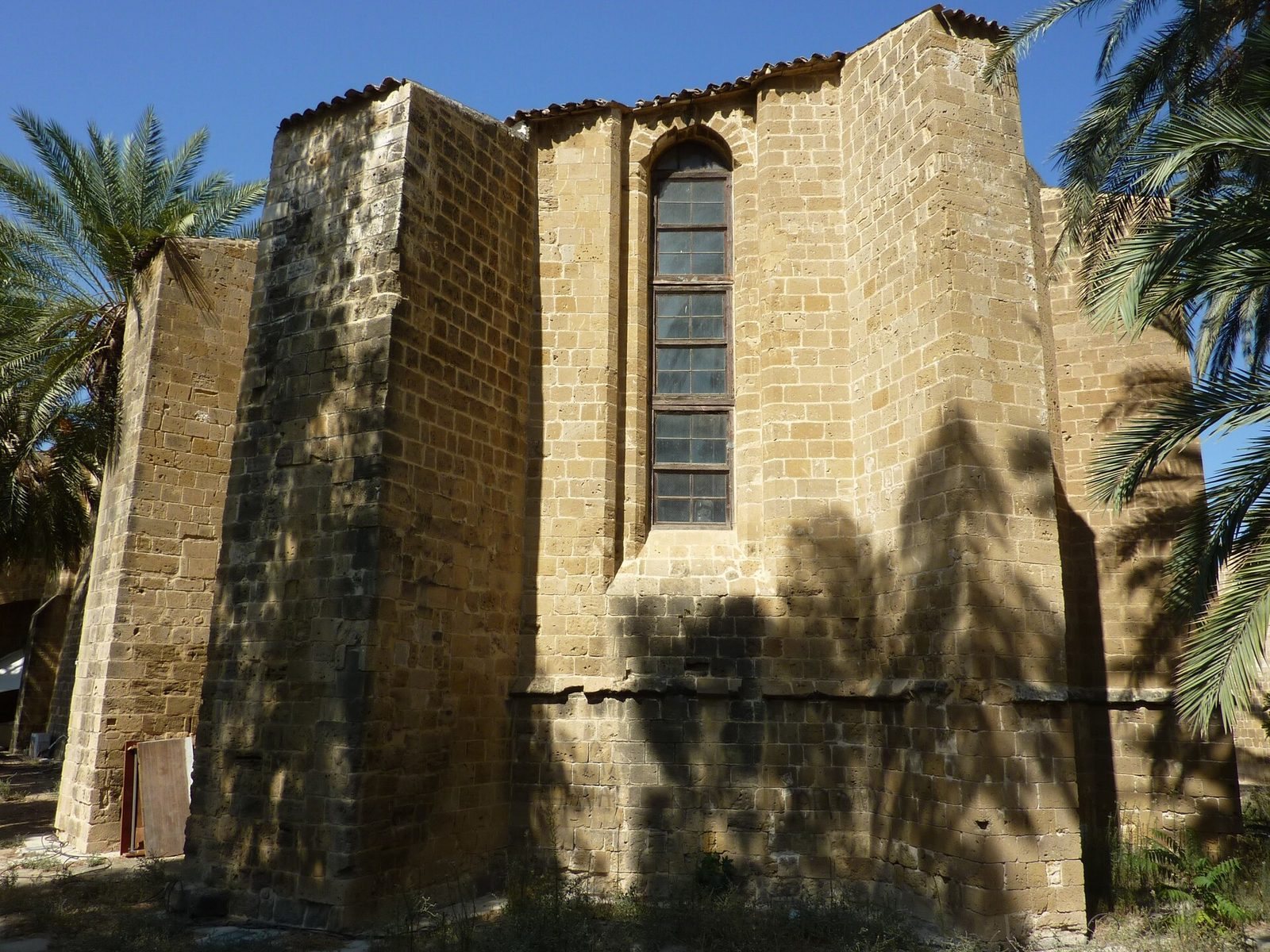
The former church had a single nave measuring about 41 by 11 metres, originally covered by rib vaults, ceilings formed by intersecting arched ribs. A three-sided apse, a projecting area at the altar end, stood to the east. At the west was a narthex with a facade of three arches: the central arch was larger, while the two flanking arches were equal in height.
The church had heavy exterior walls and simple architectural forms. Its western wall included an arched entrance with sculptural decoration. It is estimated to have stood about 15 metres high and was considered one of Nicosia’s most imposing buildings.
Ottoman mosque
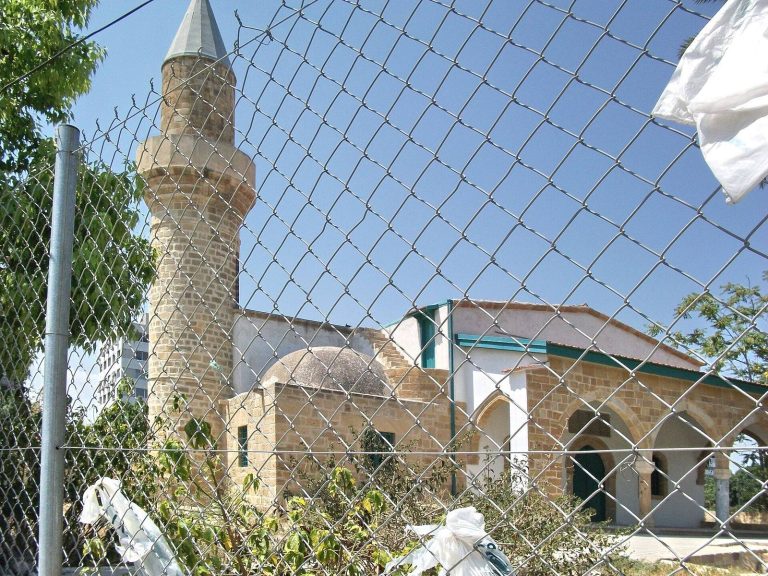
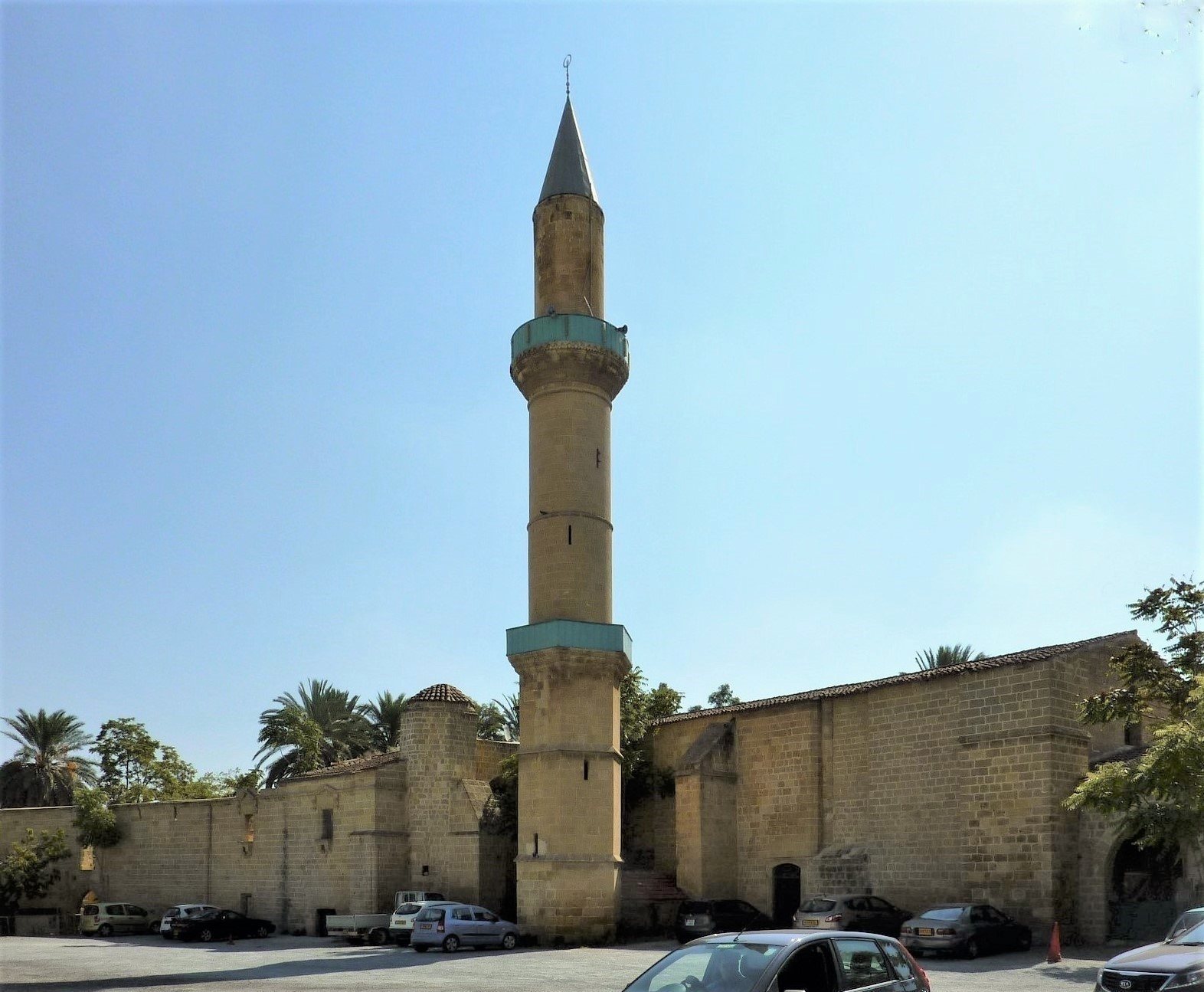
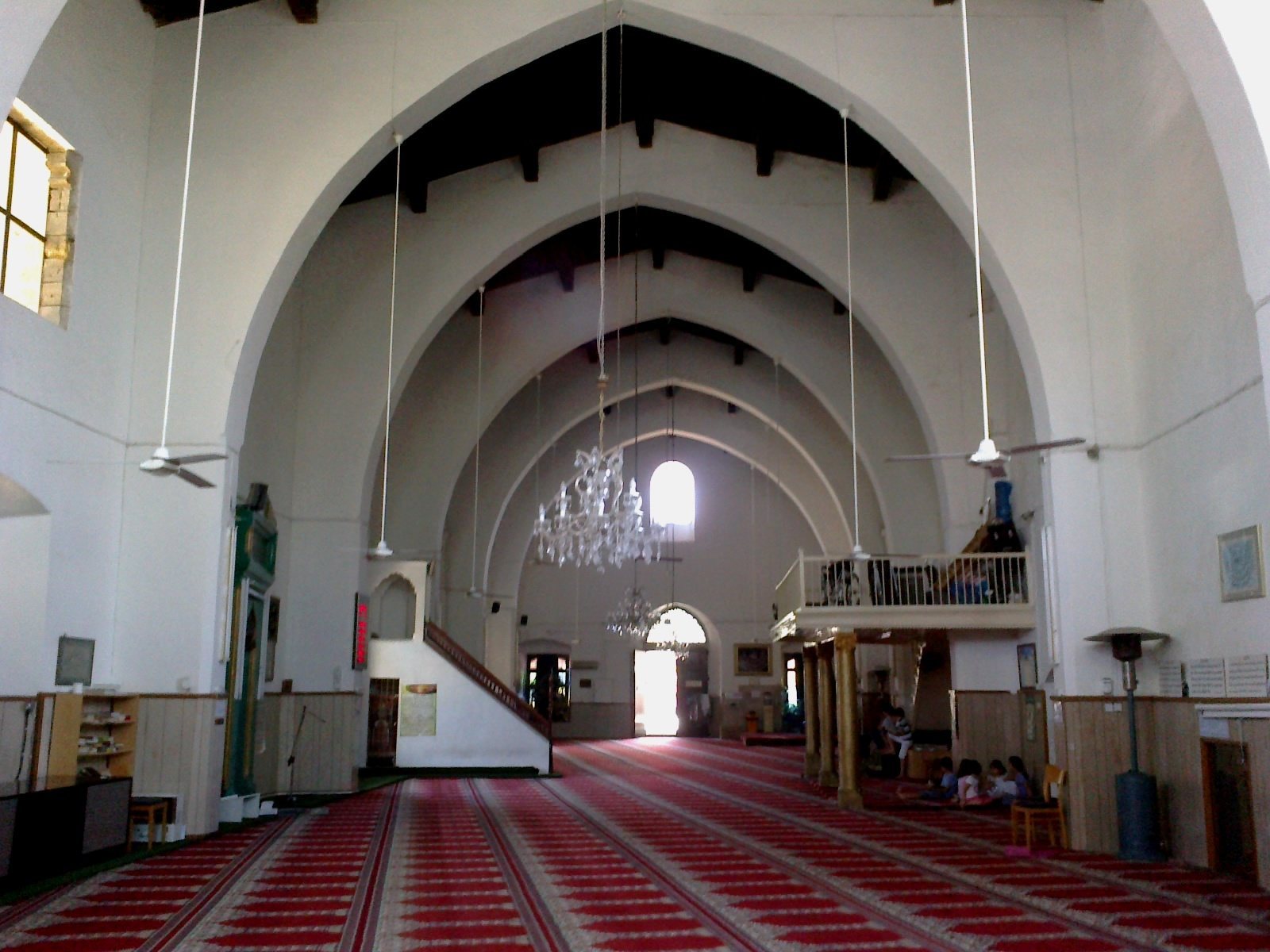
The upper part of the church, down to approximately the middle of its windows, was destroyed, probably by cannon fire during the 1570 siege. The remaining walls were later completed, and wooden roofing covered the church and narthex. The interior was plastered, and a minaret, a mosque tower traditionally used for the call to prayer, was added on the north side. The mosque also incorporates Ottoman-Islamic features, including arches and small domes, and has a single tall, Turkish-style minaret visible from a distance.
Monastery and associated bathhouse
Monastery remains
A wall on the northeast side has a Renaissance-style doorway, using forms drawn from classical architecture, and is considered part of the monastery buildings. In the early twentieth century, an associated building remained in ruins up to the level of its second floor.
Ömeriye Hamam
Across the street from the mosque stands Ömeriye Hamam, a bathhouse also commissioned by Lala Mustafa Pasha.