Savigny Abbey in Normandy: A Medieval Monastic Centre
Site at a Glance
- Popularity
- Medium
- Country
- France
- Primary era
- Medieval
- Eras represented
- Medieval
- Civilizations
- Duchy of Normandy
- Site type
- Religious
- Remains
- Monastery
On this page13 sections
History
Foundation and early growth
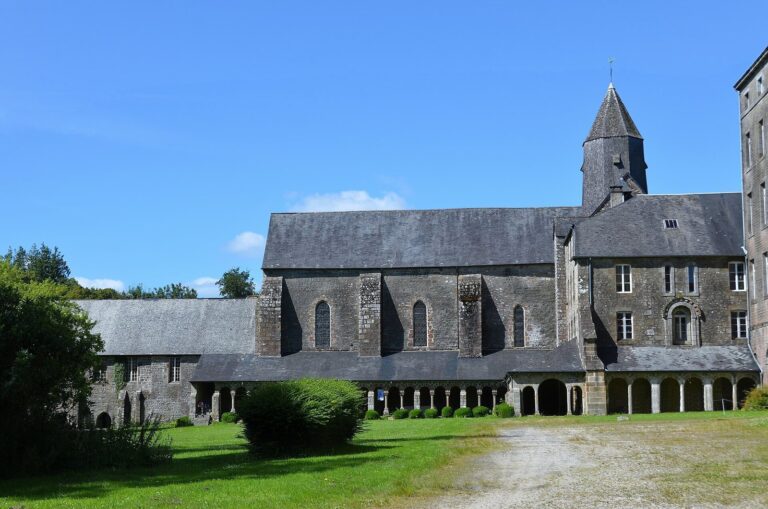
Savigny Abbey in Normandy is a medieval monastery founded in 1112 at Savigny-le-Vieux, in France. The hermit Vitalis de Mortain established its first community on land granted by Raoul I de Fougères and his wife, Amicia. Vital’s earlier hermitage at Dompierre en Mantilly had become too small for his followers, so the new community began in simple buildings beside the Moulin du Pré stream.
Savigny began as a double monastery, with communities of men and women. The women lived about 500 paces away near the forest entrance, then moved in 1120 to the Priory of La Blanche near Mortain, founded by Vital’s sister Adeline. Vital began a wooden church, which his successor Geoffroy completed. Dedicated to the Holy Trinity in 1124, it was the abbey’s first church. Vital died in 1122, having also founded three other monastic houses.
Geoffroy, abbot from 1122 to 1139, organized the monks’ enclosed communal life and established their first chapter, the community’s formal assembly for governance. The community grew to more than 100 monks. Pope Celestine II placed the abbey under papal protection in 1119, while Henry I of England endowed it and established or supported 29 monasteries of its network in his lands. Many of his grants to Savigny were in the Passais. Robert fitz Martin and his wife Maud also gave land at Vengeons.
The monastic network and Cistercian union
Savigny’s community initially followed the Rule of St Benedict, a foundational guide to Western monastic life. From 1132, its monks held annual general chapters at the abbey. At Bernard of Clairvaux’s request, they supported Pope Innocent II against Anacletus, a rival claimant to the papacy. By 1147, the Savigny network included 28 abbeys in France and the British Isles, as well as thirteen English houses and one in Dublin. Its reach eventually extended to roughly 75 monasteries, including houses such as Furness, Vaux-de-Cernay, Beaubec, Neath, and Sainte-Marie de Dublin.
Concern that some English monasteries, particularly Furness, might leave the network led the fourth abbot, Serlon, to seek union with the Cistercians, a monastic order based at Cîteaux. With Bernard of Clairvaux’s advice and Pope Eugene III’s approval, the union took effect in 1147. Savigny became a daughter house, or affiliated monastery, of Clairvaux and adopted Cistercian practices and rule. Its abbot ranked below the five principal Cistercian abbots but retained direct oversight of Savigny’s dependent houses. In 1215, Pruilly Abbey was given precedence over Savigny.
The abbey’s dependencies included priories at Dompierre, established in 1119, and Villers-Canivet, founded in 1127 and raised to royal-abbey status in 1681. Barbery began as an agricultural estate managed by the monks, called a grange, in 1140 and became an abbey in 1176. Savigny also received extensive lands from Robert III and André II of Vitré, which it used to develop the countryside around Rennes. Four granges later became priories: Fayel, on land granted in 1167, Vaux, Louvigné, and Champfleury. A nineteenth-century château later replaced the grange at Vaux. In 1135, Richard de Beaufou, bishop of Avranches, gave Savigny the right to nominate a cleric to the church at Lapenty.
Royal visits, decline, and suppression
In 1172, Henry II of England met papal envoys at Savigny in connection with the murder of Thomas Becket, archbishop of Canterbury. In 1248, the relics of five canonized members of the abbey and those of Adeline were transferred before a crowd of about 100,000. Louis IX of France visited in 1256 and prayed at the abbey. Isabelle de Meulan, a benefactress who died in 1220, was buried there. Robert Stitchill, an English archbishop who died in 1274, was also buried at Savigny, while his heart was interred at Durham Cathedral.
By the fourteenth century, the community had reached about 300 monks and 100 lay brothers, members who undertook much of the community’s manual work. The abbey was damaged after Henry V of England landed at Touques in 1417. Louis XI confirmed its royal protection in 1465. Commendatory abbots, who held the abbey’s title and income without necessarily directing its daily religious life, were introduced in 1501, after which discipline and prosperity declined.
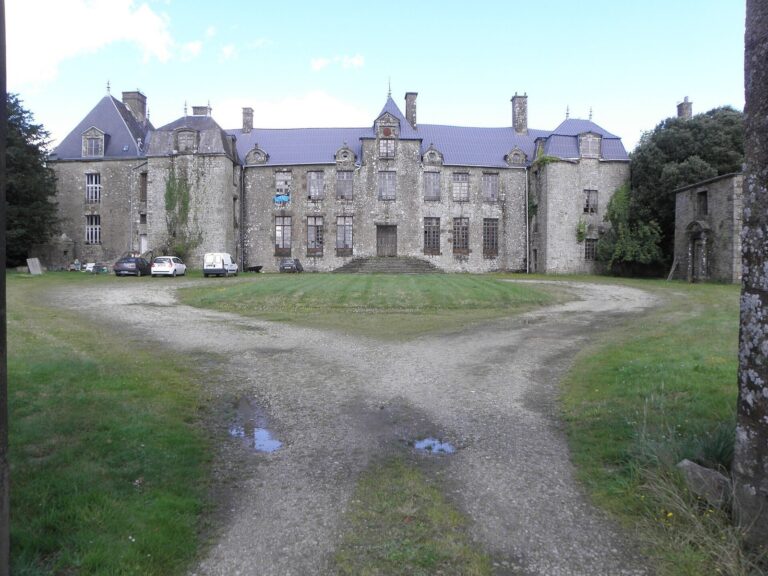
In 1562, Calvinists sacked and burned Savigny; followers of the Protestant military leader Gabriel de Montgomery were associated with the attack. The destruction dealt the monastery a severe blow, and it declined thereafter. In 1789, the French Revolution expelled the 14 monks who remained. The abbey was suppressed in 1791, sold as national property, and used as a source of building stone. Joseph Porphyre Jacquemont, steward of the Duke of Orléans’s estates, bought the complex in 1793 for one-tenth of its value.
Preservation
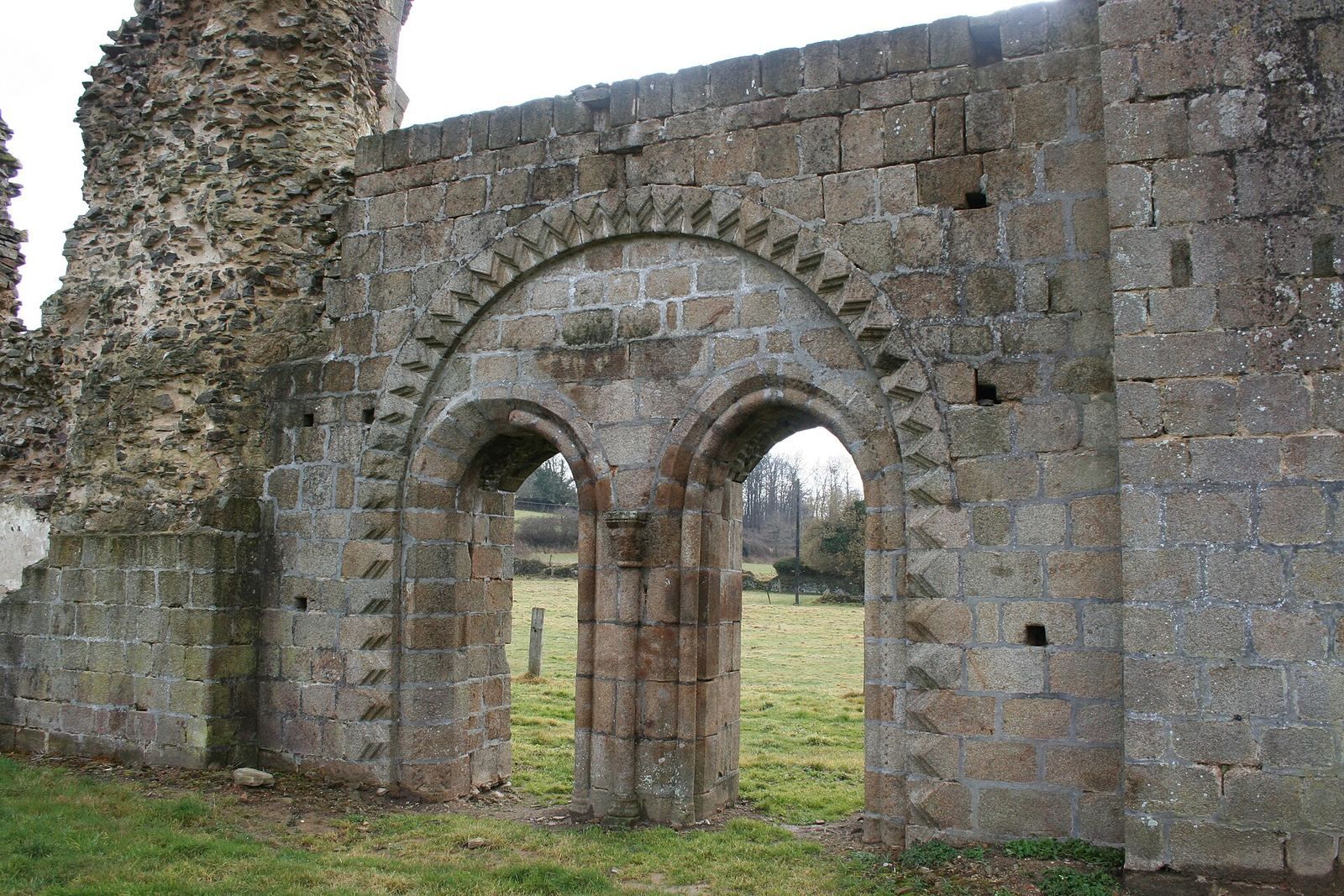
In 1838, archaeologist Arcisse de Caumont bought the surviving refectory gate to preserve it. A restoration of the abbey church is dated to 1869. In 1924, the former refectory’s double portal and adjoining buttresses received French historic-monument protection. In 1983, heritage architect François Pougheol attempted to reconstruct the abbey’s overall plan, drawing partly on notes and drawings made by Lemesle, the parish priest in the mid-nineteenth century. From 2003 to 2009, the surviving ruins above ground were cleared and stabilized in two phases, with the aim of securing them while retaining their ruined character.
Remains
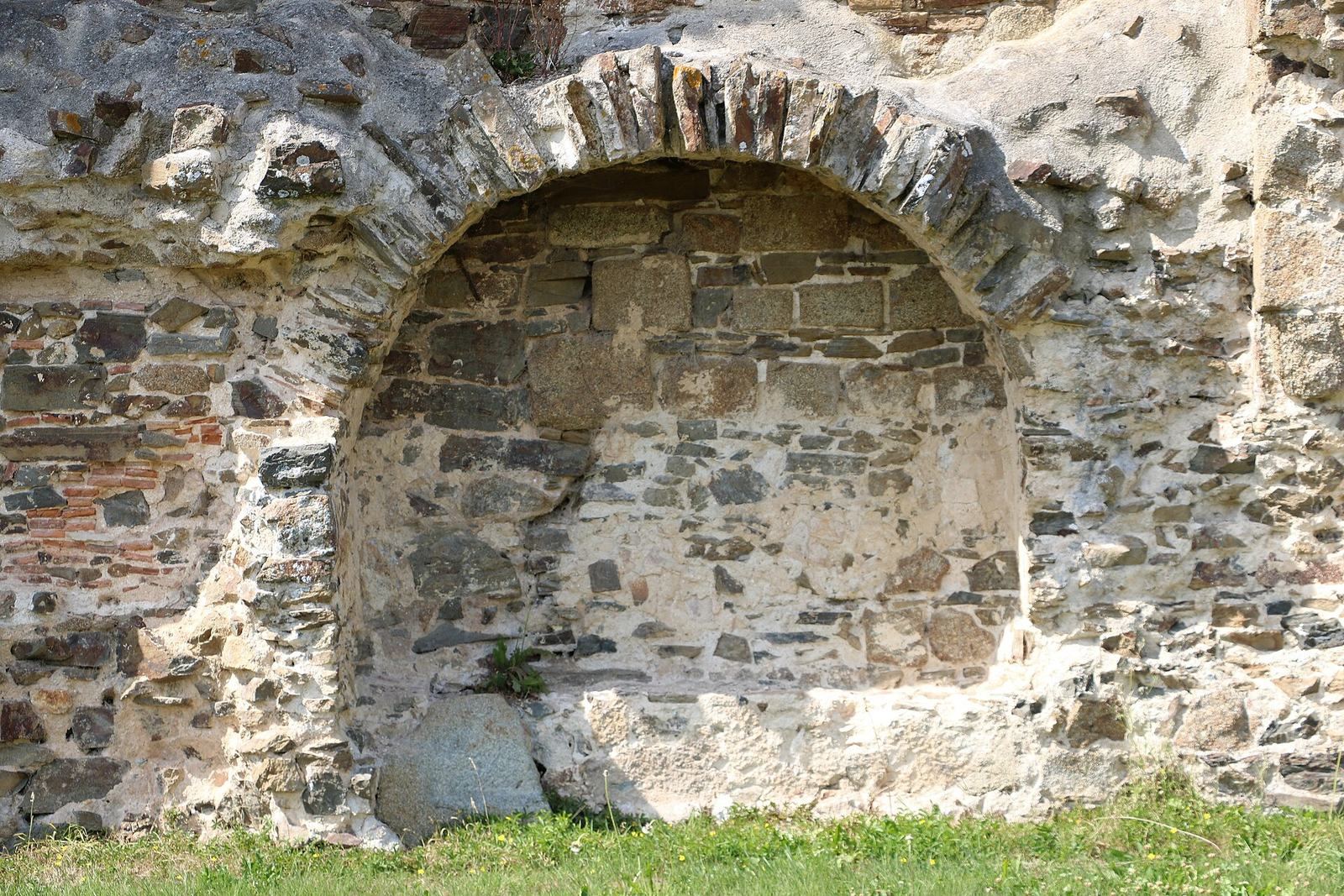
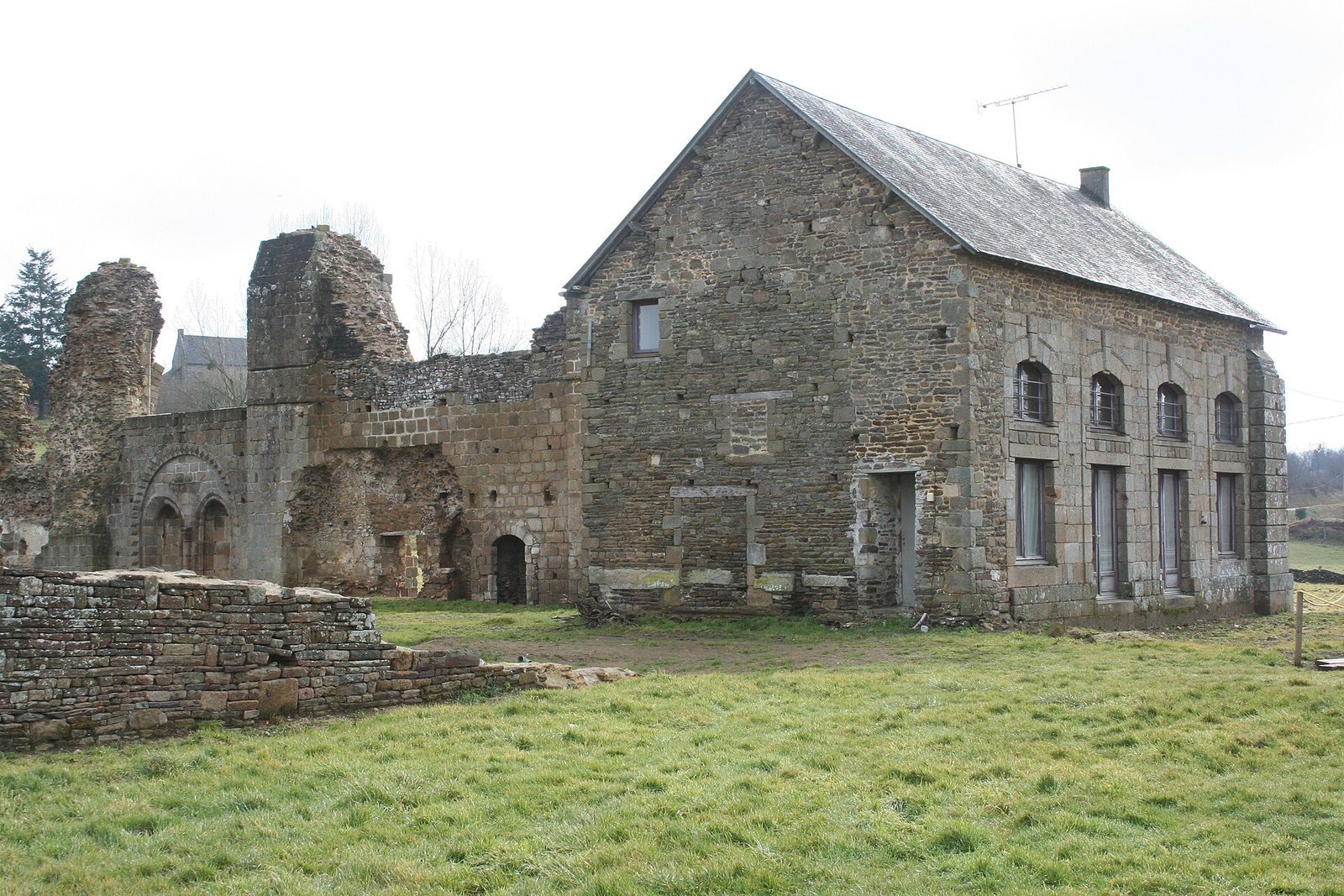
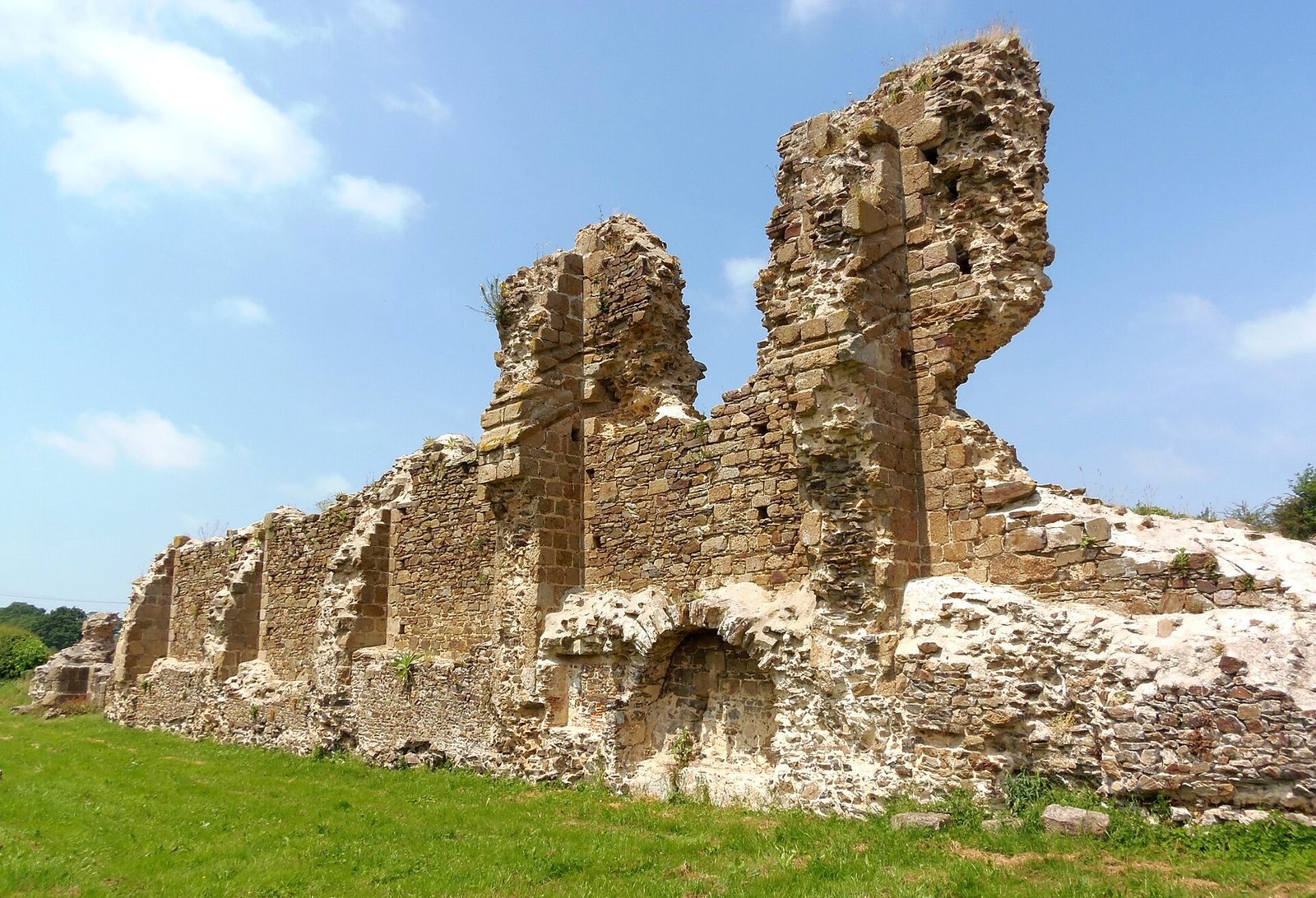
The abbey survives as irregular fragments of wall, from ground level to seven metres high and between 0.8 and 2 metres thick. They mark parts of the former monastic complex, including walls between the cloister, refectory, and other buildings. The Romanesque stone church is now reduced to shortened wall sections and internal rubble masonry, with its facing stones removed.
Church and cloister precinct
Abbey church
The church covered 3,256 square metres and measured 82 metres long, 50 metres wide across the transept, and 27 metres across the nave. Its spire reached 70 metres. The building had 15 altars, 76 stained-glass windows, and three rose windows, each six metres across. At the eastern end, chapels were arranged around a semicircular apse, following designs also found at Clairvaux and Pontigny.
Cloister and refectory
The surviving walls include sections that separated the cloister, a covered walk around a courtyard, from the former refectory, the monks’ communal dining hall, and other buildings. The refectory’s double portal, also called the Saint-Louis Gate, opened from the cloister into the great dining hall. Its geometric zigzag decoration survives; the portal and adjoining church buttresses together extend for 13 metres.
Other surviving features and furnishings
Leper hospital and chapel
The surviving remains also include the leper hospital and its chapel, forming part of the wider group of abbey buildings.
Guesthouse
Part of the abbey guesthouse survives, incorporated into a farm.
Furnishings and reused stonework
Religious and funerary furnishings from the abbey, including bas-reliefs, statues, and tombs, are held in the parish church of Savigny. Other furnishings are in the collegiate church of Mortain, while some architectural elements were reused in buildings at Teilleul and Coutances.