Cortenbach Castle: A Moated Country Residence in the Netherlands
Site at a Glance
- Rating
- 4.5
- Popularity
- Medium
- Country
- Netherlands
- Primary era
- Early Modern
- Eras represented
- Medieval, Early Modern
- Civilizations
- Dutch, Holy Roman Empire
- Site type
- Domestic
- Remains
- Castle
On this page9 sections
History
Cortenbach Castle is a moated complex northeast of Voerendaal in the Netherlands, where a medieval predecessor gave way to a classical-style country residence around 1713.
Medieval origins
The castle’s predecessor and its associated farm date to the fourteenth century. Cortenbach is one of the castles associated with Voerendaal.
Country residence and family
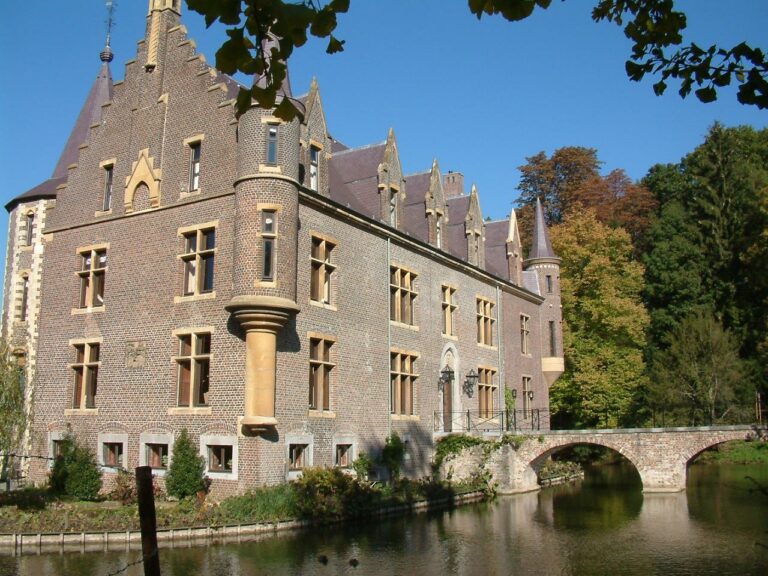
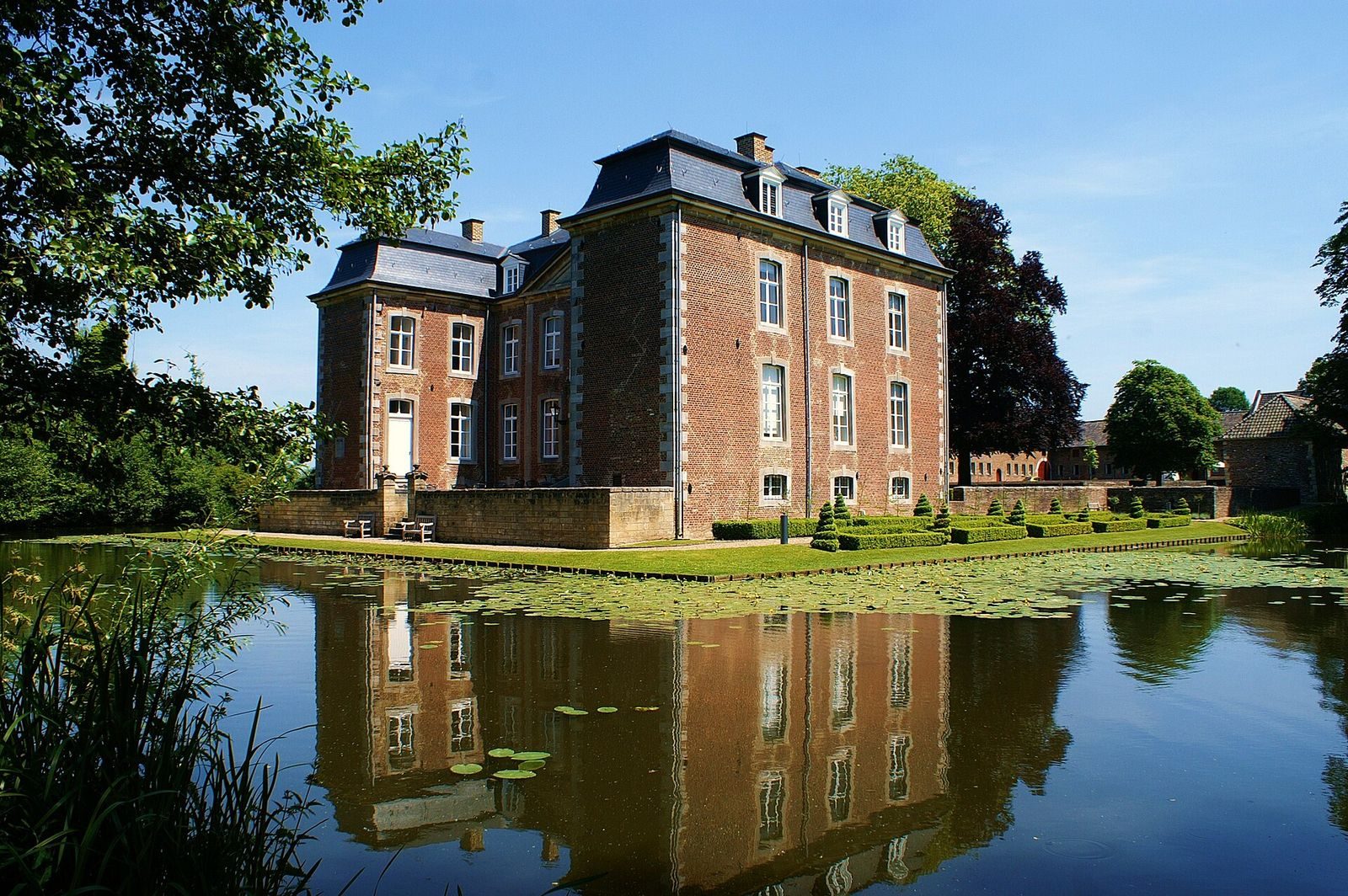
After acquiring the estate in 1682, Aachen merchant Herman Lamberts, who held the lordship, began removing its medieval buildings to make way for a new residence. The country house took shape around 1713, and a major rebuilding followed in 1776. In 1869, the widow of the last Dutch male descendant of the De Lamberts de Cortenbach family died at the castle.
Changing uses
An exclusive hotel and restaurant opened in the castle in 1939. Since 1988, it has housed the headquarters of Vebego, an internationally active company in facilities services and care; an agricultural business operates in the outer enclosure. The privately owned castle has been protected as a Dutch national monument since 2005.
Remains
The castle complex
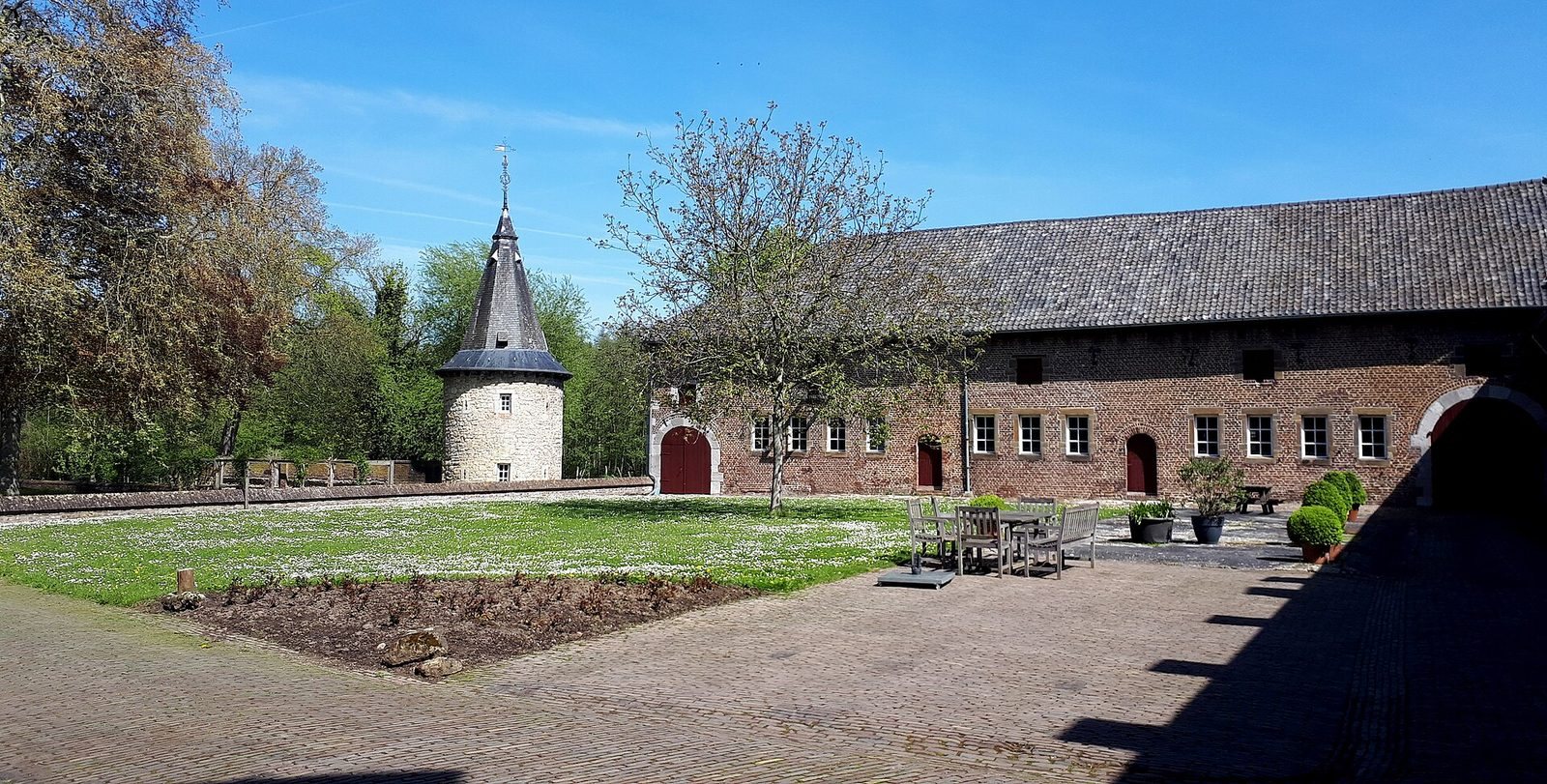
The complex brings together the main castle, an inner courtyard, an outer bailey (the castle’s outer courtyard), and a moat. The castle is described as classical in style, drawing on building traditions associated with ancient Greece and Rome.
Main castle and medieval fabric
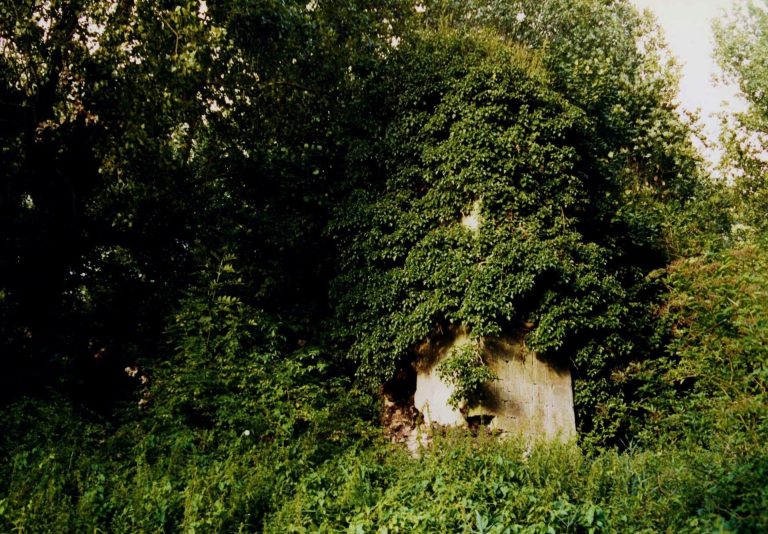
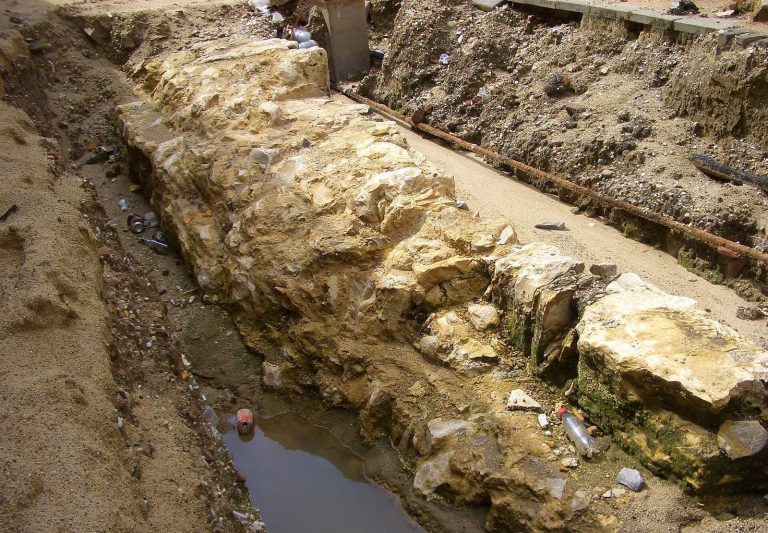
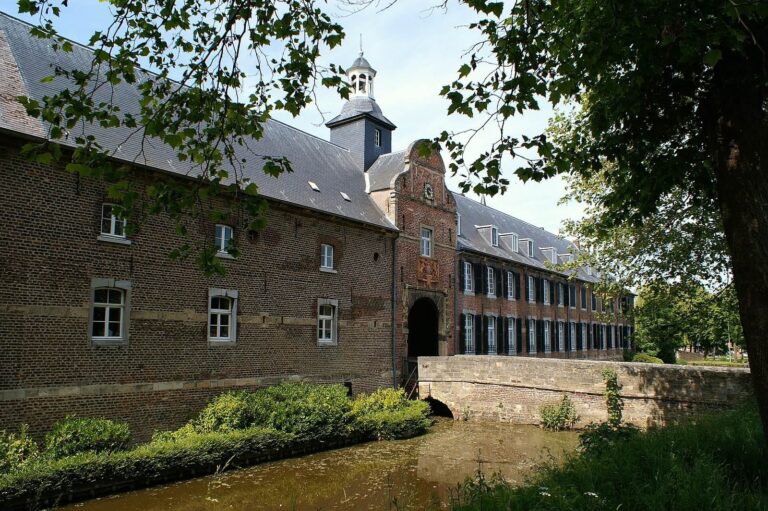
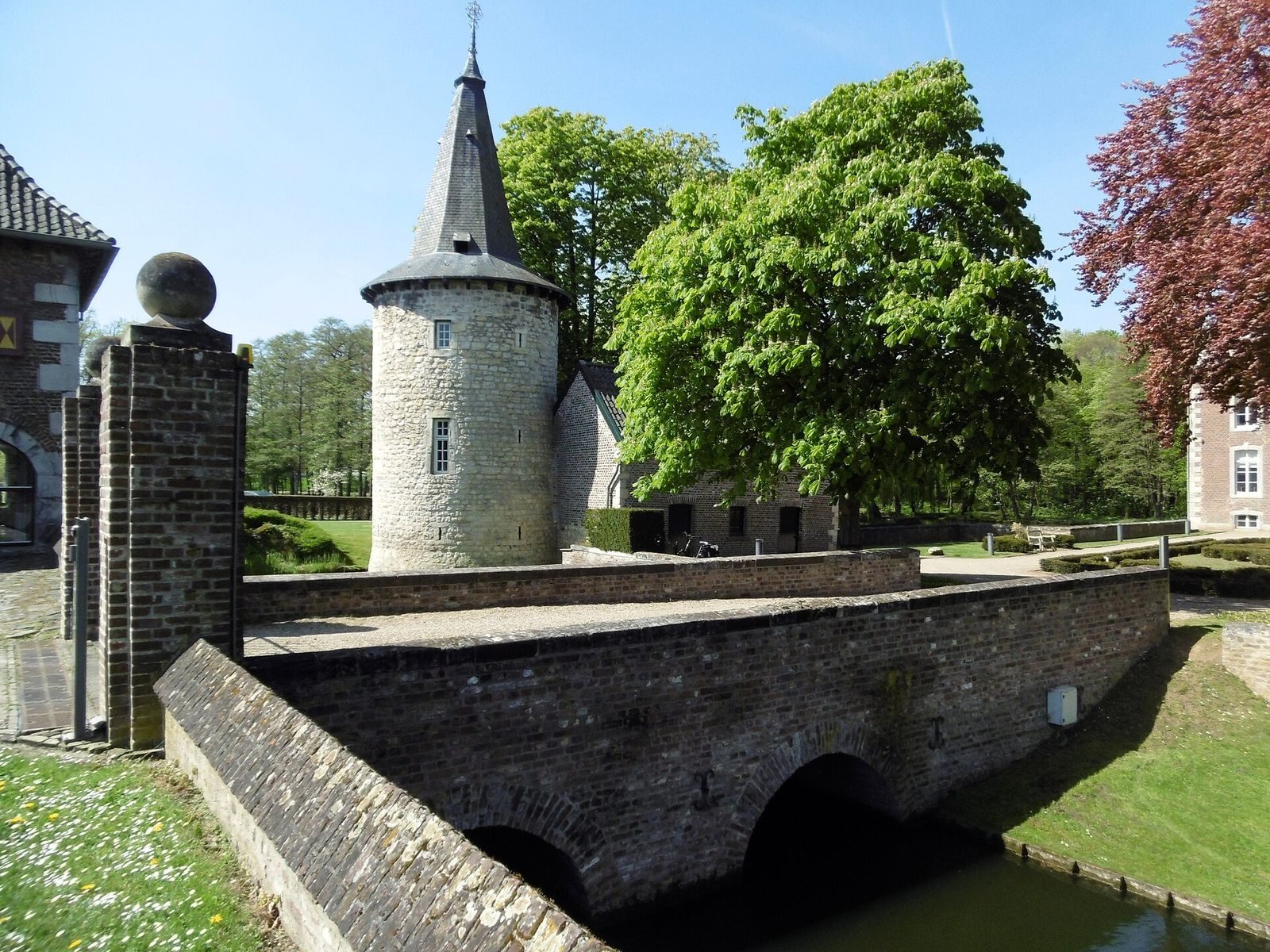
The present castle incorporates remains of the medieval fortress. Two round towers, probably once positioned at the corners of the outer bailey, and part of a defensive wall survive. The towers are built of local Kunrader stone.
Outer bailey and farm
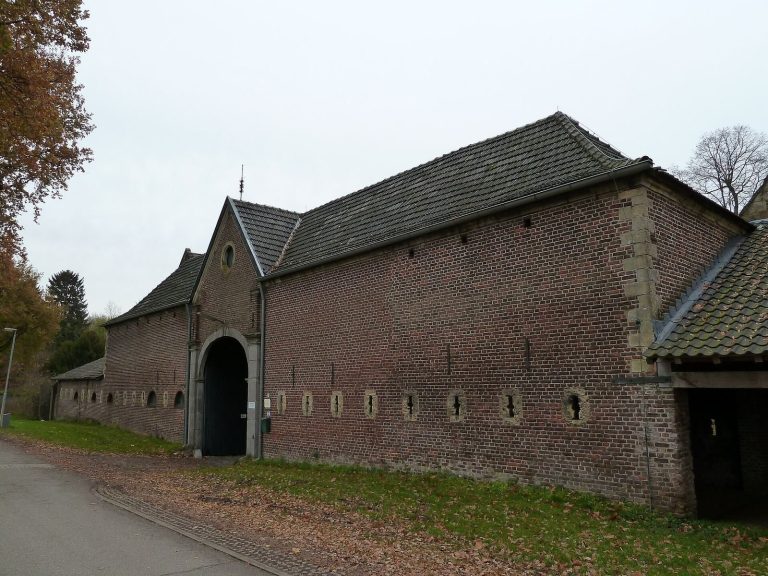
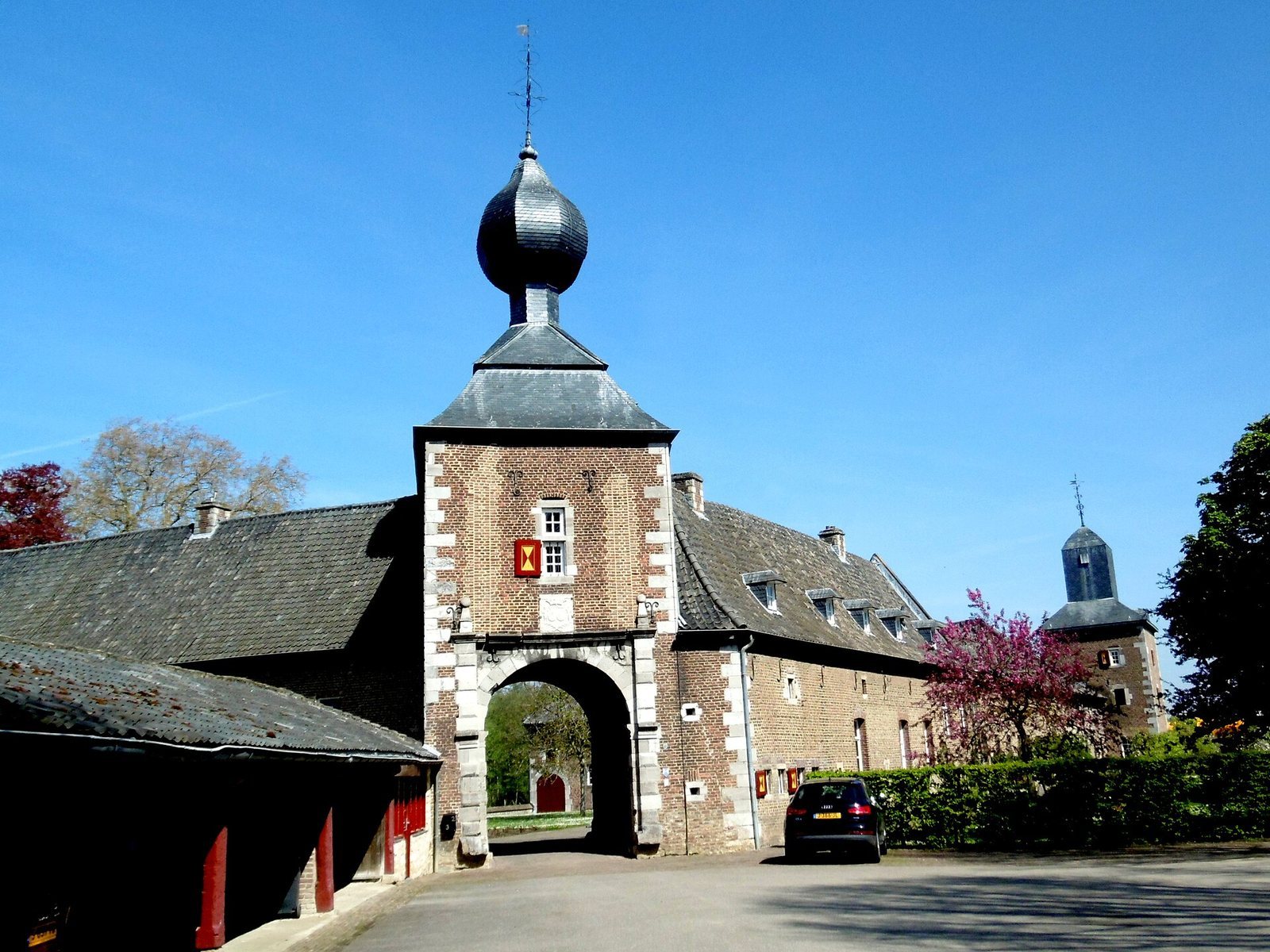
The outer bailey has a distinctive entrance gate topped by a tower with an onion-shaped spire. The associated castle farm is also part of the complex.
Nineteenth-century depiction
A painting of the castle dated 1889 is attributed to Dutch painter Willem Hendrik Teding van Berkhout. The complex is depicted with three towers.