Viktring Abbey: A Cistercian Monastery in Austria
Site at a Glance
- Popularity
- Medium
- Country
- Austria
- Primary era
- Medieval
- Eras represented
- Medieval, Early Modern, Modern
- Civilizations
- Austrian Empire, Habsburg, Habsburg Austria, Holy Roman Empire
- Site type
- Religious
- Remains
- Monastery
On this page13 sections
History
Foundation and medieval development
Viktring Abbey is a former Cistercian monastery in Austria, founded in 1142 by monks from Villers-Bettnach Abbey. The Cistercians were a Catholic monastic order that developed within the Benedictine tradition. Count Bernhard of Spanheim and his wife, Kunigunde, supported the foundation with a donation. The monks chosen for Viktring left Villers-Bettnach on 20 April 1142, and Eberhard became the first abbot on 13 May 1143. Bernhard also served as the abbey’s first lay advocate, a secular representative and protector. The name Viktring may come from the Latin word for victory or from the local place-name Vitrin.
Villers-Bettnach was Viktring’s mother house, the monastery that established it, while Morimond was the primary abbey of its Cistercian branch. Archbishop Eberhard II of Salzburg consecrated the abbey church in 1202. In 1234, Duke Bernhard von Spanheim established a daughter abbey at Kostanjevica in the March of Carniola, a medieval border territory in what is now Slovenia. From about 1220, Viktring acquired property in Maribor and became a major urban landholder. By 1488 it owned 28 houses there, as well as vineyards in Lower Styria, a historic region largely in present-day Slovenia. The abbey sold its Carniolan property in 1608.
John of Viktring, a chronicler and confidant of Duke Henry of Bohemia, became abbot in 1312. A major fire destroyed most of the abbey in 1411. The Cistercian General Chapter, the order’s governing assembly, authorized extensive rebuilding at Viktring and in its dependent parishes. In 1447, King Frederick III of Habsburg gave the abbey church an altar.
Early modern abbey
Matthäus Lang von Wellenburg served as abbot from 1502 to 1523 or 1524. Amid internal rivalries, he was appointed from outside the order as an imperial favorite and helped revive the abbey’s economy. He became bishop of Gurk in 1505 and archbishop of Salzburg in 1519. In the eighteenth century, the monastery underwent extensive Baroque refurbishment. Abbot Benedikt II Mulz, who held office from 1720 to 1763, began major rebuilding of the monastic buildings and prepared imperial rooms for high-ranking visitors.
The abbey’s economy included about 20 fishponds. At the time of its suppression, its Viktring farm held 64 Joch of arable land and 123 Joch of meadows and pasture, alongside woodlands and the Maierniggalm. A Joch was a regional measure of land area whose size varied. The farm also kept horses, cattle, pigs, sheep, and poultry.
Suppression and textile industry
Reforms under Habsburg ruler Joseph II led to Viktring’s suppression by decree on 19 May 1786. The monks were removed on 1 August, while the church and former prelature, the monks’ residence and administrative building, remained with the parish. The abbey farm continued operating until its dissolution in 1795, after which it passed to the imperial Religious Fund. In 1834, the Princes of Liechtenstein acquired it with the lordship of Viktring.
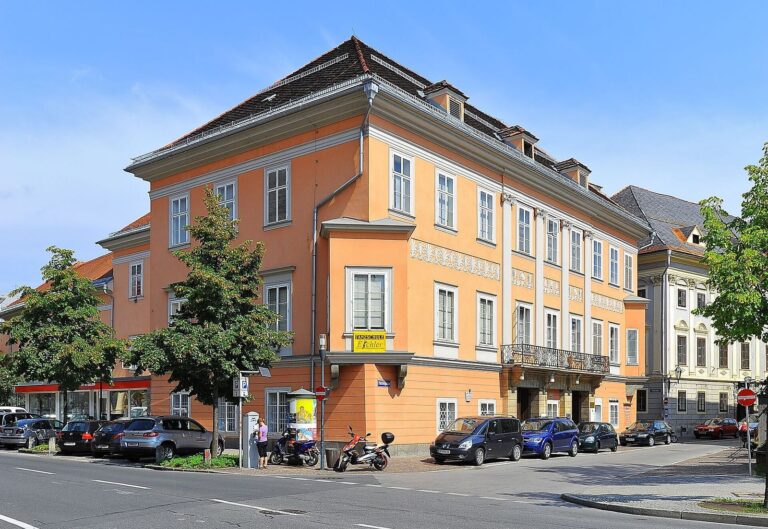
On 10 November 1788, Johann and Christoph Moro bought part of the former abbey estate at auction and established a textile factory. By 1897 the Moro family owned the entire abbey. Under Franz Ritter von Moro, the enterprise became one of Europe’s leading fine-cloth factories and at its peak employed as many as 800 people. Emperor Francis I and Empress Caroline Augusta visited in 1816; Emperor Franz Joseph visited in 1850 and 1852. The factory employed 86 workers in 1880 and supplied red cloth to the London Guard by the mid-1880s. In 1885 it introduced a health-insurance scheme funded in part by workers’ contributions.
Sales declined after 1910. Production nearly stopped with the mobilization of 1914, and wool supplies dried up from 1916 because the factory did not supply the army. A leather factory established after the First World War closed in 1923, and small apartments were then created in its building. In 1925, Adeline von Botka, the last Moro family member, sold the textile factory to Baron Josef Aichelburg-Zosenegg.
Twentieth-century transformations
Aichelburg-Zosenegg died by suicide in 1942, and the firm was taken over by the Hamburg Aero-Maschinen- und Werkzeugfabrik. Parts of that company’s operations moved to a Viktring factory building in 1943–44. British occupation authorities released the facility in 1946. A later owner built a new factory, but the business went bankrupt during the 1960s. In 1963, the Austrian federal government acquired the western textile-factory premises and converted them into a weapons and equipment store for Landwehr battalions, a territorial-defence force. The stores closed in 1998 after the territorial-defence system ended.
The Austrian Republic acquired the abbey buildings in 1970. A secondary school with a special emphasis on music education opened in the monastery buildings in 1977 and became independent in 1980; its official opening took place in 1999. The abbey church is now a subsidiary church of the Viktring-Stein parish in the Diocese of Gurk-Klagenfurt. The parish’s official languages were German and Slovene until 1938. Factory additions around the abbey were removed in the 1990s. A factory building later used as the Vitrino Designhaus cultural and events venue was sold in 2006 and demolished; housing was built on that site in 2007.
Remains
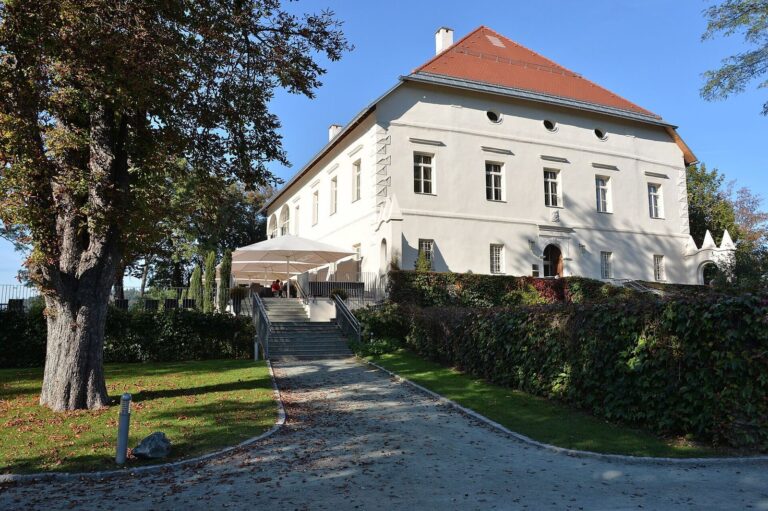
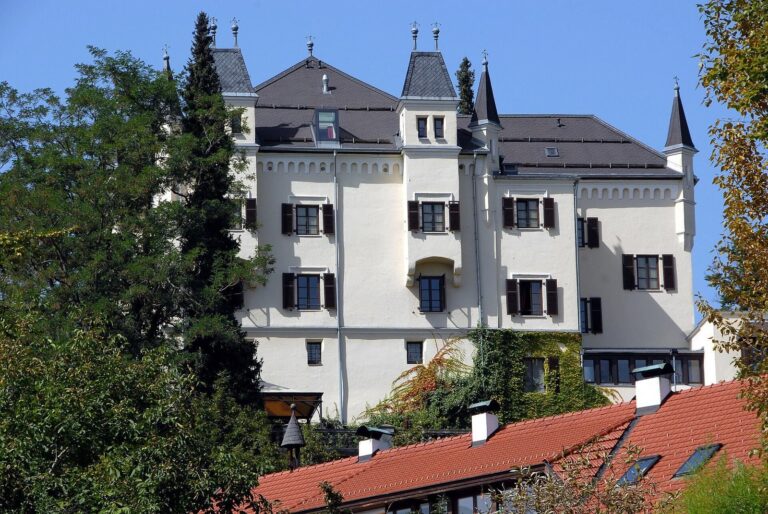
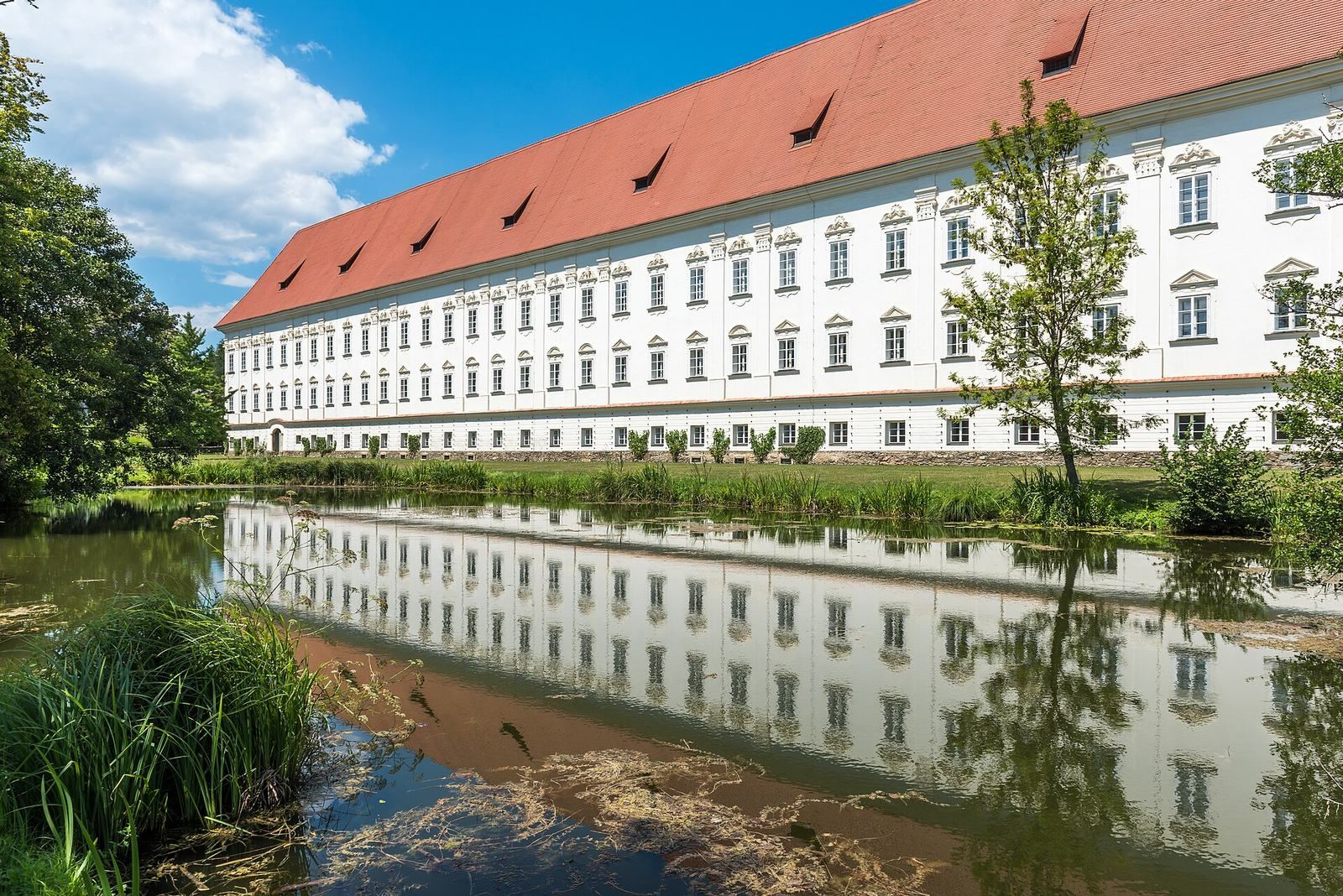
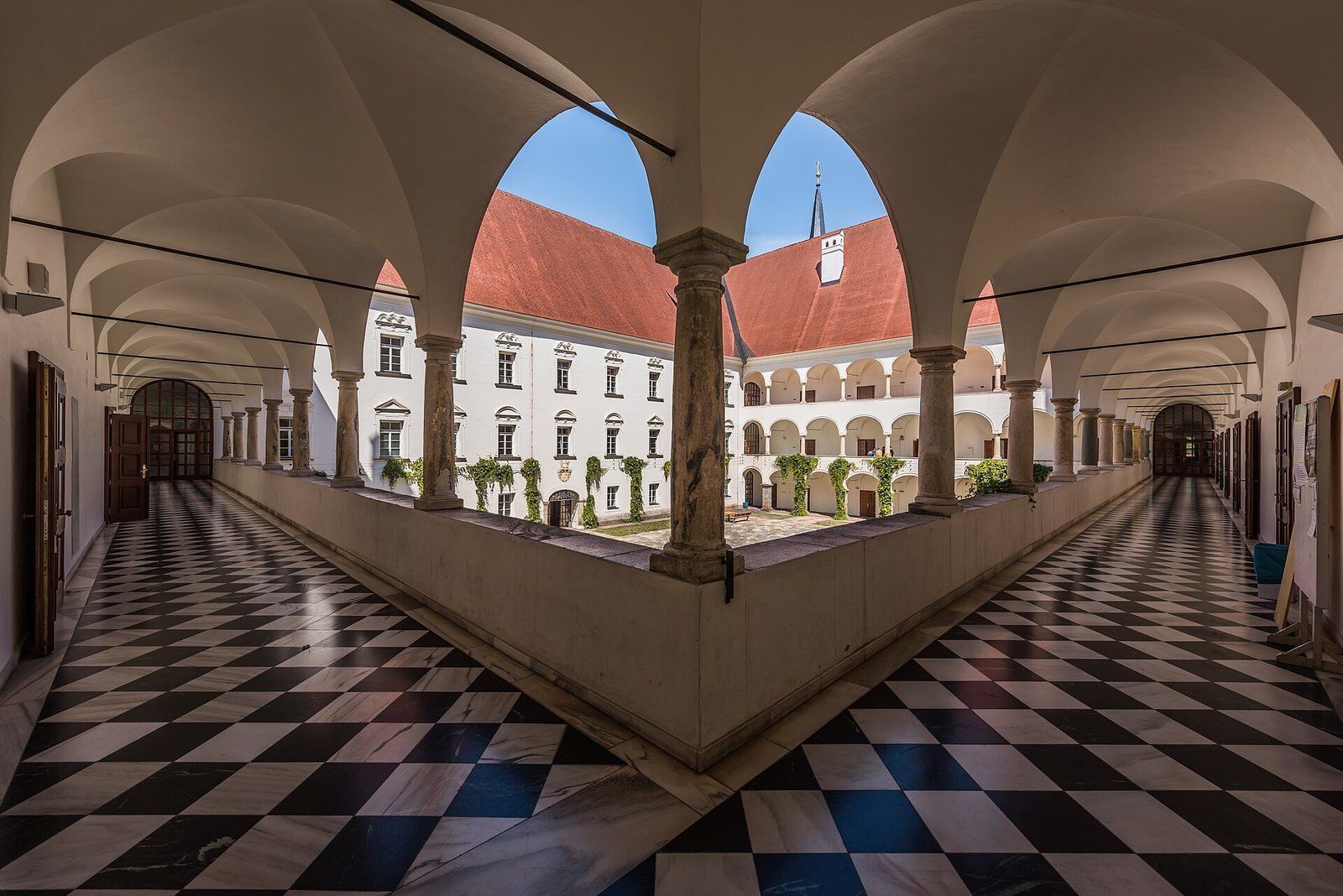
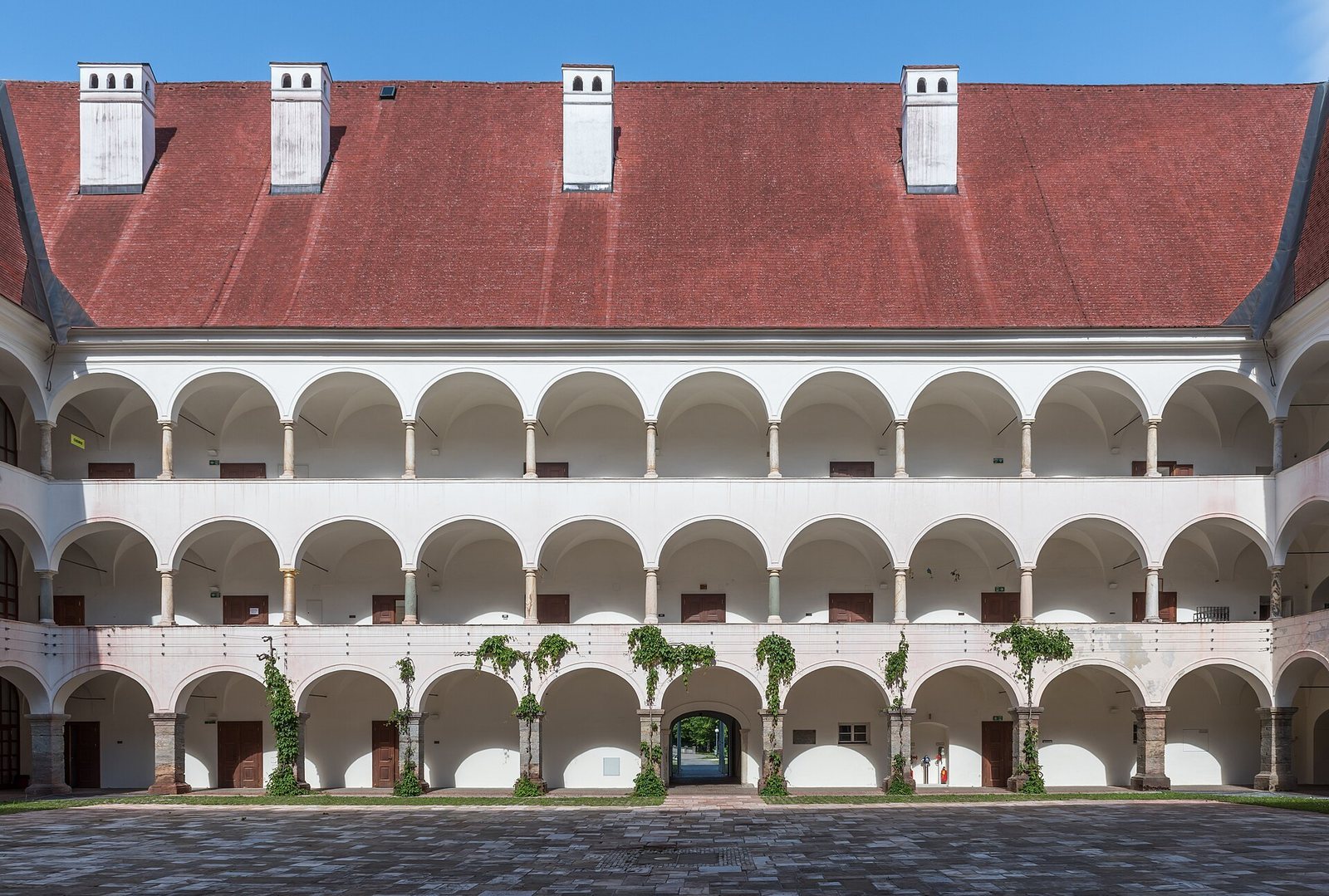
The abbey complex brings together the church and former monastic buildings, an arcade courtyard with arched passages, and a Marian courtyard with a fountain. The former abbey farm lies west of the monastery, opposite the prelature. The surviving buildings and features reflect both the monastic estate and its later industrial use.
Abbey church and monastic spaces
Church
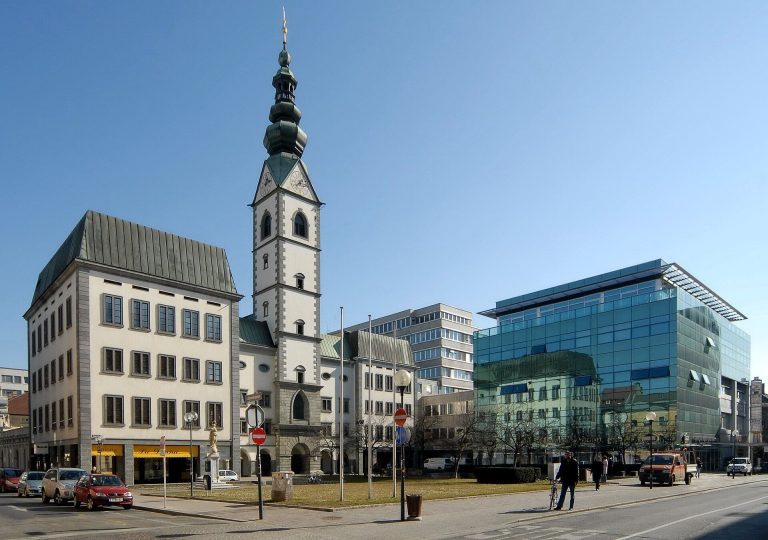
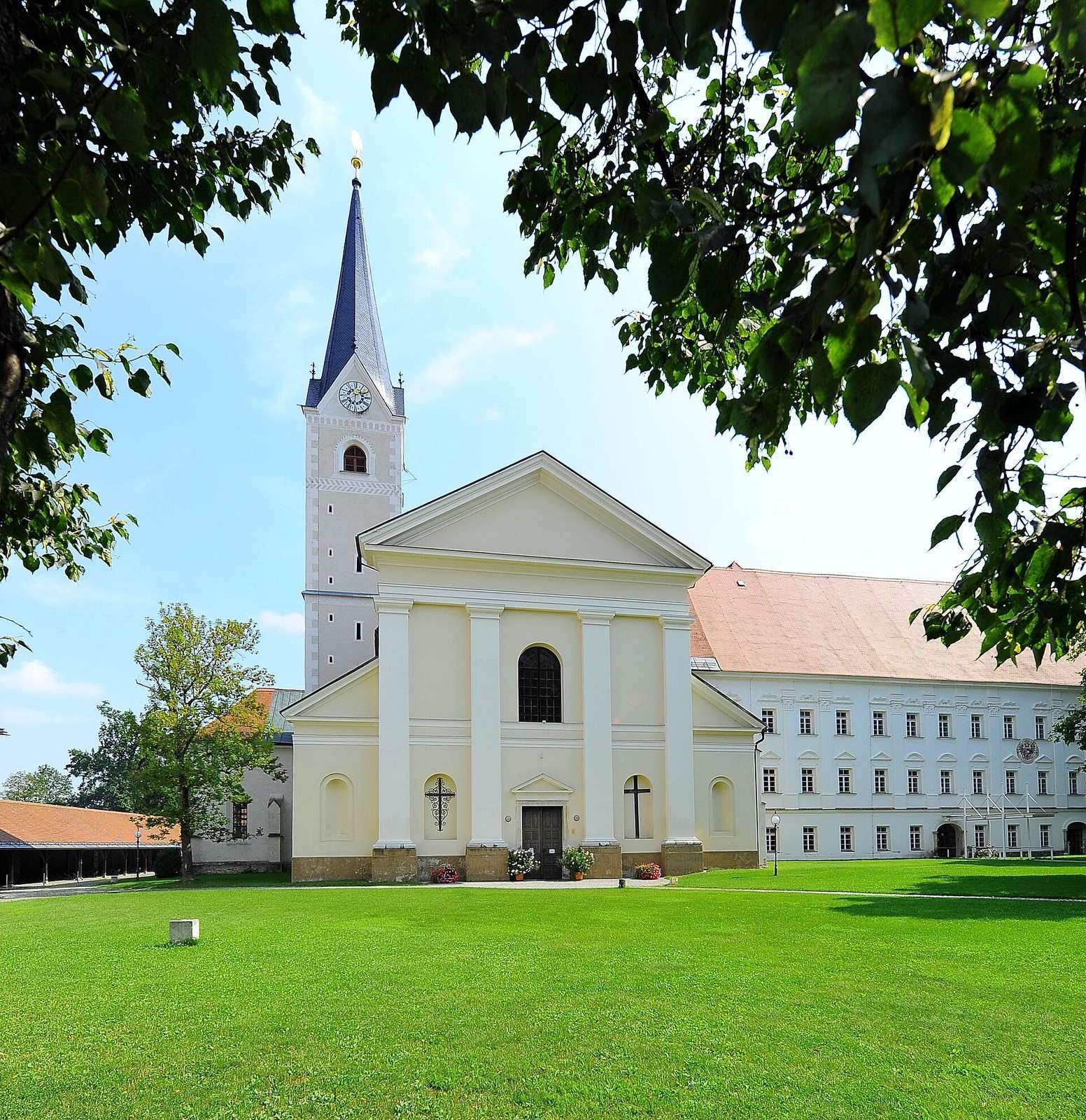
The church follows Cistercian design. In the first half of the fourteenth century, a Gothic choir was added to the sanctuary, a large tower was built, and the Bernhard Chapel was placed beside the north transept, the crosswise part of the church. In 1843, the western half of the church, comprising five sections of the nave, was demolished and replaced by the present Neoclassical façade. The church contains a five-tier Baroque high altar depicting the Coronation of the Virgin Mary. A Lenten cloth, used during Lent to veil an altar or other sacred objects, has been in the church since 1992.
Chapel and former library
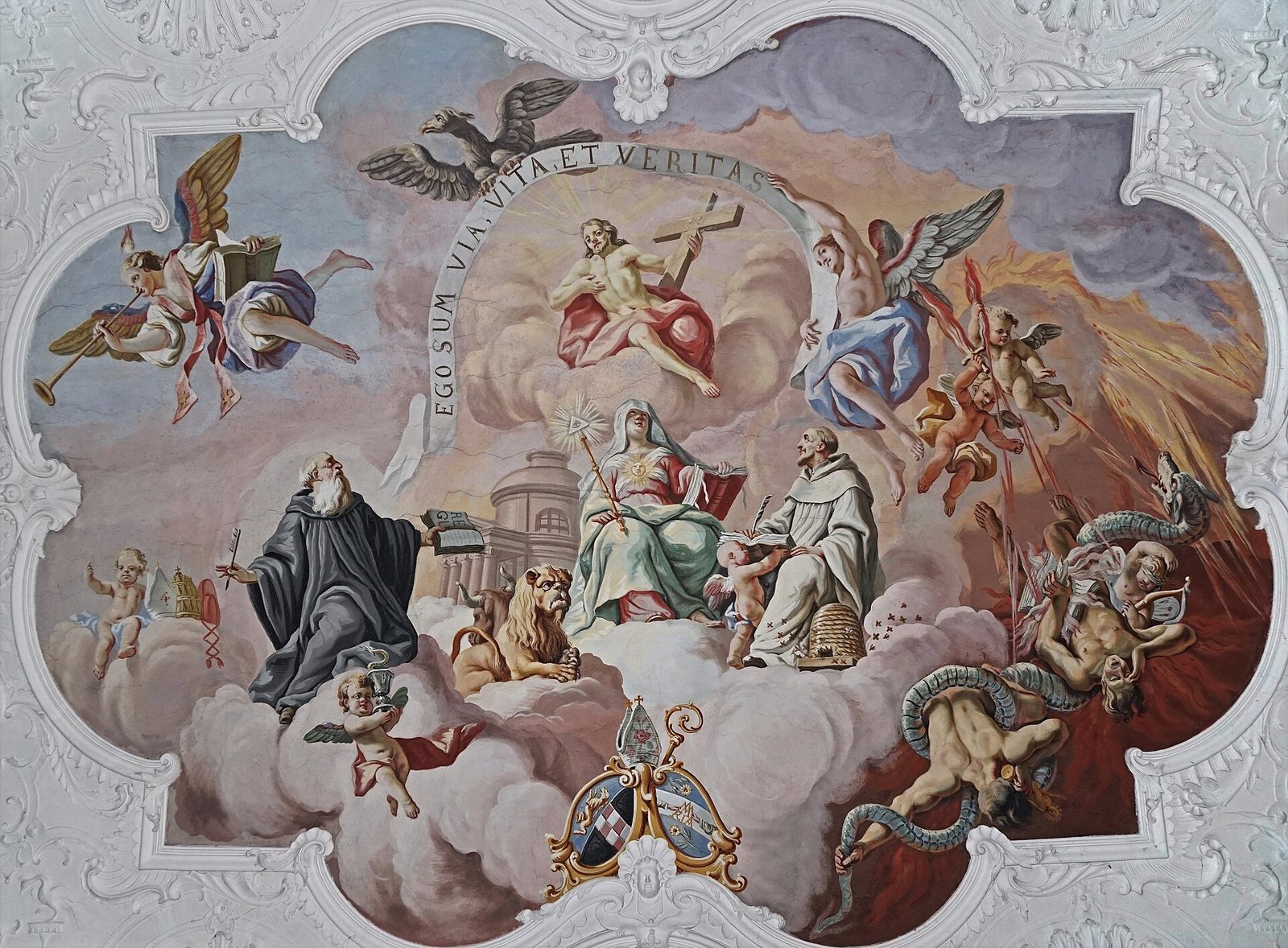
The Bernhard Chapel has a net vault, whose ribs form a net-like pattern. Its fields carry fifteenth-century frescoes, uncovered between their discovery in 1991 and the completion of exposure in 2001, then restored. The chapel also holds the surviving figurative tombstone of Abbot Gerhard II, who led the abbey from 1448 to 1467. In the former library, a vault with curved sections called lunettes carries a ceiling fresco painted by Johann Gfall around 1765. It depicts Faith with Saints Benedict and Bernard; the lunettes show the Apostles, Evangelists, and Church Fathers.
Former abbey farm and water system
Marhaus
The Marhaus is the oldest building in the former abbey farm, and documents concerning it predate the monastery. Local tradition connects it with a Slavic nobleman in the period of the Principality of Carantania, possibly as early as the seventh century. Another proposed interpretation identifies it as a Roman posting station, which would place its origins in the fifth century; neither early date is established. The abbey acquired the farm around the time of its foundation, and the Marhaus later formed part of its provisioning complex.
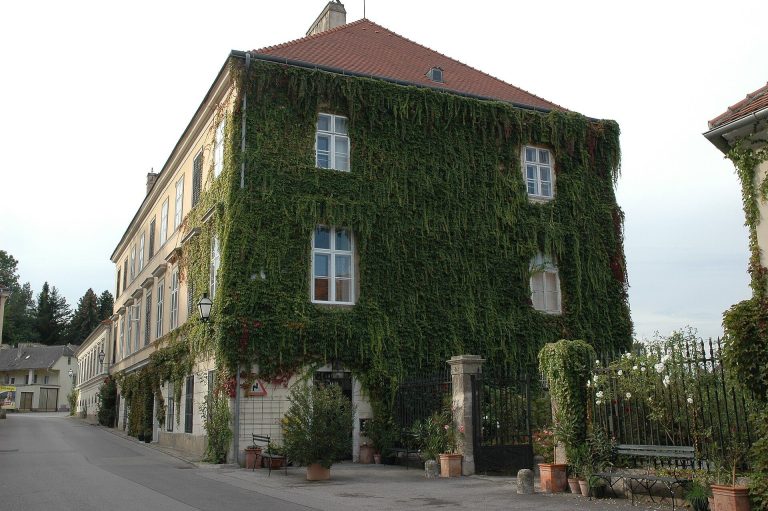
The Marhaus is a massive structure with a columned hall and a markedly crooked column in its cellar. Its thick walls use conglomerate and various stream stones; around some windows, the conglomerate is left exposed to show the historic masonry. The building has been renovated several times, including in the 1930s and in a major campaign from 1986 to 1991 that renewed its façade, vaulting, and roof. A date engraved on its surviving eastern chimney marks extensive renovation in 1857. Artists including Karl Truppe and Theodor Botka painted its walls. The building remains privately owned by the Kulterer family and is used for apartments.
Farm buildings
The farm complex stood directly opposite the prelature. A large layout described in 1688 extended from the Marhaus to present-day Stift-Viktring-Straße. A passage ran beneath the complex; a wall and defensive tower faced the prelature, while a separate group beyond the passage housed the Schlosswirt inn by the fifteenth century. The wine cellar and grain store lay north of the main buildings. A 1789 site plan shows stables, animal shelters, wagon sheds, a beet cellar, and an attic used for threshing and hay storage. It also places a mill and washhouse west of the Marhaus. By then, the former inn buildings included a chapel, brewery, and dwellings for servants and schoolteachers, while the former grain store contained a classroom and fruit press.
A major fire in 1969 destroyed much of the farm complex, especially the stable between the Marhaus and the passage. The Marhaus survived, along with part of a stable beside its eastern side and the middle stable in front. Other remaining structures include the former grain store and wine cellar, the Moro fire brigade’s equipment house, and the washhouse. The former Schlosswirt complex was demolished in the 2000s.
Water-power station
The historic Moro water-power station, in a building known as the Wasserschloss, dates to 1910 and originally supplied electricity to the factory. Water held in the factory pond flowed through an underground channel to the turbines. The original water right extended from Lake Keutschach to the Treimischer ponds; the right still in force runs from the Great Treimischer Pond to the Wasserschloss. The building and power station remain in the Kulterer family’s ownership.