Haus Loburg: A Westphalian Manor House in Germany
Site at a Glance
- Rating
- 4.5
- Popularity
- Medium
- Country
- Germany
- Primary era
- Early Modern
- Eras represented
- Early Modern, Modern
- Civilizations
- Holy Roman Empire
- Site type
- Domestic
- Remains
- Manor House
On this page7 sections
History
Haus Loburg is a manor house in the Sirksfeld farming district near Coesfeld, North Rhine-Westphalia, Germany. Then known as Loburg, it was built between 1550 and 1560 by the Westphalian noble family von Graes, which owned the estate for more than three centuries. Tradition traces its origins to Charlemagne, the Frankish king and emperor who ruled much of western and central Europe from the late eighth into the early ninth century.
The Salm-Salm family
In 1912, Prince Alfred of Salm-Salm bought the house for his son, Franz Emanuel Konstantin, and Franz’s wife, Maria Anna von und zu Dalberg. Their descendants continue to live at Loburg.
Wartime use and rebuilding
From January 1945, the house served as an auxiliary hospital for St. Vincent Hospital. A bombing attack on 10 March heavily damaged the manor and destroyed its west wing. Seven people died, including children Walter Ricker and Thekla Kösters and five patients. The gate wing was rebuilt between 1946 and 1949.
Remains
Estate layout and grounds
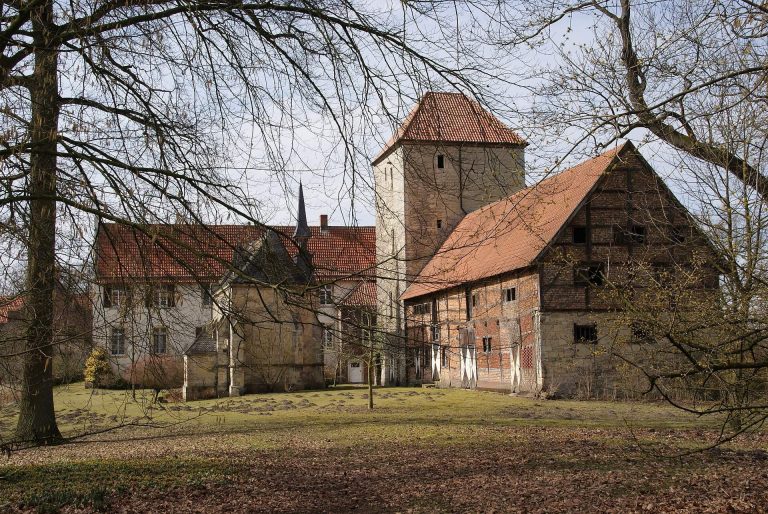
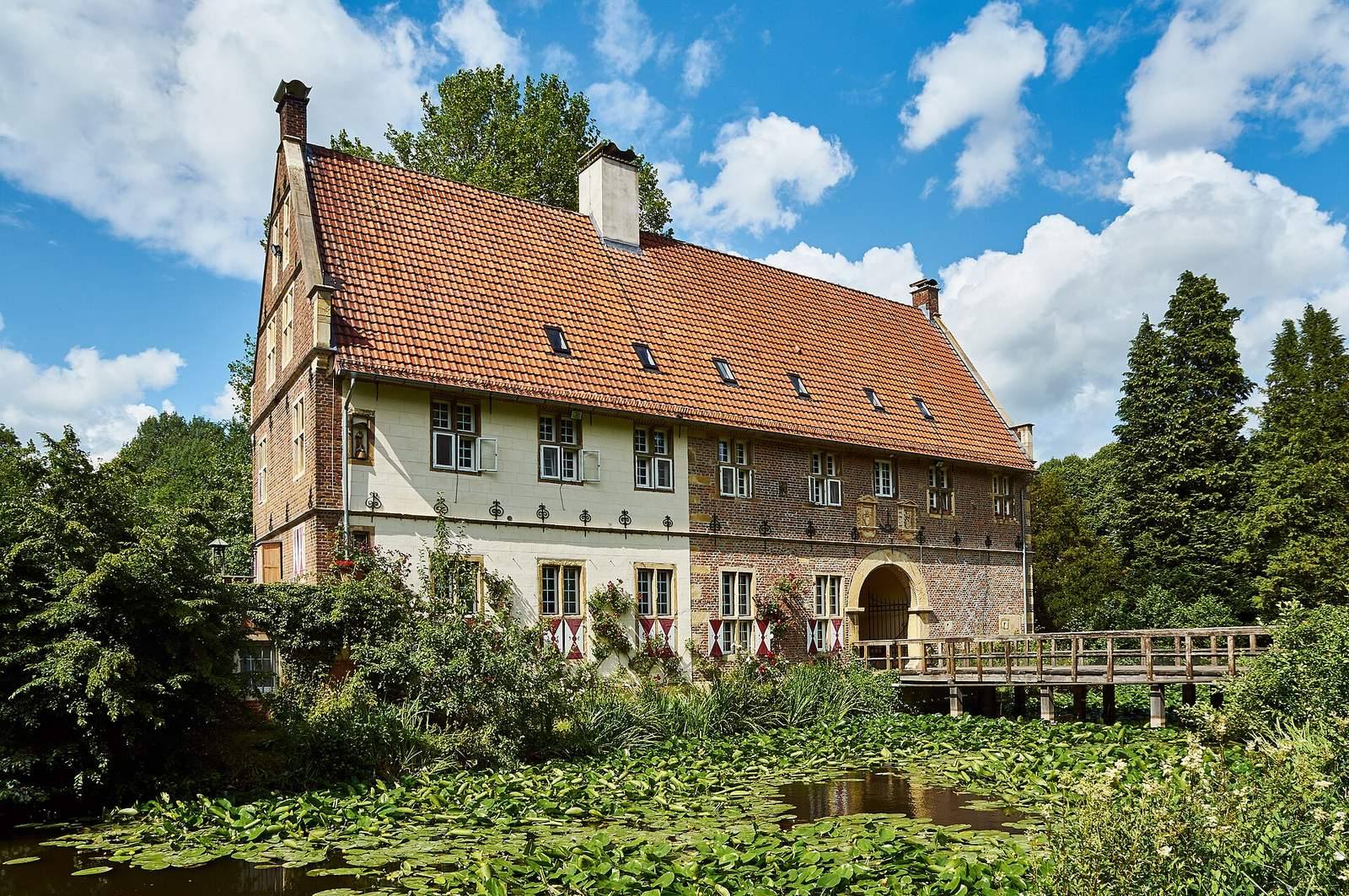
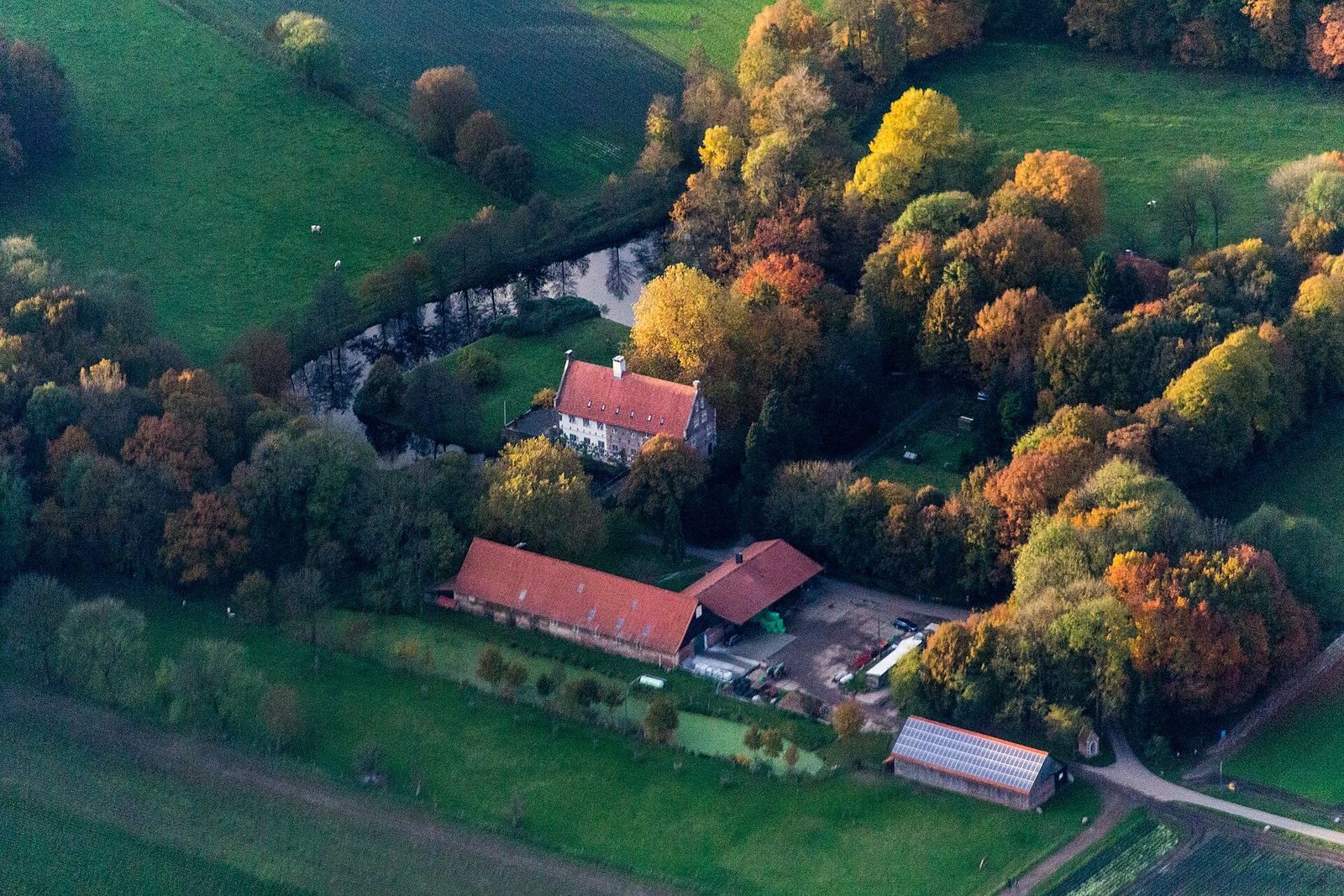
A moat surrounds the old noble seat, while agricultural buildings stand around the estate, which retains an apparently defensive appearance. The grounds comprise about 80 hectares of fields and meadows used to grow vegetables and grain and to keep livestock.
West-wing cellar and chapel
The cellar of the destroyed west wing survived, and its roof now serves as a terrace. The chapel also remained entirely intact.
Gate wing
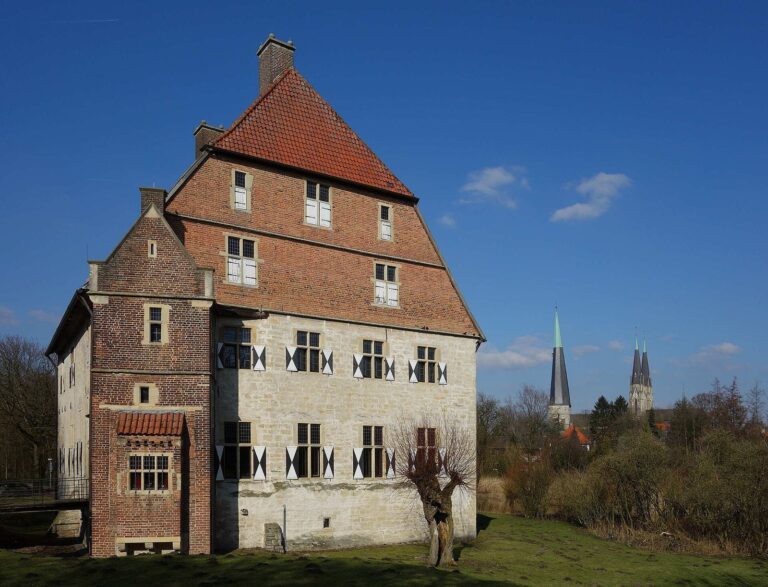
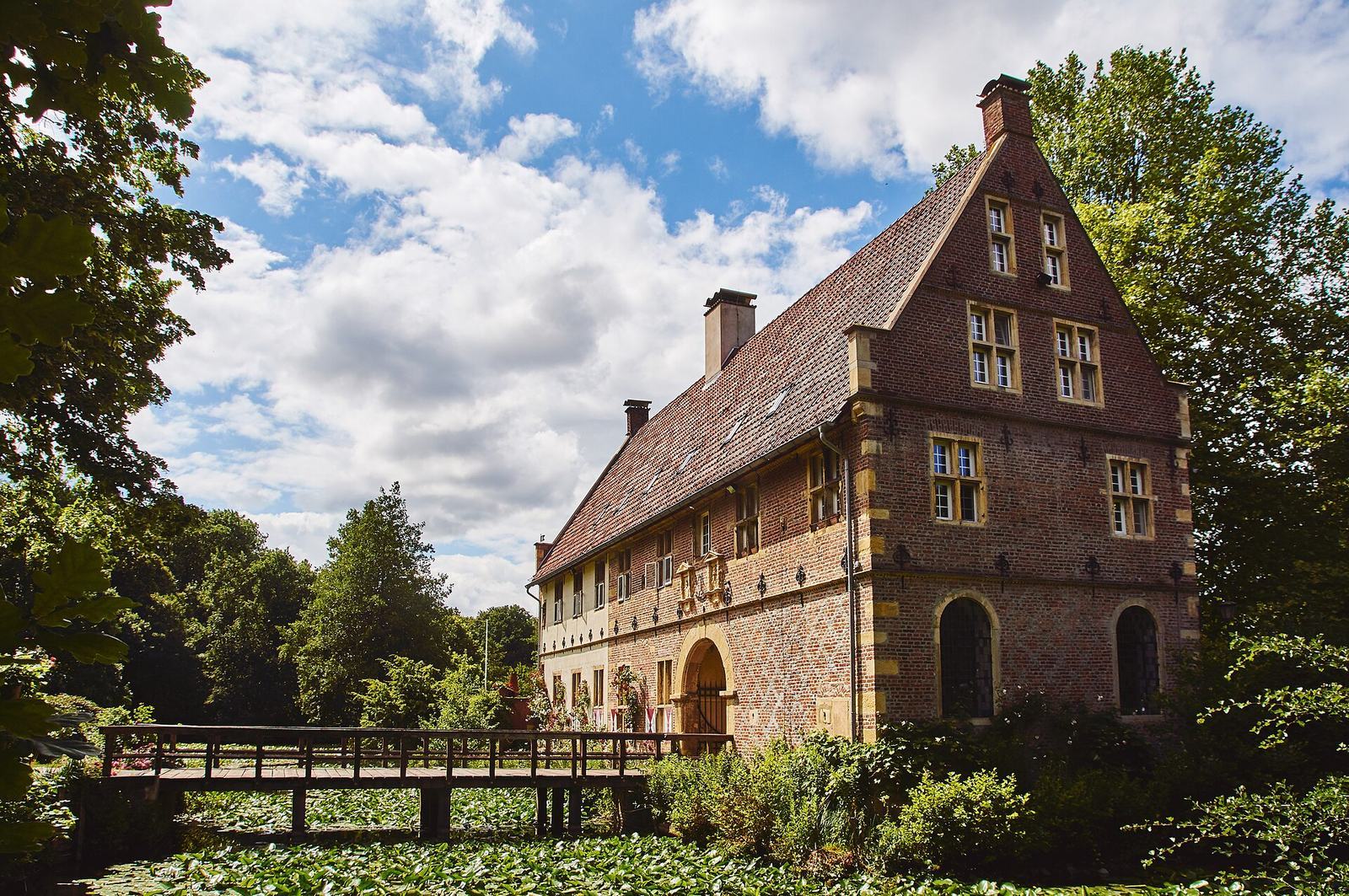
Rebuilt as a two-storey brick structure, the gate wing has dressed-stone details and a Renaissance-style stepped gable, whose profile rises toward the roof peak in a series of steps.