Mamre: A Biblical Site and Pilgrimage Centre near Hebron
Site at a Glance
- Popularity
- Very High
- Country
- Palestine
- Primary era
- Classical
- Eras represented
- Classical
- Civilizations
- Byzantine, Roman
- Site type
- Religious
- Remains
- Sanctuary
On this page12 sections
History
Mamre is a biblical place associated with Abraham and a later pilgrimage centre, identified with several sites near Hebron in Israel. Its precise location is uncertain, although Ramat el-Khalil, about 4 km north of historic Hebron, is the best-known identification. The biblical narrative places Abraham’s camp and altar at Mamre after his separation from Lot and recounts three visitors, presented as angels, promising that Sarah would have a child. Some textual traditions refer to one great tree rather than a grove. Mamre may also have been the name of an Amorite leader associated with Abraham.
Early identifications
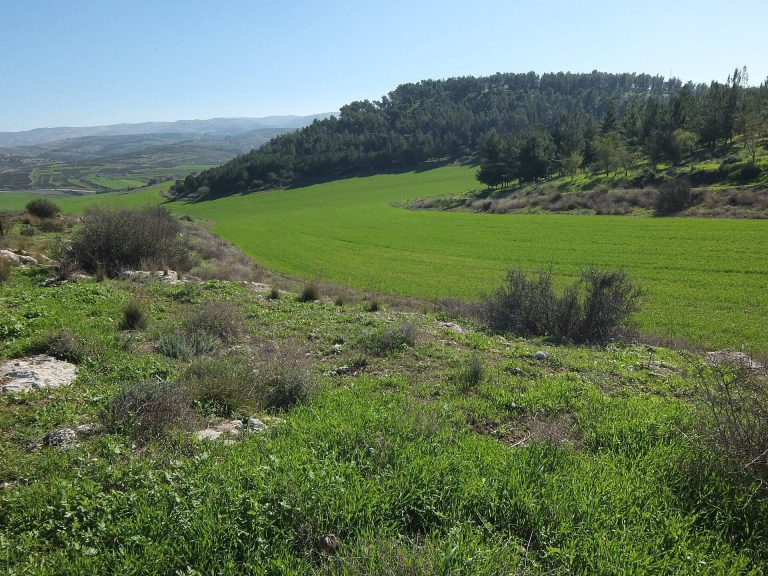
Several places near Hebron have been proposed as Mamre. Khirbet Nimra has been suggested as a Persian- or Hellenistic-period location, partly because its name may derive from Mamre, but this identification remains hypothetical. Ramat el-Khalil became associated with Mamre in the Herodian and Byzantine periods. Other proposals include Deir el-Arba’een and Khirbet es-Sibte; the sequence of traditions does not establish that all these places were successive locations of one site.
At Ramat el-Khalil, Early Bronze Age pottery may point to cultic activity around 2600–2000 BCE. The site’s later chronology is disputed. Finds have been assigned to Iron Age IIc, the Hellenistic period and later Roman, Byzantine and Crusader phases. Archaeologist Yitzhak Magen argued that some material previously classified as Iron Age or Hasmonean, the dynasty that ruled Judea before Herod, belonged instead to the Byzantine period or later.
Herodian shrine and Roman fair
Herod the Great, king of Judea under Roman authority, shifted the Mamre tradition from the proposed earlier location at Khirbet Nimra to Ramat el-Khalil, about 2.5 km away. As he promoted Hebron as a centre of worship linked to Abraham, he established one shrine at Abraham’s tomb and another at the place associated with the patriarch’s residence and his meal beneath a tree with three visitors. Herod’s family was Idumaean and had converted to Judaism relatively recently; both Jews and Idumaeans traced their ancestry to Abraham.
The Herodian enclosure became a place of sacrifice and pilgrimage for Jews, Christians and pagans. Josephus preserved a tradition that the revered tree was as old as the world and could withstand the flames of animal sacrifices. Ramat el-Khalil also hosted one of Judea’s three major fairs, held by the tree at a crossroads important to transport and communication in the southern Judean mountains. Trade accompanied religious observances, but rabbinic authorities prohibited Jewish participation because they considered the rituals idolatrous.
Forces led by Simon bar Kokhba destroyed the Herodian structure during the second-century revolt against Rome. The emperor Hadrian rebuilt it and revived the fair. A Jewish tradition preserved by Jerome connected the market with the enslavement of survivors of the defeated revolt.
Constantinian and late antique Mamre
By the reign of Constantine the Great, a Roman emperor who supported Christianity, the fair had become both a trading event and an interreligious festival. Constantine’s mother-in-law, Eutropia, objected to its pagan practices. He ordered his senior official Acacius to destroy pagan images and punish those who continued the rites. The enclosure was consecrated for Christian worship, and Constantine had a basilica, a large church building, dedicated to Saint George constructed there.
Late antique worship at Mamre included prayer, wine and incense offerings, and animal sacrifice by people of different religions. Jewish and Christian worshippers gathered in the basilica, where Jews also commemorated Jacob and David on the day after the traditional date of Christ’s birth. Visitors took pieces of the venerated tree as souvenirs until it was reduced to a stump, which remained into the seventh century. The basilica was destroyed in 614, during the Sasanian Persian conquest of Jerusalem.
Medieval and later traditions
A monastery at Mamre was still active around 670. The Russian pilgrim Abbot Daniel’s account of 1106–1108 provides the last clear medieval identification of the Byzantine church remains at Ramat el-Khalil. The proposed identification of a Crusader-period Church of the Trinity with this site is disputed. Magen considered that the church might have used the site, while historian Denys Pringle placed the church described by pilgrims at the foot of a hill, away from the undisturbed Constantinian remains at Ramat el-Khalil.
From the mid-twelfth century, accounts placed Mamre less precisely, and traditions about Abraham’s Oak shifted among locations on the route between Ramat el-Khalil and Hebron. Deir el-Arba’een was identified with Mamre from the sixteenth century into the early nineteenth, with a terebinth there associated with Abraham. Since the nineteenth century, Christian tradition has placed Abraham’s encounter with the angels at Khirbet es-Sibte. Under Islamic rule, Mamre lost its earlier role as a centre of interreligious worship and celebration, while traditions of Abrahamic hospitality also became associated with the Kaaba in Mecca.
Excavations at Ramat el-Khalil took place in 1926–1928, 1977, 1984–1985 and 1986–1988. A 2015 initiative involving the Palestinian Ministry of Tourism, the United Nations and local Muslim, Jewish and Christian youth restored the site.
Remains
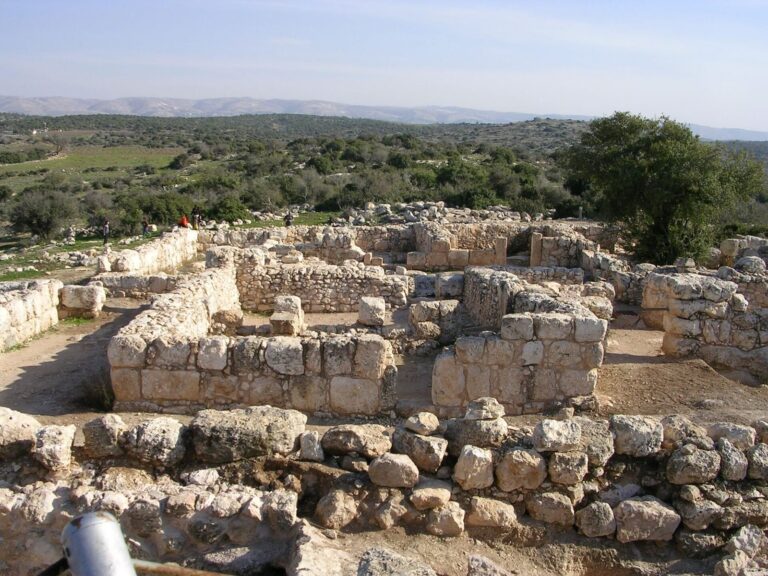
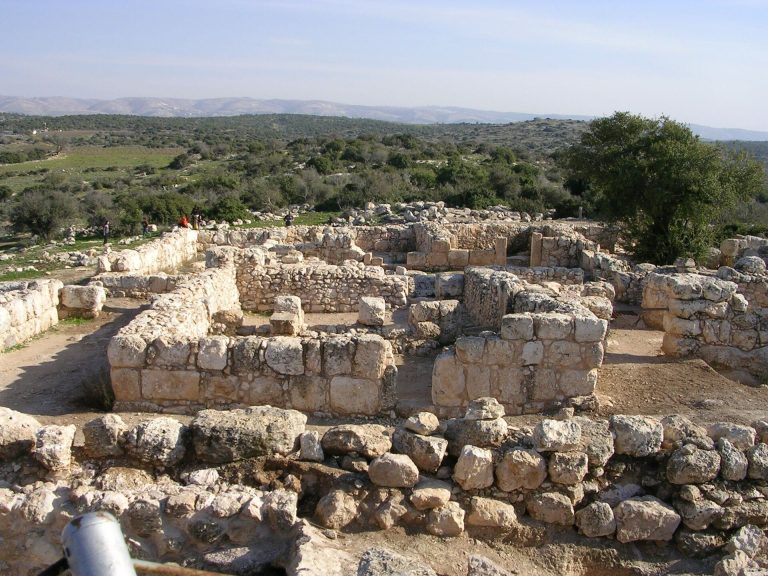
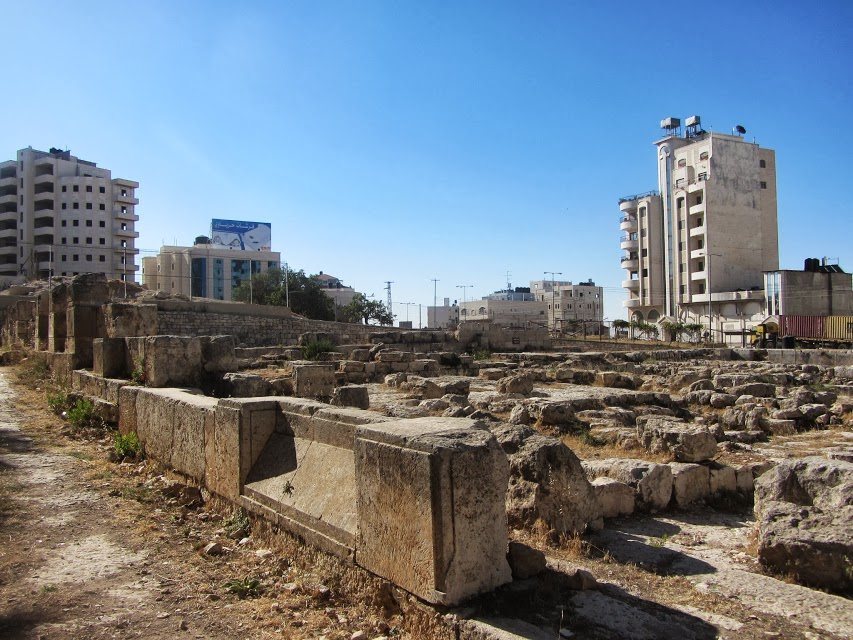
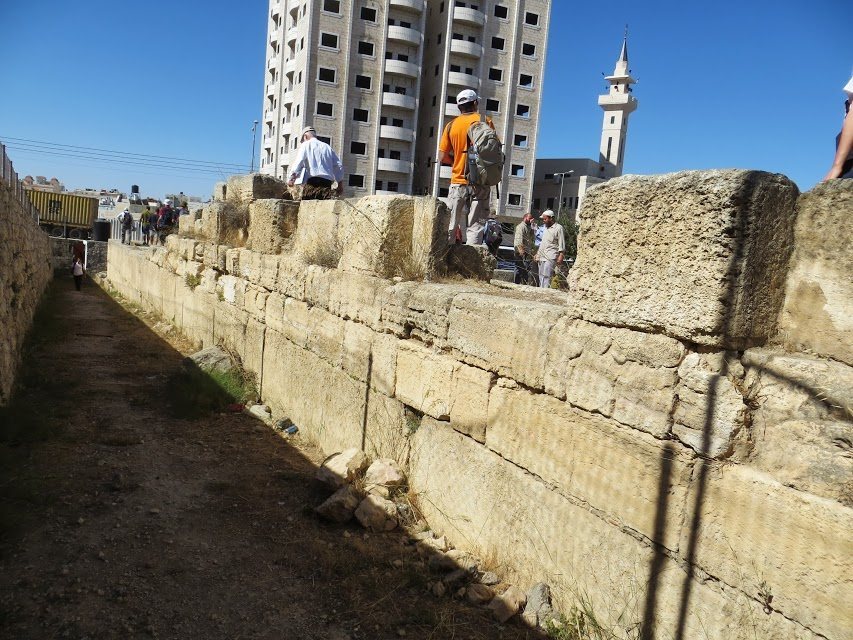
The best-known remains at Ramat el-Khalil comprise a rectangular enclosure and a Byzantine-era church along its eastern wall. The enclosure was partly roofed when adapted for Christian use, while its western area remained open.
Ramat el-Khalil
Herodian enclosure
The enclosure measures approximately 49 by 65 m and is bounded by stone walls about 2 m thick. It contains an ancient well known as Abraham’s Well, whose diameter is reported as more than 5 m, though that measurement is uncertain. A reconstruction based on Andreas Evaristus Mader’s excavations places the well, an altar and a tree in the open western area. The tree associated with ancient Mamre was a terebinth, a Mediterranean tree related to pistachio.
Basilica
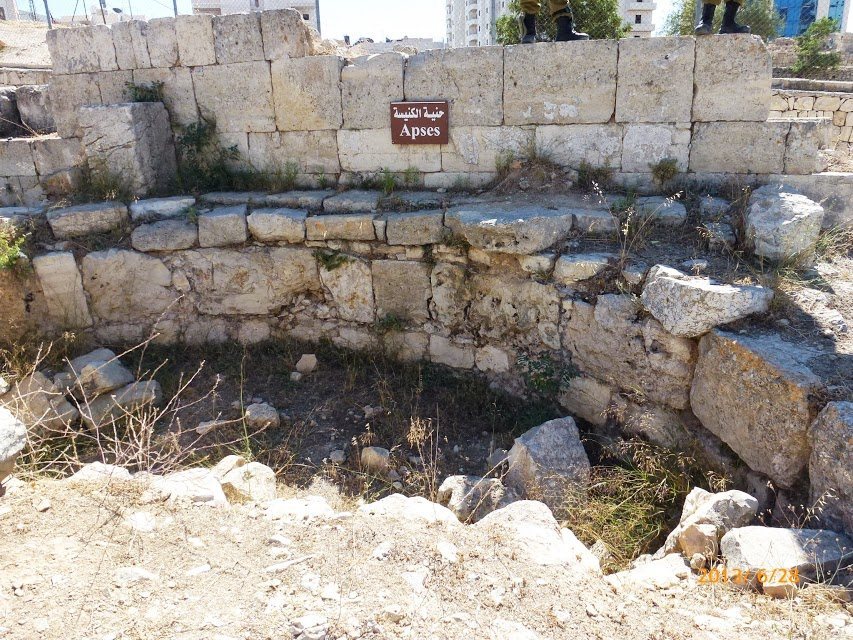
The church stood beside the enclosure’s eastern wall and had four porticoes, or covered walkways supported by columns, and an uncovered atrium, an open court. A small screen divided Jewish and Christian worshippers. The sixth-century Madaba Map depicts the church and its colonnaded atrium; a partly preserved caption refers to the terebinth and the Oak of Mamre. The Frankish bishop Arculf described a large stone church on a level hilltop, with a tree rooted between its walls beneath a roof. His account places the site imprecisely in relation to the Tombs of the Patriarchs.
Other proposed locations
Khirbet Nimra
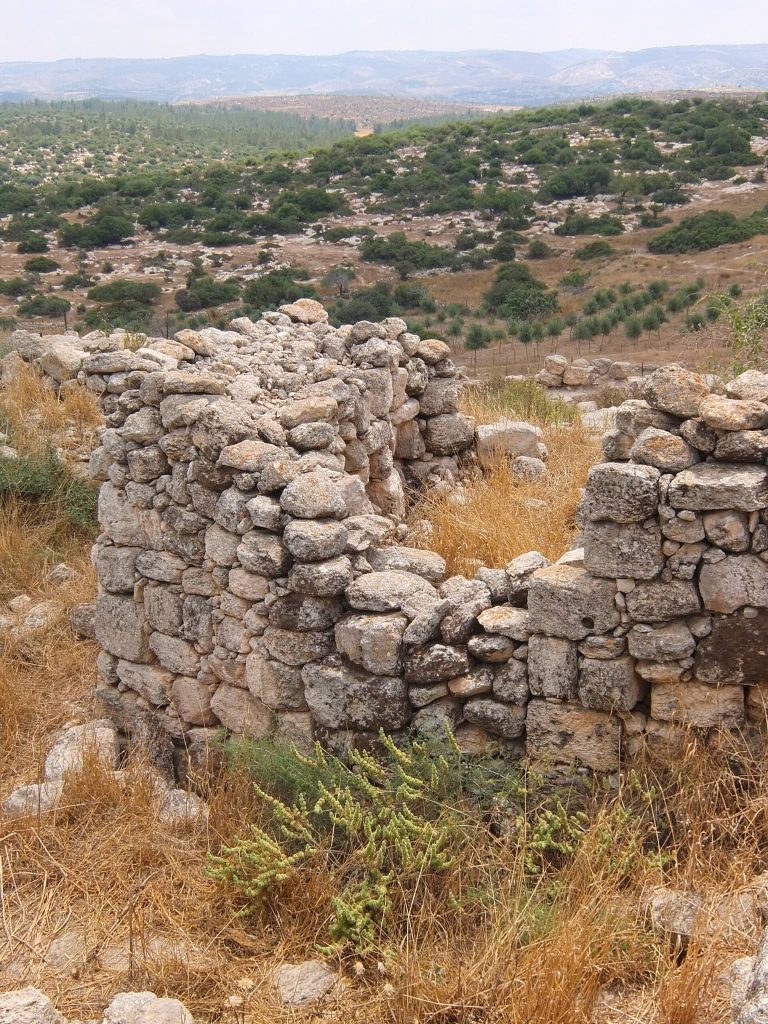
A Persian administrative building at Khirbet Nimra dates to the sixth–fifth centuries BCE. It was later adapted for agricultural production, including olive-oil and textile manufacture, and was apparently destroyed during Alexander the Great’s campaign. The proposed connection between Khirbet Nimra and Mamre rests partly on a possible derivation of the place-name.
Khirbet es-Sibte
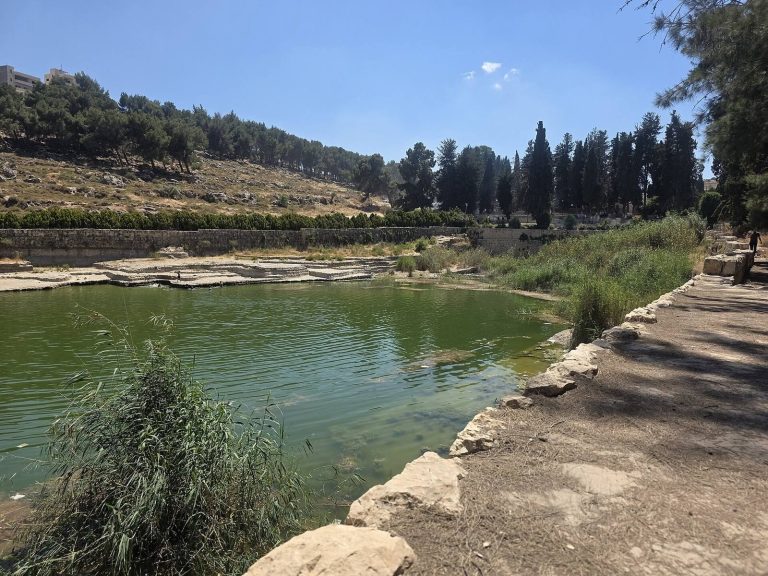
The old oak at Khirbet es-Sibte, on the grounds of a Russian Orthodox monastery, was identified by later Christian tradition as Abraham’s Oak. It is distinct from the terebinth associated with ancient Mamre. The oak collapsed in 2019.