Almond Castle: A Ruined Scottish Castle
Site at a Glance
- Rating
- 3.5
- Popularity
- Low
- Country
- United Kingdom
- Primary era
- Medieval
- Eras represented
- Medieval, Early Modern
- Civilizations
- Kingdom of Scotland
- Site type
- Military
- Remains
- Castle
On this page6 sections
History
Almond Castle is a ruined castle about 5 km west of Linlithgow, north of the Union Canal, in the Falkirk council area of Scotland; the Crawford family built it around 1470.
Livingstone ownership and renaming
Around 1540, the estate passed through marriage to the Livingstones, also identified as the MacLea family. In 1633, James Livingstone, a Scottish nobleman, became Baron Livingstone of Almond, a noble title. The castle, previously called Haining, was renamed Almond.
Forfeiture and later history
After the Jacobite rising of 1715, an armed attempt to restore the Stuart dynasty’s claim to the British throne, the Livingstone family forfeited the castle to the Crown. The family’s head held the title Earl of Callendar, a senior British noble rank. The castle was abandoned in the 1750s. In 1783, the York Buildings Company, a commercial enterprise involved in acquiring and selling Scottish estates, sold the ruin to William Forbes.
Historic Scotland listed Almond Castle as a Category B building until 2015, a category for buildings of regional or more than local importance. The site is protected as a scheduled monument, a place legally protected for its archaeological or historic interest.
Remains
The main castle
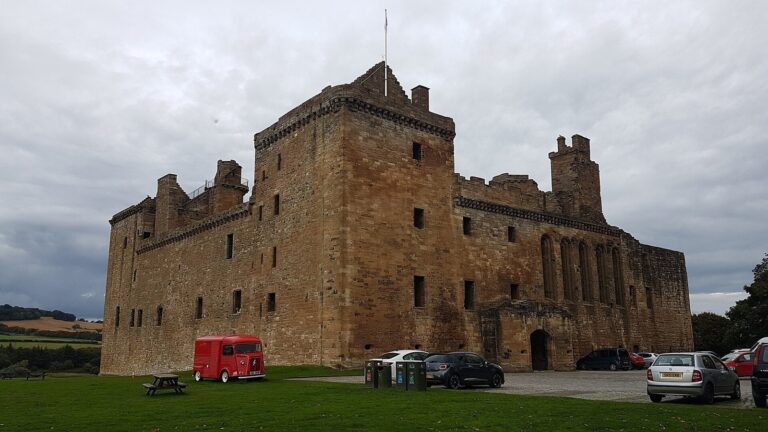
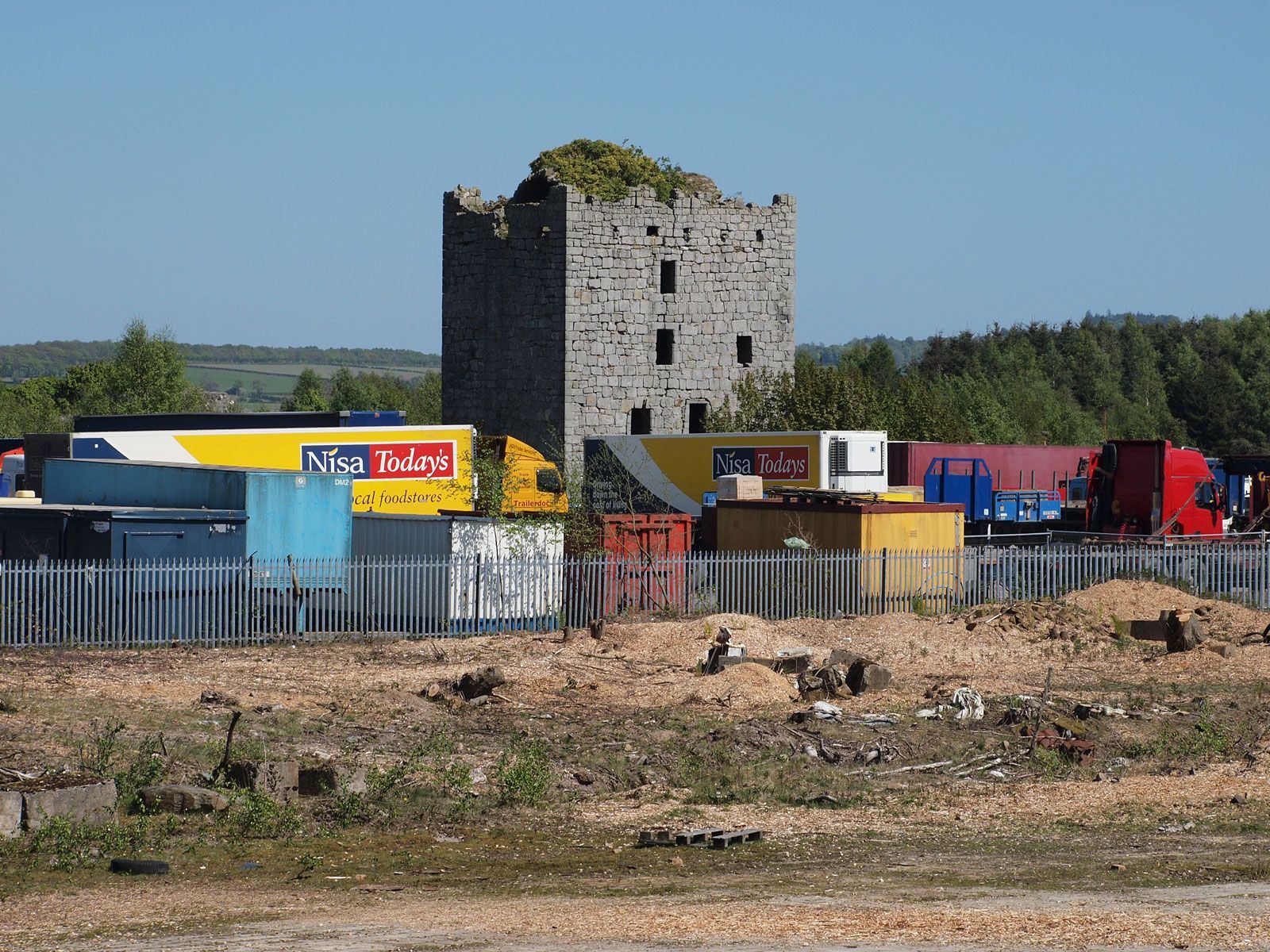
The castle survives as an unsound ruin with an L-shaped plan. It had four full storeys and a garret, a room or space in the roof, above a basement with a vaulted, or arched, ceiling. The hall and entrance were on the first floor, above ground level. An entrance on the long southeast face led to that floor, while a kitchen occupied a wing.
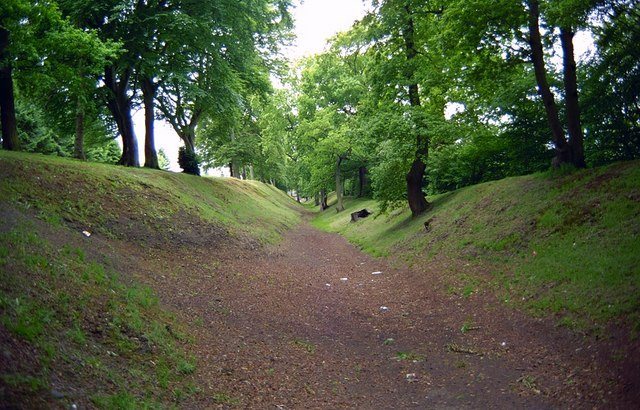
Extensions and courtyard
The Livingstones added an extension to the southwest around 1540, followed by another addition along the southeast wall in 1586. A wall and ditch enclose a courtyard around the remains of 16th-century buildings.