Honeburg: A Former Moated Castle and Manor Estate in Germany
Site at a Glance
- Popularity
- Medium
- Country
- Germany
- Primary era
- Early Modern
- Eras represented
- Medieval, Early Modern, Modern
- Civilizations
- Holy Roman Empire
- Site type
- Domestic
- Remains
- Manor House
On this page9 sections
History
Honeburg is a former lowland moated castle at the northeastern edge of Haste, a district of Osnabrück in Lower Saxony, Germany. It developed from a farm belonging to the Lords of Eifeler, and the castle dates to the first half of the fourteenth century.
Medieval origins
The Eifeler family is documented in Osnabrück from 1270. By 1344, its members held a castle described as standing before woodland called Hoen or Pedersberg. In 1402, Sweder von Eifeler received the castle as a fief, a grant held within a feudal relationship.
Noble ownership and estate changes
Through marriage, Honeburg passed to the von Kerssenbrock family in 1469, the von Boeselager family in 1597, and the Ostman von der Leye family in 1793. The last-named family still owns the estate. The family’s social position was within the lower nobility, a rank beneath the high aristocracy.
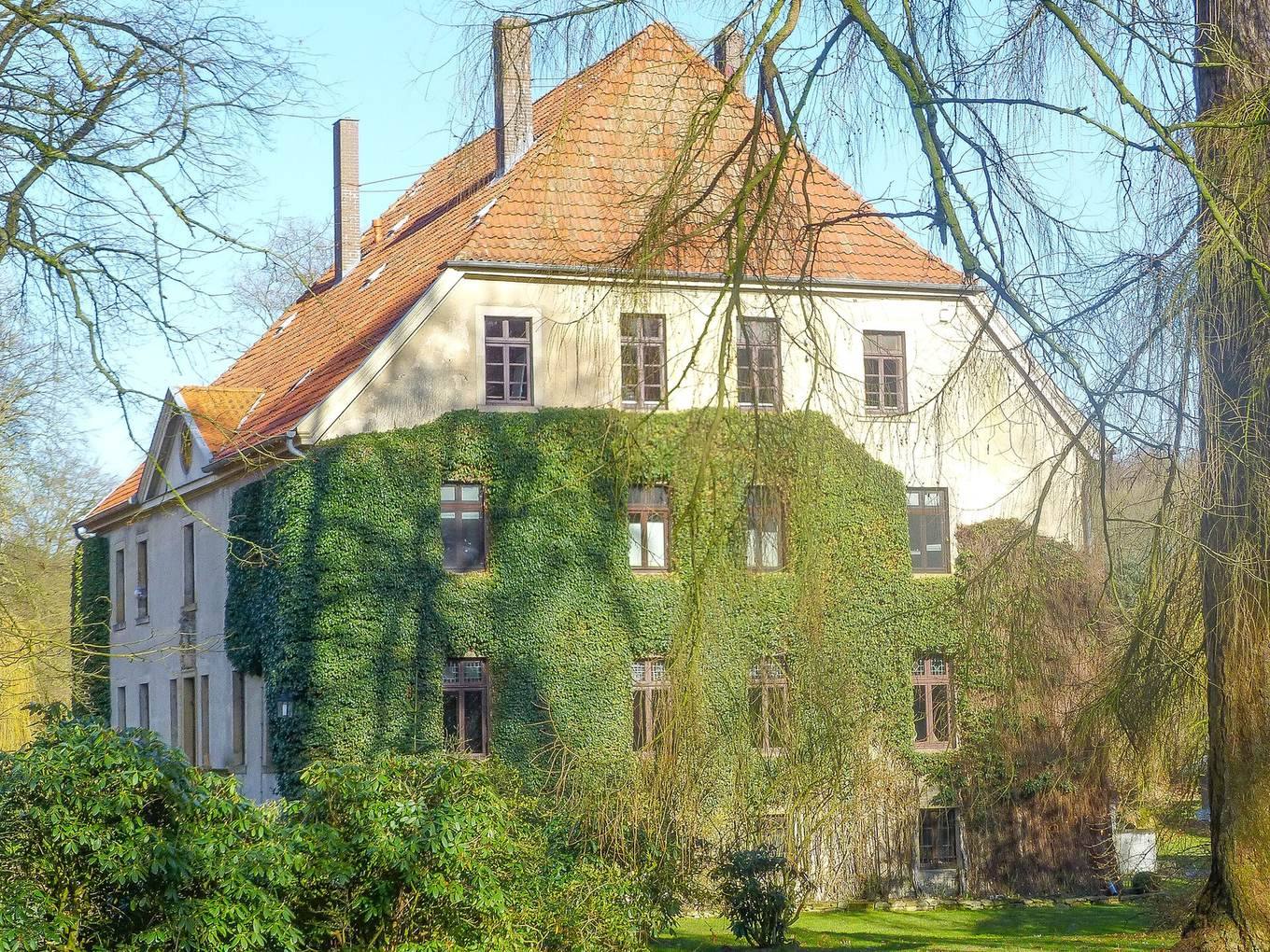
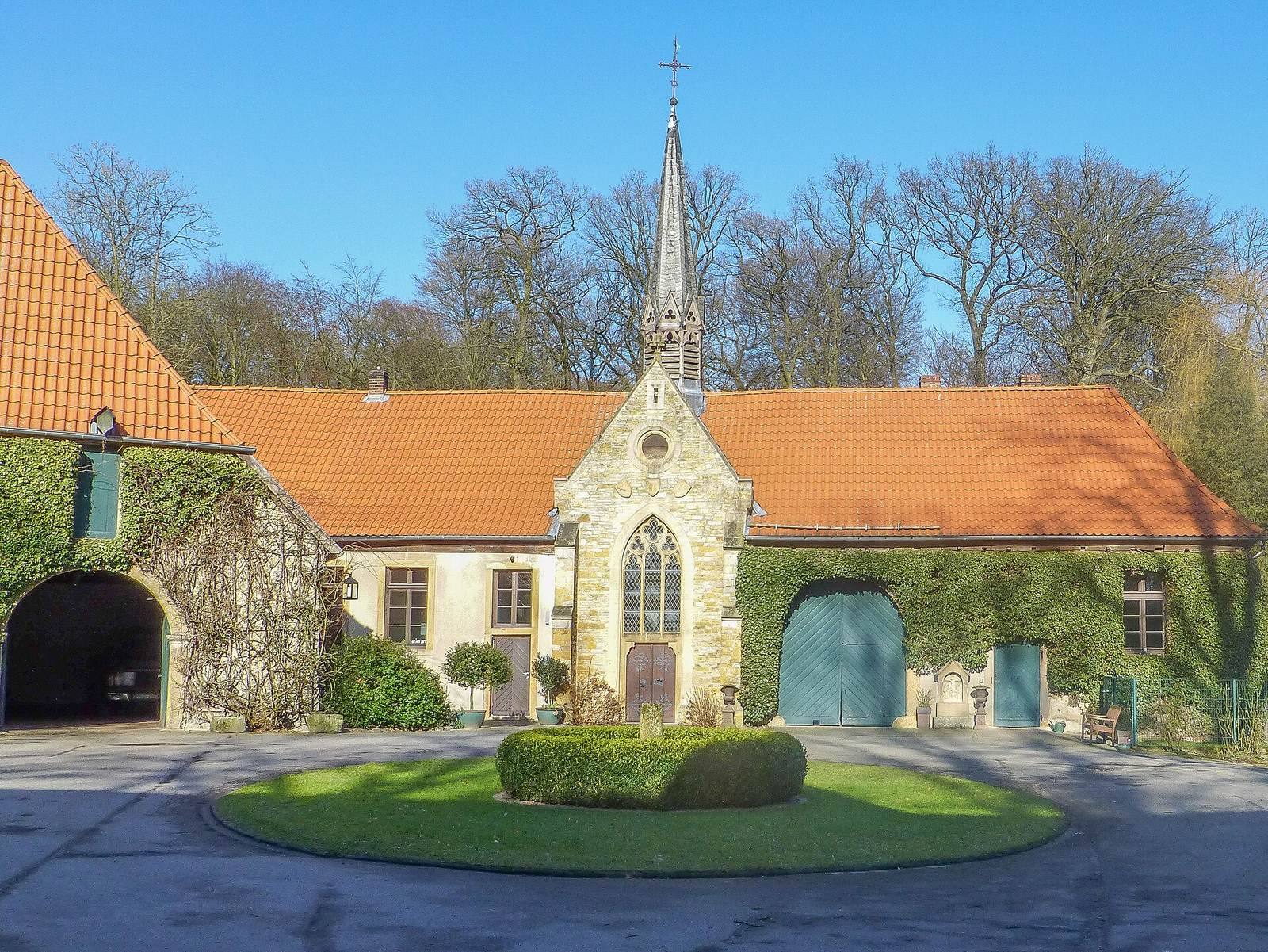
The manor house was remodeled in 1651, taking on its present form. Two farm buildings and a gatehouse were built in the first half of the eighteenth century and renovated in 1857 and 1944. The Chapel of St. Aloysius, named for the sixteenth-century Italian Catholic saint Aloysius Gonzaga, was added in 1866. In the 1880s, nearby coal mining dried the moat’s water inlets, and the moat system was filled in.
Remains
Estate layout
The estate comprises a manor house, two farm buildings, a gatehouse, and a chapel. These buildings form the surviving ensemble of the former moated castle.
Principal buildings
Manor house
The two-story manor house stands on older foundations and has a half-hipped roof, with shortened slopes at the gable ends. Exterior staircases and gabled features emphasize the building’s central axis. Until the nineteenth century, the house stood within a manor pond.
Farm buildings and gatehouse
Two farm buildings and a gatehouse are part of the estate. They were built in the first half of the eighteenth century and later renovated.
Chapel
The Chapel of St. Aloysius belongs to the estate’s group of buildings. It was added in 1866.