Royal Abbey of Longchamp: A Poor Clare Monastery in France
Site at a Glance
- Popularity
- Medium
- Country
- France
- Primary era
- Medieval
- Eras represented
- Medieval
- Civilizations
- French
- Site type
- Religious
- Remains
- Monastery
On this page15 sections
History
The Royal Abbey of Longchamp was a Roman Catholic monastery of the Poor Clares, a Franciscan order of women religious, in France west of Paris. Also called the Convent or Abbey of the Humility of Our Lady, it stood in the parish of Auteuil, at the northern edge of Longchamp, a communal field of the hamlet of Menus-lès-Saint-Cloud. The site lay between the Seine’s right bank and the Forest of Rouvray. Isabelle of France, daughter of Louis VIII and sister of King Louis IX, founded the house in 1255. She wished to remain unmarried and establish a Poor Clare community. She lived within the convent but never took religious vows.
Foundation and Franciscan rule
Louis IX granted land whose rights were held by the Abbey of Saint-Denis, a major royal monastery north of Paris, and authorized 30,000 livres for the work, the amount Isabelle would otherwise have received as a dowry. Construction began in 1255. On 10 June 1256, Louis laid the first stone of the monastic church, and the monastery was completed in 1259. The first nuns arrived from the Abbey of the Daughters of Saint Damian at Reims on 23 June 1260. They followed the Saint-Damian observance, a Poor Clare tradition associated with San Damiano at Assisi, and belonged to the Order of Friars Minor, the Franciscans. Louis visited often and remembered Longchamp in his will.
With Franciscan advice, Isabelle devised a less strict rule based on that of Clare of Assisi, allowing the nuns to own property. Franciscan friar Mansuetus is also associated with its composition. Pope Alexander IV approved the rule on 2 February 1259. Isabelle secured a further revision from Pope Urban IV in 1263; monasteries in France and Italy adopted it, and its followers became known as Urbanist Poor Clares. The Franciscan theologian Bonaventure preached at Longchamp several times and dedicated a spiritual treatise to Isabelle.
Royal ties and later medieval history
Isabelle died at Longchamp on 23 February 1270. After Louis IX died at Tunis later that year, his brother Charles of Anjou asked Isabelle’s companion Agnès d’Harcourt to write about her life in support of a proposed canonization. Agnès composed the biography around 1280. Isabelle was beatified in 1521 by Pope Leo X, a formal Catholic recognition of her as blessed and eligible for public veneration under specified conditions.
In 1319, King Philippe V laid the first stone of the nearby church of Notre-Dame de Boulogne. He died at Longchamp on 3 January 1322. A pilgrimage to Boulogne-sur-Seine, which Philippe had hoped to establish, began seven years later and remained closely linked to the abbey. His daughter Blanche entered the convent in 1317 and remained a nun there until her death in 1358. English forces pillaged Longchamp in 1360, forcing the nuns to take refuge in Paris. In 1461, Louis XI renewed the royal protection granted by earlier kings.
Changing reputation and eighteenth-century life
By the sixteenth century, the community was described as undisciplined. In Paris, the phrase being of Longchamp
came to describe a man with a taste for women. During the period of the Hundred Years’ War, the long conflict between the English and French crowns, and the convent’s pillaging, the abbey held the fief of Longchamp at Chaillot. A fief was land or rights held under feudal tenure. In 1585, the convent acquired another fief, Bretonnerie, also called Petite Bretonnerie.
In the eighteenth century, Longchamp became a fashionable destination for promenades, and attendance at religious services could serve as a pretext for an outing. Rumors of romantic intrigues circulated, while some nuns had considerable personal wealth and support from outside the convent. Denis Diderot drew on Longchamp in his novel La Religieuse, criticizing the confinement of women against their will. Marguerite Delamarre, an inmate of the abbey, is also identified as an inspiration for the novel.
Expulsion and the site’s later history
The nuns received an expulsion order on 26 February 1790. Valuable and sacred objects were taken from the chapel on 17 September 1792, and the community left between 10 and 12 October. The abbey was put up for sale in 1794, but no buyer came forward, and it was demolished. Some of its ruins were later used in the Hundred Steps staircase leading to the Calvary of Mont Valérien.
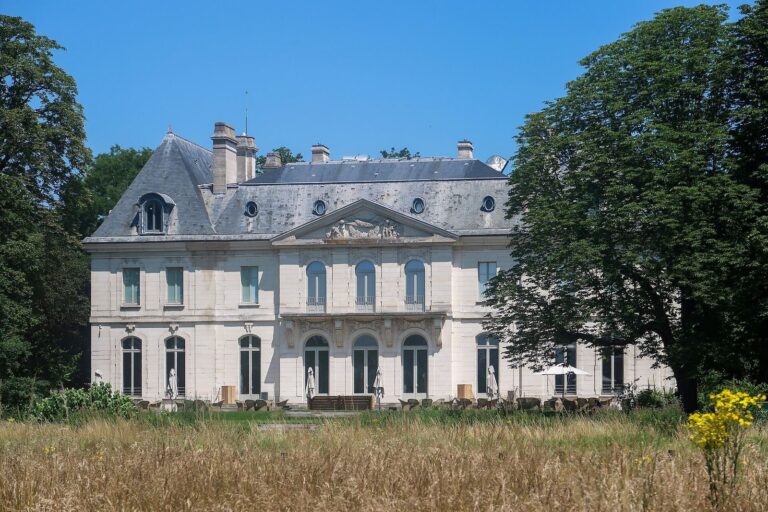
The Bois de Boulogne was created in the 1850s and incorporated the Longchamp estate in 1856. In 1857, the former farm buildings and remaining enclosure wall were demolished. Longchamp Racecourse and Château de Longchamp now occupy the site. The nearby Abbey Path preserves the abbey’s name.
Remains
The abbey’s physical record includes its historic church and enclosure, several surviving structures, and masonry reused elsewhere. The mill, former dovecote, and small ruined tower are identified remains in the area of Longchamp.
Monastic layout
Church and burial
The monastic church was the principal church of the community. Isabelle was buried there.
Isabelle’s house
A small house built for Isabelle stood within the convent enclosure, apart from the nuns’ cells.
Surviving structures and reused masonry
Mill
A mill stands north of Longchamp Racecourse. In 1902, an automobile race began beside it in the presence of Mozaffareddine Shah of Persia.
Dovecote
The former dovecote is incorporated into the grounds of Château de Longchamp. It has been substantially altered into a decorative garden structure and viewing place.
Ruined tower
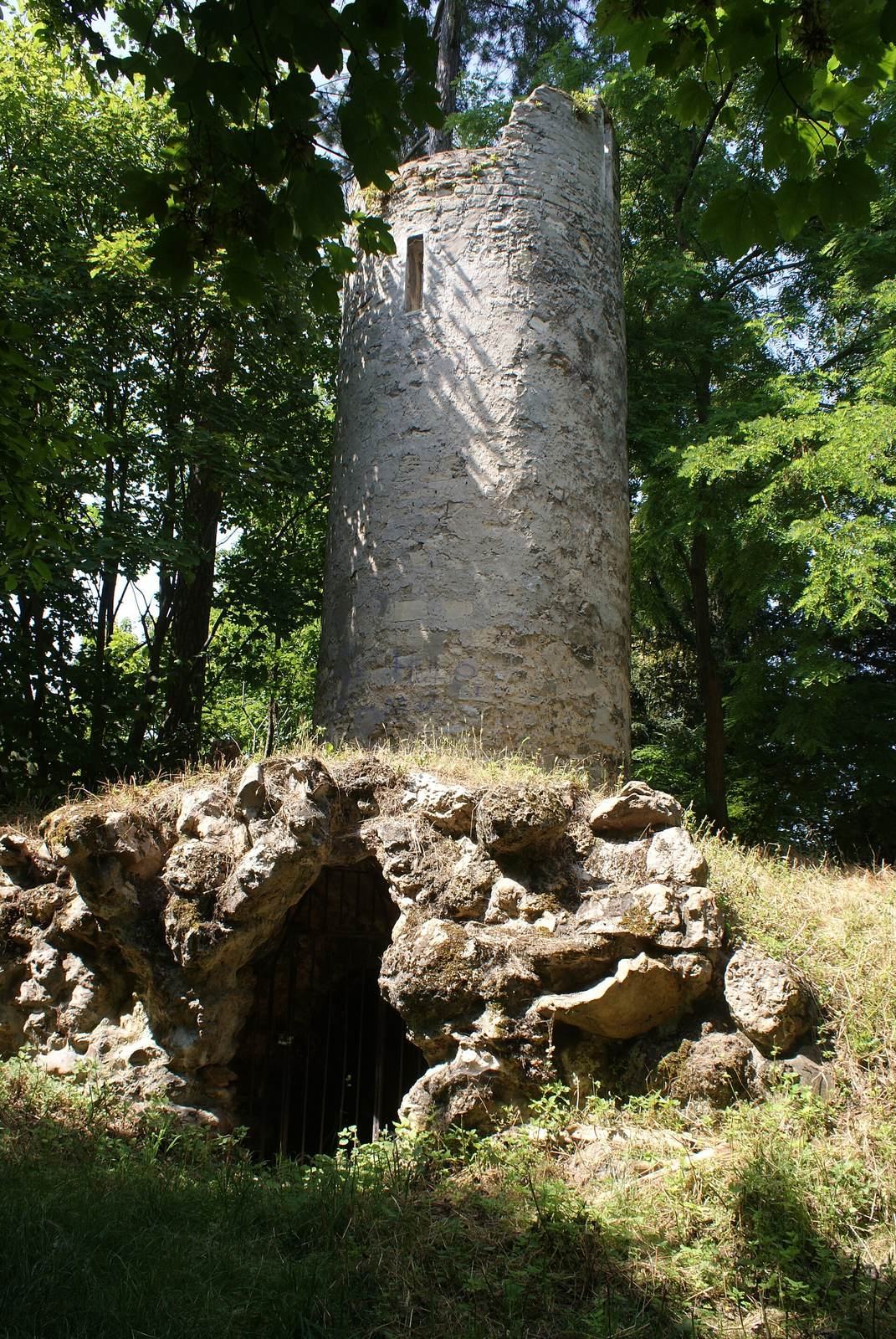
A small ruined tower remains in undergrowth near Route des Moulins.
Hundred Steps staircase
Some abbey masonry was reused in the Hundred Steps, a staircase leading to the Calvary of Mont Valérien, a devotional site representing Christ’s crucifixion.
Historical views
A seventeenth-century view attributed to Israel Silvestre shows the Calvary of Mont Valérien behind the abbey. Another view, attributed to S. J. Misbach and dated about 1795, depicts Longchamp from the foot of Mr. Lagarde’s garden. It is held in the Prints Cabinet of the Bibliothèque nationale de France in Paris, in the Destailleur collection.