Schönborn Palace: A Baroque Palace and U.S. Embassy in Prague
Site at a Glance
- Rating
- 4.3
- Popularity
- Very Low
- Country
- Czechia
- Primary era
- Early Modern
- Eras represented
- Early Modern
- Civilizations
- Habsburg, Habsburg Austria, Holy Roman Empire, Kingdom of Bohemia
- Site type
- Domestic
- Remains
- Elite Residence
On this page7 sections
History
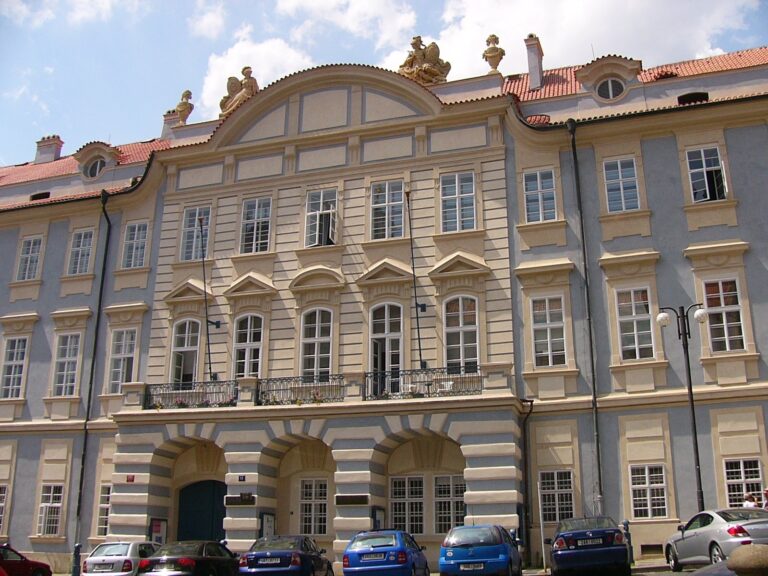
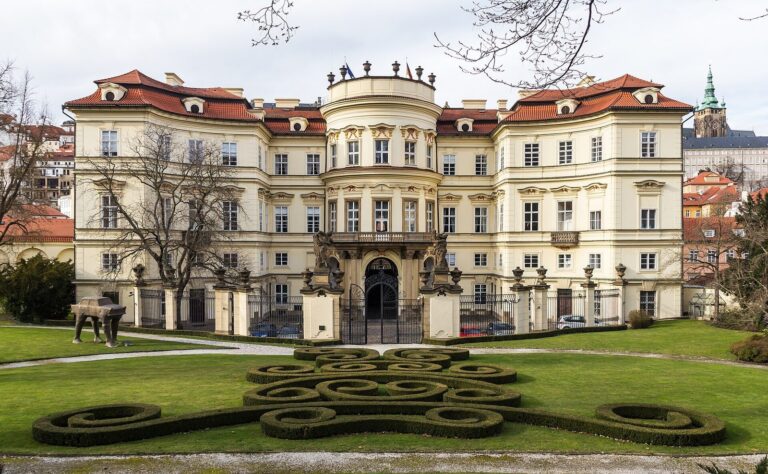
Schönborn Palace is a Baroque palace in Prague’s Malá Strana district, Czechia, commissioned by Austrian field marshal Rudolf Hieronymus Eusebius von Colloredo-Waldsee between 1643 and 1656. Baroque is an ornate European style that developed in the seventeenth century. The palace replaced an earlier building destroyed during the Thirty Years’ War, a major European conflict fought from 1618 to 1648. Colloredo was also governor of Prague and a Grand Prior, a senior official of the Catholic Order of Malta.
Construction and Baroque transformation
Around 1715, the palace took on its High Baroque appearance, a more elaborate development of the Baroque style. Plans for this transformation are attributed to architects Giovanni Battista Alliprandi and Johann Blasius Santini-Aichl.
Ownership and literary association
The palace remained in the Colloredo family for many years, then passed through the Hatzfeld family. In 1794 it came into the possession of the Schönborn family, whose name it still bears. Franz Kafka lived and worked there from early March to late August 1917.
U.S. Embassy
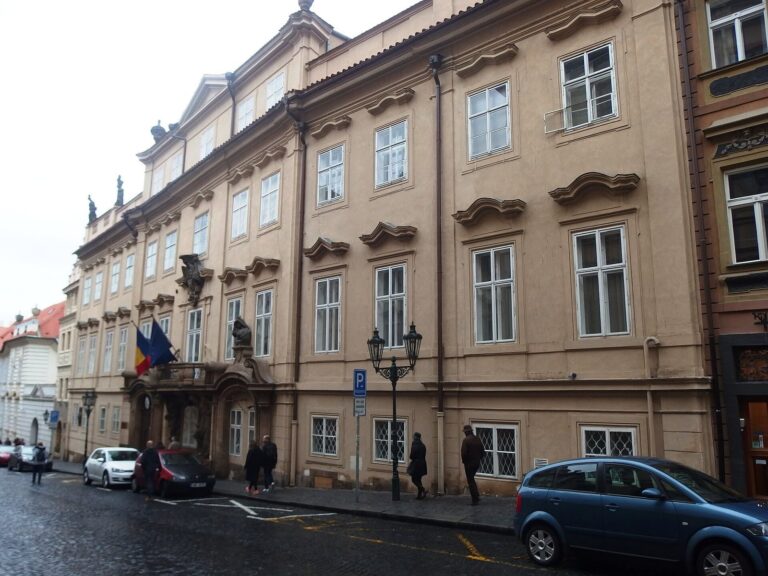
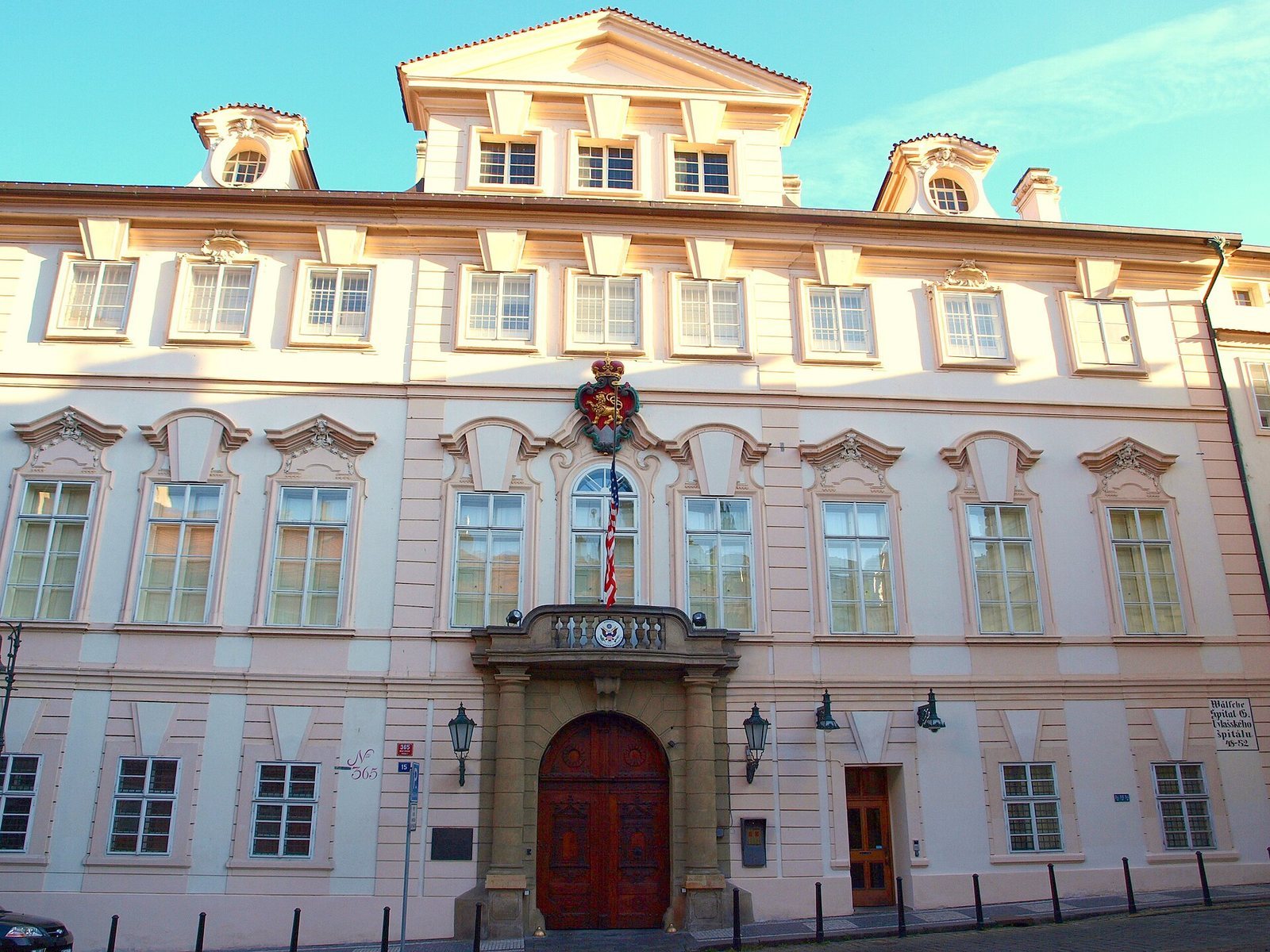
After the First World War, Count Carl Johann Schönborn, the palace’s last resident, sold it in 1919 to Richard Teller Crane II, the first U.S. Minister to Czechoslovakia from 1919 to 1921. The palace became the U.S. Embassy in Czechoslovakia in 1919. Crane sold it to the U.S. government in 1924 for $125,000, and it continues to serve as the U.S. Embassy to the Czech Republic.
Remains
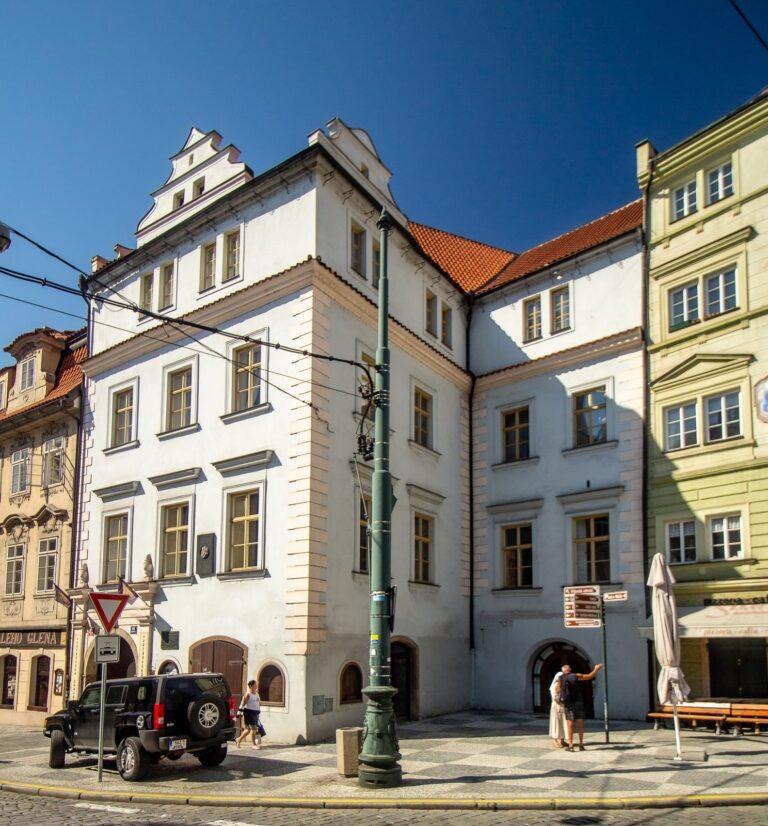
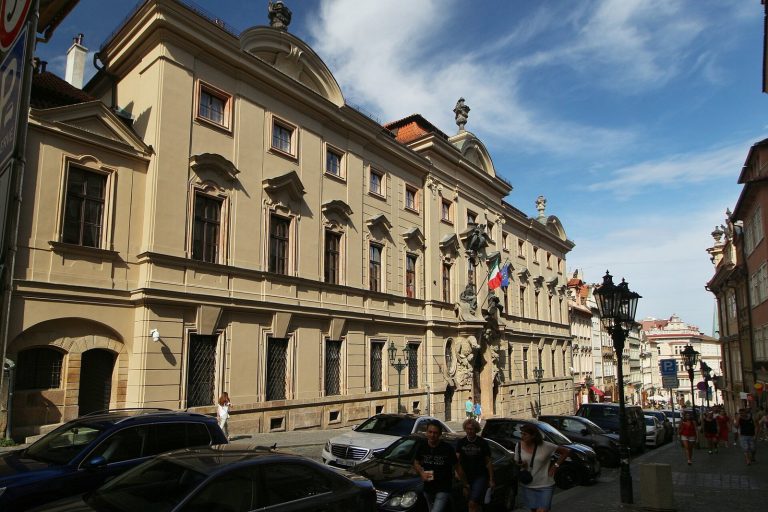
The Baroque palace stands among historic townhouses in Malá Strana. More than 100 rooms occupy four wings arranged around three courtyards.
Courtyards and entrance
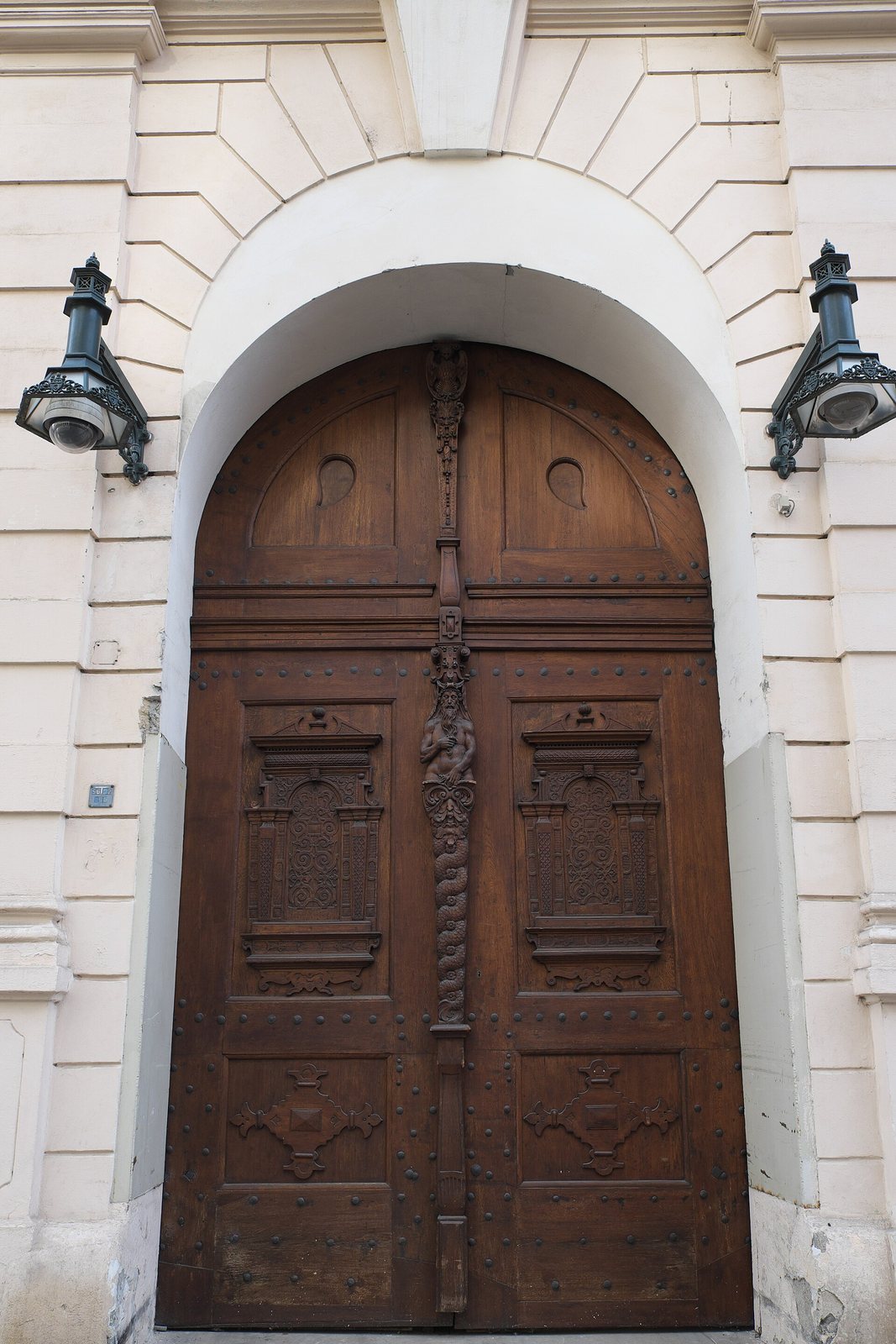
Two monumental atlantes, sculpted male figures serving as architectural supports, by Matthias Bernard Braun decorate the central courtyard. An entrance gate forms part of the palace complex.
Garden terraces
Behind the palace, its early Baroque garden was laid out in terraces. A flight of steps leads to the first terrace. After losing a leg at the Battle of Lützen in 1632, Colloredo had the steps given a special incline so he could ride into the palace on horseback. By 1938 the gardens included an orchard and the Glorietta, a garden pavilion that still exists. From the pavilion, views extended toward Charles Bridge in one direction and Hradčany Castle in the other.