Blanchelande Abbey: A Premonstratensian Monastery in France
Site at a Glance
- Popularity
- Medium
- Country
- France
- Primary era
- Early Modern
- Eras represented
- Medieval, Early Modern
- Civilizations
- French, Norman
- Site type
- Religious
- Remains
- Monastery
On this page14 sections
History
Blanchelande Abbey is a former Premonstratensian monastery in France whose religious community was founded by Richard de La Haye and Mathilde de Vernon in 1154–1155. The Premonstratensians were a Catholic order whose members lived as canons under the Rule of Saint Augustine. Blanchelande later became an important religious center serving nearby parishes.
Foundation and move to Blanche Lande
Richard, lord of La Haye-du-Puits and constable of Normandy, and Mathilde first established a priory at Brocquebœuf, in Lithaire. They dedicated it to the Virgin Mary, mother of Jesus in Christian belief, and Saint Nicholas, a fourth-century bishop venerated as a saint. The foundation may have fulfilled a condition for Richard’s release after corsairs, or armed sea raiders, captured him as he tried to escape from Cherbourg by sea. Geoffrey Plantagenet, then Count of Anjou and Duke of Normandy, was besieging the town in late 1145.
By October 1155, eight monks lived at Brocquebœuf under Renouf, the first abbot known by name. Richard de Bohon, bishop of Coutances, blessed their wooden chapel. About six years after the foundation, the community moved to Blanche Lande beside the Naudouil. Renouf blessed the new cemetery on 28 June 1160 and laid the first stone of the church on 28 April 1161. The following May, Richard de Bohon installed Premonstratensian canons there. The community had grown to thirty by 1170, after which Brocquebœuf served as a dependent priory.
Medieval growth and estates
The stone church was consecrated in 1186 by Guillaume de Tournebu, bishop of Coutances. The founders were buried near its choir, the area used by clergy during services. Pierre le Poète, elected abbot in 1169, continued the building work and expanded the abbey’s holdings, despite losing possessions that remained under English control. In the twelfth century, Guillaume Avenel gave the abbey the church of Saint-Martin at Avenel. In 1163, its name was adopted for a new abbey and village at Blanchland in Northumberland, England.
The abbey also held property and fishing rights at Cretteville by the mid-twelfth century. These included land associated with Hugues le Taureau, fish from a mill sluice, permission to catch eels with a net in a mill pool, a downstream fishery, and a dwelling for the fisherman. In 1302, Abbot Robert Hardy reached an agreement with Mont-Saint-Michel Abbey, the medieval monastery on the tidal island of Mont-Saint-Michel, over church dues known as tithes at Rotour. In 1404, the abbot said that distributing charitable aid was no longer needed because epidemics had reduced the number of poor people.
English occupation and religious conflict
During the English occupation, Abbot Thomas de Saint-Lô the Elder left Blanchelande sometime between 1421 and 1430, taking the abbey’s charters, relics, and sacred vessels to England. He later received permission to return from Henry VI, king of England. His successor, Thomas de Saint-Lô the Younger, restored the abbey’s allegiance to the French king in 1450.
In 1519, Abbot Laurent Mulot gave a bronze object to the church choir. François de Bouliers became the abbey’s first commendatory abbot in 1557. A commendatory abbot held the title and income of an abbey without necessarily governing its community in person. During the French Wars of Religion, conflicts between Catholics and Protestants in France, the abbey was pillaged on 28 February 1587. Buildings were partly destroyed, and its charters and archives were burned. On 25 May 1590, Philippe Troussey, the abbot and a suffragan bishop serving under the bishop of Coutances, was murdered by Protestants. The abbey’s finances were further weakened by its share of a tax of 100,000 écus granted to the king. By the Revolution, only five religious remained.
Revolution and restoration
In 1790, the abbey became national property, and Ange-François de Talaru de Chalmazel, bishop of Coutances and its forty-sixth and last abbot, was dispossessed. Jean Cornavin bought the property. In 1845, convent buildings were partly demolished, particularly the abbey church.
Fanny de Robersart bought the abbey from Cornavin’s heirs on 5 January 1857 and restored the abbatial residence. She invited the Sisters of the Helpers of the Holy Souls, a Catholic congregation associated with prayer and service for souls in purgatory, to join her. She bequeathed the abbey to them in 1880, and they remained there for more than a century. In 2000, parts of the abbey were listed as a historic monument in France.
Remains
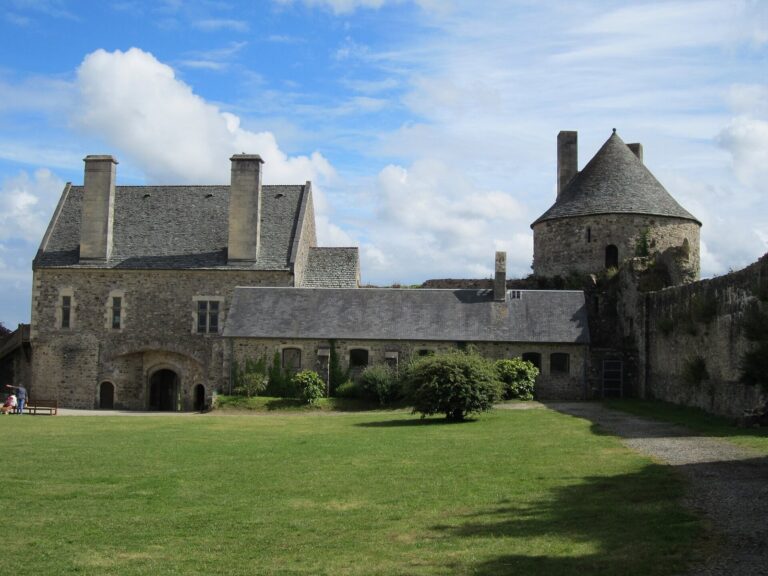
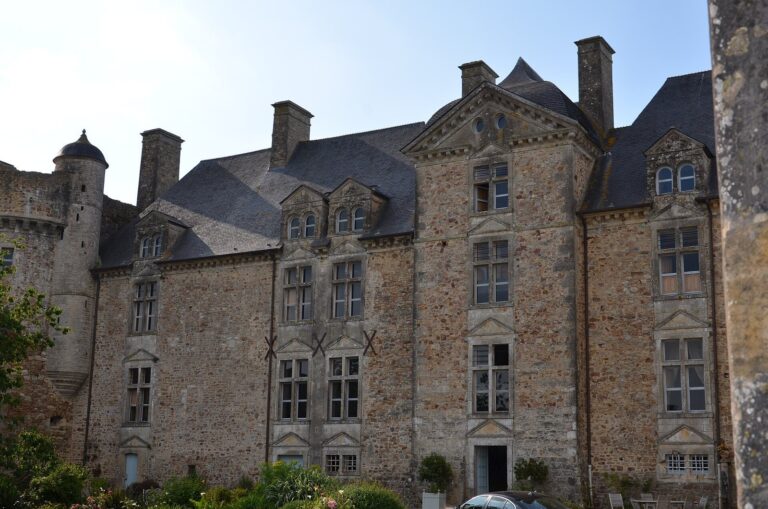
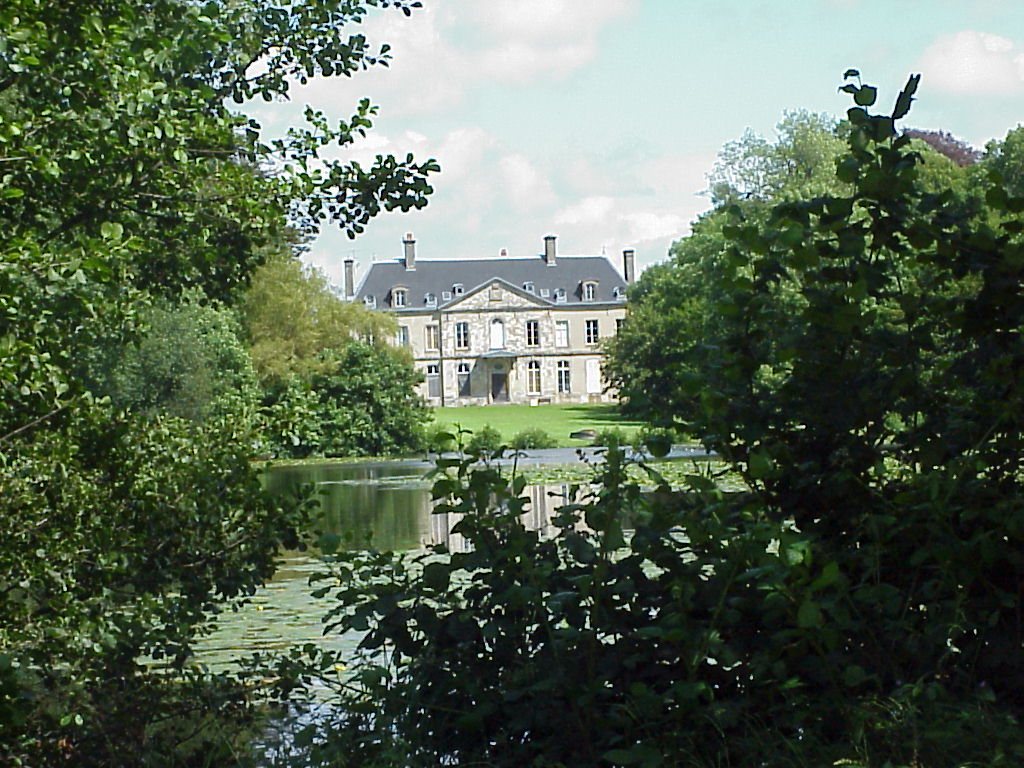
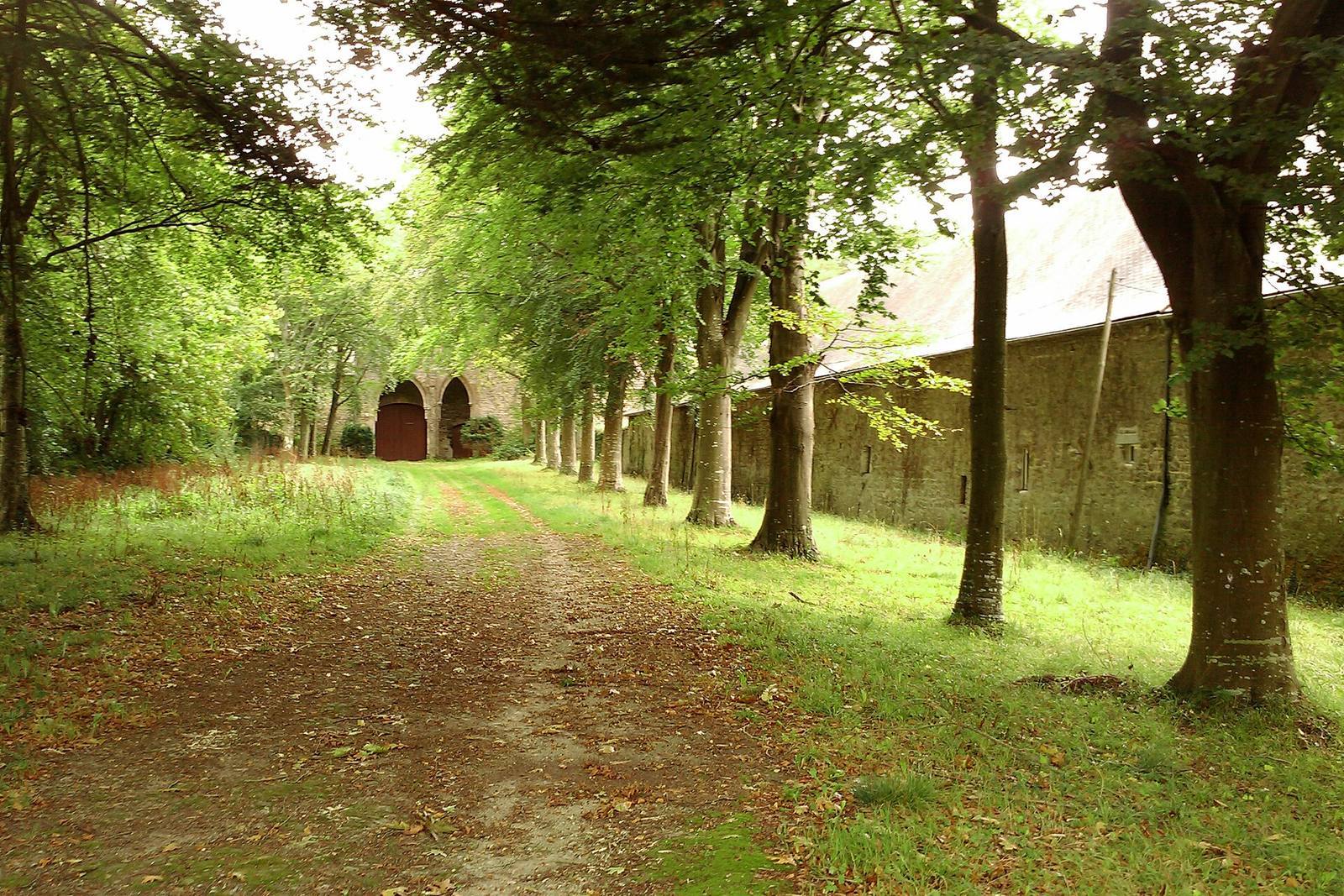
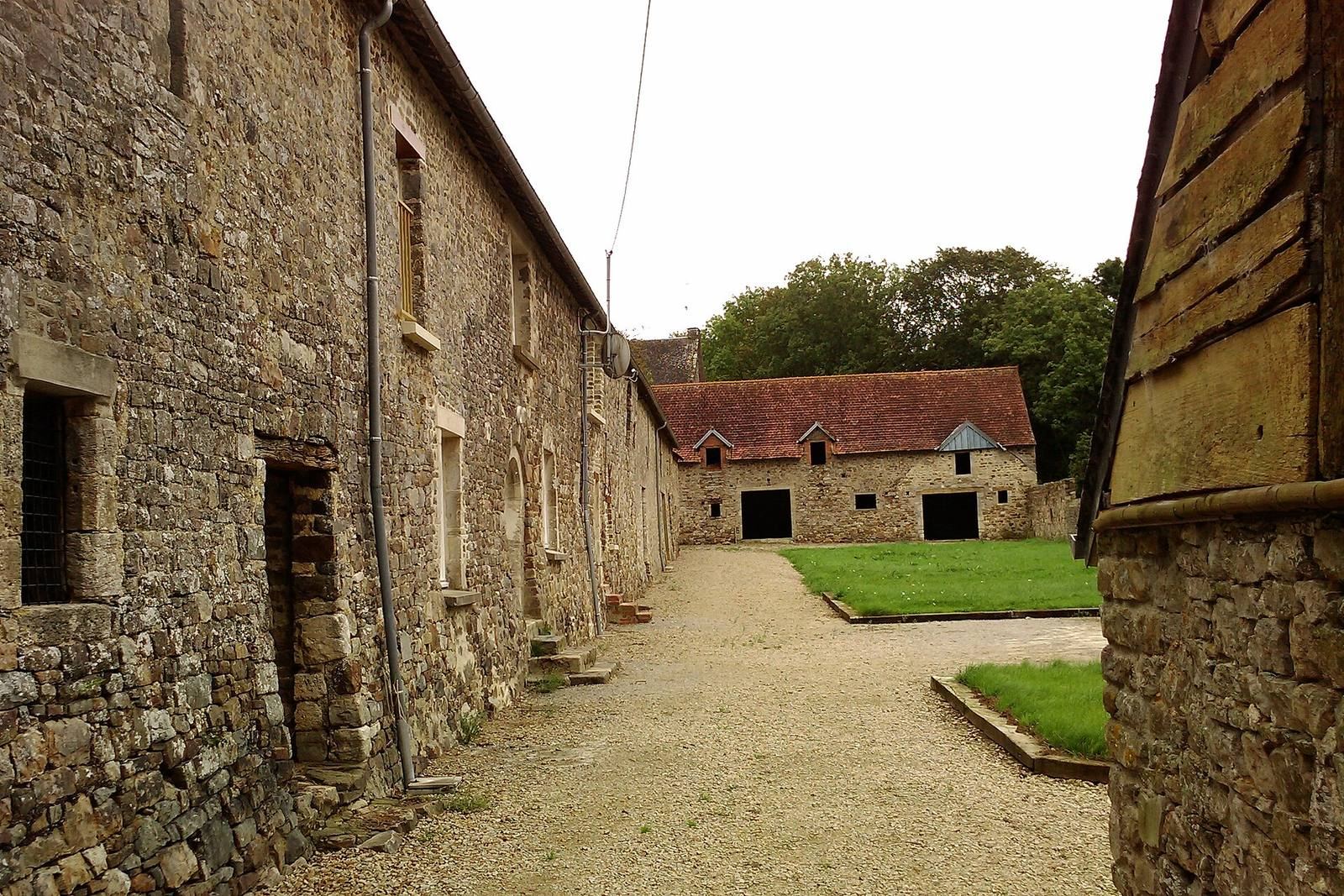
The abbey remains lie east of Neufmesnil and south of Mont Étenclin, in the valley between Brocquebœuf and Mont Étenclin, beside the Naudouil. The surviving complex includes fragments of the church, convent buildings, residences, gatehouses, and agricultural outbuildings. Walls enclose grounds that include terraces, gardens, a canal, and a pond.
Medieval structures
Abbey church and chapel
Fragments of the abbey church survive from the twelfth and thirteenth centuries. The chapel was remodeled in the eighteenth century but retains twelfth-century bays, or sections of the structure, including a square support and cylindrical columns in the Romanesque style, a medieval architectural style. Rib vaults, stone ceilings supported by crossing ribs, are thought to have covered at least part of the church. A funerary slab bearing epitaphs for abbots Nicolas Mulot, Pierre Pitteboult, and Pierre Le Febvre was transferred to the church at Neufmesnil in 1845.
Refectory
Only a few stones remain from the twelfth-century Romanesque refectory, or monastic dining hall. The building was renovated in the seventeenth century.
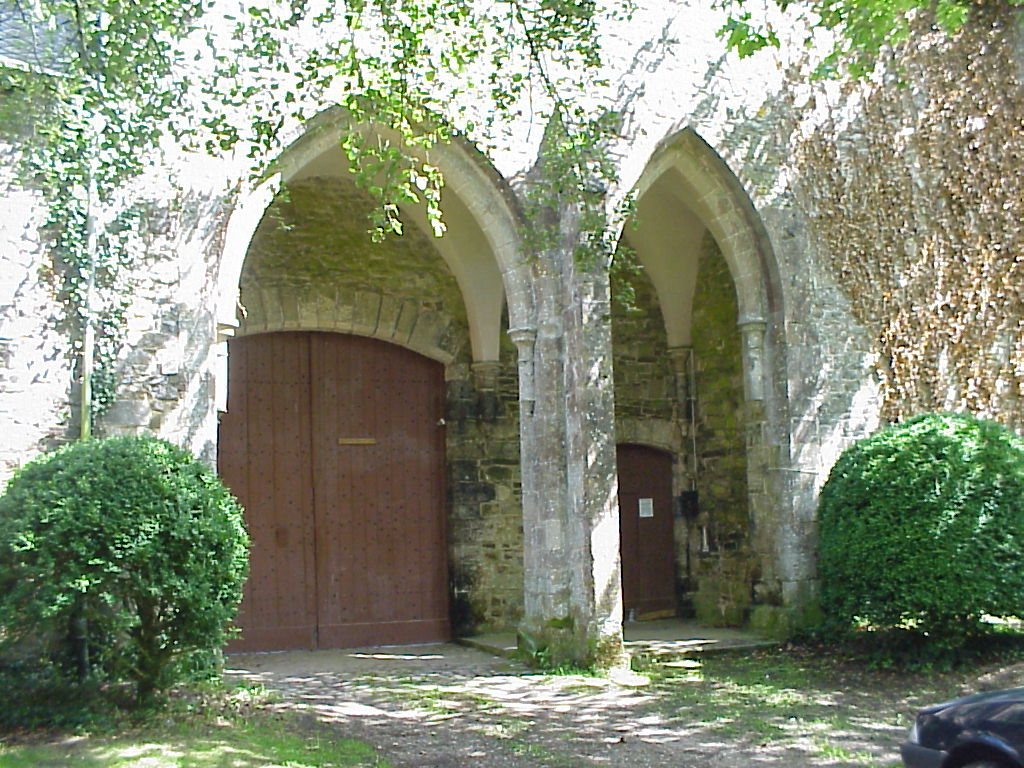
Saint-Nicolas gatehouse
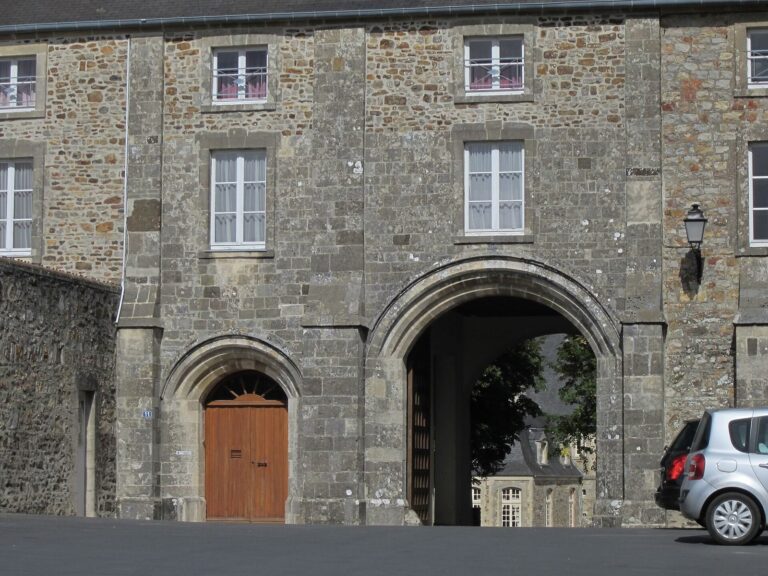
The thirteenth-century Saint-Nicolas gatehouse, also called the Homage Gate, was restored in the fifteenth century. It has a small pedestrian entrance and an adjoining lodging.
Later buildings
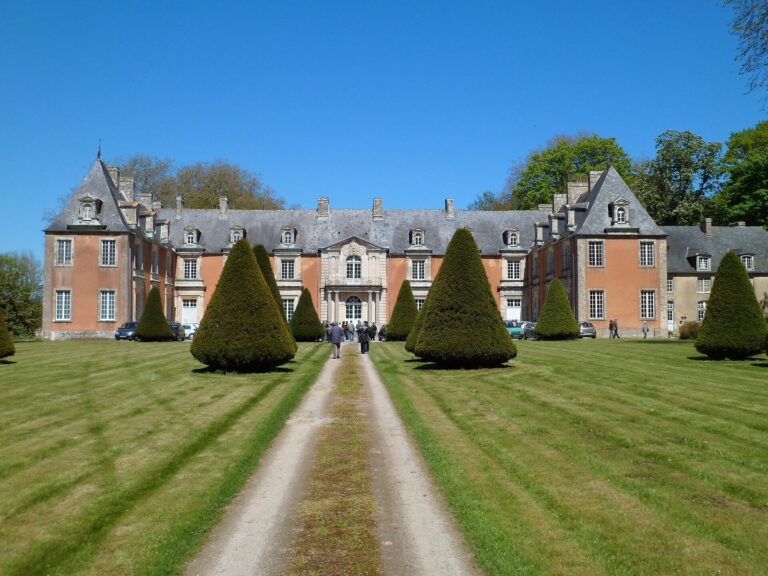
Convent and newer abbatial residence
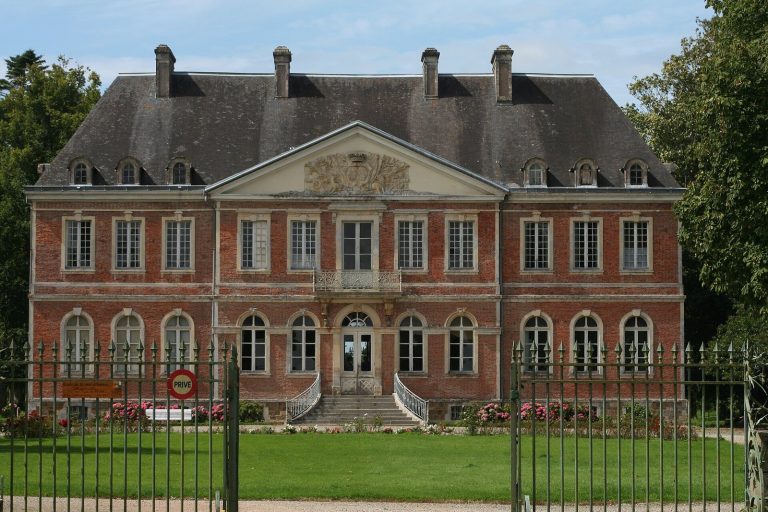
The convent buildings and square cloister, a covered walk around a courtyard, were rebuilt in the eighteenth century in a classical architectural style. The newer abbatial residence was completed in 1740. Its restored rooms include a richly decorated salon and a dining room with carved woodwork.
Older residence
The older abbatial residence, now called the priory, dates to the sixteenth century. Its damaged fabric retains some features from the late sixteenth century.
Residence gatehouse
A separate gatehouse leading to the residence has a blocked dormer window and small corner turrets supported by projecting masonry.