Karadzhov kamak: An Ancient Sanctuary in Bulgaria
Site at a Glance
- Popularity
- High
- Country
- Bulgaria
- Primary era
- Iron Age
- Eras represented
- Iron Age
- Civilizations
- Thracian
- Site type
- Religious
- Remains
- Sanctuary
On this page8 sections
History
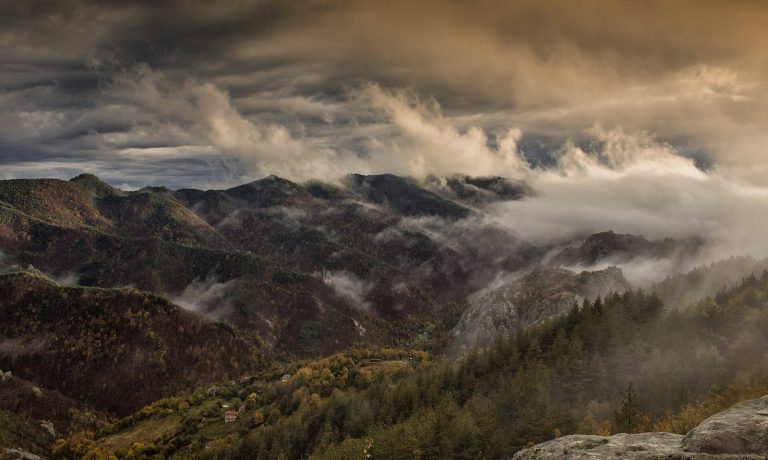
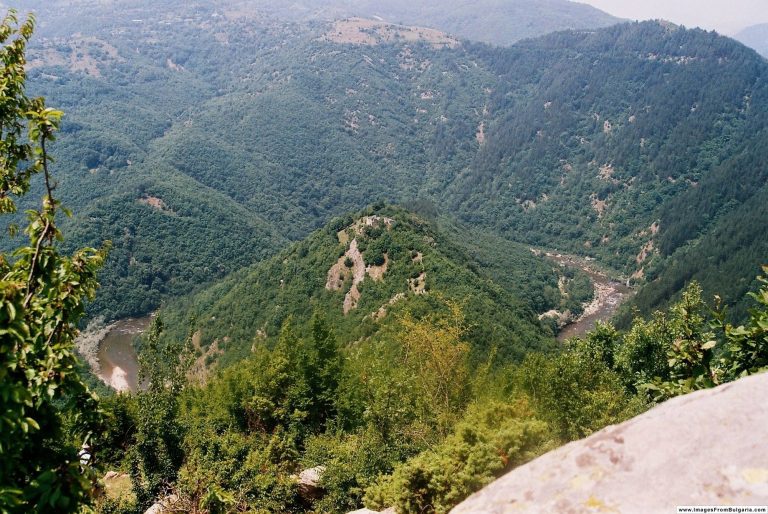
Karadzhov kamak is a high rock plateau sanctuary near Mostovo in Bulgaria, at the southeastern end of the Gradishte ridge in the Western Rhodope Mountains. It was used in the Early Iron Age, when iron became important for tools and weapons, and again in Late Antiquity, the closing centuries of the ancient world, particularly in the late third to early fourth century AD. The site is associated with the Bessi, an ancient Thracian people of the Balkans.
Sacred landscape
At least five ancient sanctuaries stood on the surrounding mountain ridges, and some were active at the same time. Archaeologists have interpreted them as part of a wider complex of cult places, with a nearby rock sanctuary thought to have been its center. This setting has prompted a proposal that worship at Karadzhov kamak began in the Neolithic, the later Stone Age, before the site was reused by the Thracians.
Investigation and local traditions
Bulgarian archaeologist Ivan Hristov led an investigation in 2003. The first excavations on the plateau followed in 2004, when his team opened three test pits in low-lying areas among projecting rocks. The plateau was declared a protected area on 6 August 2003.
Local tradition links the site’s name to a hajduk, an armed irregular remembered in Balkan traditions as an opponent of Ottoman rule, from Yavrovo. One version says that after raiders abducted and killed a young woman, the leader killed 25 of them near Mostovo. An Ottoman governor then sent troops, and the leader and his band died fighting at the rock. Another belief places buried treasure beneath the boulder and warns that finding it brings misfortune. A modern UFO legend claims that the boulder fell from space and formed part of a supposed space facility associated with the neighboring rock sanctuary.
Remains
Plateau and rock formations
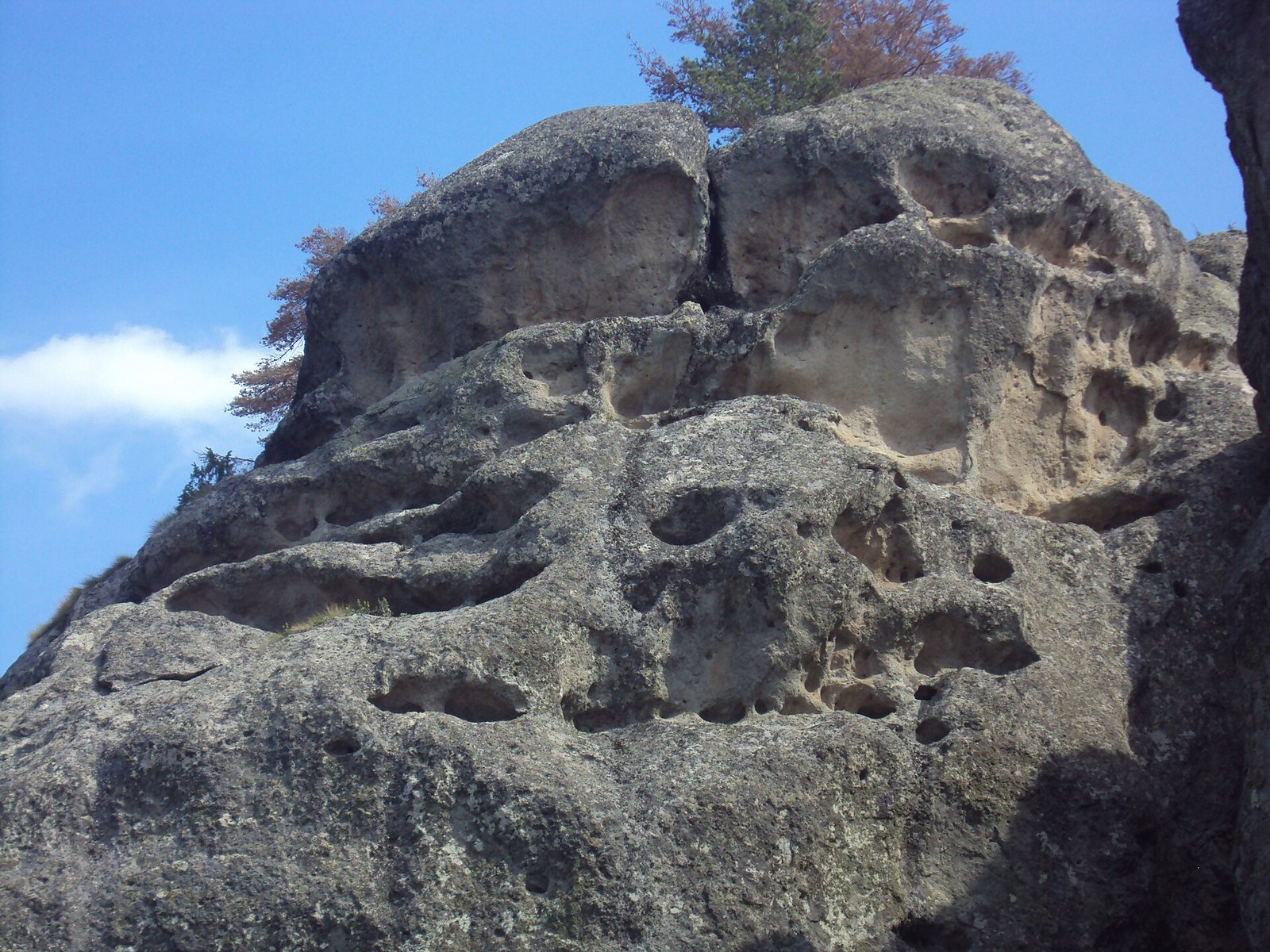
The sanctuary occupies a plateau at 1,448 m above sea level, covering 4,550 m². Steep rock faces more than 100 m high enclose the site. Its natural rock formations and several levels shape the surviving archaeological features.
Cleft and approach
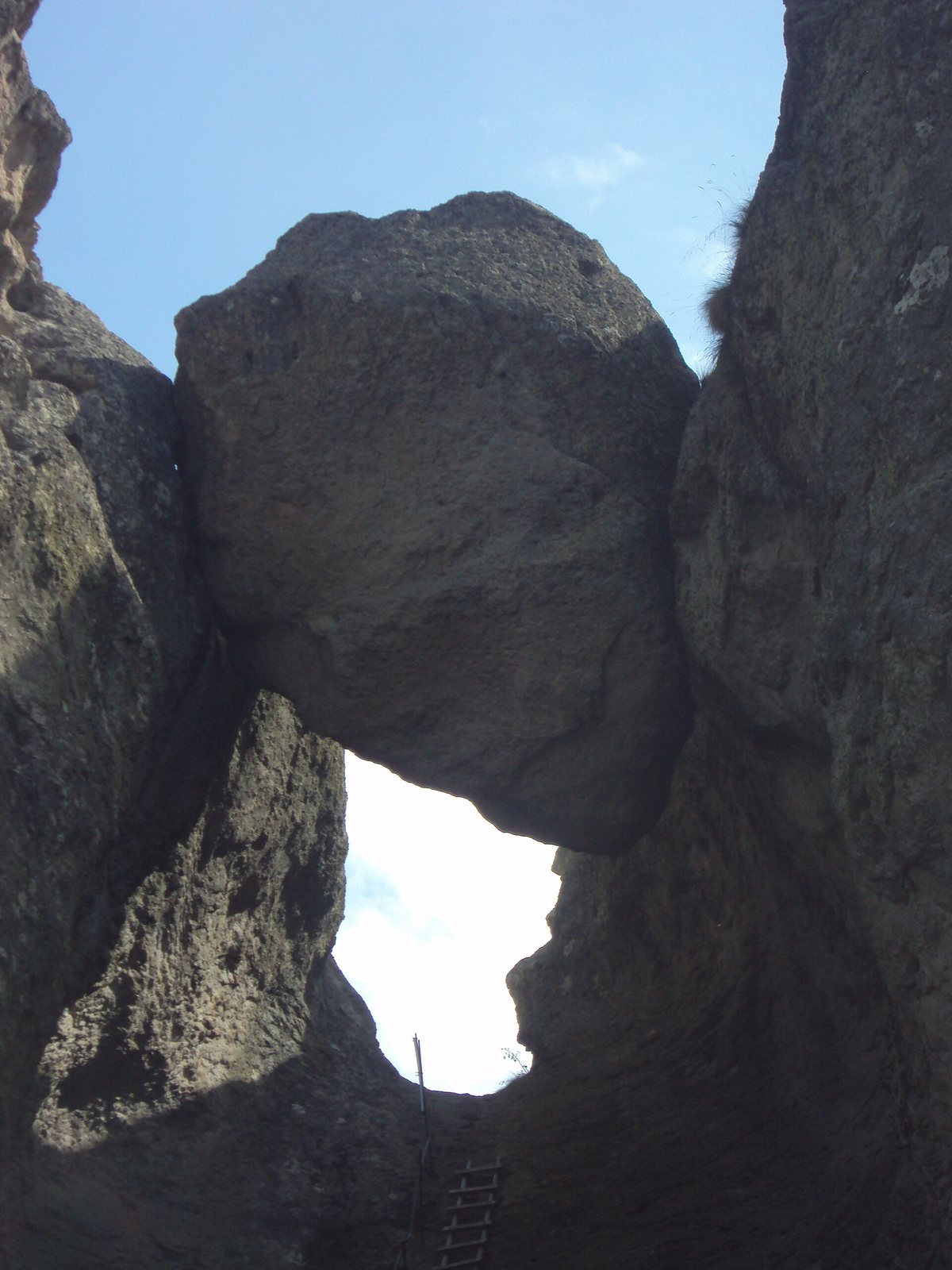
A massive boulder is wedged in a naturally formed narrow cleft in the vertical rock walls, a formation also described as an arch. The only approach to the plateau is from the southwest, through a rock cleft 18 m high. About ten steps remain visible near its upper part; rainwater has heavily worn them, and the final few are attributed to the Thracians.
Cult platforms and rock-cut features
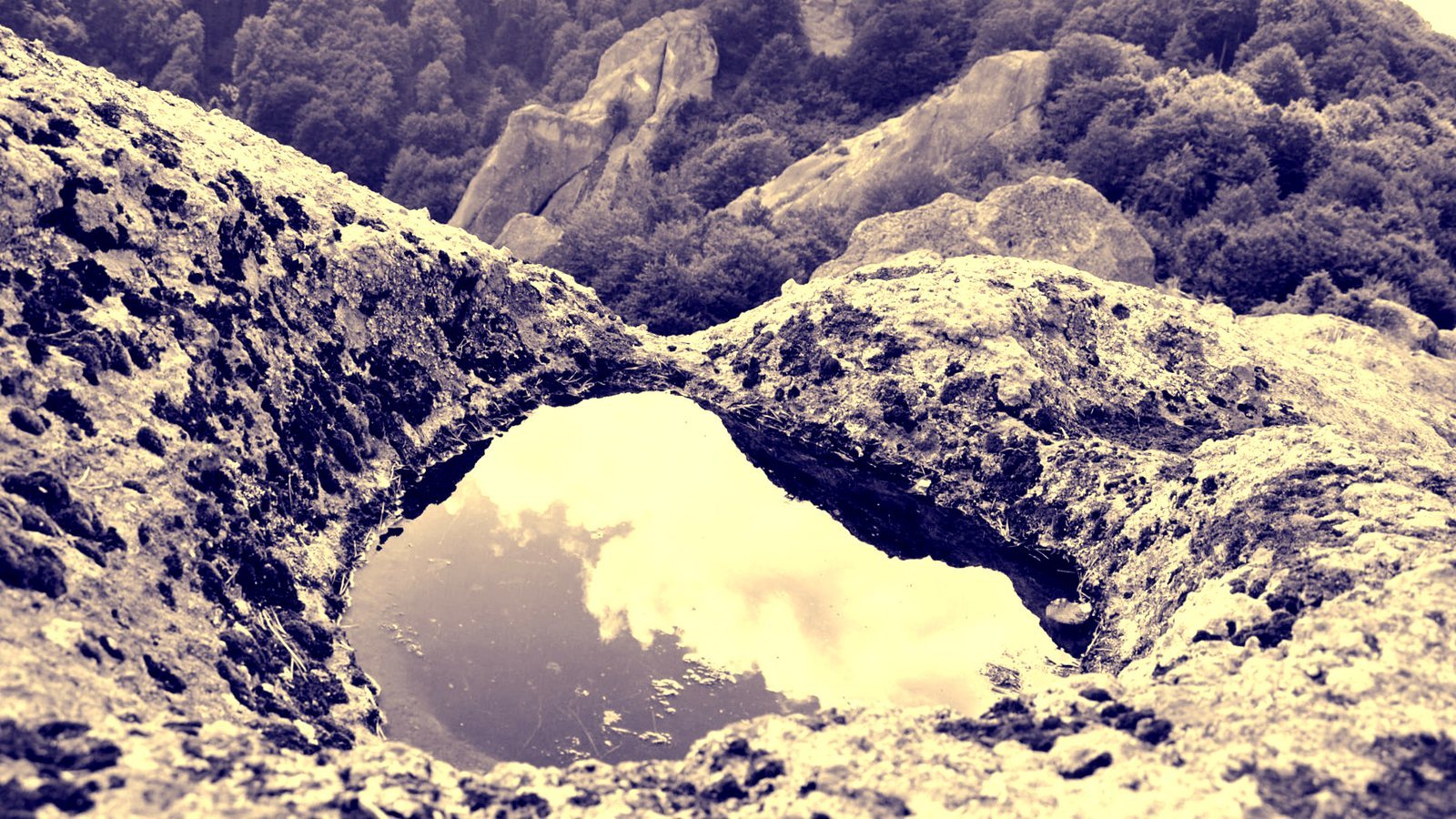
A lower cult platform leads by cut steps to a higher area, where small holes have been made in the rock. Dozens of pits across the plateau began as natural formations but were modified by people. Channels and cut pits also occur among rocks used for ritual deposits.
Pottery deposits
Large quantities of pottery fragments were ritually deposited among the rocks. The pottery belongs to the second phase of the Early Iron Age, dated to the eighth through sixth centuries BC.