Erythrae: An Ancient Ionian City-State in Turkey
Site at a Glance
- Popularity
- High
- Country
- Turkey
- Primary era
- Classical
- Eras represented
- Iron Age, Classical, Medieval
- Civilizations
- Ancient Greek, Byzantine, Roman
- Site type
- Settlement
- Remains
- City
On this page19 sections
History
Erythrae was an ancient Ionian city-state on the Karaburun Peninsula at present-day Ildırı in Turkey. It belonged to the Ionian League, an association of Greek coastal cities and nearby islands, from the league’s beginnings in the eighth century BC, and was also associated with the Pan-Ionian League in the seventh century BC.
Founding and early city
Ancient traditions offered different accounts of Erythrae’s foundation. One named Erythrus, son of the mythological Rhadamanthus, as its founder, arriving with Cretans, Carians, and Lycians. Other traditions linked its origins to Knopos, Kleopos, or Neleus, figures associated with the Athenian king Codrus. Strabo described the city as a colony from the Boeotian city of Erythrae. One story said Knopos took control through deception and killed the earlier inhabitants.
Early government was oligarchic, with power held by the Basilidai, a family said to descend from Athens’s royal house. Hippias of Erythrae recounted that a later Knopos, who lived in the seventh century BC, was murdered and replaced by the rulers Ortyges, Iros, and Ekharos. Knopos’s brother eventually drove them out. Erythrae shared a dialect with Chios, but the two cities fought in the seventh century BC. Erythrae also joined Teos in resettling Phocaea, while Parion was founded as a colony in cooperation with Miletus and Paros.
The city’s territory, known as Erythraia, was estimated to cover more than 500 square kilometres, though its boundaries changed. Communities at times under Erythrae’s authority included Butheia, Elaiussa, Polikhne, Pteleon, and Sidusa. Nearby were the harbor of Embaton and the settlements of Dorion, Helos, Korykos, and Kybelaia; islands in the bay were called the Hippoi. Erythraia bordered the territories of Clazomenae and Teos to the east and Chios to the west, although Chian territory may also have extended onto the peninsula.
Lydian and Persian rule
Erythrae came under Lydian rule around 560 BC. Persian forces captured and destroyed it in 545 BC. The city began issuing silver coins in the sixth century BC and sent eight ships to the Battle of Lade in 494 BC, during the Ionian Revolt. Although it was not a large city, Erythrae became known for making millstones under tyrannical rule.
Athenian and Persian alliances
In the fifth century BC, Erythrae joined the Delian League, an alliance led by Athens. Around 453 BC it broke away rather than pay tribute, but an Athenian garrison and a new government brought it back into the alliance. Tribute records list its payments from 450/449 to 415/414 BC.
In 412 BC, Erythrae revolted again alongside Chios and Clazomenae and served as a base for the Peloponnesian League, led by Sparta. A Persian-aligned oligarchy then governed the city. From 394 BC it was again allied with Athens, but later shifted between Athenian and Persian connections, probably as democratic and oligarchic factions competed for power. After the Battle of Cnidus, Erythrae received the Athenian commander Conon and honored him in an inscription.
Around the middle of the fourth century BC, Erythrae maintained close ties with Mausolus, ruler of Caria, and concluded a mutual-aid treaty with Hermias, ruler of Assus and Atarneus. An inscription calls Mausolus a benefactor of the city. Erythrae issued bronze coins from the fourth century BC, paused its coin production in 356 BC, and resumed it in the Hellenistic period.
Alexander and the Hellenistic period
Erythrae regained independence in 334 BC in connection with Alexander the Great’s campaign. Alexander, king of Macedon, planned a canal about 11 kilometres long across the peninsula between Klazomenae and Teos. In 331 BC, Greek envoys at Memphis told him that the long-silent oracles at Erythrae and Didyma had spoken and declared him the son of Zeus.
In the Hellenistic period, the era following Alexander’s conquests, Erythrae first allied with Pergamum. Some smaller communities in its territory or under its authority were absorbed into the city. During the war against Antiochus III, Erythrae sided with Rome, along with Chios and Smyrna; Rome rewarded the cities with land.
Erythrae’s territory produced grain and wine, and the city was renowned for wine, goats, timber, and millstones. It was also celebrated for prophecy. A sibyl was a woman regarded as a prophetic speaker, and the Erythraean Sibyl, identified as Herophile, was especially famous. Ancient tradition also named prophetesses Sibylla and Athenais, the latter associated with Alexander’s lifetime. Herophile’s standing was placed just below that of the Sibyl of Cumae. Erythrae was credited with at least two Olympic victories.
Roman and Byzantine rule
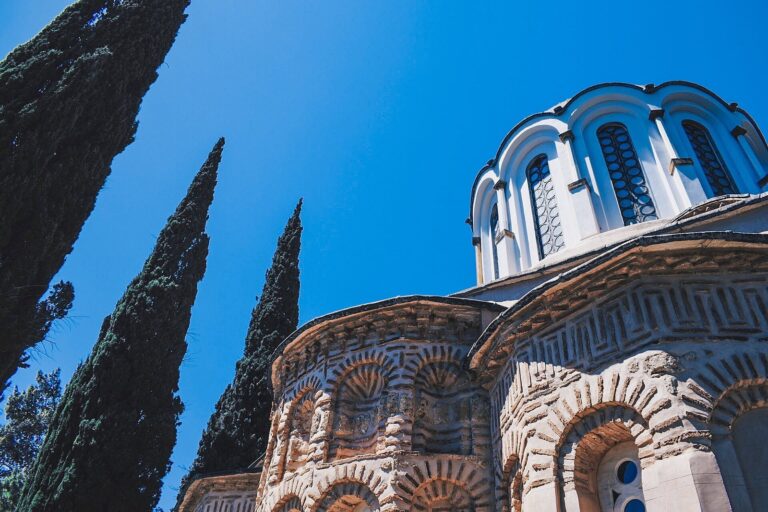
After Attalus III, the last king of Pergamum, died in 133 BC, Erythrae flourished as a free city attached to the Roman province of Asia. It remained under Roman rule, and its coins indicate that the city continued into the late imperial period. In the first century AD it was plundered and suffered decline after regional earthquakes, but it revived under the later Roman Empire and during the Byzantine period, the later eastern Roman Empire and its successor tradition.
Bishops of Erythrae are known from 431 to 1292. In the ninth and tenth centuries, an archon, a minor governor, was based in the city.
Litri and archaeological work
From the middle of the eighteenth century to the early twentieth century, the later settlement of Litri, also called Lythri, operated as a port and trading place, with commerce involving Chios and Smyrna. Excavations at the ancient city began in 1964. Turkish archaeologist Ekrem Akurgal explored the site extensively during the 1960s.
Remains
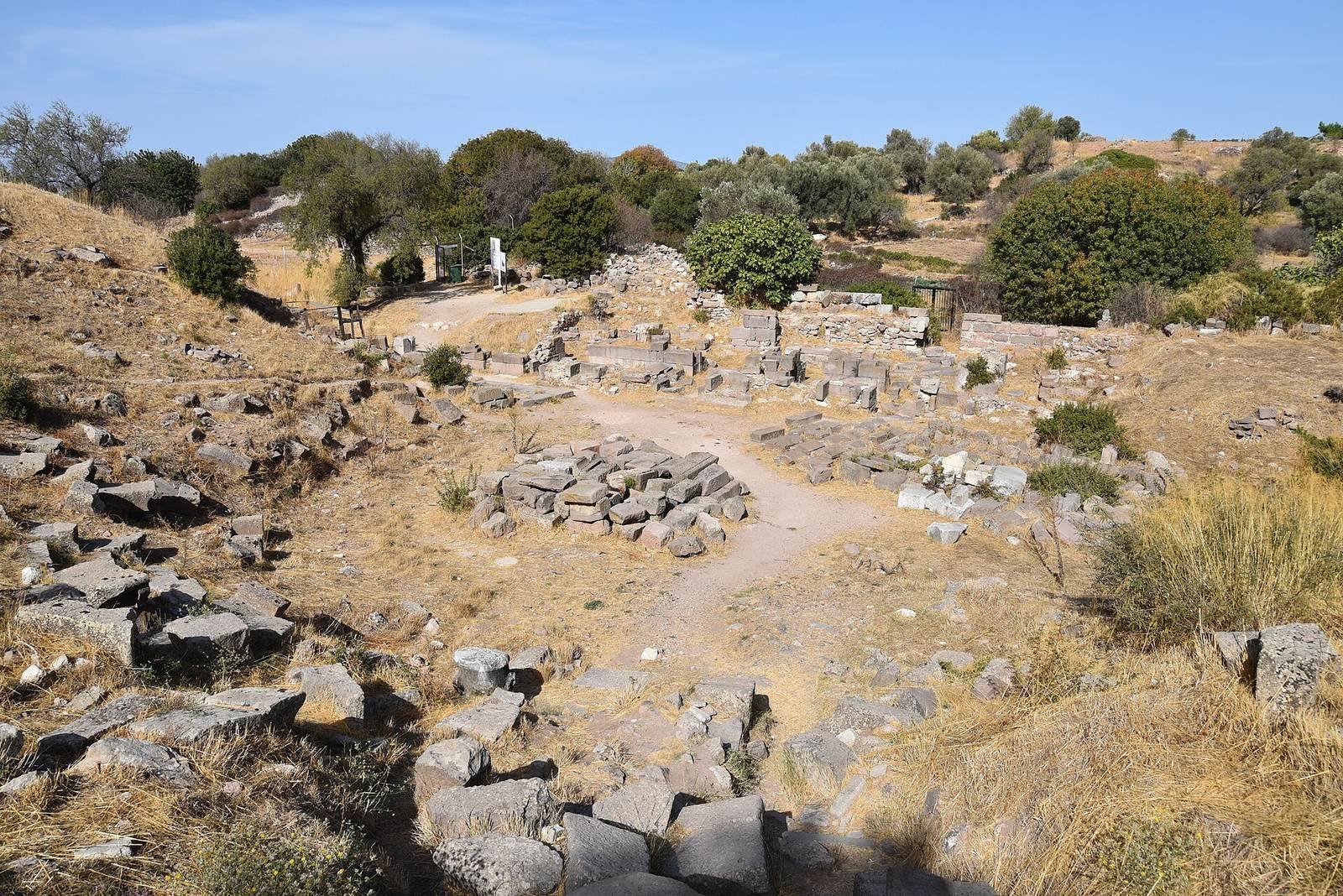
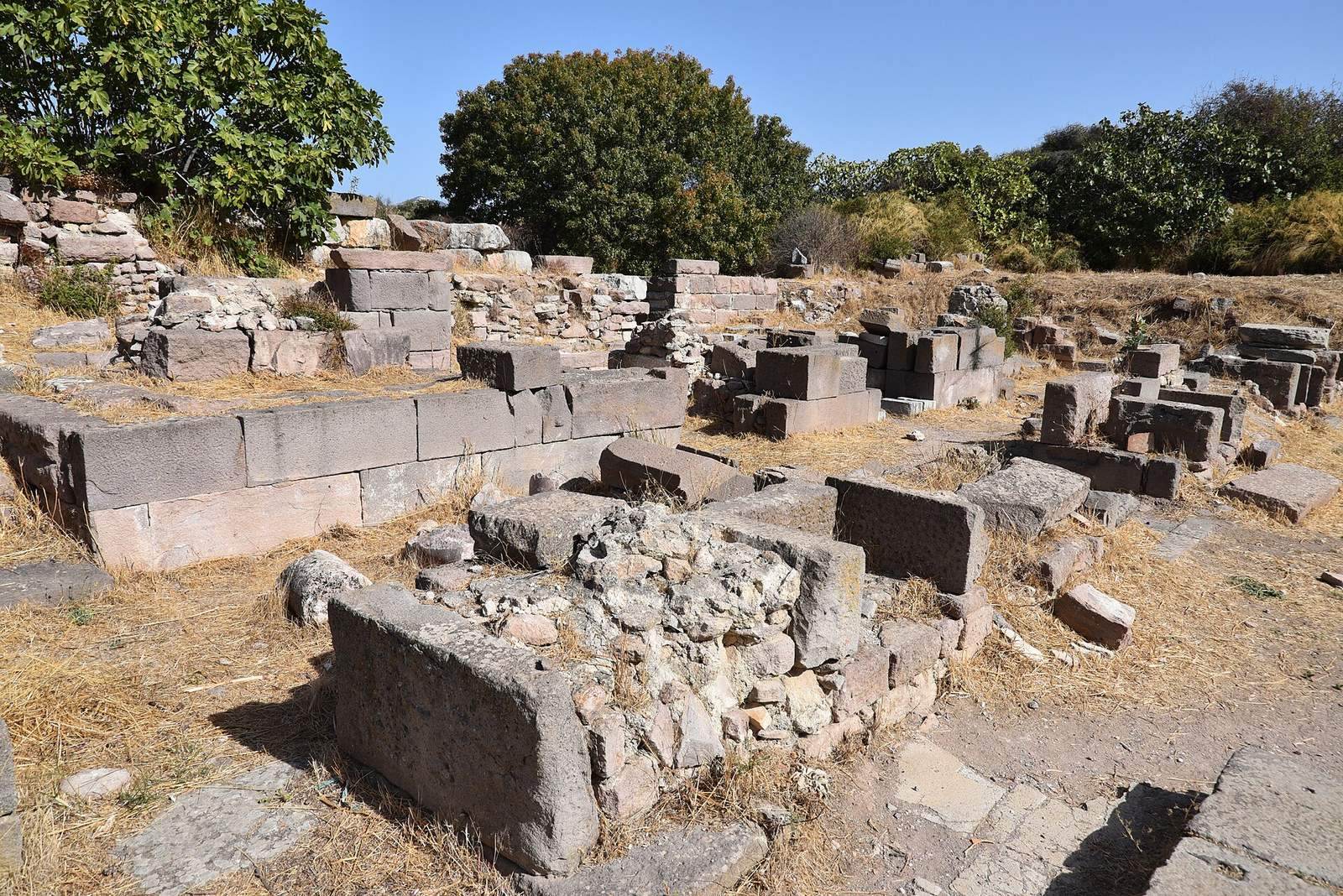
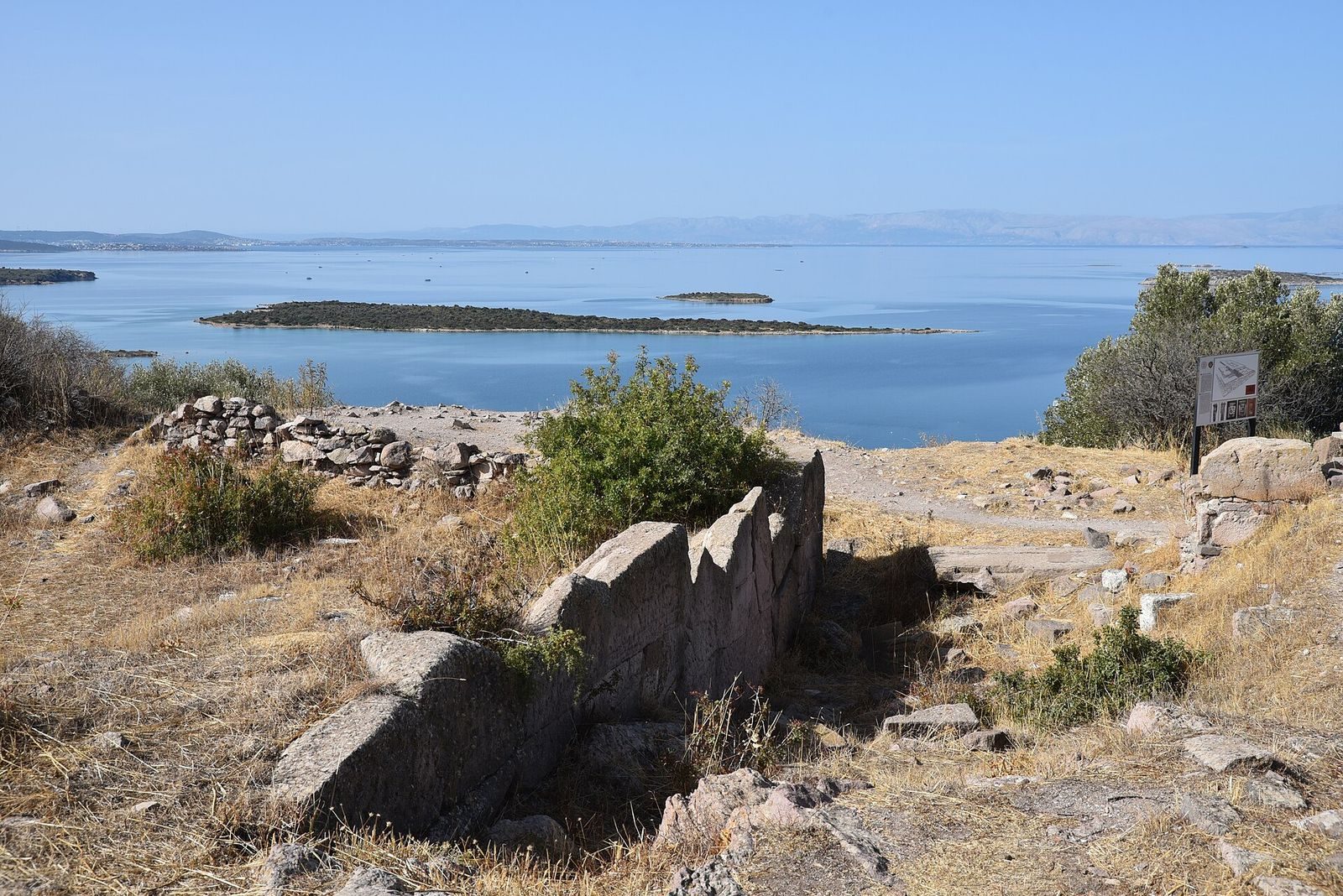
Erythrae occupied a small promontory on the western Karaburun Peninsula, opposite Chios and overlooking the Bay of Erythrae. Its urban center lay on a plain at the mouth of the Aleon, or Aleos, River, called Aksos on coins. The enclosed city covered about 135 hectares. Its harbor lay in the southern part of the city at the river mouth; Cyssus is also identified as Erythrae’s coastal harbor. The site lay near the Mimas and Corycus uplands, about 22 kilometres northeast of Cyssus.
City walls and acropolis
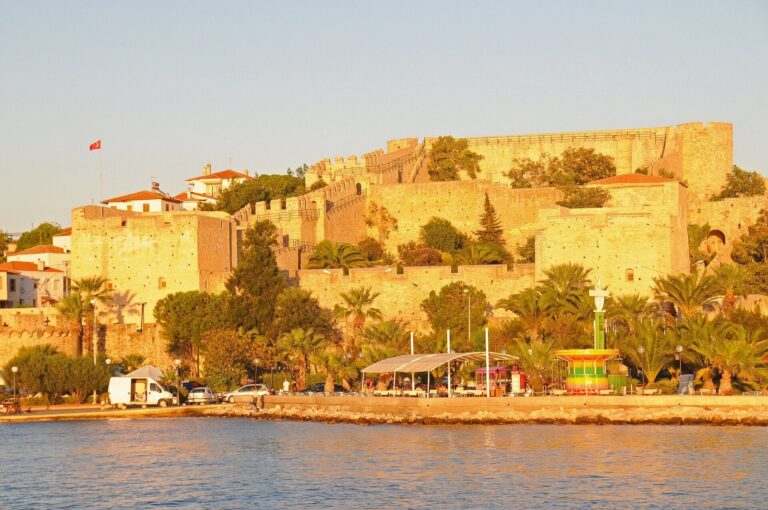
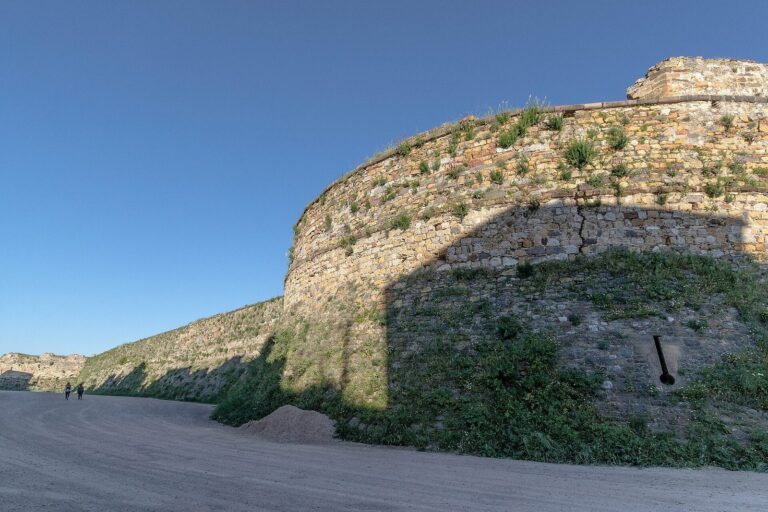
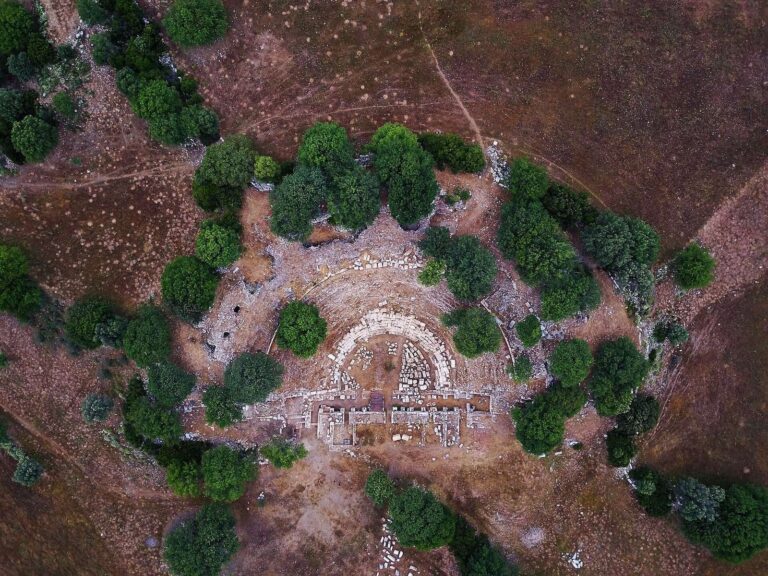
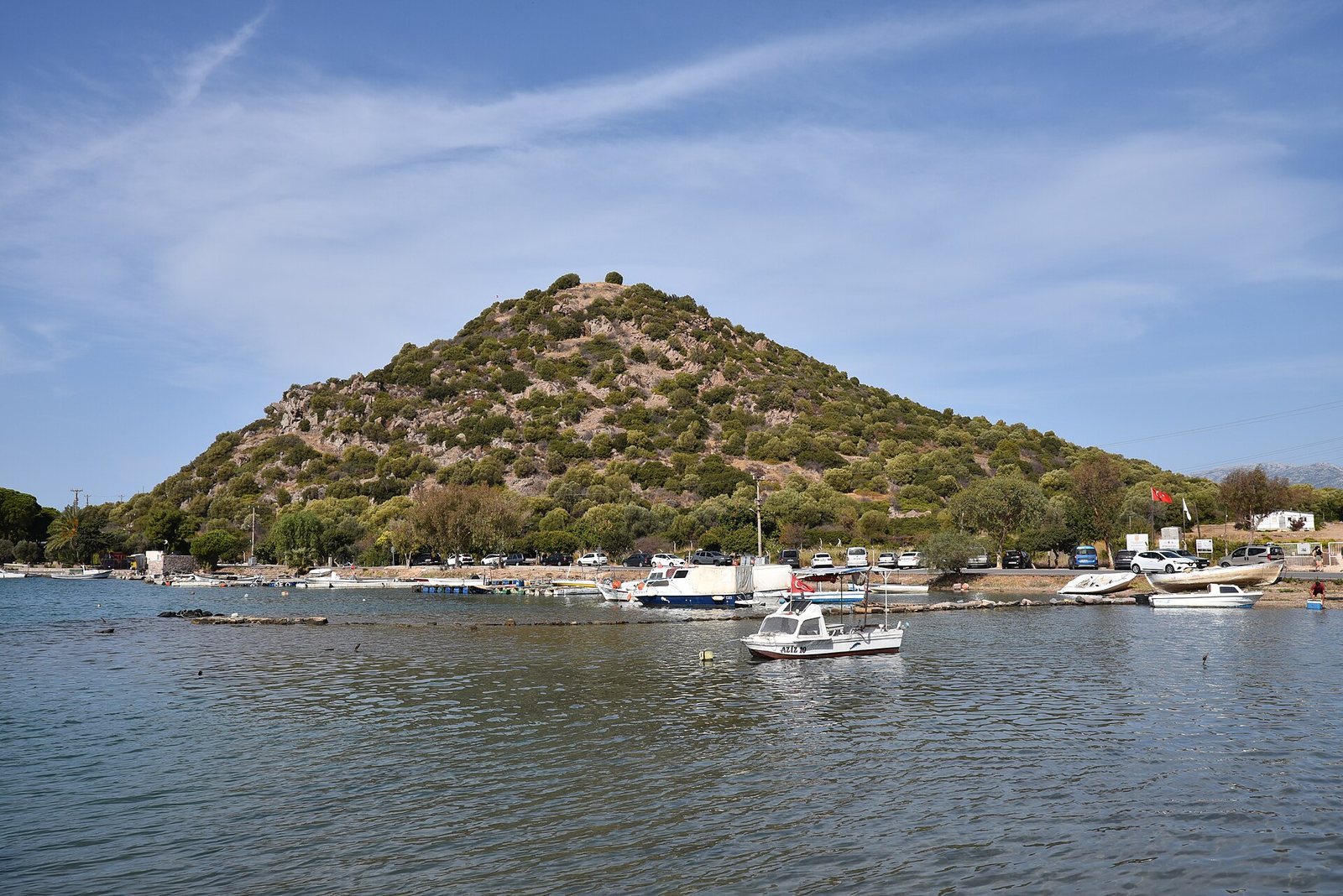
The fourth-century-BC city walls survive well enough for their course to be traced around the perimeter. They were about four to five metres thick and included several gates; five towers remain visible. A hill near the shore served as the acropolis, the elevated central area of the city. It was described as 280 feet high, and the city’s Greek theater stood on its northern slope.
Sanctuaries
Temple of Athena Polias
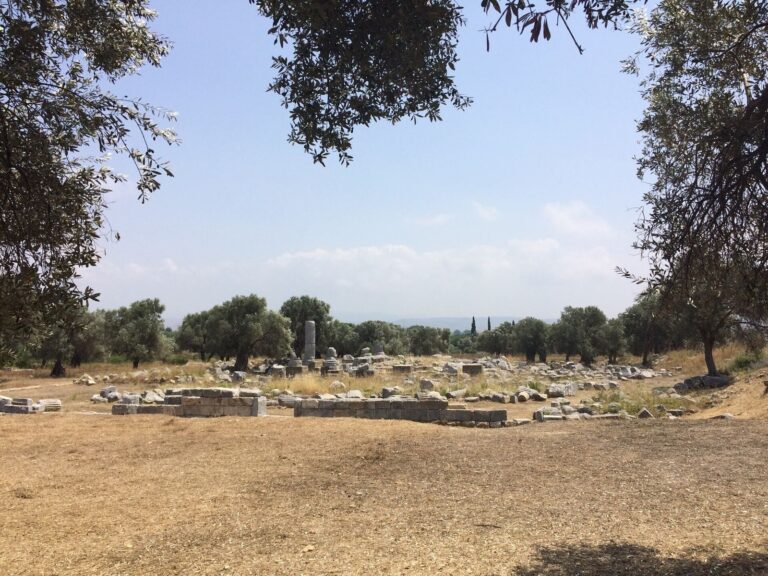
The temple of Athena Polias, Athena in her role as the city’s protector, was first built in the seventh century BC and rebuilt in the sixth. Its wooden cult statue showed the goddess seated. Bronze and ivory offerings from the period between 670 and 545 BC were found at the temple site.
Temple of Aphrodite Pandemos
An inscription records the construction of a temple to Aphrodite Pandemos around 400 BC. The epithet refers to Aphrodite’s public or civic aspect.
Sanctuary of Herakles
A sanctuary honored both the Herakles associated with the Idaean Dactyls and the Tyrian Herakles. Pausanias described its cult statue, which also appeared on Erythraean coins. The statue was said to have miraculous qualities.
Other cults
Worship in Erythrae also included Zeus Agoraios, associated with the public gathering place, as well as Apollo, Asclepius, Artemis, and Achilles.
Civic buildings and water supply
Civic buildings
Inscriptions name a prytaneion, a civic building connected with officials and the public hearth, an agora, or public gathering place and marketplace, and a stoa, a covered colonnade.
Byzantine aqueduct
Remains of a Byzantine aqueduct run north to south from the river mouth, south of the acropolis.
Roman and Byzantine remains
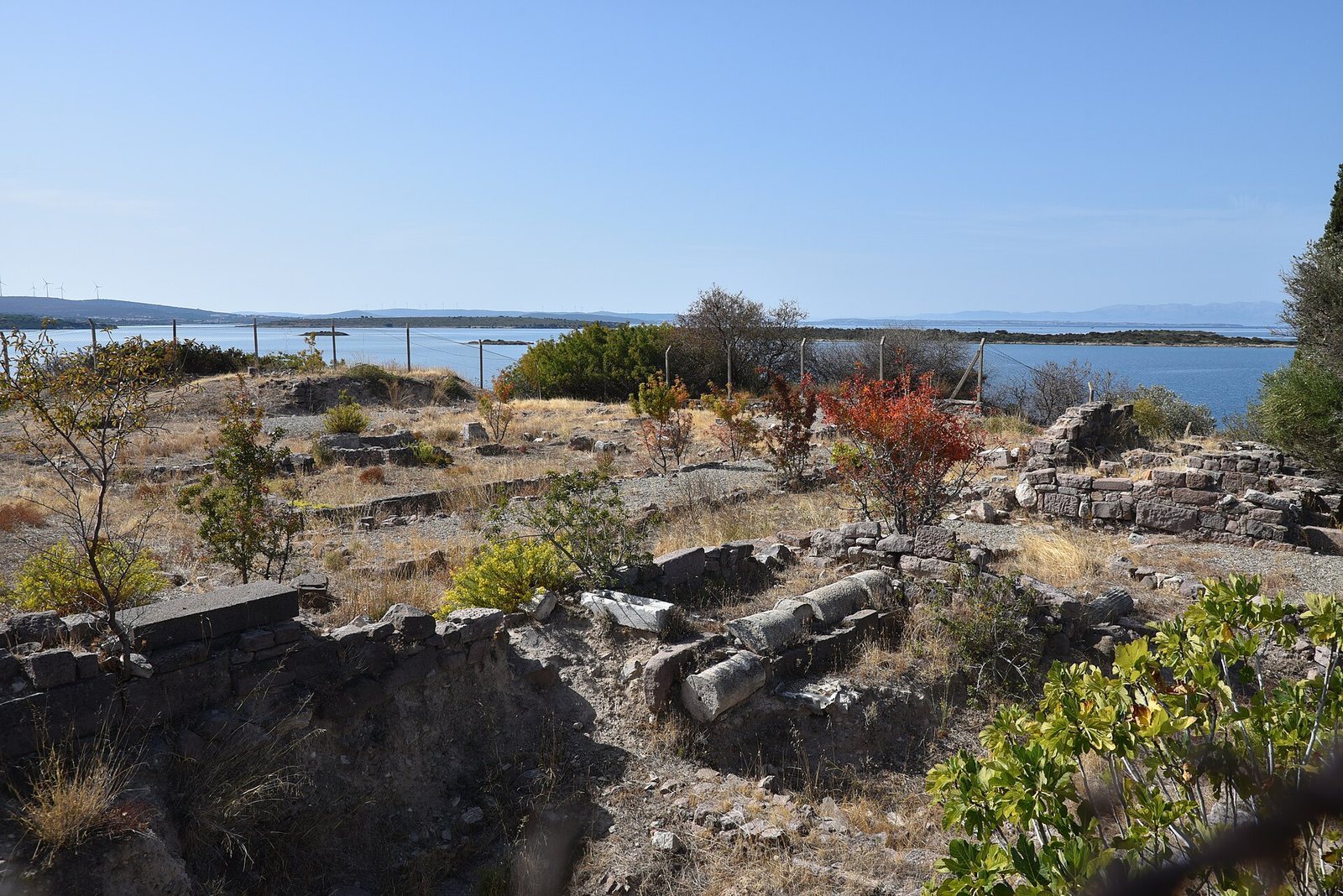
A second-century-AD Roman villa with a mosaic floor is among the remains found at Erythrae. Numerous tombs have been found outside the city walls, and many Byzantine building remains lie east of the acropolis.
Excavated finds
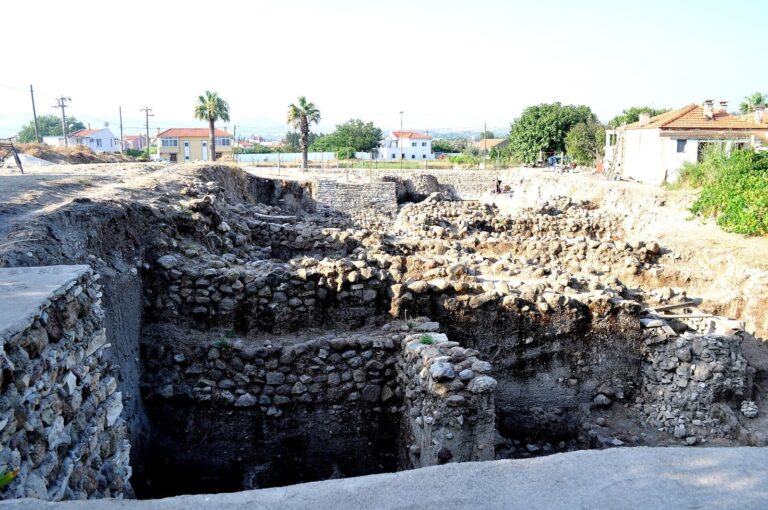
Excavations revealed a Greek theater, a tomb, and a sacrificial altar dating to the fifth century BC, as well as the Roman villa. Finds from Erythrae, including sculptures, pottery, and votive objects, are held at the İzmir Archaeological Museum.