Spandau Gord: A Slavic Fortified Settlement in Berlin
Site at a Glance
- Popularity
- Medium
- Country
- Germany
- Primary era
- Medieval
- Eras represented
- Medieval
- Civilizations
- Unclassified
- Site type
- Settlement
On this page4 sections
History
Spandau Gord was a Slavic fortified settlement on a small island in the Havel in present-day Spandau, Berlin, Germany. Its earliest settlement traces date to the eighth century, about two kilometres south of Spandau’s present-day old town. The settlement was fortified early. High-quality finds and a strongly defended area suggest that a Heveller prince lived there. The Hevellers were a West Slavic people whose territory lay in the Havel region.
The settlement was destroyed or burned several times, then rebuilt. It was abandoned in the twelfth century, when its inhabitants moved to nearby, newly founded Spandau.
Remains
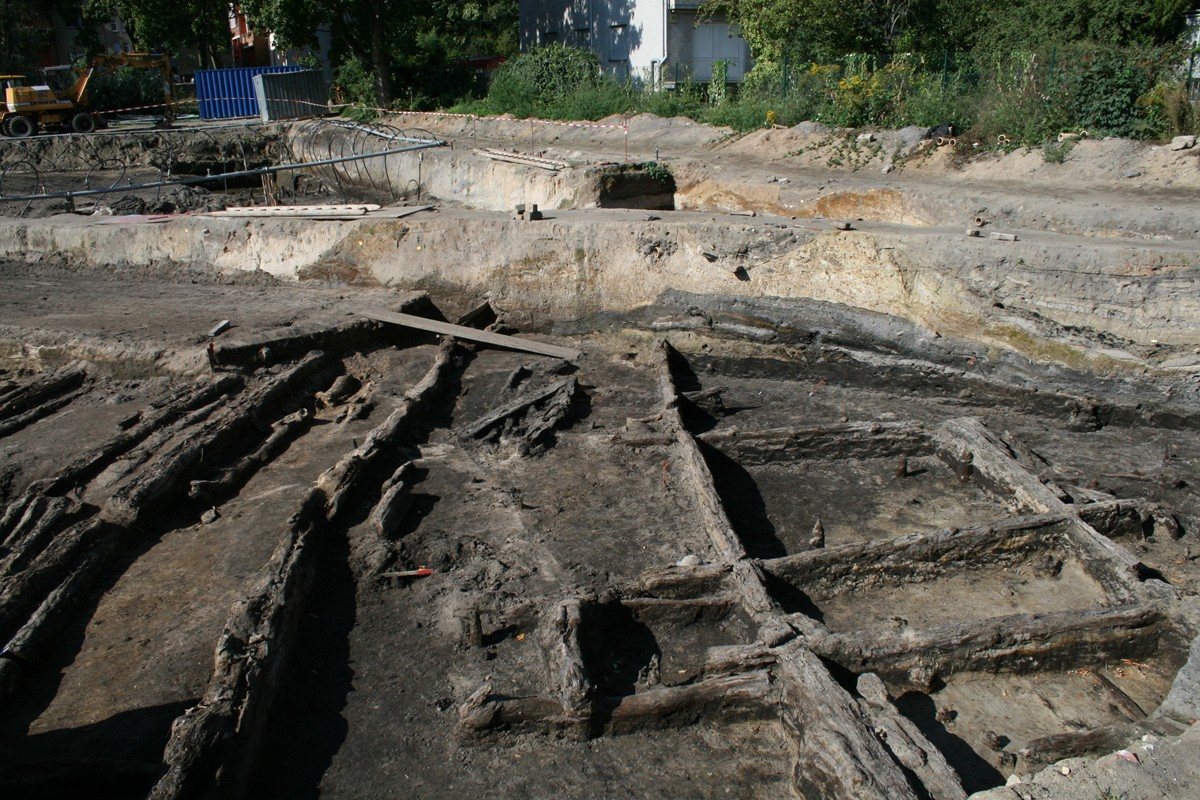
The settlement occupied a small Havel island and extended onto the nearby riverbank. Its wooden buildings stood within a defended landscape that included a rampart and an elaborately fortified section.
Defenses and settlement landscape
The Burgwallgraben, a ditch around the island, ran along its western side, and Bullengraben flowed into it. A wooden bridge connected the island to the bank. Fields around Bullengraben were used for grazing and haymaking. In the mid-nineteenth century, construction of the Berlin–Hamburg railway filled the ditch’s northern section, joining the island to the mainland and leaving a peninsula. Spandauer Burgwall street lies on this partly built-up land and recalls the former Slavic settlement center.
Church, cemetery, and finds
A wooden hall church, with one undivided nave and no side aisles, stood near the settlement and dates to around 980. Excavations in 1982 uncovered finds beside the church and a mould for the Spandau Cross near its former location. An associated cemetery has also been excavated. Later discoveries at the site included a gold Thebal ring, a medieval ring type associated with magical or protective formulas.