York Guildhall: A Civic Meeting Place in York
Site at a Glance
- Popularity
- Medium
- Country
- United Kingdom
- Primary era
- Medieval
- Eras represented
- Medieval, Modern
- Civilizations
- British, English
- Site type
- Civic
- Remains
- Town Hall
On this page11 sections
History
Medieval and early modern history
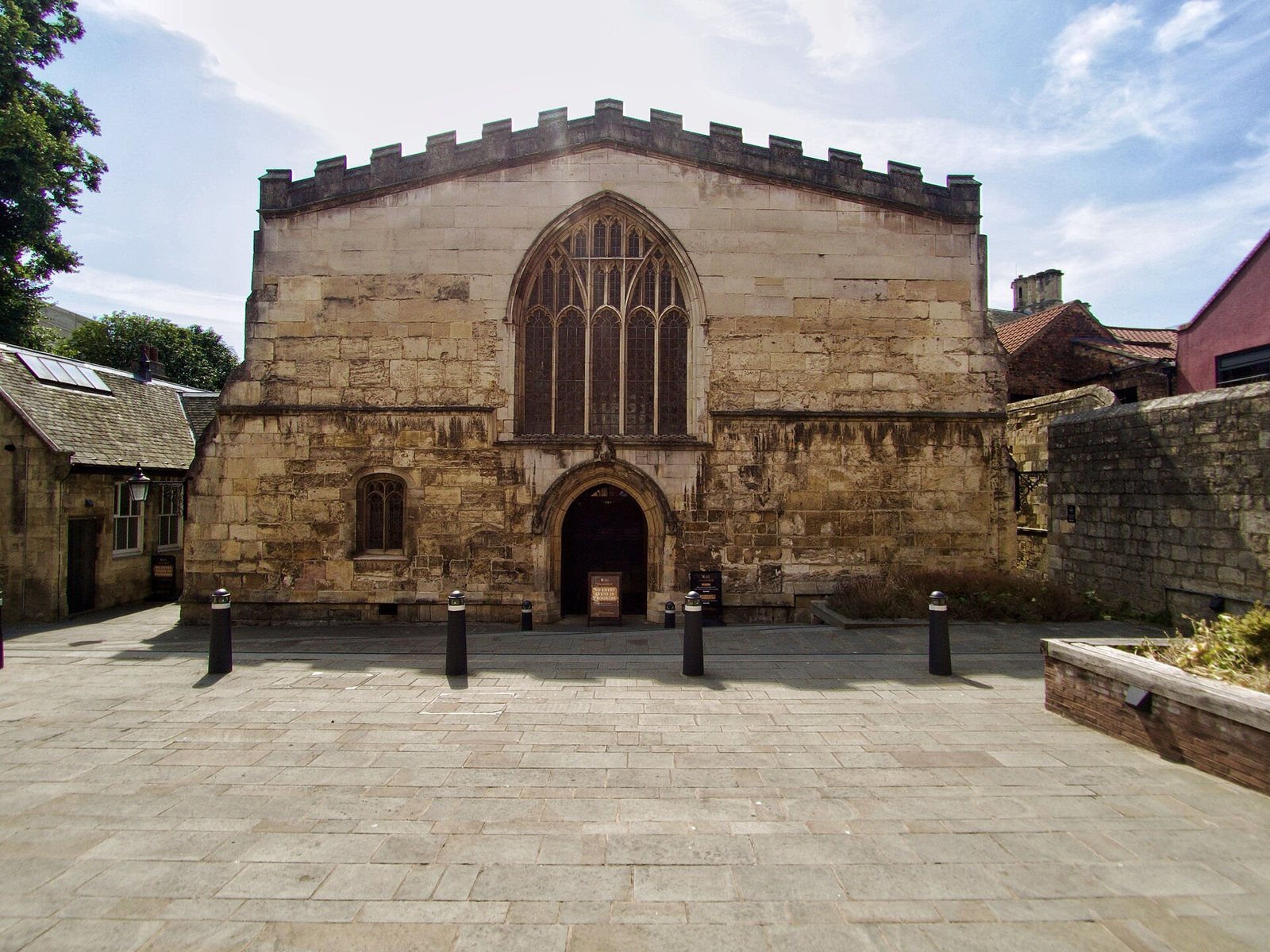
York Guildhall is a civic meeting complex in York, United Kingdom, built between 1449 and 1459 as a gathering place for the city’s guilds. These associations brought together people working in the same trade or craft and could also have civic responsibilities. Richard III, king of England from 1483 to 1485, was entertained at the Guildhall in 1483. In 1586, Margaret Clitherow, an English Catholic martyr, was tried there.
During the English Civil War, the conflict between supporters of Charles I and Parliament, £200,000 was counted at the Guildhall in 1647 before being paid to the Scots for the king’s release. Charles I was king of England, Scotland and Ireland.
Nineteenth-century expansion
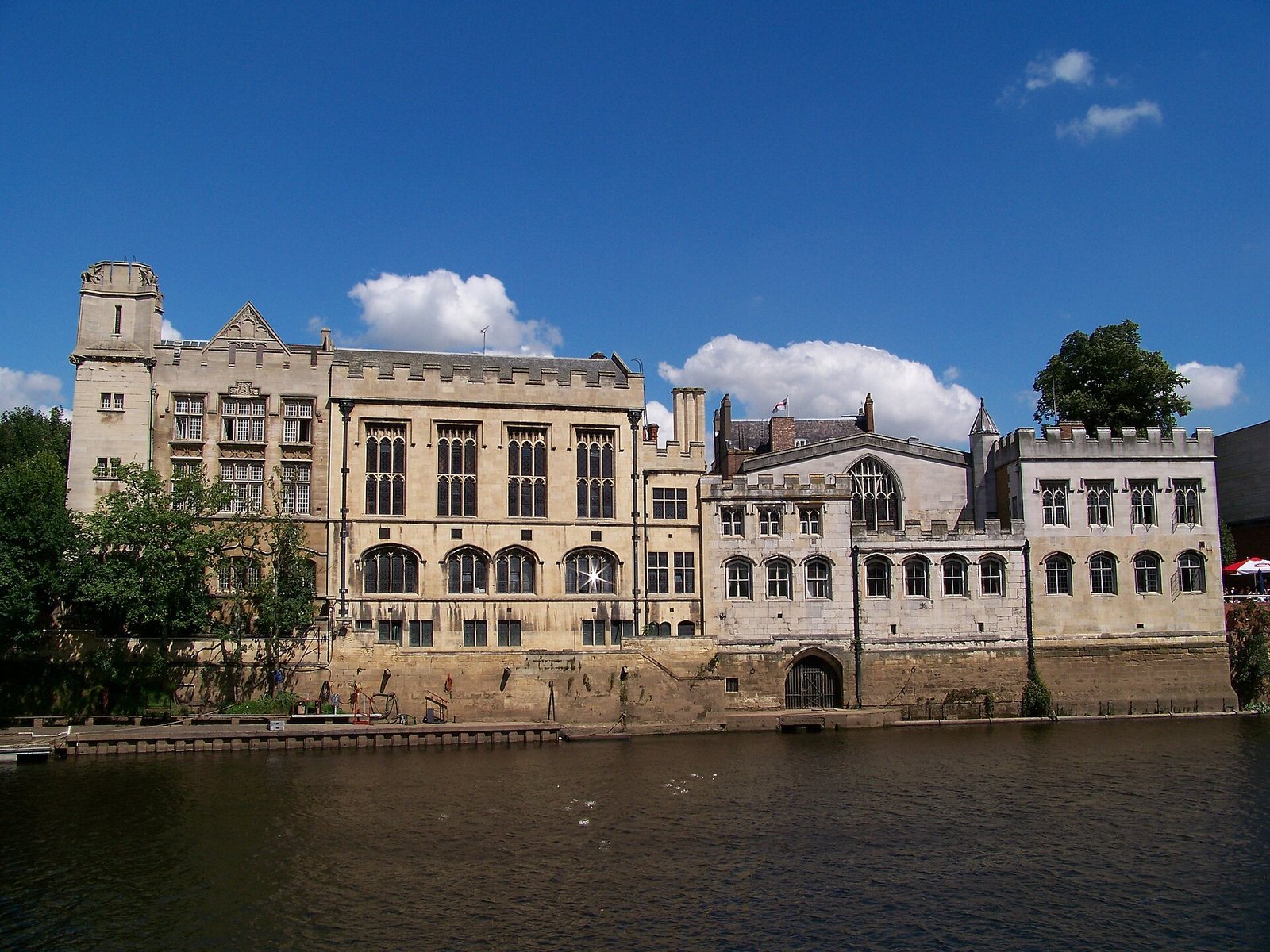
A council-chamber building was added south of the original hall in 1811. In October 1850, Prince Albert, husband and consort of Queen Victoria, attended a royal banquet at the Guildhall as guest of honour. A larger council chamber was built north of the hall in 1891, and its interior was decorated during the 1890s. An extension for the General Post Office followed between 1901 and 1903.
War damage and later use
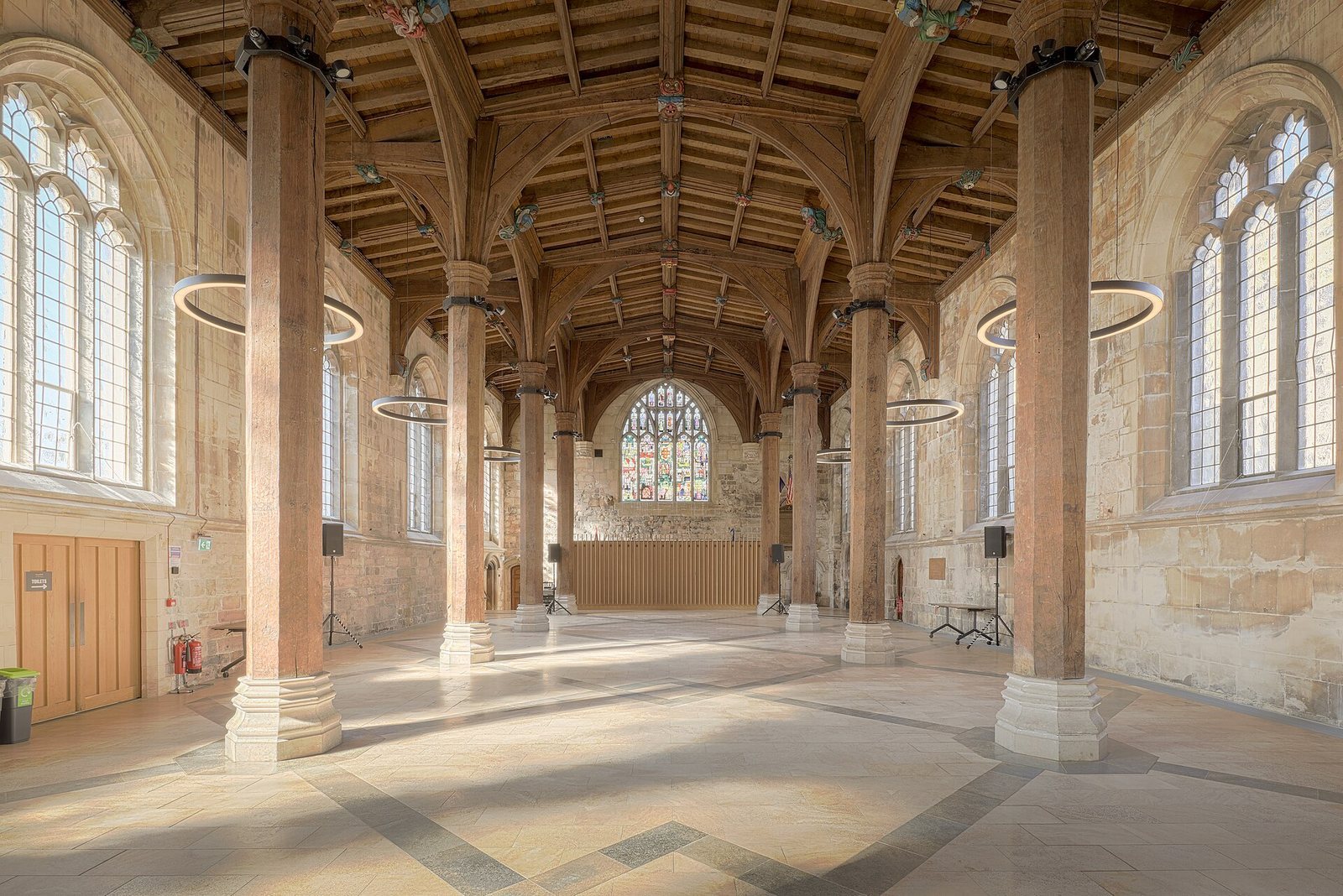
The Guildhall was severely damaged in the 1942 Baedeker raid, a German air raid on a British city during the Second World War. It was substantially reconstructed after the war and reopened in 1960 by Queen Elizabeth The Queen Mother, formerly Elizabeth Bowes-Lyon. York City Council held meetings in the Guildhall during the twentieth century. In 1954, the building received Grade I listed status, England’s highest category of listed-building protection, for buildings of exceptional interest.
Restoration began in autumn 2017 to address serious structural problems and was completed in 2022. After the work, the Guildhall was leased to the University of York as a centre for start-up businesses.
Remains
Site layout and reconstruction
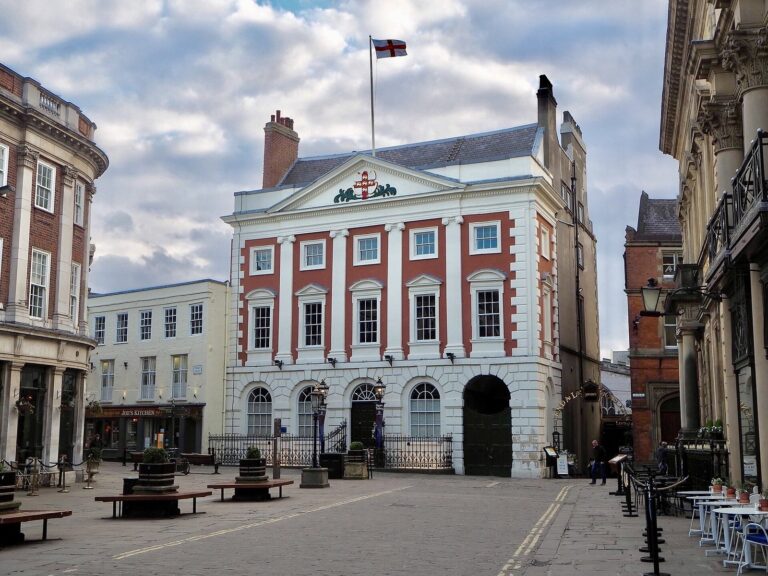
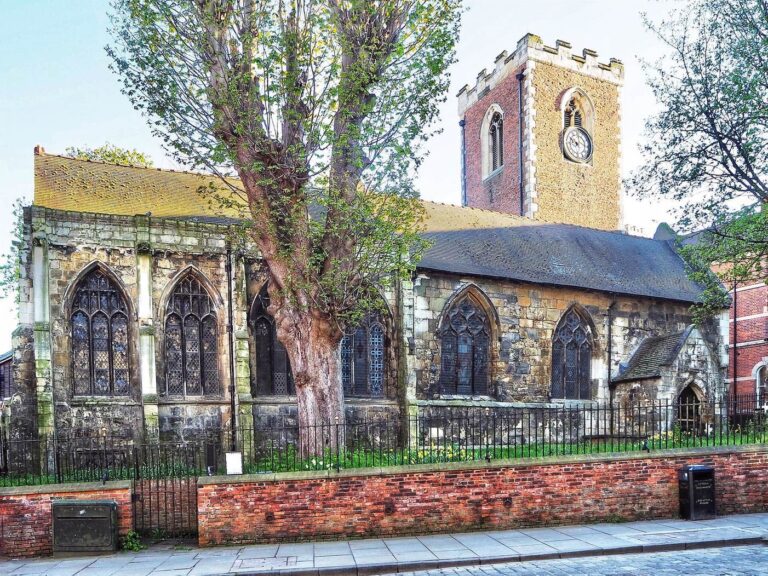
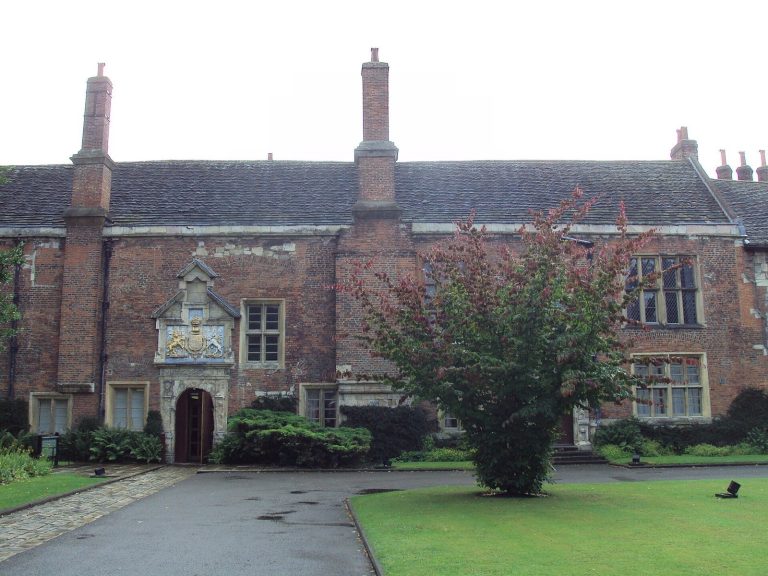
The complex stands in St Martins Courtyard on Coney Street, behind the Mansion House. Its identified components include the Guildhall and chamber range, the Atkinson block, Common Hall Lane and a boundary wall containing the lane’s entrance. Much of the present Guildhall is a postwar reconstruction.
The hall’s stained glass
A stained-glass window at the north end of the Guildhall was painted around 1682 by Henry Gyles, a seventeenth-century glass painter. After the war, York artist Harry Harvey designed and installed a stained-glass window depicting five aspects of the city’s history: architecture, war, civic affairs, commercial trade and religious education.
Chamber buildings and northern ranges
Atkinson Room
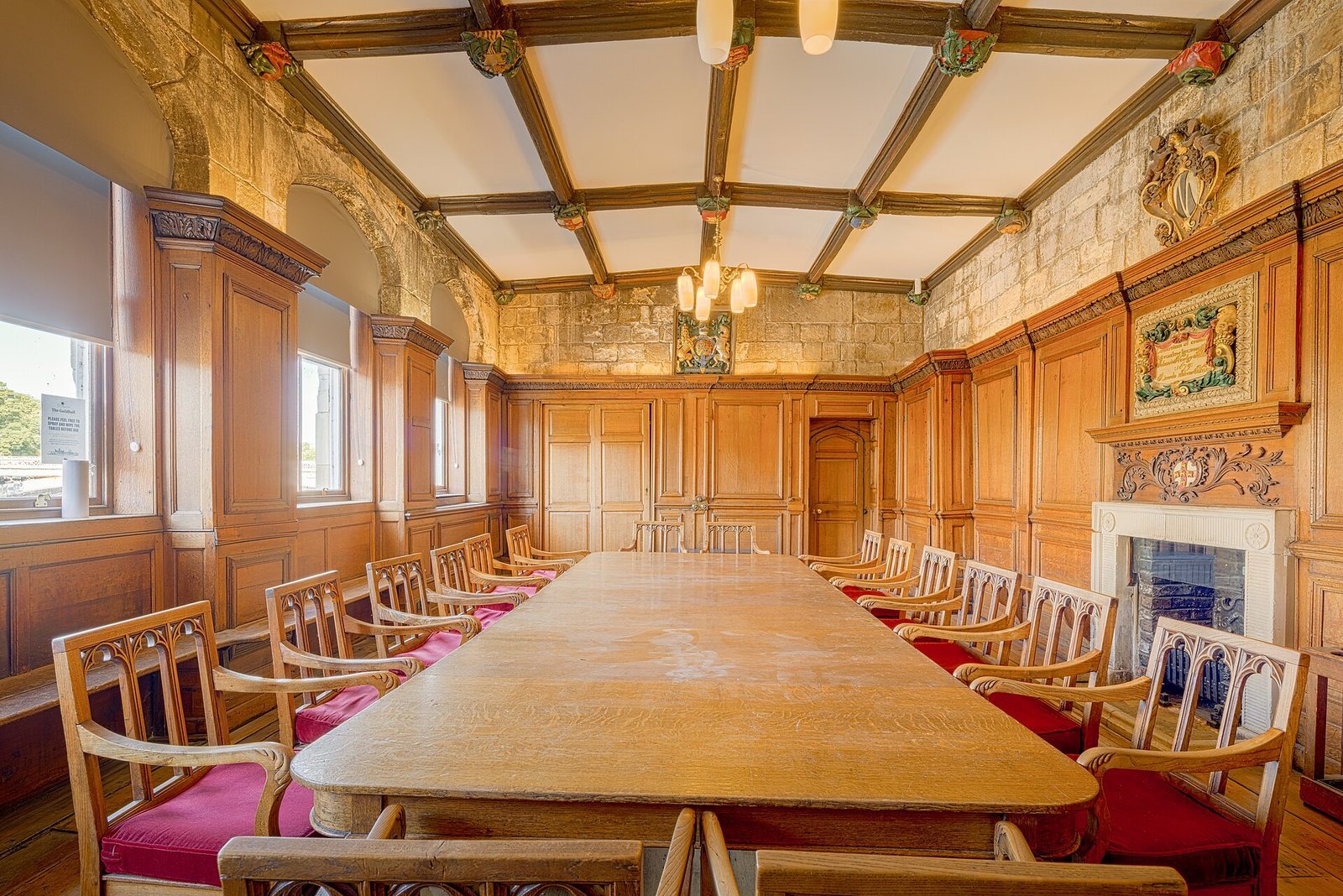
The building added south of the original hall in 1811 is now known as the Atkinson Room. It was constructed for use as a council chamber.
Municipal Offices
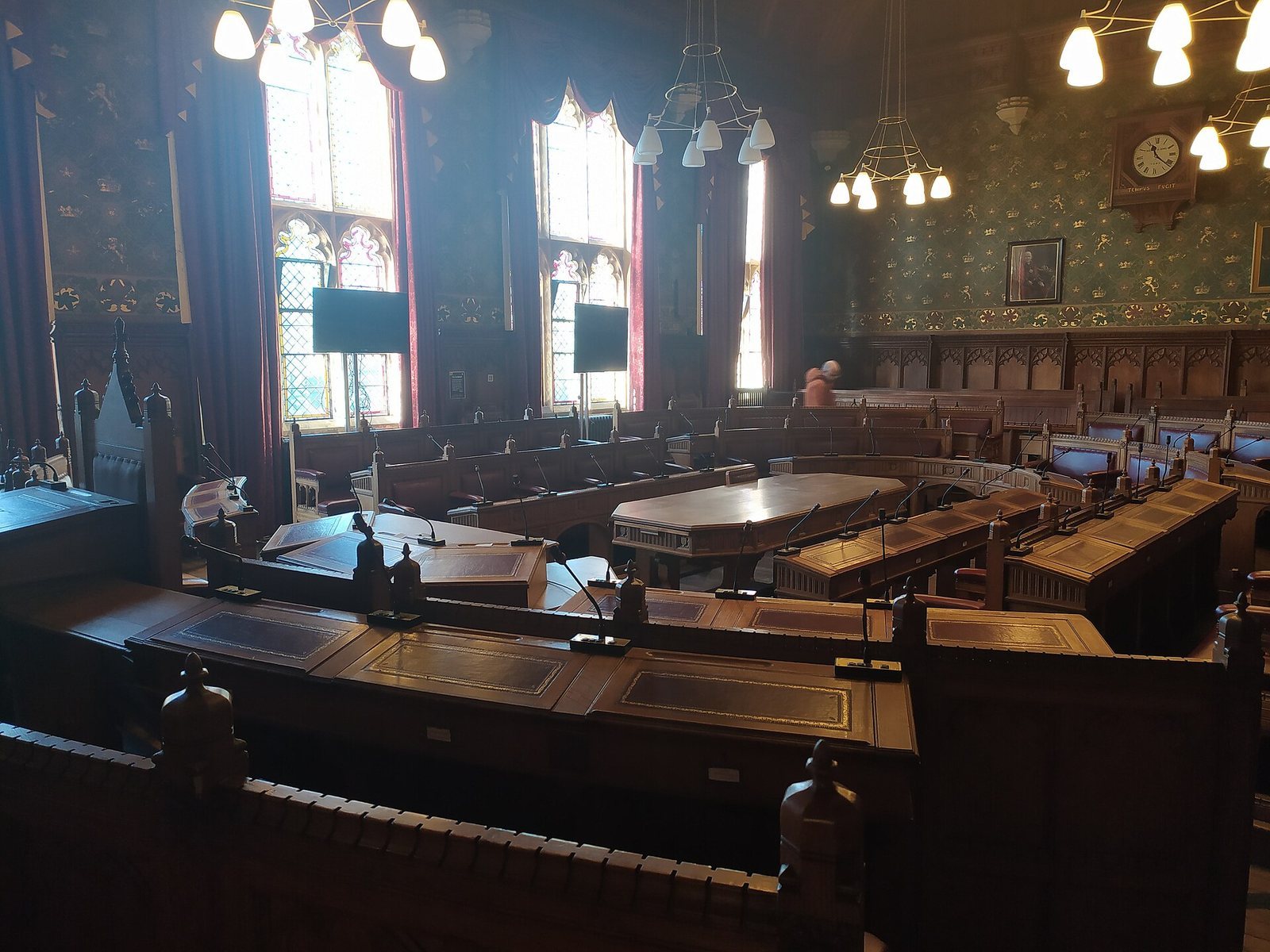
The building erected north of the hall in 1891 to provide a larger council chamber is now called the Municipal Offices. Kendal, Milne and Co decorated the chamber during the 1890s.
York Guildhall Annex
The late-nineteenth-century civic ranges on the north side of the complex are known collectively as the York Guildhall Annex. They include offices and the extension built for the General Post Office between 1901 and 1903.