Mansion House, York: An Early Georgian Residence for the Lord Mayor
Site at a Glance
- Popularity
- Medium
- Country
- United Kingdom
- Primary era
- Early Modern
- Eras represented
- Early Modern
- Civilizations
- British
- Site type
- Domestic
- Remains
- Elite Residence
On this page11 sections
History
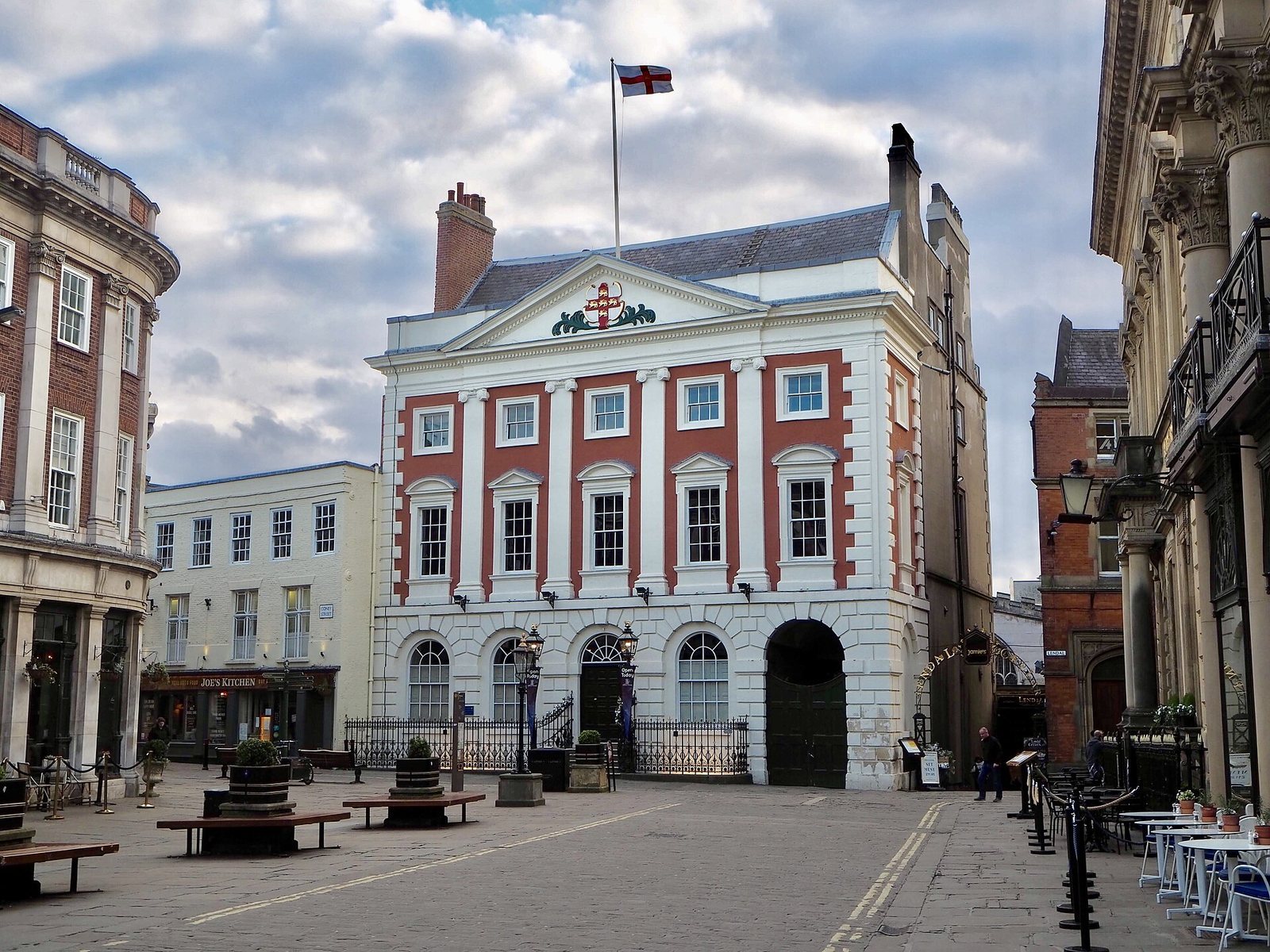
Mansion House, York, is an early Georgian civic residence in the United Kingdom, built as the official home of the city’s lord mayor, its civic head with ceremonial and municipal duties. Its foundation stone was laid in 1725, and construction was completed in 1732. The building belongs to Britain’s Georgian period, broadly 1714 to 1830. It is the earliest surviving purpose-built residence for a lord mayor, predating London’s Mansion House by at least 20 years.
The earlier civic site
Before Mansion House was built, the site contained the Common Hall Gates, an entrance to the Guildhall, along with a chapel, the Cross Keys public house, and properties and tenements belonging to the Guild of St Christopher and St George. A guild was an organized association whose activities could have civic, professional, or devotional purposes. These buildings were demolished in 1724 to clear the site.
York Guildhall, a 15th-century building behind Mansion House, was where the medieval city council met. The city’s annual Mayor Making ceremony is still held there each May, before the Lord Mayor takes up residence in Mansion House.
Civic use and conservation
Mansion House continues to serve as the Lord Mayor’s working residence during the mayoral term and also functions as a museum. The City of York Council owns the building. On 14 June 1954, it was designated a Grade I listed building, England’s highest listed-building grade, indicating exceptional architectural or historic interest.
York Civic Trust restored the house in 1998. A later refurbishment, called Opening Doors, carried out further conservation work on the building and its collections.
Remains
The building and interiors
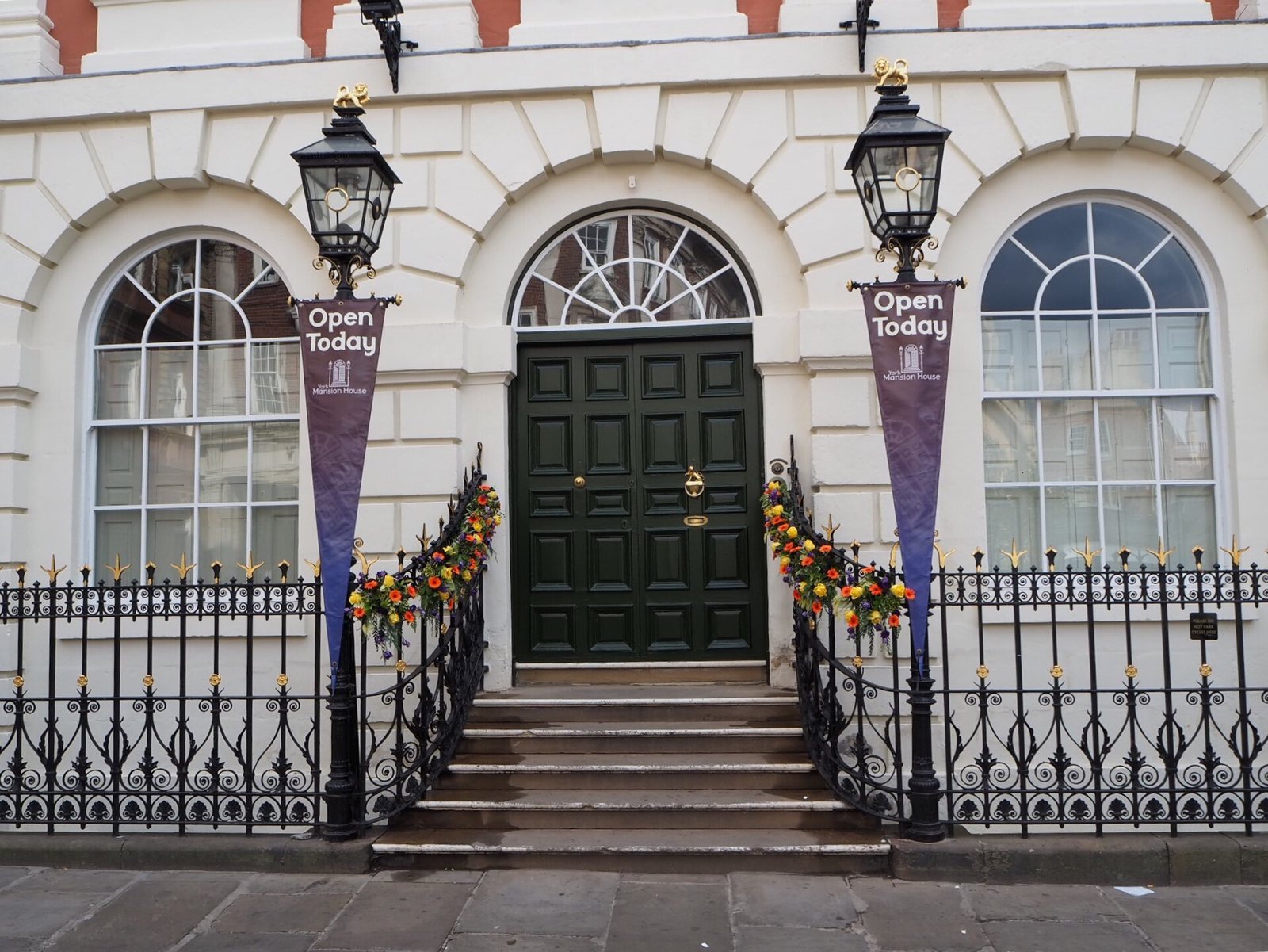
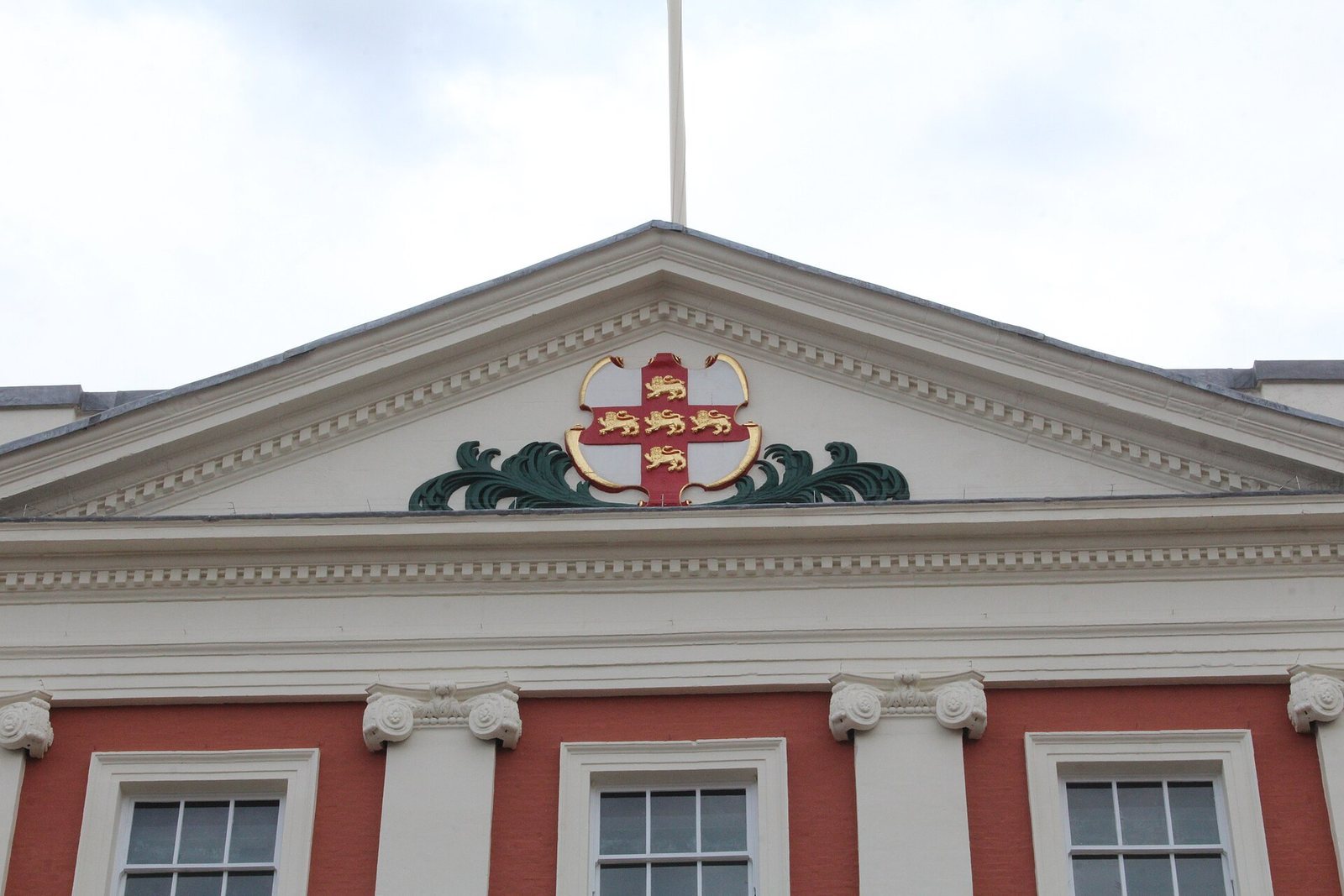
Mansion House stands in St Helen’s Square, where Coney Street and Lendal meet. The early Georgian building has front railings and attached gas lamps. Its architect is unknown, although William Etty, an English architect active in the 18th century, may have designed the frontage. The Opening Doors refurbishment restored the original kitchens, improved displays and access to the collection, and developed an environmental and conservation plan for the building. The project also included an oral-history component. Since January 2017, a Silver Gallery has displayed the civic silver collection.
Civic collections
Gold and silver
Mansion House holds one of England’s largest civic silver collections. Among its earliest pieces are a 17th-century silver chamber pot and a gold cup. A bequest made for York in 1669 provided for a gold cup valued at £100 and a silver chamber pot valued at £10. It required both objects to pass from one lord mayor to the next, with their value returned to the executor or heirs if they were used for another purpose. The cup bears the arms of York and Marmaduke Rawdon, as well as an inscription identifying him as the son of Laurence Rawdon, formerly a city alderman.
Civic regalia
The civic regalia, meaning ceremonial objects that represent a city’s authority, includes a 17th-century mace and two city swords.
The Bowes Sword
Sir Martin Bowes, who was born in York and became Lord Mayor of London in 1545, gave the sword to York. Bowes had been christened at St Cuthbert’s Church, where members of his family were buried. When the city considered reducing its number of parish churches, he urged the council to preserve St Cuthbert’s. In a letter dated 20 September 1549, he said he was sending the sword in thanks. It was described that year with a crimson velvet scabbard decorated with pearls and stones set in silver and gilded metal.
In 1603, when James VI of Scotland visited York, the sword travelled to London with a member of his entourage. James became James I of England that year. When the sword returned, its original precious stones were gone and had been replaced with semi-precious stones.
The Sigismund Sword
The sword belonged to Sigismund, Holy Roman Emperor, a ruler of a Central European polity. In 1416, he became a Knight of the Order of the Garter, a British order of chivalry, as part of Henry V’s alliance against France. Sigismund sent the sword to St George’s Chapel at Windsor Castle to hang above his place in the chapel; it remained there when he died in 1437. Henry Hanslap, Dean of Windsor, a senior cleric, and a canon, or clergy member, of Howden, later acquired it. A native of York, Hanslap presented it to the city on 5 May 1439.
The sword has a blue-black blade, made by treating the steel to help protect it from corrosion, inscribed with the Royal Arms of Elizabeth I. Figures on its crimson velvet scabbard have been described as scorpions or dragons; their form resembles the emblem of the Order of the Dragon, a chivalric order founded by Sigismund.
Portraits
The house also holds oil paintings of former York lord mayors. The portraits include George IV when he was Prince Regent, the statesman Charles Watson-Wentworth, 2nd Marquess of Rockingham, and the 19th-century railway promoter and politician George Hudson.