Monastery of St. Petka Ostrovica: A Serbian Orthodox Monastery in the Sićevo Gorge, Serbia
Site at a Glance
- Popularity
- Medium
- Country
- Serbia
- Primary era
- Medieval
- Eras represented
- Medieval, Modern
- Civilizations
- Serbian
- Site type
- Religious
- Remains
- Monastery
On this page12 sections
History
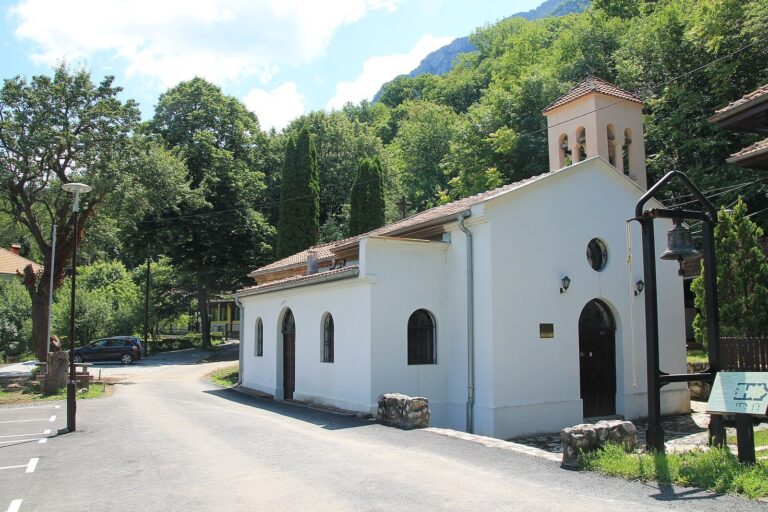
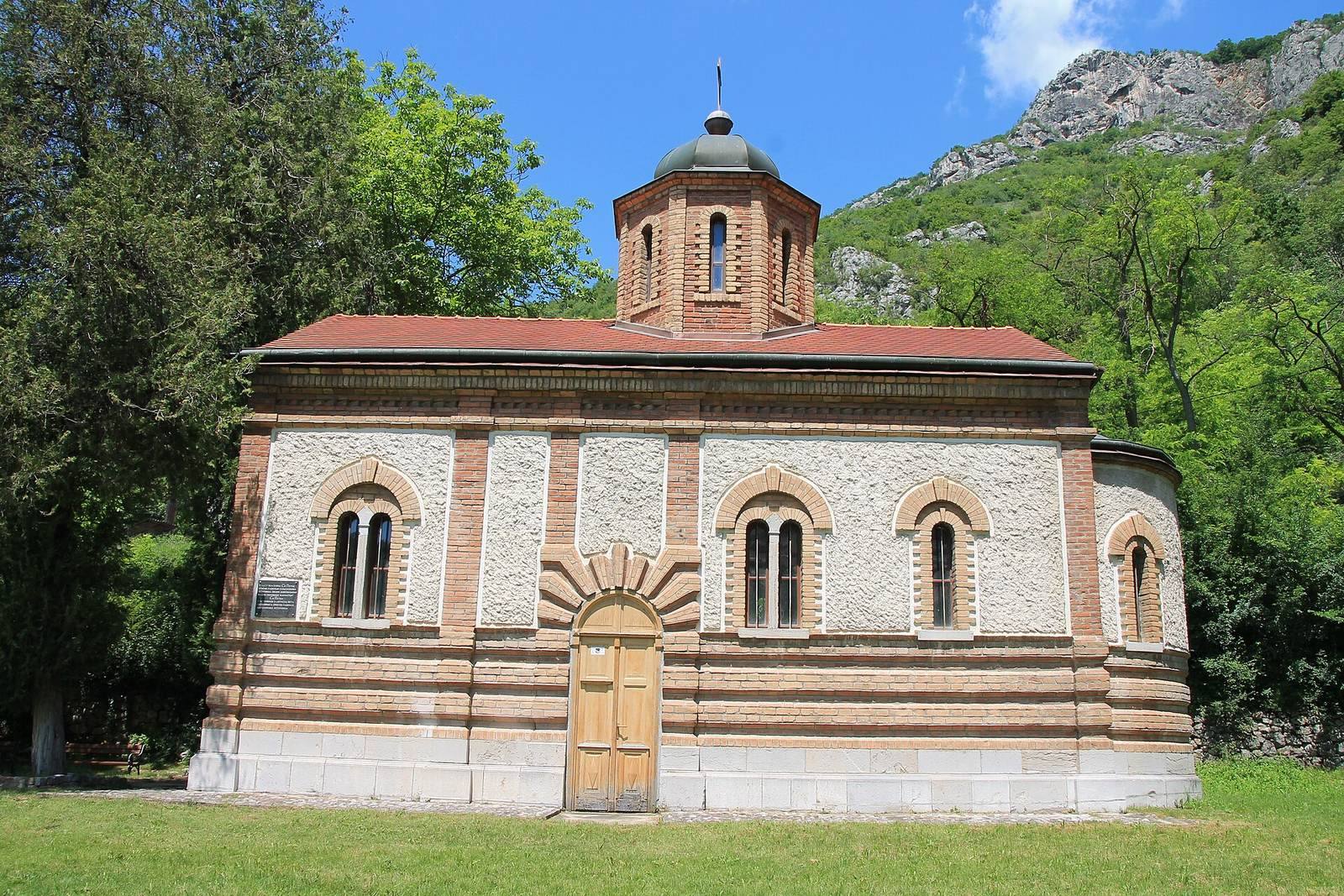
The Monastery of St. Petka Ostrovica is a Serbian Orthodox monastery in Serbia’s Sićevo Gorge, dedicated to Saint Petka, the Serbian name for Saint Paraskeva of the Balkans, an 11th-century Orthodox ascetic especially venerated in the region. Its origins are uncertain, but its church was rebuilt in 1898 in Serbian-Byzantine style, combining Serbian traditions with Byzantine church forms. The monastery formed part of a gorge that became a refuge for Orthodox monastic life during Ottoman rule.
Origins under Ottoman rule
One hypothesis connects the monastery’s beginnings with monks escaping Ottoman advances. They may have included monks from Iviron, a Georgian Orthodox monastery on Mount Athos, who settled among the remains of an older, abandoned monastery.
From the 15th century, monks fleeing Ottoman expansion settled in secluded Sićevo Gorge. The wider gorge became a religious center with about twenty monasteries, churches, and other sacred sites, serving Greek, Russian, Bulgarian, and Serbian monks. Its isolation offered Christian religious communities refuge amid Ottoman restrictions on non-Muslim worship in Niš.
A tax register from the reign of Ottoman Sultan Mehmed III (1595–1603) lists an obligation of 500 akçe, units of Ottoman currency, assessed on grain, fruit, beehives, mills, and other income. The scale of the payment indicates that the monastery was prosperous. This is its last known entry in that register. Ottoman forces destroyed the monastery during the 16th century, during a large gathering that angered them. A tradition holds that twelve young women were buried alive in front of the church; the Orthodox Church later recognized them as saints.
Rebuilding and changing administration
A reconstruction of the monastery is dated to 1896. Serbian army engineering units rebuilt the church, which was consecrated in 1898 as they prepared the area for road and railway tunnels through the gorge. Work began after the engineers heard that King Alexander I had survived a near-fatal incident at sea near Biarritz. The Ministry of Construction supplied a standard design, while architect Svetozar Ivačković designed the church. Alexander also contributed money. Engineer captain Živojin Damjanović later set down details of the construction in a handwritten account.
From its consecration until 1903, the monastery belonged to the Serbian army and was served by military clergy. A royal decree dated 19 February 1901 appointed the military priest Žunić as its head. During this period, it held the unusual title Royal Serbian Military Monastery of St. Petka Iverica. After the May Coup, the 1903 Serbian coup d’état, the monastery passed to the Eparchy of Niš, a diocese of the Serbian Orthodox Church. In 1963, it was designated a cultural monument of great importance and entered Serbia’s Central Register of Cultural Monuments.
Remains
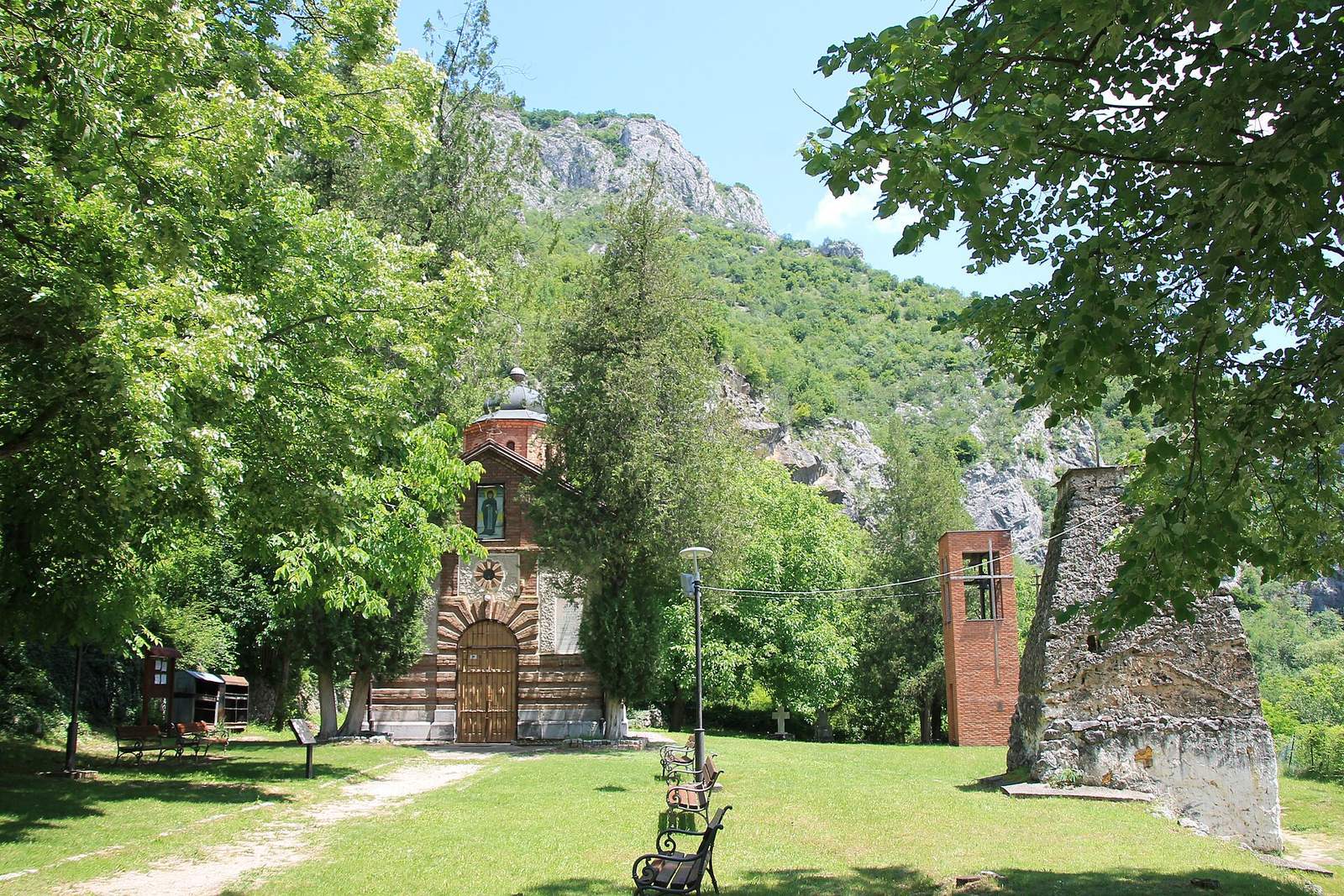
The complex occupies the rocky northern side of Gradištanski Canyon, at the entrance to the canyon section of Sićevo Gorge and on the right bank of the Nišava River. The monastery stands at about 260 metres above sea level; here the canyon is about 360 metres high and 50 metres across. Gradištanski Canyon extends for about 5.5 kilometres, while the road and railway pass roughly 100 metres south of the monastery. The church, a separate bell tower, courtyard chapel, and remains of earlier monastic buildings make up the site. A quarry opened at Ostrovica in 1886, about 200 metres away, threatens the complex and nearby vegetation through dust, blasting vibrations, and flying rock. Traffic on the adjoining road also causes vibration and air pollution.
The church
Plan and exterior
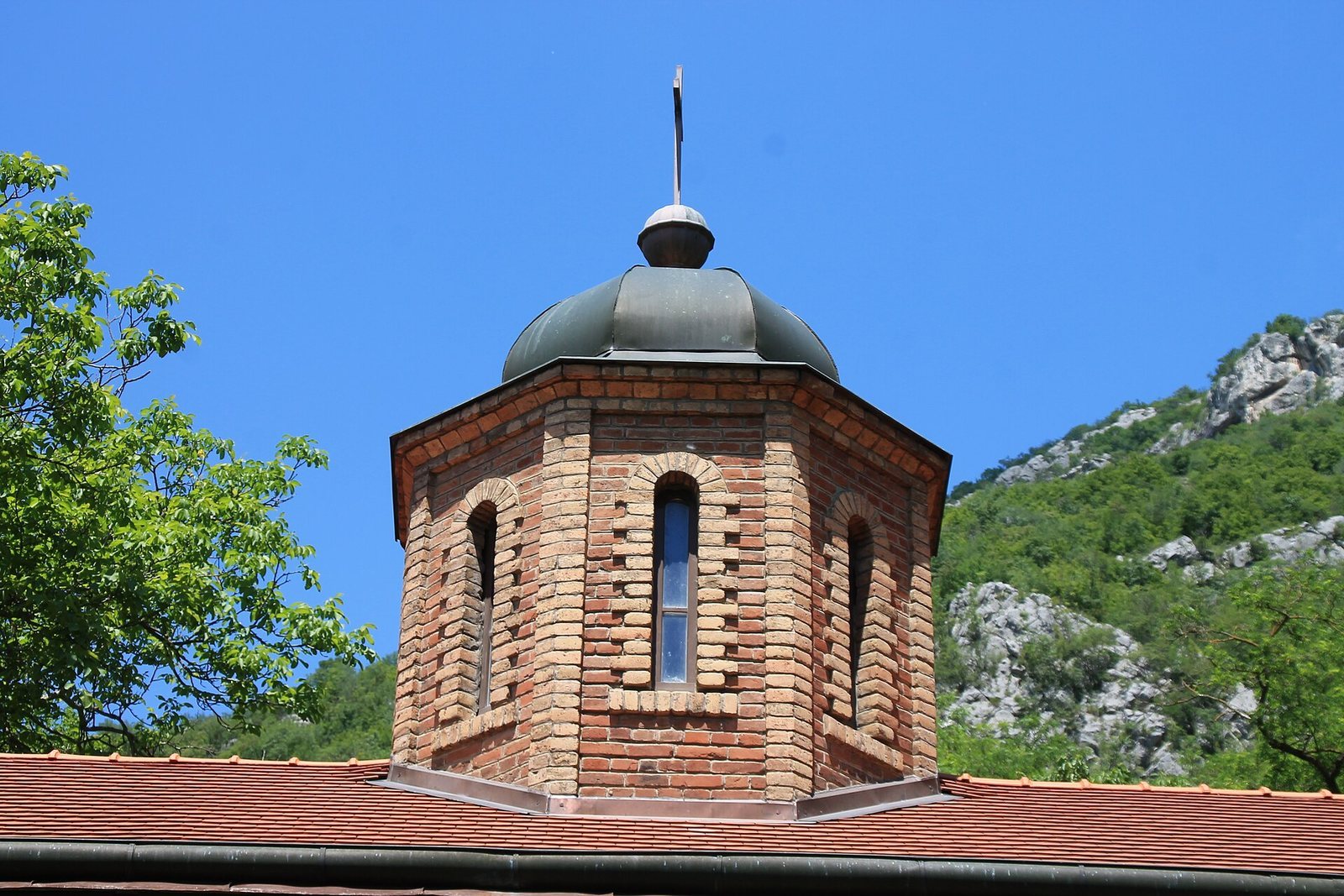
The church has one principal interior space, a semicircular projecting sanctuary end at the east, and a dome raised on an eight-sided supporting structure. Alternating two-colour decoration gives the walls the appearance of stone and brick. Arched entrances on the west and south sides have decorative bands following the arches, with radiating patterns. Four windows along the main hall are each divided into two openings. The sanctuary end has three plain windows, and each side of the dome’s support has one. All the windows are arched and framed by shallow-relief bands.
The church stands on foundations associated with earlier religious buildings. These include a temple attributed to the medieval Serbian noble family the Mrnjavčevići and a still older place of worship. Monks from Iviron are also associated with the site. On the church’s western exterior, an image of Saint Petka is painted on a metal sheet.
Interior and furnishings
The ceiling depicts a blue sky filled with stars, and a fresco shows a storm at sea. The scene recalls the incident involving King Alexander that prompted the engineers to undertake the rebuilding. An icon screen, bearing images and separating the sanctuary from the main part of the church, was installed after the building was completed. Painter Milutin Marković decorated it, probably using Russian church screens as a model.
Other buildings and archaeological remains
Bell tower and courtyard chapel
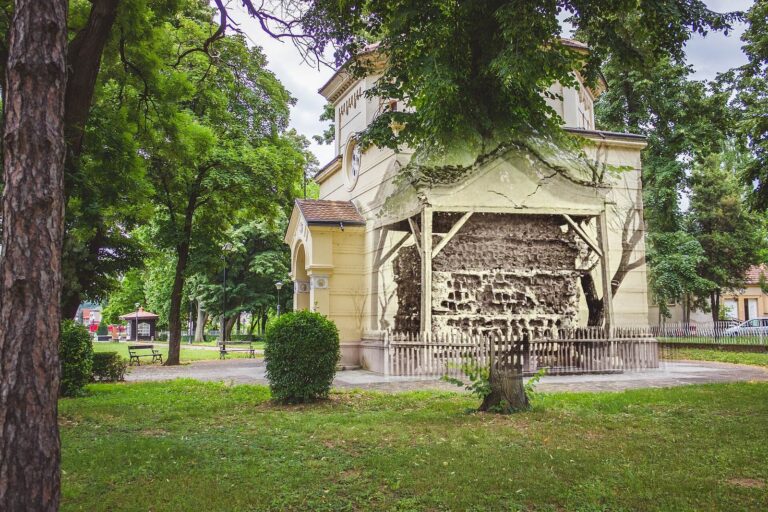
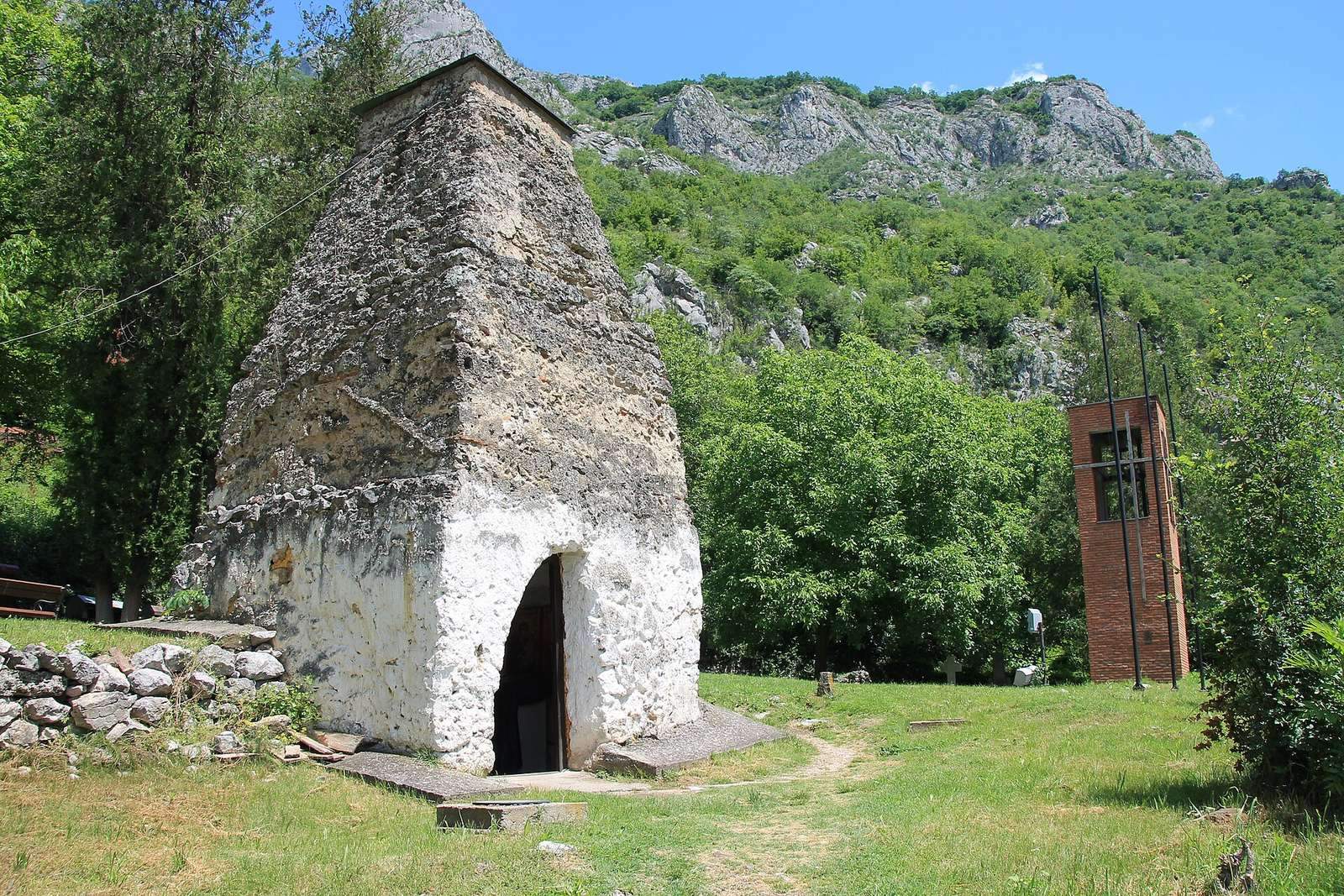
A separate bell tower, dated to 1898, contains three bells weighing 400 kilograms in total. Near the courtyard fence on the southern boundary, beside the road, a large conical stone structure made of partly shaped stone has been converted into a chapel.
Earlier monastery remains
Visible remains of the earlier monastery include a kitchen and chimney belonging to the old monastic lodging, as well as a substantial truncated stone pyramid. These features stand among the remains associated with the earlier religious buildings on which the present church foundations rest.
Excavated finds
Excavations of earlier church foundations in the late 19th century revealed three layers of buildings. Finds included spears, arrows, armor, and a coin from the reign of King Uroš I, a medieval Serbian ruler. Bones and jewelry found during construction of the new church have been linked to the tradition of the twelve young women buried before the church.
Cemetery and monastic lodging
The cemetery beside the church contains the graves of several engineers who died while tunneling through the gorge. A monastic residential building has also been constructed at the complex in recent times.